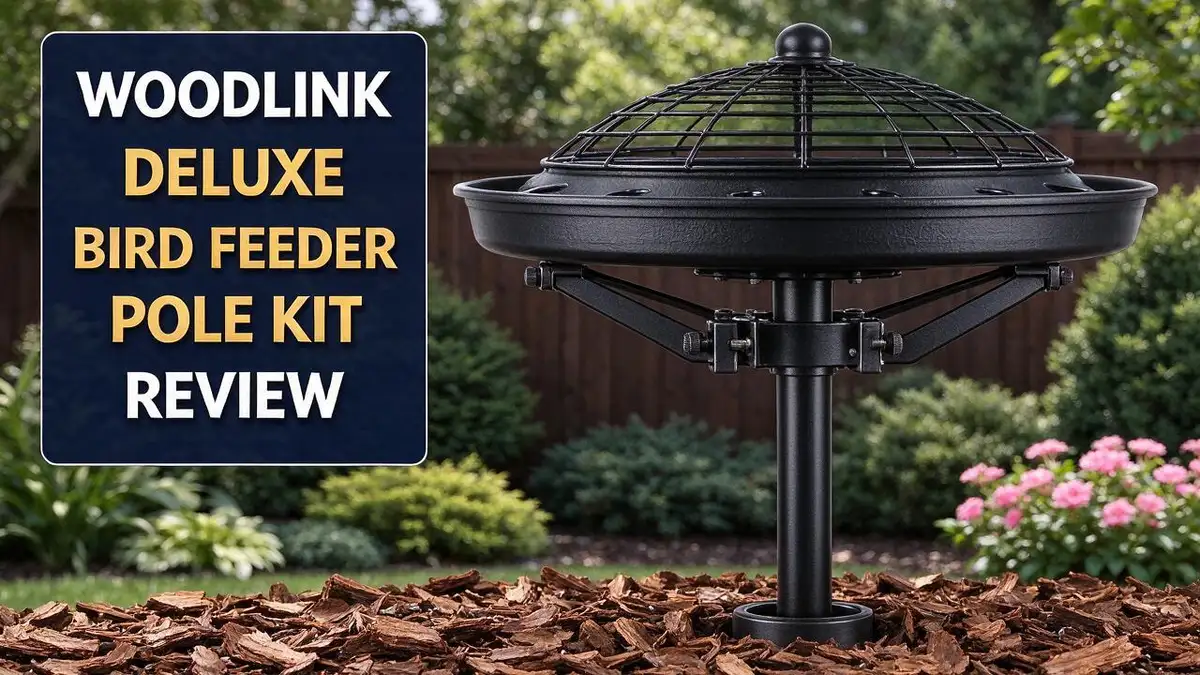
Woodlink Deluxe Bird Feeder Pole Kit Review 2026: Buyer’s Guide
Do you want a bird feeder that looks charming and works well? The Woodlink Deluxe Bird Feeder Pole Kit could be the answer. It pairs a cute gazebo style feeder with a sturdy pole. Your yard can become a busy spot for visitors.
Birds need a feeder they can trust. This one holds up to 10 lb of seed, so you refill it less often. The hinged roof makes cleaning and filling simple. One reviewer also says it handles weather well and that birds actually use it.
Still, no product is perfect. Some owners report that a squirrel found a way inside. Others feel the feeder swings too much on thin poles. In this review, we look at what works, what does not, and whether this kit deserves a place in your garden.
In a Nutshell
- Holds a generous amount of seed: The main feeder carries up to 10 lb of seed, so you can refill it less often than with smaller models.
- Offers related models: The Deluxe Wood version adds polycarbonate windows, a metal suet cage, and room for 2 suet cakes. The Deluxe Cedar version uses kiln dried inland red cedar with anodized aluminum roof hinges.
- Earns praise for weather protection: One reviewer says the feeder stays dry in wet conditions, and birds visit it regularly.
- Raises a squirrel concern: One reviewer reports that a squirrel got inside the feeder. If squirrels visit your yard, consider adding a squirrel guard to protect the seed.
- Needs a steady setup: The feeder can swing on lightweight poles, which may make birds feel uneasy. A firm, stable pole helps birds feel safe while they feed.
- Compares well with other options: Shoppers often also consider the Woodlink Audubon Hopper Deluxe from the same brand, plus the Audubon Three Piece set from Backyard Chirper.
Design and Build Materials

- Whimsical Gazebo Design
- Ready To Hang
Last update on 2026-07-11 / Affiliate links / Images from Amazon Product Advertising API Some of the links on this website are affiliate links, which means that at no additional cost to you, I earn a commission if you click through and make a purchase. I only recommend products and services that I believe will add value to my readers. Thank you for your support!
Materials shape how a feeder performs outdoors. Good choices keep seed dry and help the feeder handle sun, rain, and wind. This design relies on natural wood and sturdy metal parts.
Wood gives the feeder a warm, natural look. A wooden feeder blends into a garden, so it feels at home among trees and shrubs. Birds also seem to accept natural surroundings more easily than harsh, shiny plastic.
The related Deluxe Cedar model uses reforested inland red cedar. Reforested means new trees grow where older ones were harvested. Shoppers who care about where their materials come from will appreciate that choice.
Kiln drying matters too. This process removes moisture from the wood before it becomes a feeder part. Less moisture means the wood is less likely to warp over time.
Cedar also has a natural advantage. It resists rot better than many other soft woods. That makes it a smart pick for a feeder that stays outside all year long.
Metal parts need strength as well. The Deluxe Cedar uses anodized aluminum roof hinges. Anodizing thickens the outer layer of aluminum, which helps it resist corrosion.
Hinges that resist rust keep the roof moving smoothly. A stiff or rusty hinge can make everyday care feel like a chore. Smooth movement makes the feeder easier to live with.
Durable materials also mean fewer repairs. A feeder that lasts several seasons saves you time and effort. It also keeps birds returning to a familiar spot.
Wood does need a little attention over time. Wipe the surfaces with a damp cloth now and then. This keeps the feeder looking fresh and helps prevent mold from building up in damp weather.
Keep one detail in mind before you order. Check the pole size listed on the product page. A good match keeps the feeder steady and secure.
Overall, the materials in this design feel practical and attractive. Natural wood and metal hardware work well together. Together, they suggest a feeder that can handle changing weather for many seasons.
Seed Capacity and Filling
Seed capacity matters more than many shoppers expect. A feeder that runs empty fast leaves hungry birds waiting on the pole. A good refill plan keeps your visitors happy all season long.
Think about your daily routine first. Check how often you can refill the feeder each week. Busy schedules often call for a larger seed supply. Lighter use suits a smaller setup.
Filling works best when the feeder sits level. Set the pole on firm ground and check the seed level from the side. A tilted tray pushes seed toward one edge and wastes space.
Keep seed dry at all times. Damp seed clumps, spoils, and can grow mold. Fill the feeder on a dry day when possible. Dry seed flows better, and birds eat it more readily.
Choose seed that matches the birds in your area. Black oil sunflower seed attracts many species. Cracked corn draws ground feeders, while mixed blends can bring in more variety.
Avoid filling the feeder to the very top. Extra seed can spill out when the wind blows. Leave a small gap so the seed stays inside the tray.
A small scoop or funnel makes filling faster and cleaner. Pour slowly so seed does not bounce out of the tray.
Rinse the feeder before each big refill. Old seed hulls collect dust and bits of spoiled food. A quick brush and clean water keep the feeder fresh. Let it dry fully before you add new seed.
Watch the feeding pattern over several days. Heavy use in cold weather means you should fill more often. Quiet days in spring may let you stretch the refill schedule. Adjust your routine as the seasons change.
Mark your refill dates on a phone calendar. Simple notes help you spot patterns quickly.
Overall, seed capacity and filling habits work together. A steady routine keeps birds coming back. Your garden stays lively with very little extra effort.
Pole Compatibility and Stability
Pole compatibility starts with one simple check. Measure the pole diameter before you order anything.
A fit that is too loose lets the feeder wobble. A fit that is too tight can crack the mounting area.
Look for a pole that matches the feeder’s weight. A full feeder holding 10 pounds of seed puts real load on the top section.
Stability also depends on where the pole stands. Choose a spot with firm, level ground. Soft soil lets the base lean over time.
Wind exposure matters just as much. An open yard catches more gusts than a spot near a fence or shrub line. Partial shelter keeps the feeder steadier.
Many gardeners set the pole in a bucket of concrete or use a ground stake. Both options hold the pole upright. Choose the method that suits your soil.
Check the hardware every few weeks. Loose bolts or clamps let the pole shift. Tighten them with a basic wrench.
Height plays a role too. Place the feeder at a level you can reach for refilling. Many people find shoulder height works well.
Squirrel defense also connects to the pole. Add a baffle or cone to block climbing pests. Mount it below the feeder for the best result.
Measure the distance from the nearest tree or fence. Keep several feet of space so cats and jumping animals have less cover. Birds also prefer a clear flight path.
Seasonal checks help too. Before winter, inspect the pole for rust, cracks, or soft wood near the base. Replace weak parts early so the setup stays safe all year.
Gather a level, a shovel, and a tape measure before setup. Having these tools ready makes installation smoother.
Before you fill the feeder, push the pole gently from each side. A solid setup barely moves. Any noticeable sway means you should adjust the base.
Top 3 Alternatives
These three feeders make strong alternatives to the Woodlink Deluxe Bird Feeder Pole Kit. Each one keeps birds fed and helps keep squirrels away.
Brome Squirrel Buster

- Our largest-capacity model, the Squirrel Buster Plus squirrel-proof bird feeder is also our most popular.
- Truly Squirrel-Proof: Openings in the shroud align with the feeding ports, providing birds access to the food. When a squirrel climbs onto the feeder, its weight automatically forces the shroud down, closing access to the ports. Squirrels and some large birds are foiled but not harmed in any way.

Last update on 2026-07-01 / Affiliate links / Images from Amazon Product Advertising API Some of the links on this website are affiliate links, which means that at no additional cost to you, I earn a commission if you click through and make a purchase. I only recommend products and services that I believe will add value to my readers. Thank you for your support!
The Brome Squirrel Buster uses a clever weight system. When a squirrel climbs on, the perches close the seed ports. Birds can still eat with ease. This feeder works well for busy yards where squirrels love to visit. It also holds a good amount of seed, so you refill it less often.
Droll Yankees Flipper

- WEIGHT-ACTIVATED SQUIRREL PROOF PROTECTION: This squirrel proof bird feeder features a weight-sensitive spinning perch that gently removes squirrels when they attempt to access seed, allowing the birds to feed undisturbed
- AMPLE BIRD SEED CAPACITY: This large feeder holds 5lbs of bird seed in a durable polycarbonate tube, which reduces the frequency that refills are needed and provides easy monitoring of seed levels
Last update on 2026-07-09 / Affiliate links / Images from Amazon Product Advertising API Some of the links on this website are affiliate links, which means that at no additional cost to you, I earn a commission if you click through and make a purchase. I only recommend products and services that I believe will add value to my readers. Thank you for your support!
The Droll Yankees Flipper sits on a sturdy pole and spins when heavy animals try to feed. Squirrels soon give up and walk away. Small songbirds, however, land on the perches and eat freely. You can adjust the seed level with a simple tool. Many bird lovers enjoy how easy it is to clean.
Stokes Select Feeder

- 6 feeding portals for many birds to feed at once
- Open tube design allows maximum seed capacity
Last update on 2026-11-24 / Affiliate links / Images from Amazon Product Advertising API Some of the links on this website are affiliate links, which means that at no additional cost to you, I earn a commission if you click through and make a purchase. I only recommend products and services that I believe will add value to my readers. Thank you for your support!
The Stokes Select Feeder gives you a clear view of your birds. It has a durable tube design and wide perches for cardinals and finches. Its cover keeps seed dry during rain. You can hang it from a pole or a tree branch. Simple refills and quick cleaning make this feeder a good choice for new and experienced bird watchers alike.
Squirrel Resistance and Upkeep
Squirrels are clever, and they test every feeder. One reviewer reported that a squirrel got inside this model. Knowing this helps you plan ahead.
Start with a quick gap check. Look at the roof edges and the seams around the seed tray. Small openings give squirrels a way in, so seal them with clear silicone.
Watch for chew marks along the edges. Squirrels gnaw soft wood to reach seed. Sand rough spots and let the wood dry fully before you add any bird safe finish.
Pick a seed mix that squirrels dislike. Safflower seed often stays untouched by squirrels, while many songbirds still eat it. Plain sunflower seed draws squirrels fast, so skip it if they cause trouble.
Add a baffle above the pole. A dome shaped or cone shaped baffle blocks climbing. Place it about five feet off the ground so squirrels slide off instead of reaching the feeder.
Measure the jump distance. Squirrels leap several feet from nearby branches, fences, or roofs. Move the pole away from these launch points so the feeder sits out of reach.
Notice when squirrels visit. Watch the yard for a full day. Note the hours when squirrels appear, then adjust your seed choice or baffle to match their routine.
Clean up fallen seed daily. Spilled seed on the ground pulls squirrels down from the trees. A small tray or a quick sweep keeps the area tidy and draws fewer visitors.
Test the roof latch often. A roof that does not close fully lets rain and pests inside. Lift the roof once a week and press it down until it clicks into place.
Schedule a seasonal inspection. Check the perches and tray for cracks or loose screws. Replace damaged parts before winter storms arrive so birds stay safe all season.
Bottom line: small habits protect your seed. Combine gap checks, a baffle, and smart placement for the best results. Your birds will thank you with steady visits.
Weather Performance and Bird Appeal
Rain tests every feeder sooner or later. The Woodlink Deluxe has a hinged roof that keeps water off the seed. One reviewer reports that it stays weatherproof during wet spells.
Bright sun can also warm the seed tray. Place the feeder where shade covers part of the afternoon. Shade helps keep the seed cooler through the day.
Winter brings snow and freezing rain. Birds need steady food when natural sources disappear. Brush snow off the roof after heavy storms so it opens freely.
The related Woodlink Deluxe Cedar model uses anodized aluminum roof hinges. Metal parts like these handle moisture well over many seasons. The cedar wood is kiln dried, which helps it stay stable as humidity changes.
Cold mornings can make a metal hinge stiff. Open and close the roof gently to keep it moving freely.
Bird appeal starts with design. The whimsical look catches the eye of curious visitors. Birds often inspect new objects before they land.
One reviewer confirms that birds actually use this feeder. That result matters most for anyone hoping to see regular visitors.
Give new feeders time. Most birds need several days or even weeks to trust a new spot. Keep the seed fresh and the area quiet during that period.
Spring and summer bring nesting birds. Many species prefer quiet spots with cover nearby, so place the feeder near shrubs but not right against them.
Morning light often makes the feeder easy to spot from windows. Watching birds from inside becomes a daily pleasure.
Weather changes often, so check the feeder after each storm. A quick look keeps the setup ready for hungry visitors.
Weather and design both shape bird visits. A feeder that stays dry and easy to reach earns steady visitors over time.
Pros and Cons
Pros
- Hinged roof makes cleaning easier.
- Filling the seed tray takes less effort.
- Large seed capacity means fewer refills during busy weeks.
- The gazebo style gives birds a sheltered place to feed.
- Reviewers say the feeder works well for everyday backyard use.
Cons
- The feeder can swing on thin poles, which may make birds nervous.
- Pole size is not clearly listed, so buyers should check the fit first.
- Only a small number of reviews exist, so long term results are still unclear.
- Birds may take time to accept a new feeder in a new spot.
Who Should Buy It
This feeder suits backyard bird lovers who want a simple way to enjoy daily visits. It fits people who like watching birds from a kitchen window.
Families with children often enjoy this style. Kids can spot visitors up close and learn their names.
Beginners also find it easy to start with. A single feeder with a clear layout keeps the first season simple. Newcomers can learn which birds visit without buying extra gear.
Busy households can benefit too. Less time spent outdoors each week leaves more time for birdwatching from the porch.
Office workers who watch from home can enjoy a steady show during lunch breaks. Quick glances can reveal new visitors each day.
Gardeners who love a cozy look may enjoy how the shape blends with cottage gardens and wooden decks. Its charm adds character to a plain yard.
People who want a feeder for large flocks may need several stations instead. One unit works best for a small group of regular visitors.
Those who enjoy sharing photos online may also like the classic look. The rounded shape makes a pleasing subject for photos.
Anyone who wants a hummingbird feeder should look elsewhere, since this model serves seed for birds that eat it. Nectar feeders need a different design.
Renters who cannot set a pole in the ground should check their options first. A freestanding stand or deck mount may suit them better.
Parents teaching kids about nature can use the feeder as a daily lesson. Simple observation sheets make the activity fun and educational.
Retirees with time to observe often enjoy watching feeding patterns. A steady routine helps them notice which species stay longest.
Overall, this kit suits casual birders who want a charming feeder with minimal fuss. Pick it for a relaxed backyard, and enjoy the steady stream of feathered guests.
Final Verdict
The Woodlink Deluxe Bird Feeder Pole Kit makes a pleasant choice for most backyards. It brings a cozy gazebo look and a roomy seed tray. Birds often feel safe under its sheltered roof.
The best feature is the hinged roof. It keeps water off the seed during rain and makes filling simple. Cleaning takes less effort, which helps busy owners keep the feeder fresh.
Still, buyers should know the drawbacks. A few reviewers report squirrels getting inside. The feeder can also swing on thin poles, which may make nervous birds stay away.
Pole fit is the first thing to check. The listing does not clearly state the pole size. Measure your pole and confirm the fit before ordering, so the kit sits steady from day one.
Think about your yard layout before you buy. A spot near a window lets you watch daily visits up close. Keep the feeder away from dense shrubs, where cats may hide and wait.
Patience matters too. Most birds need several days or even weeks to trust a new spot. Place the feeder in partial shade and keep it stocked during this time.
Seed choice also matters. Black oil sunflower seed attracts many common species, so it makes a smart first mix.
Who should buy it? Backyard bird lovers, families with children, and beginners will likely enjoy it most. Gardeners who want a feeder that blends with cottage gardens or wooden decks may also like the classic look. Those feeding large flocks may need several stations instead.
Overall, this kit offers a charming, easy starting point. Its strengths outweigh its minor flaws for everyday use. Reviews are still limited, so long term results remain unclear, but early feedback looks promising. Owners who enjoy the hobby will likely return to it season after season.
Frequently Asked Questions
Can squirrels get inside this feeder?
One reviewer reports that a squirrel got inside, so guard the setup well. Place the feeder away from tree limbs that squirrels can jump from. Adding a squirrel baffle on the pole also helps protect the seed for the birds.
Which related Woodlink model fits my backyard best?
The Deluxe Wood model has polycarbonate windows, so you can check seed levels at a glance. It also holds 2 suet cakes in a metal cage. The Deluxe Cedar model uses reforested, kiln-dried inland red cedar, which suits buyers who love natural wood.
Is there another option worth comparing?
Yes, the Woodlink Audubon Hopper Deluxe comes from the same brand. Compare its shape and seed capacity with the gazebo style. Count how many birds visit your yard before you decide, so you pick the right size.
How can I keep the seed dry during bad weather?
Choose a spot with some natural cover, but keep the roof clear of heavy branches. Check the seed tray after storms and remove any soggy seed. Fresh, dry seed attracts more birds and keeps them healthy.

Hello, I’m Amelia White, the founder of birdsfanatic.com. As a lifelong bird enthusiast and spiritual seeker, I’ve always been fascinated by the mystical connections between birds and the human experience. On this site, I share my knowledge and insights into the symbolic meanings and spiritual significance of various bird species, exploring their roles in mythology, folklore, and cultural traditions. Join me on this journey into the world of birds, where we’ll discover the hidden wisdom and guidance that these magnificent creatures have to offer.