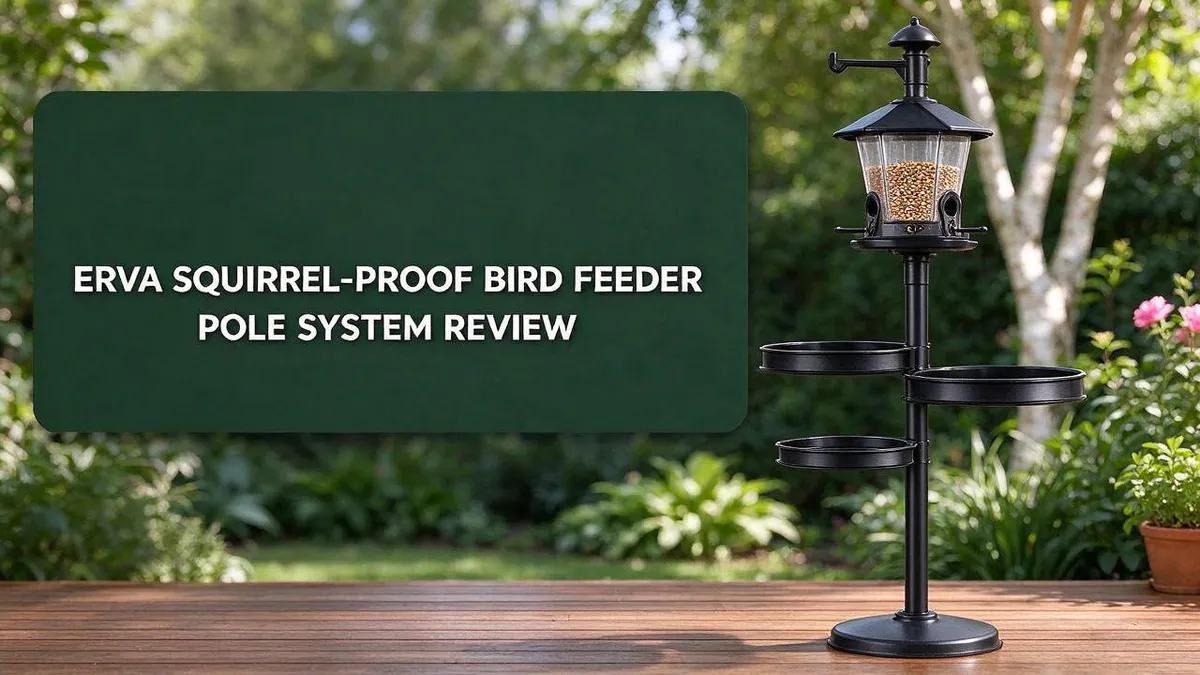
Erva Squirrel-Proof Bird Feeder Pole System Review 2026
Tired of squirrels emptying your bird seed in minutes? You are not alone. Many backyard bird lovers struggle to keep furry guests away from their feeders.
Good news: a pole system can solve that problem. The Erva pole system uses a galvanized baffle that wraps around the pole and measures 17 inches across. Squirrels find it hard to climb past it.
Here is what stands out. The sturdy steel pole comes in three sections, and you can pick a two arm or four arm set. Even better, a squirrel feeder mounts right on the back plate, so the critters stay busy. Keep reading to see if this setup fits your yard.
In a Nutshell
- Two arm and four arm sets let you hang several feeders on one pole. This flexibility helps busy backyards.
- A three section pole feels sturdy in the hand. It uses 16 gauge steel tubing with a one inch diameter, and the maker says the wall is nearly twice the usual thickness.
- Useful extras come in the box. You get a ground twister, adjustable height settings, four shepherd hooks, a mesh tray, and a water bowl, according to one listing.
- A squirrel feeder adds fun. It mounts on the included back plate, so you can fill it with oranges or other fruit to keep squirrels busy and away from your birdseed.
- One review rates it 100 percent recommended. That result comes from a single review, so treat it as a small sample and read more feedback before you decide.
- Placement matters most. Squirrels may still hang from feeder roofs or try to beat weight activated designs, so position the pole with care in an open spot.
Build and Materials

- Squirrel Baffle Included: Comes with a squirrel baffle to help deter squirrels from accessing your bird feeders
- Sturdy Construction: Made of black powder-coated steel for exceptional durability and weather resistance
Last update on 2026-11-24 / Affiliate links / Images from Amazon Product Advertising API Some of the links on this website are affiliate links, which means that at no additional cost to you, I earn a commission if you click through and make a purchase. I only recommend products and services that I believe will add value to my readers. Thank you for your support!
Strong materials matter when squirrels test every part of your setup. The pole uses 1 inch diameter black steel tubing for its main frame. Solid metal gives the pole a steady base, even in windy yards.
The pole has a 16 gauge build, which describes the thickness of its metal. A thicker build helps the pole resist bending when a squirrel pulls or pushes on it.
The maker also claims the tubing wall is nearly twice the usual industry thickness. That claim is hard to test at home, so read owner feedback for real world results.
Galvanized metal protects the squirrel baffle from rain and moisture. Rust can weaken metal over time, so this detail matters for seasons outdoors.
The black finish blends well with most yards and fences. Dark metal can also feel warm in direct sun, so keep that in mind on hot days.
When you handle the pole, pay attention to the joints where sections meet. Smooth fits keep wobble low and help the frame stay upright.
Heavy seed and fruit add weight to each feeder. Consider the pole’s build when you plan how many feeders to hang.
Metal construction suits people who want a long term setup rather than a short trial. Solid materials help the pole last through many seasons.
Listings can differ on small parts, so check each material detail before you buy. Some sellers may list included items differently than others.
Overall, the materials support a sturdy yard setup. Still, check the listing details and read recent owner feedback to confirm the build fits your space.
Squirrel Deterrence Performance
Squirrels are clever climbers, so the baffle does most of the work. The 17 inch galvanized baffle wraps fully around the pole. It creates a barrier that squirrels struggle to pass.
Start by studying the approach path. Squirrels often leap from fences, posts, branches, or nearby sheds. Place the pole so the closest launch point sits at least several feet away.
Good placement gives the baffle room to work. Leave open space around the base so squirrels cannot drop straight onto the feeders. Clear away low limbs that hang over the pole.
The ground twister adds a second obstacle near the base. Squirrels that reach the bottom face another challenge before they touch any seed. This layered setup slows them down.
Watch the behavior during the first week. Note which squirrels try which routes each morning. Patterns show you where gaps remain, so you can adjust the setup quickly.
The squirrel feeder can also redirect attention. Fill it with oranges or other fruit, and squirrels often focus on that treat. Fresh fruit keeps the feeder interesting, so replace it regularly.
Keep the area clean too. Remove fallen leaves, seed hulls, and spilled food from the baffle and ground. Squirrels use these scraps as stepping stones, so a tidy yard works better.
Give the system time. Squirrels test new setups for several days before they accept defeat. Judge results over a few weeks, not a single afternoon. Patience helps you see the true performance.
Your yard layout also matters. Tall trees near the pole give squirrels an easy route. Choose a spot where the nearest branch sits well out of jumping range.
Finally, check the baffle after storms. Strong winds can shift the pole or loosen parts. A quick check keeps the barrier in the right position.
Setup and Placement
Start with a clear spot before you dig. Pick a level patch of lawn that gets plenty of morning sun. Sunlight helps birds feel safe and lets you spot visitors easily.
Next, assemble the pole on the ground first. Lay out all three sections and fit them together. This step lets you check each connection while your hands stay free.
Then consider the distance from your home. Place the feeder at least a few feet from windows. Birds can misjudge glass, and a short distance lowers the risk of strikes.
Think about height too. Set the pole so you can reach the feeders without a ladder. A comfortable height makes refilling quick, especially on cold mornings when you want to finish fast.
Keep the feeder away from tree limbs and fences. Squirrels use nearby branches as launch points. Give the pole a clear gap around it so jumps fall short.
Anchor the base firmly. Push the pole deep into soft ground, or set it in a bucket of concrete. A stable base keeps the feeders steady during windy days.
Think about water access as well. Place the bowl where you can reach it with a hose or watering can. Fresh water draws more songbirds, so a close location makes refills simple.
Ask a friend to help with the lift. Two people can raise the pole upright more safely than one. Keep hands clear of the pinch points as the pole rises.
Check the setup after heavy rain. Soft soil can shift, and a loose pole may tilt. Tighten the base and reset the pole when needed.
Mark the spot before you finish. Stand back and look at the yard from a window. This view shows whether neighbors, paths, or pets interfere with the feeders.
Give yourself a final test. Hang a small amount of seed and watch for a day. If birds avoid the spot, adjust the position and try again.
Top 3 Alternatives
Brome Squirrel Buster Plus

- Our largest-capacity model, the Squirrel Buster Plus squirrel-proof bird feeder is also our most popular.
- Truly Squirrel-Proof: Openings in the shroud align with the feeding ports, providing birds access to the food. When a squirrel climbs onto the feeder, its weight automatically forces the shroud down, closing access to the ports. Squirrels and some large birds are foiled but not harmed in any way.

Last update on 2026-07-01 / Affiliate links / Images from Amazon Product Advertising API Some of the links on this website are affiliate links, which means that at no additional cost to you, I earn a commission if you click through and make a purchase. I only recommend products and services that I believe will add value to my readers. Thank you for your support!
The Brome Squirrel Buster Plus uses a weight-activated design. When a heavy squirrel lands on the cage, the feeding ports close.
Small birds can still slip inside and eat. This feeder helps you save seed for the birds you want to see.
Setup stays simple, so you can get started quickly.
Droll Yankees Yankee Flipper

- Lifetime Warranty*
- Squirrel proof feeder*
Last update on 2026-11-26 / Affiliate links / Images from Amazon Product Advertising API Some of the links on this website are affiliate links, which means that at no additional cost to you, I earn a commission if you click through and make a purchase. I only recommend products and services that I believe will add value to my readers. Thank you for your support!
The Droll Yankees Yankee Flipper takes a playful approach to squirrel control. Its perch tips when a squirrel tries to climb on and feed.
The squirrel loses its grip and drops off the feeder. Many backyard watchers enjoy seeing squirrels get tossed off.
Birds are light enough to keep the perch steady. They can eat without trouble.
Droll Yankees Yankee Dome

- Measures 12" in diameter which covers the feeder and area around it
- Protects all aspects 2-3/4 tubes from inclement weather
Last update on 2026-09-12 / Affiliate links / Images from Amazon Product Advertising API Some of the links on this website are affiliate links, which means that at no additional cost to you, I earn a commission if you click through and make a purchase. I only recommend products and services that I believe will add value to my readers. Thank you for your support!
The Droll Yankees Yankee Dome covers the feeder with a large dome-shaped guard. Squirrels struggle to reach the seed from above or from the sides.
The dome also shields the seed from rain and snow. The seed stays dry and fresh for longer.
Birds can still land on the perch and eat freely. This option suits people who want a simple shield against pests.
Feeder Capacity and Accessories
Think about your flock size before you choose an arm count. The two arm complete set hangs two feeders at once. A four arm set is also listed for busier backyards.
Watch how many birds crowd each feeder at once. Crowding often means you need more space.
Two stations work well for a small group of birds. More arms give you room for different seed types.
The mesh tray adds a flat surface for mixed seed. It also gives ground feeding birds a place to land.
Fill the tray with seed you refill often, like black oil sunflower.
Some listings include a water bowl. Check your listing to confirm this item comes in the box.
Birds need water all year long, even in cold months.
A bowl placed near the seed can attract more visitors.
The kit includes four shepherd hooks. Use them to hang extra feeders or a second water source nearby.
Hooks also help you place feeders at different heights.
The adjustable height feature helps you fit the feeder to your view. Lower feeders suit close viewing.
Higher feeders keep food away from ground animals.
The squirrel feeder mounts on the included back plate. It works well for oranges and other fruit.
Offer it in a separate spot. This keeps fruit away from your seed trays.
Fruit draws squirrels fast, so refill it on a set schedule.
Mix seed types in separate sections of the tray. Sunflower hearts draw cardinals, while millet suits ground feeders.
Add one accessory at a time. This helps you learn what works best in your yard.
Plan your setup around your goals. Choose the arm count, accessories, and height that fit your space. Each small choice helps birds feel welcome.
Cleaning and Long-Term Durability
Regular cleaning keeps birds healthy and keeps your setup working well. Old seed turns damp and moldy fast. Hulls and droppings also build up on the mesh tray. A simple cleaning routine stops these problems early.
Empty each feeder every week or two. Scrub the tray with warm water and mild soap. Rinse it well and let every part dry in open air before you refill it. Wet seed can spread illness among birds, so this step matters most during rainy weather.
Clean the water bowl often too. Standing water grows algae quickly. Dump the old water, scrub the bowl, and refill it with fresh water each day. Use a soft brush so the surface stays smooth.
Long lasting performance starts with the materials. The pole uses 16 gauge, one inch black steel tubing, and the baffle is galvanized for rust protection. Still, the black finish can chip from scraping or hard knocks. Look for small scratches at the start of each season.
Touch up chipped spots with a metal paint made to resist rust. Clean the area first and let it dry fully. This quick fix stops rust from creeping under the coating.
Winter needs its own care plan. Snow and ice can build up on the baffle and arms. Brush them off gently after each storm so the moving parts stay free. Check that the hooks and joints still turn without binding.
Each season, take the pole apart at the joints. Wipe each section, look for bends, and check the threads for wear. Then apply a light coat of lubricant to moving pieces so they slide smoothly for years.
Keep your spare parts organized too. Store small bolts and hardware in a labeled bag. Repairs take minutes instead of hours when everything stays in one place.
A few minutes each month keeps the feeder ready for every visitor.
Pros and Cons
Pros
- The wide galvanized baffle stops squirrels from climbing the pole.
- The steel tubing feels solid and holds its shape.
- The squirrel feeder gives you a fruit option like oranges for squirrels.
- A 4-arm set lets you grow your feeding station later.
- The kit covers both birds and squirrels in one setup.
Cons
- Few reviews exist yet, so long-term data is limited.
- Squirrels may still hang from the feeder roof.
- Determined squirrels can find a way around the setup.
- Placement matters a lot, and a weak spot can cause problems.
Who Should Buy It
Backyard bird lovers with a squirrel problem should look at this kit first. If squirrels empty your feeders every morning, a tall pole with a wide baffle can help you take back your feeding station.
Beginners may also find this system a good fit. Choosing bird gear can feel confusing, and this setup keeps the decisions simple. You can start with one clear plan and add pieces later as your interest grows.
People with a small yard or trees near the feeding spot also fit this group well. Squirrels often leap from nearby branches, so an open pole area gives you more control. You can place the pole where you see birds most often and where the squirrels have the hardest time reaching it.
Still, this system may not suit everyone. Shoppers who need years of proof from many owners may want to wait. The product has not built a long track record yet, so careful buyers may prefer a model with more history.
Some people also want a different style of defense. If you want a weight activated design, you may prefer another model. Brome is one option to compare, since it uses a different method to block squirrels from the seed.
Think about your goals before you buy. Ask yourself how much squirrel pressure you face each day. If the problem is constant, you may need extra steps. If squirrels visit only now and then, this setup may handle the job with less effort.
Overall, this kit suits people who enjoy feeding birds and want a simple way to start. It also works well for anyone who dislikes losing seed to squirrels. Plan the placement, watch how the squirrels respond, and adjust as needed. With the right spot, you can enjoy a calmer feeding station and more time watching your visitors.
Final Verdict
Our final verdict leans positive. The Erva system handles squirrels better than many basic poles. Still, no product stops every animal.
The main alternative is Brome. It uses weight activation. A squirrel that lands on the perch causes the feeding area to shut. Erva takes a different route by relying on a physical barrier.
That difference matters for your choice. Weight systems suit people who want a fully closed feeder. Barrier systems suit people who prefer simple parts with no moving pieces.
Keep the review results in perspective, too. One listed review shows full recommendation. That is a small sample, so treat it as a hint, not proof.
Your next step is simple. Set the pole in an open spot first. Watch squirrel behavior for one week. Then move the feeder if squirrels still reach it.
A quick checklist helps. Confirm the pole stands straight. Check that the baffle sits level. Make sure each feeder hangs freely and stays clear of the ground.
Watch how birds respond, too. Quiet visits from finches and chickadees show the setup works. Regular squirrel visits mean you should adjust the spot. Clear signs matter more than guesses.
Many owners also keep a simple log. Note the weather, seed level, and visitor types each week. Patterns appear fast, and they guide your next move. Good notes make future buying choices easier, too.
This kit cuts squirrel problems a lot. It rarely ends them for good.
Bottom line: if you want a pole that targets squirrels directly, this kit deserves a close look. If you prefer a feeder that seals itself, compare Brome side by side before you decide.
Frequently Asked Questions
Is the pole easy to put together?
The pole has three sections, so setup takes a little time. Fit each section firmly and check that the joints line up before you add any feeders. A second person makes the job faster and easier.
Can I use this on a deck or patio?
The included ground twister works best in lawns and soft soil. Hard surfaces may need a different base or mounting plan. Test the stability first by gently pushing the pole before you fill the feeders with seed.
What does the mesh tray do?
The mesh tray gives birds an extra place to feed. It also helps catch loose seed, so less food ends up scattered on the ground. Birds that prefer to feed low will often use it first.
Does every kit include a water bowl?
Not always. One listing mentions a water bowl, but other sellers may not. Check the package contents so you know what you get. A shallow bowl gives birds a clean place to drink, especially during dry weather.
Can I change the feeder height later?
Yes, the height adjusts as your needs change. You can lower the feeders for ground feeding birds or raise them when the pole sits in a busy spot. Make small changes and watch how the birds respond before you move the setup again.

Hello, I’m Amelia White, the founder of birdsfanatic.com. As a lifelong bird enthusiast and spiritual seeker, I’ve always been fascinated by the mystical connections between birds and the human experience. On this site, I share my knowledge and insights into the symbolic meanings and spiritual significance of various bird species, exploring their roles in mythology, folklore, and cultural traditions. Join me on this journey into the world of birds, where we’ll discover the hidden wisdom and guidance that these magnificent creatures have to offer.