Heritage Farms Absolute II Squirrel-Proof Feeder Review 2026
Tired of squirrels emptying your bird feeder before the finches arrive? You are not alone. Many backyard bird lovers lose more seed to furry raiders than they ever wanted to share.
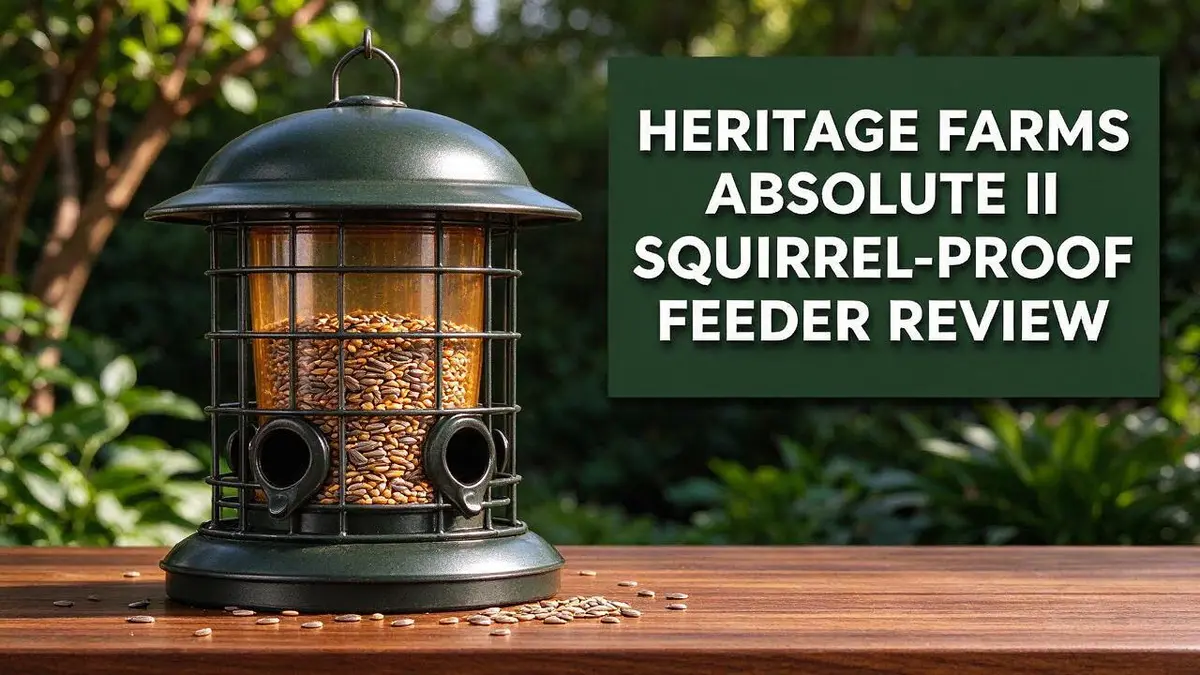
The Heritage Farms Absolute II is a squirrel proof bird feeder that aims to change that. Its gravity activated ports close when a squirrel lands on the perch. The perch also counterbalances, so you can set it for light, medium, or heavy birds.
The all metal, powder coated steel body feels sturdy. A locking top keeps seed secure, and pole mount hardware comes in the box. Still, no feeder works the same everywhere. Placement and the individual squirrel make a big difference.
In a Nutshell
- Perch adjusts for bird size. The counterbalanced perch has three positions. You can set it for light, medium, or heavy birds.
- Holds about 12 pounds of seed. The listing gives a 12 lb mixed seed capacity. That means fewer refills for a busy yard.
- Locking top controls access. The lid locks in place. You decide when birds and other visitors can reach the seed.
- Pole mount comes ready. Pole mounting hardware and a hanger ship with the feeder. You can set it up without buying extra parts.
- No seed saver baffle. The feeder skips a baffle that catches spilled seed. Expect some seed to fall below, so plan for a tray or cleanup.
- Cardinals may stay away. One 2011 user review said cardinals never ate at this feeder. Your local birds may behave differently, so watch what visits your yard.
- Placement makes the biggest difference. Squirrel resistance depends on where you hang the feeder and how determined the squirrel is. Choose a spot away from jumping routes like trees and fences.
Build and Materials

- AbsoluteII Squirrel-Proof, has feeding ports on bo
- Steel construction,polycarbonate windows above fee
Last update on 2026-08-16 / Affiliate links / Images from Amazon Product Advertising API Some of the links on this website are affiliate links, which means that at no additional cost to you, I earn a commission if you click through and make a purchase. I only recommend products and services that I believe will add value to my readers. Thank you for your support!
A feeder’s build decides how long it stays in your yard. The Heritage Farms Absolute II uses a metal body that many owners expect to last. Metal also resists chewing better than thin plastic.
The finish needs a closer look too. Research notes that paint faded in one 2011 user review. Faded paint may bother anyone who wants a neat look.
Sun exposure can also affect the finish. Bright sun may fade colors faster than shade does. Hanging the feeder in partial shade may help.
Weight is another point to consider. Metal feels heavier than plastic in your hands. A heavier feeder may stay steady on a pole during windy days.
Cleaning matters for any feeder. Open the feeder often and check for damp seed. Wet seed can grow mold and make birds sick.
Seed choice matters too. Mixes can clump in damp weather. Store seed in a sealed bin to keep it dry.
Weather affects every outdoor feeder over time. Rinse it and let it dry before refilling. Rough weather tests every outdoor product. Winter snow, rain, and heat all take a toll.
Start with a clean feeder each season. Scrub the parts with warm soapy water. Dry everything before you refill it.
Check the hardware often too. Any bolts or clips can loosen over time. Tighten them when you clean the feeder.
Small paint repairs can help. Use an outdoor metal paint on any bare spots. Let the paint dry fully before refilling.
Think about who cleans the feeder. Some parts need more care than others. Make a simple routine that fits your schedule.
A weekly check keeps problems small. Look for rust spots, loose parts, and damp seed. Catching issues early saves time later.
Choose a spot with easy access for checks. Simple care keeps the feeder working well. A strong build gives you more time between replacements.
Overall, the materials suit everyday backyard use. Regular care helps any metal feeder last for years. Your yard conditions will shape how well it holds up.
Squirrel-Resistant Port Mechanism
Think of the port as a simple balance. Seed sits behind openings that stay shut until enough weight lands on the perch. This is the core idea behind the squirrel resistant port mechanism.
The ports respond to weight, not to size. A small bird lands on the perch and leaves the ports open. A heavier squirrel shifts the balance and closes them.
Perch position changes how the feeder feels. The counterbalanced perch offers three settings for light, medium, or heavy birds. Choosing the right setting helps the ports work as intended for your local birds.
Test the balance before you fill it. Empty the feeder and set a light object on the perch. Watch whether the ports stay open. Then add a heavier weight to see if they close.
Keep the first fill moderate. A full load adds weight, so the balance may shift. Fill the feeder halfway and add more once you see how the ports behave.
Watch for sticky or slow movement. Dirt, seed dust, and rain can slow the ports. Gently wipe the moving parts and check that each port moves freely.
Expect squirrels to test the ports. Clever squirrels may push, pull, and climb around the feeder. Each attempt gives you a clear sign of how well the mechanism works.
Notice how squirrels react over time. Some squirrels give up after a few tries. Others keep returning every day. Your notes help you decide if this mechanism fits your yard.
Compare the port to other designs. Many basic feeders have open ports that never close. This feeder adds ports that react to weight. That feature sets it apart in the yard.
Check the moving parts during routine care. Look at the ports and perch at least once a week. Small issues are easier to fix when you catch them early.
Stay realistic about results. No feeder stops every squirrel every time. A well set up mechanism gives you a strong advantage, but some patience still helps.
Adjustable Perch and Bird Access
Think about who visits your yard first. Small songbirds like chickadees, titmice, and finches weigh very little. They usually need the lightest perch setting to reach the seed with ease.
Heavier visitors need a different setting. Blue jays and grackles have more body weight, so the medium or heavy setting often suits them better.
Watch the feeder for a few days before you decide. If small birds seem to struggle, try the lightest setting and see if visits improve.
Room to land matters too. Many birds like to pause, look around, and balance before they eat. A perch with space around it gives them that moment.
Nearby cover helps birds feel safe. Place the feeder where they can approach from open branches or shrubs. A clear flight path builds trust over time.
Keep a simple visitor log. Write down the date, the perch setting, and the birds you see. Patterns appear quickly, and the log helps you adjust with confidence.
Seed choice shapes who arrives. Black oil sunflower seed draws a wide range of birds, so the perch sees steady use from many visitors.
Make changes slowly. Adjust one setting at a time, then wait several days. Quick changes make it hard to know what worked.
Patience pays off in this process. Give each setting at least two weeks before you judge it.
Mixed flocks may show up together. The adjustable perch lets you suit the most common visitor while still welcoming others.
Note which birds skip the feeder entirely. That pattern may point to a perch that feels tricky for them, not a lack of interest.
Seasons bring new visitors too. Winter often brings more small birds to the yard, while spring and summer bring a wider mix. Check your setting each season.
The right setting helps your favorite birds feel welcome. Take time to watch, adjust, and enjoy the show.
Top 3 Alternatives
Here are three strong alternatives if the Heritage Farms Absolute II does not fit your yard. Each one helps keep squirrels away while birds keep feeding.
Brome Squirrel Buster Plus

- Our largest-capacity model, the Squirrel Buster Plus squirrel-proof bird feeder is also our most popular.
- Truly Squirrel-Proof: Openings in the shroud align with the feeding ports, providing birds access to the food. When a squirrel climbs onto the feeder, its weight automatically forces the shroud down, closing access to the ports. Squirrels and some large birds are foiled but not harmed in any way.

Last update on 2026-07-01 / Affiliate links / Images from Amazon Product Advertising API Some of the links on this website are affiliate links, which means that at no additional cost to you, I earn a commission if you click through and make a purchase. I only recommend products and services that I believe will add value to my readers. Thank you for your support!
This feeder uses a weight-activated design. When a squirrel lands on the perch, the ports close shut. Birds are much lighter, so they can still reach the seed. The adjustable perch lets you match the feeder to the birds in your yard. It suits people who want a dependable option that handles determined squirrels.
Droll Yankees Yankee Flipper

- WEIGHT-ACTIVATED SQUIRREL PROOF PROTECTION: This squirrel proof bird feeder features a weight-sensitive spinning perch that gently removes squirrels when they attempt to access seed, allowing the birds to feed undisturbed
- AMPLE BIRD SEED CAPACITY: This large feeder holds 5lbs of bird seed in a durable polycarbonate tube, which reduces the frequency that refills are needed and provides easy monitoring of seed levels
Last update on 2026-07-09 / Affiliate links / Images from Amazon Product Advertising API Some of the links on this website are affiliate links, which means that at no additional cost to you, I earn a commission if you click through and make a purchase. I only recommend products and services that I believe will add value to my readers. Thank you for your support!
This feeder takes a different approach. The perch tips when a heavy squirrel climbs on it, so the squirrel tumbles off. Birds keep feeding while squirrels get tossed to the ground. Many people enjoy watching the show. The feeder also works with many types of seed, so you have flexible choices.
Brome Squirrel Buster Standard

- Durable, squirrel proof bird feeder
- Reservoir holds 0.75 quarts of seed
Last update on 2026-06-10 / Affiliate links / Images from Amazon Product Advertising API Some of the links on this website are affiliate links, which means that at no additional cost to you, I earn a commission if you click through and make a purchase. I only recommend products and services that I believe will add value to my readers. Thank you for your support!
This version offers the same core idea in a simpler package. It also uses a weight-activated mechanism to block squirrels. It is a great pick for anyone who wants basic squirrel protection. It is also easy to fill and clean, which saves time each week.
Pick the feeder that fits your yard and your bird-watching goals. Each option gives you a fresh way to enjoy birds without the squirrel mess.
Installation and Mounting
Setting up your Heritage Farms Absolute II takes less time than you might expect. The box includes pole mount hardware and a hanger, so you can pick the method that fits your yard. Good planning makes the job simple and quick.
Gather a few tools before you begin. A wrench, a level, and a screwdriver cover most steps. Keep them near the work area so you do not waste time searching.
Keep the instructions nearby and read each step once. This helps you spot missing parts before you start.
Pick your mounting style first. A pole works well in open areas. A hanger suits a sturdy branch or bracket. Decide before you drill or tighten anything.
If you use the hanger, choose a branch that can hold steady weight. Check it for cracks or rot first. A weak limb may bend or snap in windy weather.
Place the pole away from fences, shrubs, and tree limbs. Squirrels use these as launch points, so extra distance matters.
Set the pole in firm ground. A loose base can wobble in strong wind. Push the pole deep and check that it stands straight.
Attach the pole mount hardware in order. Tighten each bolt by hand first, then use a tool to snug it up. Overtightening can strip threads or warp the metal.
Hang the feeder at a comfortable height. Stand near the feeder and see if you can reach the top easily. You should be able to fill it without a ladder.
Check that the feeder sits level. Step back and look at it from the side. A tilted feeder can spill seed out of the openings.
Test the fit before the first fill. Grip the pole and shake it gently. If it sways a lot, tighten the base again and recheck.
A solid setup gives you a strong start. Your yard will feel more lively with a feeder that stays put. Enjoy the process and the view.
Pros and Cons
Pros
- The solid metal body holds up well outdoors.
- The locking top keeps seed secure.
- Pole mount hardware comes in the box.
- You can also use the hanger for a second mounting choice.
- The listed capacity of about 12 pounds means fewer refills.
Cons
- The paint may fade over time, based on one older review.
- Some cardinals may skip it, according to one user.
- There is no seed saver baffle, so spilled seed lands on the ground.
- Squirrel results vary with your yard layout and placement.
Who Should Buy It
This feeder fits people who fight squirrels every day. If squirrels empty your feeders before breakfast, this model deserves a close look. It suits yards where birdseed disappears too fast.
It also works well for backyard watchers who want a simple routine. You fill it, hang it, and let the ports do their job. Many people enjoy that easy rhythm.
Small yards can still benefit from it. A single feeder takes little room, so it fits a compact patio or a corner garden. You can move it to a new spot if birds stop coming.
People who want a tidy feeder should look elsewhere. Spilled seed falls onto the ground because there is no waste catcher. Anyone who dislikes cleaning up debris may prefer a different style.
Shoppers who compare models often look at the Brome Squirrel Buster Plus or the Perky Pet 339 Squirrel Be Gone II. Each option offers its own approach to squirrel control. Reading both lists can help you decide.
Choose this feeder if your main goal is simple squirrel defense. It rewards owners who accept a little trial and error. Your yard will show you whether it fits your life.
Households with children may enjoy watching the action up close. A feeder near a window gives kids a front row seat for bird visits. Learning which birds come to the yard can become a fun family habit.
Retirees and people who work from home often have the time to monitor it. Watching visitors through a window becomes a daily pleasure. Those who spend most of the day at home will notice changes quickly.
Bird lovers who want many species may need more than one feeder. This model holds a fair amount of seed, but a single feeder rarely attracts every type of bird. Adding a second station can widen your guest list.
In short, this feeder suits people with a clear goal. It fits gardeners tired of squirrels, careful planners, and families who love close bird watching. Take a moment to match your needs before you buy.
Final Verdict
Our final verdict leans positive for shoppers who want a feeder built to beat squirrels. The Heritage Farms Absolute II earns a spot on the shortlist for people who want simple squirrel defense.
The biggest draw is the gravity activated ports. When a squirrel climbs on, its weight closes the openings. Small birds still reach the seed without trouble.
The adjustable perch adds another useful layer. You can set it to one of three positions for light, medium, or heavy birds. That flexibility helps a mixed flock feel welcome.
Still, no feeder works perfectly in every yard. Your results depend on where you hang it and how clever your local squirrels are. Some squirrels learn fast, so expect a little adjusting.
Think about your bird visitors before you buy. If finches and chickadees fill your yard, the light setting often suits them. If larger birds dominate, the heavy setting may serve you better. Watch the visitors for a week before you adjust it.
Competing models offer different strengths. The Woodlink Absolute II, Brome Squirrel Buster Plus, and Perky Pet 339 all target the same buyers. Compare their features side by side before you decide.
A generic Squirrel Buster style feeder may also appeal to shoppers who want a basic design. Look for the ports, the perch, and the mounting options. Those details matter more than brand names.
Our verdict is clear. This feeder works best as a practical tool, not a fancy showpiece. Plan your placement, track which birds visit, and adjust the perch as needed.
Overall, the feeder offers smart features with a few clear compromises. Weigh those compromises against your daily goals before you commit. A clear plan makes the choice easier.
Final takeaway: test it in your yard for a few weeks. Track how often squirrels visit and how birds respond. Your own observations will show whether this feeder fits your backyard. Patience pays off here.
Frequently Asked Questions
Which perch setting should I use?
Start with the medium setting for most backyard birds. Choose the light setting for small songbirds and the heavy setting for larger visitors.
Watch the feeder for a full day. Note which birds can reach the seed comfortably, then adjust if needed.
What kind of seed works best?
Fill the feeder with a mixed seed. The listing matches this seed type, so it suits the design.
Choose fresh seed and avoid damp or stale mixes. Dry seed stays easier to manage inside the feeder.
How can I tell if the ports are working?
Check the feeder after a few days of use. If squirrels still reach the seed, look at the spot around the feeder.
Move the feeder away from jump spots like branches, fences, and roof edges. This small change can make a big difference.
How often should I clean the feeder?
Empty old seed before it spoils, especially after rain. Wipe the perch and ports with a dry cloth.
Check that the ports move freely before you refill. This quick habit keeps the feeder working as intended.

Hello, I’m Amelia White, the founder of birdsfanatic.com. As a lifelong bird enthusiast and spiritual seeker, I’ve always been fascinated by the mystical connections between birds and the human experience. On this site, I share my knowledge and insights into the symbolic meanings and spiritual significance of various bird species, exploring their roles in mythology, folklore, and cultural traditions. Join me on this journey into the world of birds, where we’ll discover the hidden wisdom and guidance that these magnificent creatures have to offer.