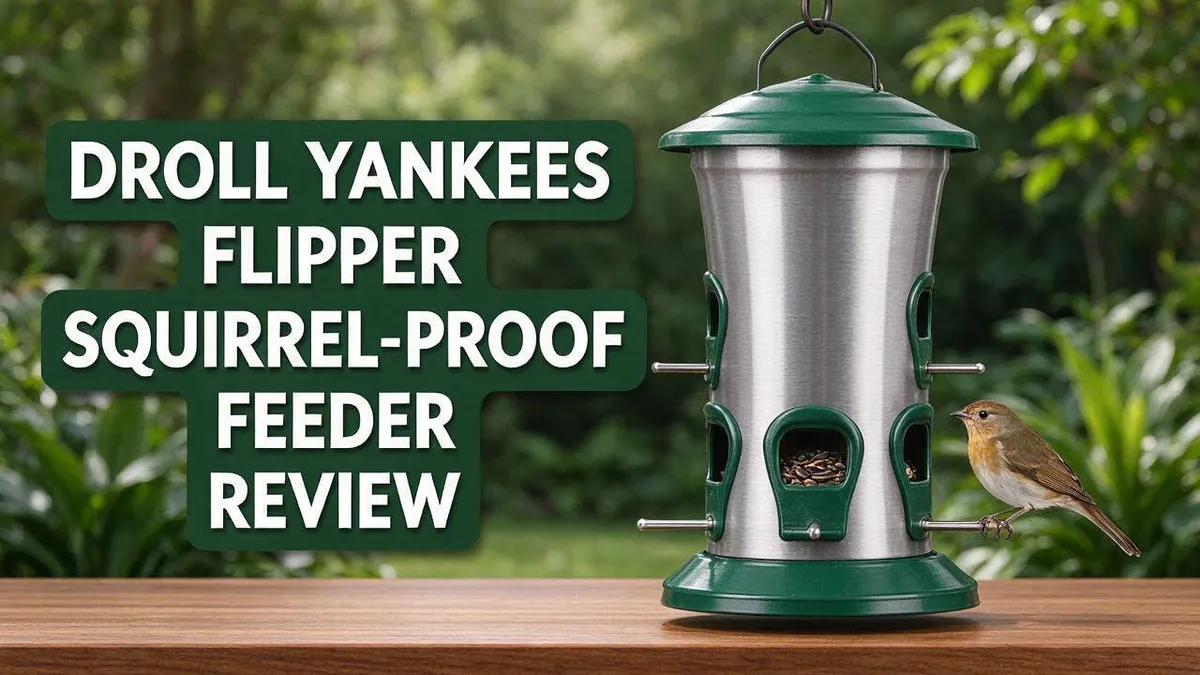
Droll Yankees Flipper Squirrel-Proof Feeder Review 2026
Tired of squirrels stealing your birdseed? You are not alone. Many backyard bird lovers struggle with greedy visitors every single day.
The Droll Yankees Flipper is a squirrel proof bird feeder that aims to solve this problem. It keeps squirrels in check while birds keep feeding.
Here is how it works. A squirrel’s weight activates the motor on the rotating perch. The spinning action then tosses the squirrel right off.
Shoppers often praise its squirrel deterrence. The feeder holds about 5 lb of seed, so you refill it less often. Its metal base and UV stabilized seed tube add durability, too.
In this review, you will learn what works well. You will also see where it falls short, so you can decide if it fits your yard.
In a Nutshell
-
Large seed supply: This feeder holds about 5 pounds of seed. You fill it less often, so your birds stay fed longer.
-
Hard for squirrels to climb: Its wide and long body gives squirrels very little to grip. Many backyard fans find this design a real help.
-
Spinning perch action: A squirrel’s weight starts the motor, and the spin sends it away. Your birds can still land and eat in peace.
-
Sturdy build: A metal base and a seed tube that resists sun damage help the feeder last outdoors. It holds up through rain, snow, and hot summer days.
-
Less ideal for small birds: The perch can feel too large for tiny songbirds. Check which birds visit your yard before you choose this model.
-
Hanging design: The feeder hangs from a branch or hook, so it fits many outdoor spaces. Keep it away from fences and nearby trees where squirrels can jump onto it.
How the Weight-Activated Squirrel Deterrent Works

- WEIGHT-ACTIVATED SQUIRREL PROOF PROTECTION: This squirrel proof bird feeder features a weight-sensitive spinning perch that gently removes squirrels when they attempt to access seed, allowing the birds to feed undisturbed
- AMPLE BIRD SEED CAPACITY: This large feeder holds 5lbs of bird seed in a durable polycarbonate tube, which reduces the frequency that refills are needed and provides easy monitoring of seed levels

Last update on 2026-07-09 / Affiliate links / Images from Amazon Product Advertising API Some of the links on this website are affiliate links, which means that at no additional cost to you, I earn a commission if you click through and make a purchase. I only recommend products and services that I believe will add value to my readers. Thank you for your support!
Squirrels are clever and patient. This feeder relies on weight, not on movement or noise.
Only heavy visitors trigger the spin. Small birds land on the perch and eat without setting off the motor. That means your finches and chickadees enjoy calm meals.
Think of it like a scale that reacts to a heavy load. When a squirrel grips the perch, the added weight pushes the system into motion.
The timing matters. Squirrels often leap from nearby branches with lots of force. The spin starts fast, so the animal loses its grip and drops away.
Placement helps the system work well. Hang the feeder on a pole or line away from trees and fences. Squirrels then have fewer easy launch points.
Battery power keeps things running. The feeder is rechargeable, so you can keep the motor ready without constant battery swaps. Check the charge now and then, especially during cold months.
Refill the tube before it runs empty. A steady supply keeps birds returning and gives squirrels less reason to test the feeder.
Watch the first few days. Many owners notice squirrels giving up after a few failed attempts. Keep watch to see how your yard responds.
Patience matters during setup. Some squirrels test a feeder many times before they quit. Persistent visitors may need a few days to learn the lesson.
Bird watchers often enjoy the calm view. Cardinals, sparrows, and other feathered guests can dine in peace. The feeder becomes a small show for the whole family.
Keep the area clean too. Spilled seed on the ground can attract squirrels and other pests. A quick sweep each week keeps the yard tidy.
In short, the weight trigger does the heavy lifting. It separates squirrels from birds and keeps your seed for feathered friends.
Build Quality and Materials
Build quality matters a lot for a feeder that hangs outside all year. The Droll Yankees Flipper uses materials that shape how it handles rain, wind, and daily squirrel visits.
The metal base gives the feeder a solid foundation. It keeps the unit steady when a heavy animal lands on it. Metal also holds its shape better than thin plastic over time.
The seed tube takes the most daily wear. It stays in constant contact with seed, moisture, and feeding birds. Inspect it each season for cracks or loose parts.
The green finish helps the feeder blend into leafy surroundings. This can make it less noticeable to passing animals. It also suits most backyards without drawing attention.
Cleaning keeps the materials in good shape. Wipe the tube and base with mild soapy water every few weeks. Dry every part fully before you add fresh seed.
The hanging hook and moving parts face the most stress. Strong winds and busy squirrels can loosen connections. Check these points after storms and tighten them when needed. Gentle handling during setup also prevents damage.
Simple parts also make repairs easier. You can often replace one piece without swapping out the whole unit. This keeps waste low and extends the feeder’s useful life.
Good build quality usually means fewer replacements. Watch for rust on the metal and fading on the plastic. Catching small problems early keeps the feeder working for many seasons.
Overall, the materials suit outdoor use well. Regular care helps the feeder last longer. Bird lovers who want a durable setup will likely appreciate this design.
Seed Capacity and Refilling
Seed capacity affects your daily routine more than you might think. A full load lasts longer when only a few birds visit. Busy yards go through seed much faster.
Start by watching your flock for a week. Note how quickly the level drops. This simple habit helps you plan refills without guessing.
Weather also changes how much seed gets eaten. Cold snaps often bring more hungry birds to the yard. Plan extra checks during those days.
Refilling works best in the morning. Birds feed most at dawn, so a full tube early keeps them happy. Fill it again before dusk if the level looks low.
Keep the seed dry at all times. Damp seed clumps and can spoil quickly. Store bags in a sealed bin away from rain and rodents.
Pour seed slowly into the tube. This prevents spills on the ground. Spilled seed can attract ground feeders and pests.
Check the perch and ports after each refill. Remove any old husks that block the openings. Clear paths let seed flow freely.
Hanging the feeder at a comfortable height makes refilling easier. You can reach the lid without a ladder. A stable step stool works too for taller hooks.
Use a simple log with dates. Write down each refill and the approximate seed type. Over time, you will know your yard’s pattern.
Seed level tells a useful story. An empty tube often means birds are finding food nearby or the feeder needs attention. Keep a close eye on it.
Friendly birds return when feeding stays steady. Skipping refills for days can drive visitors away. Consistent care keeps your garden lively all season.
Small changes make a big difference. A few minutes each week keeps things running smoothly.
Top 3 Alternatives
Brome Squirrel Buster Plus

- Our largest-capacity model, the Squirrel Buster Plus squirrel-proof bird feeder is also our most popular.
- Truly Squirrel-Proof: Openings in the shroud align with the feeding ports, providing birds access to the food. When a squirrel climbs onto the feeder, its weight automatically forces the shroud down, closing access to the ports. Squirrels and some large birds are foiled but not harmed in any way.
Last update on 2026-07-01 / Affiliate links / Images from Amazon Product Advertising API Some of the links on this website are affiliate links, which means that at no additional cost to you, I earn a commission if you click through and make a purchase. I only recommend products and services that I believe will add value to my readers. Thank you for your support!
The Brome Squirrel Buster Plus is a strong pick for backyard birders. Its perches close when a heavy squirrel lands on them, so the seed stays safe. Small birds still feed freely because they are too light to trigger the cover.
Setup is simple, and the seed capacity suits busy feeding days. It works well for families of songbirds that visit often.
Perky-Pet Squirrel-Be-Gone

- HANGING BIRD FEEDER: This bird feeder is great for your yard
- SQUIRREL PROOF BIRD FEEDERS FOR OUTDOORS - When a squirrel's weight is detected on the perch or metal frame, the feeding ports close
Last update on 2026-08-26 / Affiliate links / Images from Amazon Product Advertising API Some of the links on this website are affiliate links, which means that at no additional cost to you, I earn a commission if you click through and make a purchase. I only recommend products and services that I believe will add value to my readers. Thank you for your support!
This feeder takes a different approach. A sturdy metal cage surrounds the seed, which keeps squirrels out while smaller birds slip through the openings. Many people like that it blocks larger pests without hiding the birds from view.
The clear design makes it easy to check seed levels. Cleaning is quick, too.
Brome Squirrel Buster Standard

- Durable, squirrel proof bird feeder
- Reservoir holds 0.75 quarts of seed
Last update on 2026-06-10 / Affiliate links / Images from Amazon Product Advertising API Some of the links on this website are affiliate links, which means that at no additional cost to you, I earn a commission if you click through and make a purchase. I only recommend products and services that I believe will add value to my readers. Thank you for your support!
The standard model shares the same squirrel-blocking idea in a smaller size. It fits well on a patio, a deck, or a small yard. If you want protection without a large footprint, this option makes sense.
It is easy to hang and easy to fill. You can enjoy watching birds with less worry about squirrels raiding the feeder.
Perch Design and Suitability for Different Birds
The perch on this feeder sits wide and long. Larger birds often land with ease. Think of blue jays and cardinals, which grip the edge and settle in without fuss.
Smaller birds may have a different experience. Chickadees, finches, and nuthatches have light bodies and tiny feet. A wide perch can feel like a stretch for them. Research notes that the perch size is not ideal for these little visitors.
Still, many small birds adapt. They often grab the edge of the seed ports or hover for a moment before feeding. Watching these habits shows how comfortable each species feels.
Mixed flocks raise a useful question. Do you want only larger birds, or a wider range of visitors? If you want finches, add a second feeder with a narrower perch nearby. That way, every guest has a comfortable landing spot.
Perch height and nearby cover matter too. Hang the feeder near a shrub or tree branch. Small birds feel safer near cover, so they return more often. Larger birds also relax when shelter sits close by.
Try a simple test over two weeks. Count which species visit each day. Note how long each bird stays on the perch. You will learn which visitors feel at home and which ones need a different setup.
Keep expectations realistic. No feeder suits every bird perfectly. The goal is a balance that fits your local birds and your garden space. Adjust gradually, and watch how your visitors respond.
Installation and Placement
Choosing the right spot matters just as much as the feeder itself. A smart location helps birds feel safe and keeps squirrels guessing.
Look for an open area with a clear flight path. Birds like to dart in and out fast, so they need room to land and leave. Keep the feeder away from dense shrubs where cats could hide.
Think carefully about nearby trees and fences too. Squirrels often jump from branches or fence tops onto feeders. Place the feeder several feet away from any launch point they could use.
Sunlight plays a role too. Morning sun helps dry any damp seed, while afternoon shade keeps the tube cooler on hot days.
Wind can also shake a hanging feeder. Pick a sheltered spot near a wall or sturdy porch. A steady feeder feels more inviting to nervous birds.
Mounting hardware deserves a close look. Make sure the hook or pole can hold the full weight of seed and several birds at once. Confirm that the mount stays firm and does not wobble.
Give the feeder room to move too. The spinning action works best when nothing blocks it. Keep branches, railings, and walls clear of the feeder body.
Many owners report good squirrel results with this model. A well chosen spot gives the feeder its best chance to work.
Test the spot before you commit. Stand where you would watch from and look at the feeder. Notice whether squirrels could reach it easily from nearby.
Finally, keep this feeder apart from other feeders when possible. Spreading feeders out reduces crowding and makes it harder for squirrels to hop between them.
Cleaning and Long-Term Maintenance
Cleaning keeps birds healthy and keeps your feeder looking fresh. Plan a deep clean every two to four weeks. Warm or wet months need shorter gaps.
Start by emptying every bit of seed. Then take the feeder apart as far as the design allows. Wash each piece with warm water and a little mild dish soap.
Skip harsh chemicals. Bleach and strong cleaners can leave fumes or residue that harm birds. For stubborn grime, soak the parts in one part vinegar to nine parts water.
Use a small bottle brush for the seed tube. It reaches the corners where mold hides. Scrub gently so you do not scratch the surface.
Rinse every part well. Leftover soap can upset birds. Let everything air dry in the sun before you add new seed.
Wear gloves during cleaning. Droppings can carry bacteria. Wash your hands well afterward.
Watch for warning signs between cleanings. Musty smells, pink or black spots, and clumped seed all mean it is time to clean sooner. Throw away any moldy seed right away.
Look closely at the metal base and hanging hardware while you work. Check for rust spots or loose screws. Tighten anything that wiggles.
Rake up fallen shells below the feeder each week. Spilled seed can attract rats and other pests. A tidy patch of ground keeps the whole yard cleaner.
Mark a yearly deep check each spring. Replace any part that shows cracks or heavy wear. Your birds will thank you for the extra care.
Pros and Cons
Pros
– The green finish blends into leafy trees and stays low key.
– The metal base gives the feeder a sturdy build.
– The UV stabilized seed tube resists sun damage over time.
– The hanging design keeps seed off the ground.
– The spinning action tosses squirrels off when their weight activates it.
Cons
– The motor must be recharged to keep the spinning action working.
– Some details come from an older 2009 review.
– The research does not name rival models for a side by side check.
Who Should Buy It
This feeder suits busy homeowners who are tired of losing seed to squirrels. It fits people who want a simple, hands off answer to a pest that raids feeders every day.
Bird lovers who mostly attract larger visitors may appreciate this model. A stable setup can make feeding time calmer for both birds and owners.
Gardeners and nature fans with some patience also make good fits. They enjoy watching wildlife up close and do not mind a little trial and error.
Shoppers who focus on tiny songbirds should think twice. The perch may feel awkward for small visitors.
Finches and chickadees might take longer to settle in. Those readers may prefer a different model built for small birds.
Families with children can also enjoy this feeder. Kids often find the squirrel tossing action funny to watch, which turns a backyard chore into a fun show.
Apartment dwellers with tiny balconies may hesitate. This hanging design needs open space and a secure spot, so it suits those with a yard or patio.
Busy commuters may also appreciate the low effort routine. Once the feeder hangs in place, it asks for little daily attention beyond refilling seed and checking that it still spins freely. Simple routines fit well into a packed schedule.
Retirees who enjoy morning coffee by the window can also benefit. Watching birds land and squirrels get bounced off can be a relaxing hobby. It gives them a fun daily routine.
In short, this feeder fits yard owners who want squirrel control first. Shoppers who want variety or tiny songbird comfort should compare other choices before they buy. Clear goals make the choice easier.
Final Verdict
Our final verdict is clear. The Droll Yankees Flipper does its main job well. It keeps squirrels away from your seed, and that is the feature most yard owners want.
Customer feedback leans positive. Many people report fewer squirrel visits after setup. Real world praise like that carries weight.
Still, this feeder is not perfect for every yard. The perch can feel too large for smaller birds. So your mix of backyard visitors should guide your choice.
The five pound seed capacity also helps. You refill less often, which saves time on busy weeks. Fewer trips to the feeder means more time to enjoy the view.
Think about your goals first. If you want fewer squirrels and enjoy watching bigger birds, this model earns a spot on your list. If you dream of a busy flock of tiny songbirds, you may need a different plan.
Here is a simple way to decide. Count the birds you see most often. Then watch how squirrels respond during the first few weeks. Those observations tell you more than any spec sheet can. Keep a short notebook so you can spot patterns quickly.
Expect a short learning period. Your birds may need time to find the feeder. Patience pays off, so give the setup a fair trial before you judge it.
Bottom line: the Flipper works best as a squirrel stopper first and a bird feeder second. It delivers on that promise for many homes. With the right expectations, you will likely feel happy with your choice.
Frequently Asked Questions
Will squirrels learn to beat the spinning perch?
Some clever squirrels may test it again and again. Each attempt still activates the motor, so the perch keeps spinning and tossing them off.
Can squirrels climb up to the feeder?
Not easily. The wide and long body makes climbing tough for squirrels. They find little to grip, so most give up.
What happens if a squirrel jumps onto the feeder from a branch?
The weight still triggers the motor. The perch starts turning quickly, so the squirrel usually lands on the ground instead of eating.
Why choose this feeder over a basic one?
A basic feeder often loses seed to pests. This model puts squirrel control first, so more seed reaches the birds you want to see.

Hello, I’m Amelia White, the founder of birdsfanatic.com. As a lifelong bird enthusiast and spiritual seeker, I’ve always been fascinated by the mystical connections between birds and the human experience. On this site, I share my knowledge and insights into the symbolic meanings and spiritual significance of various bird species, exploring their roles in mythology, folklore, and cultural traditions. Join me on this journey into the world of birds, where we’ll discover the hidden wisdom and guidance that these magnificent creatures have to offer.