
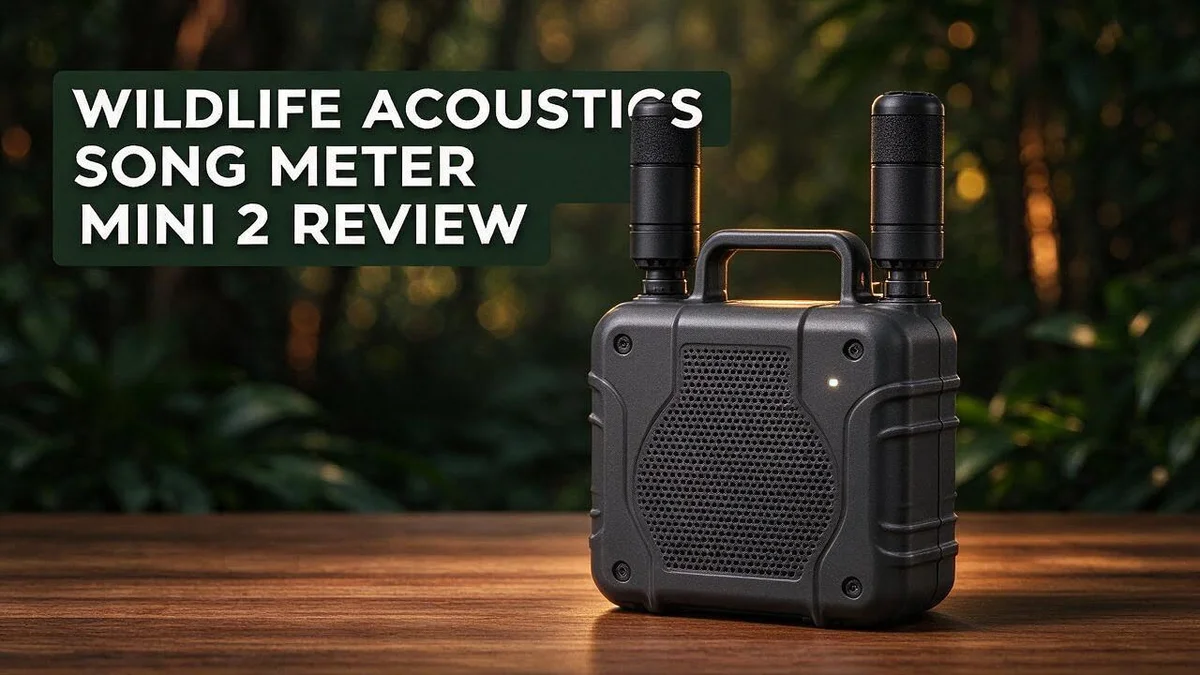
Wildlife Acoustics Song Meter Mini 2 Review: Complete Guide
Have you ever wondered what lives in the woods near your home? Many nature lovers never hear the birds and frogs that fill the air each day. A simple recorder can change that.
The Wildlife Acoustics Song Meter Mini 2 makes it easy to capture those sounds. It is compact, light, and weatherproof. It also offers preset recording schedules, so you can leave it in the field with confidence.
Clean, crisp audio is the main reason many people choose this device. Its built-in microphone picks up sounds with accurate direction. This helps you learn where each bird or frog is calling from.
Wondering if this recorder fits your needs? This review covers its key features, its strengths, and how it compares to other popular options. Keep reading to find out if it belongs in your gear bag.
In a Nutshell
-
Two power options: You can choose a model with a rechargeable battery or one that runs on AA batteries. This gives you flexibility for short trips or long stays in the field.
-
Light enough for long hikes: The device weighs about 1.15 lb with its batteries. You can clip it to a tree or carry it all day without feeling weighed down.
-
Ready to record quickly: Preset recording schedules come built in. You can start capturing bird and frog calls with very little setup.
-
Sturdy build for outdoor weather: The enclosure protects the unit from rain and dust. It also works with a lock, which adds security in busy public spaces.
-
Optional microphone port: You can add an external acoustic microphone. This helps you target specific sounds in different habitats.
-
Best for bird and frog studies: The recorder focuses on sounds in the acoustic range. Researchers and hobbyists both use it to track these animals over time.
Audio Quality and Microphone Performance

- DURABLE & KIDS-FRIENDLY DESIGN – Built for Young Explorers: Crafted with impact-resistant ABS plastic to withstand backyard adventures and camping trips. Unlike flimsy alternatives, our reinforced construction ensures long-lasting fun. The ergonomic trigger and lightweight build (under 1 lb) make it easy for small hands to hold and operate independently. Parents love that it’s tough enough for active play
- CRISP LONG-RANGE SOUND AMPLIFICATION – Hear Nature from 160ft Away: Our upgraded parabolic microphone focuses on sounds directly ahead, effectively minimizing wind and background rustle. Perfect for isolating a single bird call in a noisy forest or tracking a squirrel's movement in the backyard. Experience clear, amplified audio through the included headphones without the distortion found in cheaper models
Last update on 2026-06-17 / Affiliate links / Images from Amazon Product Advertising API Some of the links on this website are affiliate links, which means that at no additional cost to you, I earn a commission if you click through and make a purchase. I only recommend products and services that I believe will add value to my readers. Thank you for your support!
Sound quality decides whether a field recording is useful. Clear audio lets you hear each chirp and croak.
The Mini 2 uses a microphone that keeps background hiss low. Quieter recordings help you focus on the animals themselves.
The microphone also records with directional accuracy. You can tell where a sound came from. This helps researchers track which bird sings from which tree.
Sensitivity matters for small animals. A sensitive mic catches soft calls from frogs near water. It also picks up distant songs in quiet forests.
The device focuses on the acoustic range. This range covers most bird and amphibian calls. Less time goes to sounds you do not need.
Frog calls often sit in a narrow band. A recorder that tunes well to these pitches catches the full call. Clear pitch capture helps identify species later.
Extra listening points help large studies. Some projects need sound from several spots at once. Adding a second microphone can make that possible.
Background noise from traffic or wind can hide faint calls. Clean sound makes computer analysis easier. Software often finds species more accurately with clear files.
Long deployments test any microphone. Wind and humidity can add noise over several days. Check the recordings often to spot problems early.
Tip for better results: Place the recorder away from wind and running water. Hold it a few feet above the ground. Small changes often make a big difference in clarity.
Many field teams review files on a laptop after each trip. Headphones reveal faint details that speakers can miss. Careful listening helps you spot quality issues early.
Overall, the audio performance suits field researchers and nature lovers alike. Public details on exact frequency response are limited for this model. Listening to sample recordings before you buy helps you judge the sound yourself. That check keeps your data useful for years.
Design, Weatherproofing and Mounting
When you set up a field recorder, the body matters as much as the microphone. The Mini 2 uses a case built for damp forests and shifting weather. Its enclosure keeps the electronics dry during long deployments.
Mounting choices decide where your recorder can hear best. The unit works with several mounting options, so you can attach it to a tree, a fence post, or a metal pole. Pick a spot above ground level and away from flowing water. Wet ground can cause extra noise in your recordings.
Lock compatibility adds peace of mind. Many researchers leave gear in remote areas for weeks. A lock point helps secure the recorder from curious people and wandering animals. Keep the key or code in a safe place.
Good placement starts with the mount. Use a strap or bracket that holds the unit firmly without pinching the housing. Tighten it enough to stop wind from shaking the case, but not so much that you damage the seals.
Check the seals before each trip. Look at the rubber gaskets around the lid for cracks, dirt, or debris. Clean them with a dry cloth so the lid closes tightly. Small steps like this protect the device over time.
Orientation also affects the recording. Face the recorder toward the sounds you want to capture. Keep the unit level so rain runs off the housing instead of pooling near the seams. A level mount also keeps the case stable on windy days.
The Mini 2 handles outdoor work well, but no device survives neglect. Inspect the unit after storms and heavy snow. Early checks help you catch problems before they ruin a full season of data.
Read the waterproof details carefully. Specific water ratings were not confirmed for every model in this lineup. Check the official documentation before you expose the device to deep water or prolonged soaking.
Power Options and Scheduled Recording
Power shapes how long your recorder can listen. Your field plan depends on it.
Think about the schedule first. Scheduled recording runs during the hours you choose. Long listening sessions use more energy than short ones.
Frequent recording drains any power source faster. Dawn chorus sessions can last for hours each morning.
Cold weather changes battery life. Low temperatures reduce power output in many batteries. Keep spare power on hand for winter studies.
Pack spare batteries for each trip. Fresh cells keep your schedule running without gaps. Label each set so you know which ones are charged.
The rechargeable option suits researchers who have easy access to power. You can top up the unit at a base station each evening.
AA cells suit remote projects. You can find them almost anywhere and swap them quickly in the field.
Check the battery level before each deployment. A quick check prevents missed recordings. Write the date and level in a field log.
Scheduled recording turns the unit into a timed listener. You set the start time, the stop time, and the days to run.
Match the schedule to your target animals. Frogs call most after dusk, while many birds sing at sunrise. Set the window to fit those peaks.
Shorter schedules save power and storage space. Long daily runs can fill a memory card within days.
Test the schedule at home before you head out. A short trial run shows whether the timing works as planned.
Use the schedule to gather better data. Consistent timing makes it easier to compare recordings across days and seasons.
Keep a spare memory card in your pack too. Storage can fill faster than expected during busy seasons.
A simple routine keeps your study on track. Check power, storage, and schedule settings each time you visit.
A little preparation goes a long way in the field. Your recorder will reward you with clear, steady data.
Top 3 Alternatives
AudioMoth

- MADE BY OPEN ACOUSTIC DEVICES — Version 1.2.0 AudioMoth acoustic logger, made in the United States.
- UNCOMPRESSED WAV — Records uncompressed WAV audio to microSD card at sample rates from 8 kHz up to 384 kHz.
Last update on 2026-11-24 / Affiliate links / Images from Amazon Product Advertising API Some of the links on this website are affiliate links, which means that at no additional cost to you, I earn a commission if you click through and make a purchase. I only recommend products and services that I believe will add value to my readers. Thank you for your support!
AudioMoth is a small, open-source acoustic recorder. It is easy to build and simple to customize, so many researchers and hobbyists choose it for their projects. It runs on a few batteries and saves audio to a standard SD card. You can program it to record on a schedule, which helps during long field studies. It works well for beginners who want to explore bird, bat, and insect sounds. Its open design also lets users share updates with a large community.
Song Meter Micro

Last update on 2026-11-24 / Affiliate links / Images from Amazon Product Advertising API Some of the links on this website are affiliate links, which means that at no additional cost to you, I earn a commission if you click through and make a purchase. I only recommend products and services that I believe will add value to my readers. Thank you for your support!
Song Meter Micro is a compact recorder made by Wildlife Acoustics. It fits easily in a pocket and handles outdoor conditions well. Its small size makes it simple to mount on trees or fence posts. The device can run for long periods on batteries, so you can collect audio without visiting the site every day. It suits anyone who needs steady monitoring in remote spots. Many users also like its clear recordings and simple setup process.
Frontier Labs BAR-LT

- Speed Range: 200-6,000 rpm
- Temp Range: Air Cooled
Last update on 2026-11-24 / Affiliate links / Images from Amazon Product Advertising API Some of the links on this website are affiliate links, which means that at no additional cost to you, I earn a commission if you click through and make a purchase. I only recommend products and services that I believe will add value to my readers. Thank you for your support!
Frontier Labs BAR-LT is a bioacoustic recorder built for long field deployments. It captures sound across many hours and stores files on removable memory. Researchers often use it to track frogs, birds, and other wildlife. Its sturdy housing protects it from rain, dust, and temperature changes. It fits projects that need dependable data collection over a full season. Scientists who plan detailed surveys often find it a helpful tool.
Ideal Field Deployments and Use Cases
Field teams deploy this recorder in many different settings. Each place asks for a different kind of listening. Here are some of the most common uses that researchers and hobbyists rely on.
Forest bird surveys make a strong starting point. Many songbirds sing most at dawn, so teams often plan their setup around sunrise.
Wetland and pond monitoring works well for amphibians. Frogs return to the same breeding spots each spring. A recorder placed at the pond edge shows which species appear and when.
Long term biodiversity projects need steady data over many months. One recorder in a single habitat builds a clear record of seasonal change. Teams can also compare that record across several years.
Habitat comparison studies test two areas side by side. A team might place units in a restored meadow and a nearby farm field. The recordings reveal which location hosts more species.
Urban wildlife research brings its own challenges. Parks often sit near roads, rail lines, and busy footpaths. Researchers frequently pick quiet corners or early morning hours to limit human noise.
School and community projects also benefit from this gear. Students can set up a unit in a school garden and review the audio together. Citizen science groups gain useful data when volunteers collect recordings that experts check later.
Short pilot deployments help teams plan larger studies. A brief test run reveals which animals call at a site and at what times. That knowledge saves effort before a full survey begins.
Remote habitat studies often reach places with no roads or trails. Teams hike in, install the unit, and return weeks later to collect the memory card. Clear planning makes these trips far more productive.
Every use case rests on one simple idea. Start with the question you want to answer. Then choose the spot, timing, and setup that bring you the best answer.
Setup and Ease of Use
Setup feels simple from the first day. The Song Meter Mini 2 arrives ready to record. Most users can start a basic deployment with very little training.
The unit weighs only 1.15 lb (522 g) with batteries. You can carry it in one hand while you walk to a remote site. That light weight also makes long hikes easier on your back.
Preset recording schedules save time. The recorder includes built-in schedules that work well for common bird and amphibian surveys. Start with these presets. Change them later once you know your study needs.
Good planning begins before you leave the office. Write down your target species and their active hours. Then match your schedule to those hours so you do not waste storage. Adjust the timing if the season changes.
A short test run builds confidence. Record for a few minutes at your desk or in your backyard. Listen to the file with headphones. Confirm that the audio sounds clear and that the file saves correctly.
The Mini 2 comes in two battery versions, so you can match the unit to your field plan. Read the setup guide once before field work. Note any step that feels confusing and practice it at home.
Keep a simple checklist. Write each step on a card and keep it in your bag. Include the schedule, the date, the location, and the battery check. A checklist prevents small errors that cause lost data.
Labeling matters too. Put a clear tag on each unit with a contact number. Record the unit ID in your field notes so every file matches the correct site later.
Learning the menus takes practice. Spend time with the controls before your first trip. Use the manual as a reference, not a textbook. Most questions get answered after one or two practice sessions.
Finally, plan file retrieval. Decide how you will collect and back up recordings after each visit. A steady routine keeps your project organized from day one. Store copies in two places so no data disappears.
Pros and Cons
Pros
- The clear, sensitive audio picks up bird and frog calls with good detail.
- At 1.15 lb (522 g), the unit is easy to carry on long hikes.
- The weatherproof shell handles rough outdoor conditions.
- Two battery versions let you match the unit to your field plan.
- Preset recording schedules start working with very little setup.
Cons
- It targets acoustic range wildlife, so it can miss ultrasonic bat calls.
- The waterproof rating for bat recorders is unclear, so check specs first.
- Tools like AudioMoth may fit small or low cost projects better.
Who Should Buy It
Not every nature lover needs this recorder. However, some people gain far more from it than others. Read the list below and see where you fit.
Field technicians who visit sites often will appreciate the lock compatibility. A locked unit stays secure when you leave it on a post or tree. Spare batteries in your bag also make quick swaps possible.
Consultants and environmental staff also benefit from this gear. Clients often ask for proof of species presence, and directional recordings help you pinpoint where each call comes from. Clear files make reports easier to write.
Teachers and youth leaders can use the unit for practical lessons. Students hear real wildlife sounds and learn to compare recordings side by side. Keep each session short so attention stays high.
Landowners who want to track birds on their property can start small. The optional acoustic microphone port gives you room to grow as your interests expand.
Citizen scientists who already log sightings can add audio data to their records. Sound often reveals animals that stay hidden from view.
Hobbyist recordists who love frog choruses or dawn birdsong will enjoy the detail. You can capture sounds that you would miss by ear alone.
Some people should look elsewhere. Anyone who prefers phone apps over dedicated hardware may find this unit less exciting. Those who want a device that needs no planning at all should also explore other options.
Before you decide, ask yourself three questions. Do you need a unit that stays locked in place? Do your target animals call within the acoustic range? Will you use it often enough to make learning its features worthwhile?
If you answer yes to most questions, this recorder fits your needs well. Take time to match the tool to your goals. Your recordings will reflect the care you put into planning.
Final Verdict
The final verdict is simple. The Song Meter Mini 2 suits people who record birds and amphibians in the field.
Shoppers give it a 4.4 out of 5 star rating on Amazon. Many reviewers praise its clear and sensitive audio.
Real users test the recorder in messy outdoor conditions. Their feedback offers a useful signal for buyers.
Think about storage first. Long recording runs create large audio files. Bring extra memory cards and a backup drive.
Plan power for deployments before you leave. This keeps the unit listening through the night.
Sorting files by site keeps later analysis simple. Each folder should hold one location and one date range.
Pair the recorder with analysis software. Spectrogram tools help you spot species calls quickly. Listening to hours of audio takes time.
Write down your target species first. This choice guides your schedule, settings, and microphone placement.
Compare the sibling model too. The Song Meter Micro 2 comes from the same maker. Check both sets of specs side by side.
Expect some trial and error. Your first recordings may pick up wind, traffic, or insects. Adjust your position and try again.
Noise control makes a big difference in the final results. Choose quiet hours and calm days when possible.
Keep notes on each deployment. Record the weather, temperature, and time of day. These details help researchers review results.
Your bottom line is clear. The Mini 2 delivers detailed audio in a light package. It rewards people who plan well and practice often.
Good research depends on consistent habits. Schedule your visits, check batteries, and log every trip. Consistency makes your data useful.
Start with a short field trip before any big project. Notice how the unit handles your site, weather, and daily routine. Then decide if it earns a place in your kit. A confident choice feels better than a rushed purchase.
Frequently Asked Questions
What sounds does the Song Meter Mini 2 capture best?
The recorder works well for birdsong and frog choruses. Its built-in low noise microphone captures clean, crisp, and sensitive audio. Faint calls stand out clearly, so you can review each recording with confidence. This helps most when you study quiet species or early morning activity.
Can I connect a different microphone?
Yes, the unit includes an optional acoustic microphone port. This port lets you change the microphone setup for specific projects. Check the compatibility details before you buy any parts. Matching the microphone to your target species gives you better results in the field.
How does it differ from the Tascam DR-05x?
The Tascam DR-05x is a handheld recorder made for interviews, music, and quick field sound. The Mini 2 suits long unattended deployments at fixed sites. Think about whether you plan to stand beside the device or leave it in place for days.
How often should I check the recorder in the field?
Check the unit at every site visit. Look at the microphone, the enclosure, and the battery level. A short test recording before you leave helps you catch problems early. Regular checks protect your data and save time on return trips.

Hello, I’m Amelia White, the founder of birdsfanatic.com. As a lifelong bird enthusiast and spiritual seeker, I’ve always been fascinated by the mystical connections between birds and the human experience. On this site, I share my knowledge and insights into the symbolic meanings and spiritual significance of various bird species, exploring their roles in mythology, folklore, and cultural traditions. Join me on this journey into the world of birds, where we’ll discover the hidden wisdom and guidance that these magnificent creatures have to offer.