Birds Choice Recycled Platform Feeder with Pole Kit Review 2026
Backyard birds need a reliable place to eat. A good feeder makes that easy. Many bird lovers want a simple setup that brings chickadees and titmice close to home.
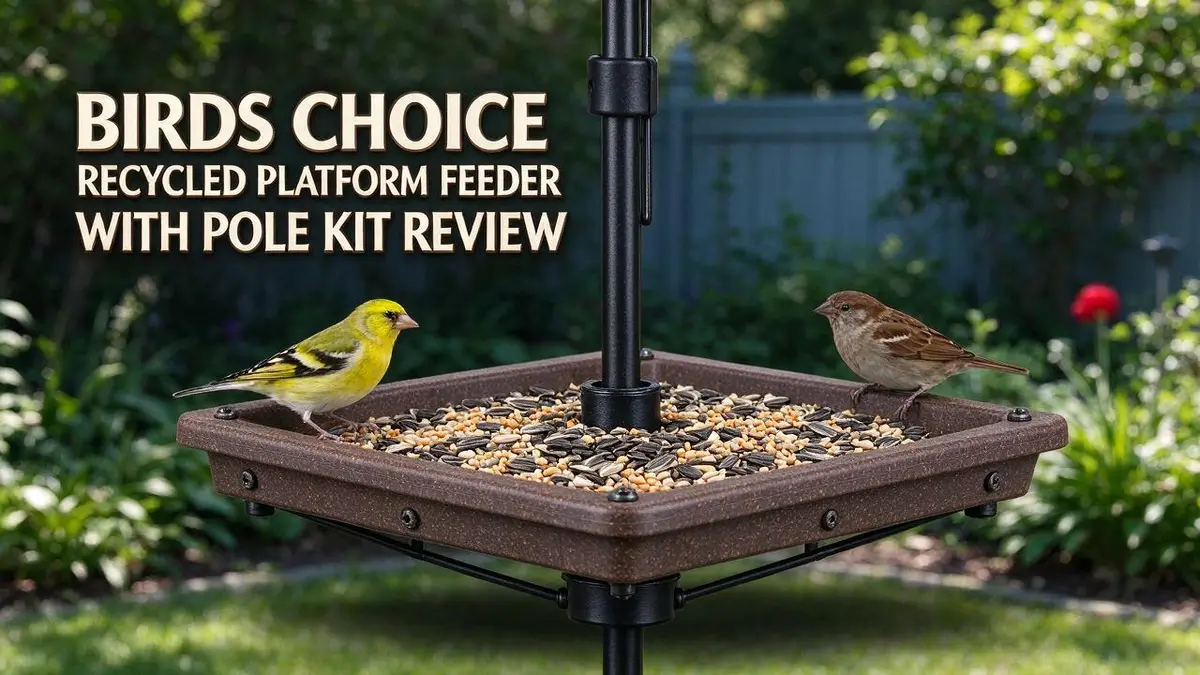
The Birds Choice Recycled Platform Feeder with Pole Kit aims to do exactly that. It sits on a pole that adjusts from 24 to 72 inches. You can set the height that suits your yard and your view.
The tray is wide enough for several birds at once. A screen bottom lets water drain away, so seed stays drier and the feeder avoids flooding. Customers often say it feels sturdy and well made. It also stays light, even when full of seed.
In a Nutshell
- Built from recycled plastic: The feeder uses recycled material. Customers say it feels sturdy and well made. This build also helps reduce plastic waste.
- Adjustable height: The pole extends from 24 to 72 inches. You can set the tray at a level that suits your yard.
- Screen bottom for drainage: Rain runs through the mesh base. Seed stays drier and the design helps keep food fresh longer.
- Light even when full: The feeder stays light even when filled with seed. Moving it around the yard stays simple too.
- Draws chickadees and titmice: Small songbirds like these often visit platform feeders. A flat tray gives them easy access to seed. Watch for them in your yard.
- Same brand option: Birds Choice also sells a Small Hanging Platform Feeder. It holds about 2 pounds of seed and is made in the USA.
- Note on specs: Some details come from related Birds Choice listings. Check the product page to confirm the exact features of this kit.
Build Quality and Materials

- PLATFORM FEEDERS: A shallow-frame design with removable screened bottoms, and can stand on the ground or be mounted onto a pole. Similar to fly-thru feeders, these also allow you to offer a variety of food options
- RECYCLED MATERIALS: Poly lumber proudly made from recycled plastic jugs and bottles in the United States and is designed to prevent cracking, splitting, or fading. Includes aluminum rust-resistant hinges and stainless steel screws
Last update on 2026-06-10 / Affiliate links / Images from Amazon Product Advertising API Some of the links on this website are affiliate links, which means that at no additional cost to you, I earn a commission if you click through and make a purchase. I only recommend products and services that I believe will add value to my readers. Thank you for your support!
Build quality matters a lot for any bird feeder. Your feeder sits outside through rain, wind, and sun. A weak design can crack or sag over time. This section looks at how well this feeder holds together.
Reviewers often describe this feeder as sturdy and well made. That kind of feedback matters. It shows the feeder can handle daily use outdoors without falling apart.
The main material is recycled plastic. Plastic does not rot like untreated wood, so it suits outdoor use.
Plastic also needs little upkeep. It does not need painting or sealing like wood does. That saves time during the busy bird season.
Less weight means less strain. A lighter load puts less stress on the pole and the mounting point. This helps the whole setup stay steady in windy weather.
The pole deserves a close look too. The research does not list the pole material or its thickness. Check these details before you mount the feeder.
Cleaning is simple with a smooth surface. Warm water and mild soap usually remove seed residue. Regular cleaning helps keep mold and bacteria from building up.
Seams and joints matter as well. Tight, even fittings keep the tray from wobbling. Give the feeder a gentle shake after assembly to test the fit. Weak points often show up at the tray edges, so look there first.
A quick note on specs helps here. Some details come from related Birds Choice listings. The exact kit may differ, so confirm the materials on the product page.
Overall, the build looks well suited for backyard use. Recycled plastic, a sturdy frame, and a drainage screen give it a solid base. Simple checks on the pole and seams help you feel confident. Pick the setup that fits your yard and your routine.
Tray Capacity and Drainage Design
A platform feeder works best when birds can land without bumping into each other. Crowding can spread illness, so open space on the tray matters. Spread seed across the whole surface instead of piling it in one spot.
Different birds use the tray in different ways. Cardinals and mourning doves often feed near the edges. Smaller birds like to peck from the center. A wide, open surface lets every visitor find a comfortable place to eat.
Seed type also changes how much room you need. Sunflower seeds and peanut pieces pile up quickly. Fill the tray lightly and refill it often. This keeps the surface clear and cuts down on waste on the ground below.
Drainage does more than keep the tray dry. Wet seed turns moldy fast, and moldy seed can make birds sick. Good airflow under the tray helps seed dry out between rain showers.
The mesh openings deserve a closer look, too. Tiny seeds like millet can slip through wide gaps and fall onto the lawn. Check the screen after setup and remove any debris that blocks the holes. Clear mesh keeps water moving and seed where birds can reach it.
Cleaning plays a big role in drainage. Husks and droppings collect in corners where water can sit. Give the tray a quick brush each week during busy seasons. A few minutes of care keeps the feeder fresh for visiting birds.
Wind can also push seed off a platform. A tray with a raised lip holds seed in place during gusts. Look for this feature if your yard gets windy.
Overall, capacity and drainage work together. Enough room keeps birds comfortable, while good airflow keeps food safe. Together, these features help a backyard feeder stay useful all season long.
Pole Height and Setup
Setting up the pole is often the first real step with this feeder. Getting the height right makes a big difference for birds and for you. Take time to plan before you dig.
Start by picking the right spot. Choose an open area where you can see the feeder from a window. Birds feel safer when they can watch for danger from a distance.
Shorter settings suit ground feeding birds. Lower heights bring the tray closer to shrubs where birds can hide quickly. Doves and sparrows often feel comfortable at this level.
Taller settings help keep pests away. A higher tray is harder for climbing squirrels to reach. Pairing the pole with a baffle adds another layer of protection.
Plan for ground clearance. Leave enough room so the tray sits above snow and tall grass. Clear space also makes refilling seed much easier.
Set the pole in firm soil. Dig a hole deep enough to hold the base steady. Loose ground may need packed gravel or concrete for extra support.
Check the level before tightening. A straight pole keeps seed from sliding to one side. Use a small bubble level on the tray edge.
Tighten the connections gently. Overtightening can strain joints over time. Turn each fitting until it feels snug, then give the pole a gentle shake to test it.
Watch the sun and shade. Morning sun dries the tray quickly after rain. Partial shade keeps seed fresher during hot afternoons.
Recheck after the first week. Soil settles, and poles can shift over time. A quick look helps keep the feeder upright all season long.
Mark your setup for next year. Note the height and location that worked best. Future moves become quick when you keep track of these details.
A careful setup saves time and frustration later. Your feeder will stand straight, and your visitors will feel welcome from day one.
Top 3 Alternatives
Stokes Select Platform Feeder

- 6 feeding portals for many birds to feed at once
- Open tube design allows maximum seed capacity
Last update on 2026-11-24 / Affiliate links / Images from Amazon Product Advertising API Some of the links on this website are affiliate links, which means that at no additional cost to you, I earn a commission if you click through and make a purchase. I only recommend products and services that I believe will add value to my readers. Thank you for your support!
The Stokes Select Platform Feeder gives backyard birds a wide, open tray to land and eat. Its flat design lets many birds feed at the same time.
Many people like it because it drains well and cleans up with ease. It works well for cardinals, jays, and doves.
Perky-Pet Platform Feeder

- WEATHER-RESISTANT: Made from durable recycled poly lumber that resists cracking, warping, fading, and rotting in rain, snow, and sunlight. Built for long-term outdoor use, this platform bird feeder maintains strength and appearance with minimal upkeep
- ATTRACT MORE BACKYARD BIRDS: The open platform bird feeder design provides unobstructed access from every side, allowing multiple birds to feed together. Ideal for Bluebirds, Cardinals, Woodpeckers, Finches, Chickadees, Titmice in any backyard
Last update on 2026-07-01 / Affiliate links / Images from Amazon Product Advertising API Some of the links on this website are affiliate links, which means that at no additional cost to you, I earn a commission if you click through and make a purchase. I only recommend products and services that I believe will add value to my readers. Thank you for your support!
The Perky-Pet Platform Feeder is a good pick for casual birdwatchers. It has a simple open design that welcomes many visitors.
Its light build makes it easy to hang or mount on a pole. Rain can run off the tray, so the seed stays drier.
Woodlink Platform Feeder

- The feeder is constructed of reforested, kiln dried, inland red cedar
- Powder coated metal screen bottom allows for drainage and is also removable
Last update on 2026-11-24 / Affiliate links / Images from Amazon Product Advertising API Some of the links on this website are affiliate links, which means that at no additional cost to you, I earn a commission if you click through and make a purchase. I only recommend products and services that I believe will add value to my readers. Thank you for your support!
The Woodlink Platform Feeder offers a sturdy option for your yard. Its wide tray holds plenty of seed for hungry flocks.
Many owners appreciate how simple it is to clean. Choose this feeder if you want a durable tray that lasts for many seasons.
Bird Attraction and Visitor Species
Birds love an open platform that feels safe and easy to reach. This feeder often brings chickadees and titmice to the yard.
These small songbirds are bold and quick. They often grab one seed, then fly to a nearby branch to eat it.
Chickadees and titmice usually arrive early in the morning. Watch for them at dawn, when they search hard for a quick meal.
Other songbirds may also stop by, depending on your region. Finches, sparrows, and nuthatches often visit platform feeders.
Seed choice shapes who shows up. Black oil sunflower seed draws the widest range of birds. Millet tends to attract ground feeding sparrows.
Keep the seed fresh. Wet or moldy seed can make birds sick, so refill small amounts often.
Visitor patterns change with the seasons. Winter often brings more activity, since birds need extra fuel to stay warm.
Patience pays off. New birds may take a few days to find a fresh food source. Stay consistent, and they will likely return.
Water nearby adds appeal. A shallow bath close by gives birds a drink and a splash. Many species visit feeders more often when water is near.
Feeding times also matter. Birds often eat most during the first hour after sunrise and before dusk. Filling the feeder then keeps the activity steady.
Quiet surroundings help birds feel safe. Loud noise and sudden movement can scare away shy species.
Some visitors may be less welcome. Squirrels and larger birds like starlings or grackles can crowd out smaller guests.
Learn the common visitors. A simple field guide or bird app helps you name each guest. Naming them makes backyard watching more fun.
Families often enjoy this hobby too. Children can keep a simple log of each bird they spot each week.
Overall, this feeder can turn a quiet yard into a busy bird stop. With the right seed and calm surroundings, your visitor list will grow.
Cleaning and Maintenance
Cleaning keeps your feeder safe for visiting birds. A dirty tray can spread germs and make birds sick. Plan a simple routine and stick to it all season.
Scrub the tray every two weeks during busy months. Use warm water and a mild dish soap. A soft brush removes droppings and old seed hulls.
Clean more often during wet weather. Rain and snow keep the tray damp, which helps germs grow.
Avoid harsh chemicals on the feeder. Strong cleaners can leave a smell or residue that birds may avoid. Plain soap and water work well for most messes.
For deeper cleaning, use a diluted bleach solution. Mix one part bleach with nine parts water. Let the solution sit for a few minutes, then rinse very well.
Rinse every surface after scrubbing. Leftover soap or bleach can harm birds that peck at the tray. Clear water should run off the feeder without any suds.
Let the feeder dry fully before adding new seed. Damp wood or plastic invites mold. Set the parts in the sun for an hour or two.
Check the screen bottom each time you clean. Look for cracks, bent wires, or clogged openings. Gently poke out any seed jammed in the mesh.
Inspect the pole kit as well. Tighten loose bolts and clamps so the tray stays level. A wobbly tray spills seed and tires birds.
Watch for signs that the feeder needs more work. Cracked plastic, sharp edges, or a sour smell mean it is time to deep clean or replace parts.
Wear gloves when you clean. Droppings can carry bacteria, so wash your hands afterward. Keep cleaning tools separate from kitchen items.
Store the feeder in a dry spot during harsh winters. Bring the tray inside when ice builds up. Your birds will return once the feeder is ready again.
Good care helps your feeder last for many seasons.
Pros and Cons
Pros
- Sturdy and well made, according to customer reviews.
- Lightweight, even when the tray is full.
- Attracts chickadees and titmice to your yard.
- Screen bottom lets water drain and keeps seed drier.
- Large tray fits several birds at once.
Cons
- No drawbacks are documented for this exact kit.
- Some specs come from related Birds Choice listings, so confirm the fit.
- The pole tops out at 72 inches, which may not suit taller spots.
- No direct competitor models are named for side by side comparison.
Who Should Buy It
New bird watchers will find this feeder a simple place to start. The open tray makes visiting birds easy to spot from a window.
Families with children will also find it a good fit. Kids can watch chickadees and titmice up close without any complicated setup.
Gardeners with small yards benefit too. Its height suits a flower bed, a patio corner, or a short lawn post.
Renters with a patio may place the pole in a deep planter. Ask your landlord first about any digging.
Shoppers who want an open design rather than a roofed model will like this style. The simple tray keeps the view clear and the setup easy.
Some people want a feeder for hanging from a branch instead. In that case, the Birds Choice Small Hanging Platform Feeder is a good option.
It is made in the USA and holds about 2 pounds of seed.
Before you buy, think about where the feeder will sit. A spot near shrubs gives birds a safe place to land. A sunny, open area also helps you watch the action from indoors.
Retirees and people who work from home often enjoy this kind of feeder. They can check the tray between calls or during a morning coffee break.
Nature teachers and youth group leaders may find it useful too. It gives students a close look at songbirds without a long walk.
Anyone who wants to learn bird habits will gain from a steady routine. Note the time of day, the weather, and which birds arrive first.
Keep a simple notebook beside the window. Write down each new species you see and the date it arrived. Over time, you will see your own backyard story unfold.
Parents teaching kids about nature will appreciate the easy setup. Little ones can fill the tray and count the birds that visit each day.
This kit rewards anyone who enjoys slow, peaceful mornings outside.
This feeder makes a friendly first step for anyone who loves backyard birds.
Final Verdict
Our final verdict is a clear yes for most backyards. The Birds Choice Recycled Platform Feeder gives birds a steady place to eat. It suits people who want a simple setup.
Think of it as a dependable everyday feeder. It handles regular use with little fuss. Birds land on the open tray quickly, so you can watch them from a window.
The recycled plastic build also matters. Old plastic gets a second life instead of ending up in a landfill. Many people feel good about that choice every time they fill the tray.
Plan a few extras for the best results. Add a squirrel baffle above the pole to slow down climbers. Use black oil sunflower seed, since many backyard birds prefer it.
Setup takes a little planning. Pick a spot with easy access for refilling and a clear view. Then check the height before you fix the pole in place.
Skip this feeder if you need a roof. Heavy rain can still wet the seed on top. Shoppers who want full cover should look at other styles.
Overall, this feeder offers solid performance and simple care. It fits well into most yards and gardens without taking over the space.
Seasonal use makes this feeder even more useful. Winter brings fewer natural food sources, so a full tray helps birds get through cold days. In spring, parent birds may visit often to feed hungry chicks.
Keep a simple log of your visitors each week. Note the species, dates, and weather. This habit turns casual feeding into a rewarding hobby over time.
Start with this feeder and enjoy the flock. Fill it, wait a day, and watch who shows up. Your yard will soon become a regular stop for local birds.
Frequently Asked Questions
What seed works best in this platform feeder?
Black oil sunflower seed is a favorite for many backyard birds. Mix in some cracked corn or millet to attract birds that like to feed low. Many birds also enjoy dried fruit pieces as a treat. Skip moldy or wet seed. Old seed can spread illness, so buy small bags and use them quickly.
How often should I clean the tray?
Clean the tray every two or three weeks. Use warm water and a mild soap. Scrub away droppings and old hulls, then rinse well. Let the tray dry fully before you add fresh seed. Clean feeders keep birds healthier and help prevent the spread of disease.
What should I do with spilled seed?
Spilled seed can draw rats and mice. Sweep up the mess under the feeder each week. Place the feeder away from your house so pests stay away from your walls and doors. Birds will still find the feeder easily, and your yard stays tidy.
How do I keep the pole steady?
Push the pole firmly into the ground before you fill the feeder. Check the base after strong winds. Tighten any loose parts so the tray stays level. A level tray keeps seed from sliding off and keeps the feeder safe for visiting birds.

Hello, I’m Amelia White, the founder of birdsfanatic.com. As a lifelong bird enthusiast and spiritual seeker, I’ve always been fascinated by the mystical connections between birds and the human experience. On this site, I share my knowledge and insights into the symbolic meanings and spiritual significance of various bird species, exploring their roles in mythology, folklore, and cultural traditions. Join me on this journey into the world of birds, where we’ll discover the hidden wisdom and guidance that these magnificent creatures have to offer.