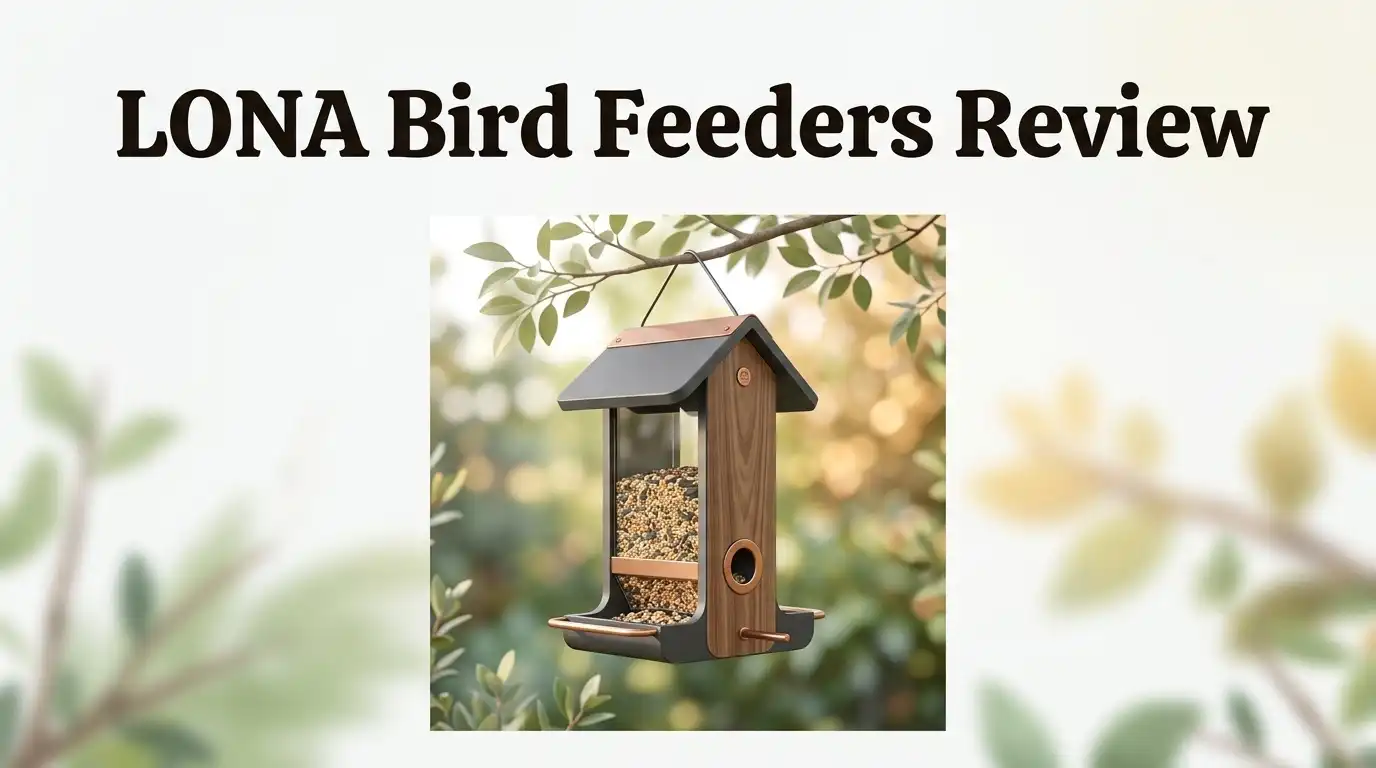
LONA Bird Feeders Review 2026: Worth Buying?
Most backyard feeders fail for the same boring reason. The seed gets wet, clumps into a grey paste, and the birds stop visiting within a week. That single problem is what pushed me to test the LONA tube feeder for a full season, through spring rain and a stretch of humid summer heat.
LONA markets itself as a Netherlands-designed, weatherproof feeding system with a domed cover and drainage holes at the base. Those are the two features that decide whether a cheap tube feeder survives past month three.
I hung two units in different spots, filled them with different seed, and tracked what showed up. Here is the honest version.
In a Nutshell
- Weather protection actually works. The wide dome cover shields the ports from direct rain, and the bottom drain holes stop water from pooling in the seed column. I found damp seed only after two days of sideways storm wind.
- Three hanging methods are included: a chain for hooks and branches, a mounting connector block for walls or stakes, and a Velcro fastener for pipes and tree trunks. The Velcro option is the surprise winner for renters.
- Capacity is modest at roughly 1000ml (34oz), around two pounds of seed. That means refilling every three to five days in a busy yard.
- Best for small perching birds. I logged finches, chickadees, sparrows, titmice, and the occasional cardinal on the longer metal perch. Larger visitors struggled.
- Seed spill is the main flaw. The feeding ports are generous, and messy eaters flick a real amount of seed onto the ground below.
- It is not squirrel proof. It is squirrel resistant at best, with hard surfaces that resist chewing but no weight-activated defense.
LONA Bird Feeders for Outdoors, Tube Feeder Weatherproof

- Exclusive Original Design: LO NA LOVE NATURE bird feeders take pride in our original design, protected by US and/or International patents and pending patents. Our garden bird feeder is originating from the top design team in the Netherlands, adhering to the concept of green ecological and family oriented design.
- Smart Hanging System for Ultimate Flexibility: LONA tube birdfeeder offers multiple hanging methods. You can effortlessly tie your feeder to trees, pipes, or fences with Mounting connector block and Velcro fastener, also can simply hang it with chain on trees or shepherds hooks
Last update on 2026-08-08 / Affiliate links / Images from Amazon Product Advertising API Some of the links on this website are affiliate links, which means that at no additional cost to you, I earn a commission if you click through and make a purchase. I only recommend products and services that I believe will add value to my readers. Thank you for your support!
This is the model I tested, sold as a single unit and also in a two-pack. It measures roughly 13 inches tall with a 7-inch dome, and the body is a clear polypropylene tube with a green or grey cap depending on the batch.
The tube is fully transparent, which sounds like a small detail. It matters daily. You can check the seed level from a kitchen window without walking outside in the rain.
Three feeding ports sit at the base, each paired with a metal perch rather than moulded plastic. Metal is the right call here, because plastic perches are the first thing squirrels destroy.
Amazon ratings for this listing sit around 4.1 out of 5 across a few hundred reviews, which is a fair reflection of my experience. It is a solid mid-tier feeder, not a premium one.
The listing claims patent-protected original design from a Dutch team. Treat that as branding. Judge the feeder on the dome, the drainage, and the perches instead.
Unboxing and First Impressions
The box is plain corrugated cardboard with a printed sleeve. No plastic clamshell, no foam, no wasted packing. The feeder arrives in three pieces plus a small hardware bag.
Assembly took me under two minutes. The dome twists onto the tube collar, the base clicks in, and the chain hooks through a moulded loop at the top.
The plastic has a slight matte finish rather than a glossy shine. It feels thicker than the ultra-cheap feeders I have handled, though it flexes if you squeeze the tube hard.
There is a faint new-plastic smell straight out of the box. It faded completely after a day outdoors, and no birds hesitated because of it.
One small annoyance: the Velcro strap and connector block arrive loose in a thin bag with no instructions beyond a diagram. I worked out the pipe mount by trial and error.
Overall the first impression is tidy, lightweight, and clearly built to a price point. Nothing feels luxurious, but nothing feels disposable either.
Top 3 Alternatives for LONA Bird Feeders

- Our largest-capacity model, the Squirrel Buster Plus squirrel-proof bird feeder is also our most popular.
- Truly Squirrel-Proof: Openings in the shroud align with the feeding ports, providing birds access to the food. When a squirrel climbs onto the feeder, its weight automatically forces the shroud down, closing access to the ports. Squirrels and some large birds are foiled but not harmed in any way.

Last update on 2026-07-01 / Affiliate links / Images from Amazon Product Advertising API Some of the links on this website are affiliate links, which means that at no additional cost to you, I earn a commission if you click through and make a purchase. I only recommend products and services that I believe will add value to my readers. Thank you for your support!
Squirrel Buster Plus Squirrel-Proof Bird Feeder

- Small Bird Focus : This caged bird feeder features a 1.5-inch x 1.5-inch mesh design, allowing birds such as goldfinches, chickadees and house finches to safely enjoy their food. Make it harder for squirrels, pigeons, and starlings to feed, save birdseed, and extend the life of your feeder. Perfect for your yard
- Stay Dry Design : Caged bird feeder features a wide, protective metal roof. Unlike open-top cages, this rain-proof lid shields seeds from rain and moisture, keeping food dry, fresh, and reducing waste significantly. Enjoy clean feeding
Last update on 2026-06-17 / Affiliate links / Images from Amazon Product Advertising API Some of the links on this website are affiliate links, which means that at no additional cost to you, I earn a commission if you click through and make a purchase. I only recommend products and services that I believe will add value to my readers. Thank you for your support!
Kingsyard Tube Squirrel Proof Bird Feeder with Metal Cage

- Seed tray and circular perch allows for 360-degree feeding
- Attractive antique copper, powder-coated finish offers rust resistance
Last update on 2026-08-06 / Affiliate links / Images from Amazon Product Advertising API Some of the links on this website are affiliate links, which means that at no additional cost to you, I earn a commission if you click through and make a purchase. I only recommend products and services that I believe will add value to my readers. Thank you for your support!
Perky-Pet Copper Panorama Bird Feeder 312C
The Three Hanging Methods Tested
The chain hang is the default and the easiest. It clips to a shepherd’s hook or a branch in seconds, and the feeder swings freely without tipping.
The mounting connector block screws into a wall, fence post, or wooden stake. This holds the feeder rigid, which reduces swinging and calms nervous birds.
The Velcro fastener wraps around tree trunks and iron pipes. I was sceptical, but it held firm through wind and never slipped once during testing.
Renters and balcony users will get the most from the Velcro option. No drilling, no permanent fixtures, no deposit arguments.
One caution on the chain: it is thin. A heavy raccoon or a determined squirrel could stress that top loop, and I would swap it for a stronger S-hook and cable if you have larger wildlife.
The connector block screws are short and basic. Use your own hardware if you are mounting to anything harder than soft pine.
Flexibility is genuinely this feeder’s best trait. Few feeders under thirty dollars give you three legitimate mounting styles in the box.
Build Quality and Weather Resistance
The dome is the headline feature. It overhangs the ports by a wide margin, so light and moderate rain never reaches the seed.
Heavy wind-driven rain is a different story. After a two-day storm I found the top inch of seed slightly damp on the windward side.
The drainage holes at the base did their job. Water that got in ran straight through instead of sitting and fermenting, which is where mould usually starts.
The plastic showed no yellowing or cracking after months of direct sun. That is better than several cheaper tubes I have retired early.
The metal perches showed no rust. They are coated, and the coating survived scrubbing with a brush.
My one durability worry is the dome-to-tube twist connection. It is a friction fit, and after repeated refills it feels marginally looser than on day one.
Nothing broke. Nothing warped. For a feeder in this price bracket, that is a genuine pass.
Which Birds Actually Showed Up
Traffic started slowly. It took nine days before the first regular visitors treated the feeder as a fixture rather than a suspicious object.
Once established, the reliable crowd was house finches, goldfinches, chickadees, tufted titmice, and house sparrows. Small perching birds fit the port and perch geometry perfectly.
Cardinals did visit, but they looked awkward. The perch is long enough for them, though a cardinal-sized bird prefers a wider tray.
I never saw woodpeckers, blue jays, or orioles use it successfully, despite the listing naming them. Those birds want platform space or suet, not a narrow tube port.
Black oil sunflower seed pulled the widest variety. Nyjer worked for finches but flowed too freely through the larger ports.
Mixed seed with millet caused the most waste, because sparrows sort through it and throw the rest.
Set your expectations around small songbirds. Judged that way, the feeder performs well and stays busy from morning through late afternoon.
Seed Capacity and Refill Reality
The 1000ml (roughly 34oz) capacity is the biggest practical limitation. That translates to about two pounds of black oil sunflower.
In a moderately active yard, expect to refill every four to six days. In a busy yard with a resident finch flock, every two to three days.
Refilling is genuinely quick. Twist the dome, pour, twist back. No tools, no fiddly funnels, no dismantling the base.
A wide funnel helps because the tube opening is narrower than the mouth of most seed bags. I spilled seed the first three times before adapting.
If you travel often or want to fill a feeder once a fortnight, this is the wrong product. You need a four to five pound capacity feeder instead.
The upside of small capacity is freshness. Seed cycles through fast, so it never sits long enough to spoil, which suits humid climates well.
The clear tube makes level checks effortless, and that alone prevents the classic empty-feeder-for-a-week mistake.
Cleaning Mold and Maintenance
Feeder hygiene matters more than most buyers realise. Dirty feeders spread salmonellosis and conjunctivitis through songbird populations.
The base separates from the tube, which lets you reach inside with a bottle brush. This is a real advantage over sealed tube feeders.
I clean every two weeks with hot soapy water, then a one part bleach to nine parts water rinse, then a full air dry before refilling.
The tube is not dishwasher rated in my experience, and I would not risk warping it on a hot cycle. Hand washing takes five minutes.
The awkward spot is the narrow channel behind each feeding port. Seed dust collects there, and a standard brush cannot reach it.
A bottle brush plus a cotton bud handles it. Skip that step and you will find damp residue after a wet month.
Drying is fast because the tube is one open cylinder. No hidden chambers, no trapped water pockets.
Squirrel and Pest Resistance
LONA describes the feeder as having survived squirrel damaging. That phrasing is doing heavy lifting, and I want to be direct about it.
This feeder is chew resistant, not squirrel proof. The smooth dome and metal perches make it harder to destroy, but nothing stops a squirrel from clinging on and eating.
My local squirrels reached the ports within a week of the feeder going up. They could not chew through the tube, and no damage occurred.
The dome does make the top approach awkward. A squirrel dropping from above slides off, which is a small win.
If squirrels are your main problem, buy a weight-activated feeder instead. A caged or Squirrel Buster style model is the honest recommendation.
Ground pests are a related concern. The seed spill below the feeder attracts rodents, so placement away from the house matters.
I moved mine twelve feet from the patio and the issue calmed down considerably.
Pros and Cons
Here is the balanced summary after months of daily use.
Pros
- The wide dome and base drainage genuinely keep seed dry through normal rain, which is the core promise and it holds up.
- Three mounting options cover almost any yard, balcony, or rental situation without drilling.
- Metal perches resist chewing and rust far better than the moulded plastic on comparable budget feeders.
- The clear tube makes seed level checks instant from indoors.
- Two-minute assembly and one-motion refilling keep maintenance friction very low.
- Priced in the twenty to thirty dollar range, often sold as a two-pack, which is strong value.
Cons
- Seed spill is significant. The ports are wide, and messy feeders scatter a lot onto the ground.
- Capacity is small at roughly two pounds, meaning frequent refills.
- Not squirrel proof despite marketing language that implies protection.
- Larger birds like jays and woodpeckers cannot use it comfortably.
- The chain is thin and deserves an upgrade in areas with heavy wildlife.
- No printed instructions for the Velcro and block mounts.
Who Should Skip This Feeder
Some buyers will be disappointed, and it is fairer to say so clearly than to sell everyone the same product.
Skip it if squirrels dominate your yard. You will spend the money and still watch a squirrel empty the tube in an afternoon.
Skip it if you travel frequently. The two-pound capacity demands attention every few days during peak season.
Skip it if you want large birds. Cardinals barely manage, and anything bigger will ignore it entirely.
Skip it if seed mess bothers you. Under a deck, over a patio, or above a tidy lawn, the spill becomes a visible problem.
It also suits ground-feeding species poorly. Doves and juncos will only pick up what falls.
Who should buy it? Someone with a small to medium yard, small songbird traffic, a wet climate, and no permanent mounting point. That describes a lot of people, and for them this feeder does the job well.
My score sits at 7 out of 10. Good engineering, honest weatherproofing, oversold on pest defense.
Expert FAQs
Is the LONA bird feeder actually weatherproof?
Mostly yes. The dome blocks direct rainfall and the base drains standing water, so seed stays dry through normal weather. Sustained sideways storm wind can still dampen the top layer of seed. I would call it strongly weather resistant rather than sealed.
How much seed does it hold?
Roughly 1000ml, or 34 ounces, which is about two pounds of black oil sunflower. Expect to refill every three to six days depending on how busy your yard is. The clear tube makes checking the level easy.
Will it stop squirrels?
No. The materials resist chewing damage and the smooth dome makes the top approach awkward, but squirrels can still reach the ports and feed. For real protection you need a weight-activated or caged feeder.
What seed works best in it?
Black oil sunflower performed best and attracted the widest variety. Nyjer works for finches but flows quickly through the wider ports. Avoid cheap mixes heavy in millet, since sparrows sort through them and waste most of it.
How often should I clean it?
Every two weeks during regular use, and immediately after any period of wet weather. Use hot soapy water, then a diluted bleach rinse, then dry fully before refilling. Clean feeders prevent disease spread among songbirds.
Can I mount it without drilling?
Yes. The included Velcro fastener wraps around tree trunks and pipes securely, and the chain hangs from any hook or branch. This makes it a practical choice for balconies and rented homes.
How long does it take for birds to find it?
In my testing, about nine days before regular visitors appeared. Placement near cover such as shrubs or a tree speeds this up. Patience matters more than product quality during that first stretch.

Hello, I’m Amelia White, the founder of birdsfanatic.com. As a lifelong bird enthusiast and spiritual seeker, I’ve always been fascinated by the mystical connections between birds and the human experience. On this site, I share my knowledge and insights into the symbolic meanings and spiritual significance of various bird species, exploring their roles in mythology, folklore, and cultural traditions. Join me on this journey into the world of birds, where we’ll discover the hidden wisdom and guidance that these magnificent creatures have to offer.