How to Keep Raccoons Off Your Bird Feeders
If raccoons are raiding your bird feeders, understanding their habits can help. Raccoons are smart and quick. They often search for food at bird feeders. You can take steps to keep them away. Choosing the right feeder is important. You should also secure your feeder properly. Here are some effective ways to protect your feeders, so your birds can eat safely.
Key Takeaways
- Install raccoon-proof feeders with locking mechanisms and weight-sensitive perches to deter access.
- Position feeders at least ten feet away from trees and elevated five to six feet off the ground.
- Use strong materials such as heavy-duty metal, and secure feeders to prevent tipping.
- Implement baffles on poles to block raccoon access while allowing small birds to feed safely.
- Employ natural deterrents like peppermint oil or chili powder around feeders to repel raccoons.
Understand Raccoon Behavior

To keep raccoons away from your bird feeders, it's important to know how they behave. Raccoons are mostly active at night. They like to travel in groups, which helps them find food more easily.
Because they work together, they can become more daring in reaching food sources.
To reduce raccoon visits, consider when you feed the birds and how much food you provide. By feeding birds during the day and limiting the food, you can decrease the chance of raccoon raids.
Understanding these habits will help you enjoy better bird watching in your backyard.
Choose Raccoon-Proof Feeders
Understanding raccoon behavior can help you choose bird feeders that keep them away.
Look for feeders with raccoon-resistant features, like locking mechanisms or weight-sensitive perches that close when a raccoon tries to access them. Metal feeders tend to be more durable and less attractive to raccoons compared to plastic ones.
Choose designs that hide any openings, such as open trays or loose lids.
Secure Bird Feeders Properly

Securing bird feeders is important to keep raccoons away. Start with strong materials. Choose heavy-duty metal or reinforced plastic for better resistance.
Next, pick a feeder design that's hard for raccoons to reach. Look for feeders with closed storage or those hanging from poles. Make sure the feeders are anchored well to avoid tipping because raccoons can easily move lightweight ones.
Adding baffles can block raccoon access while still allowing small birds to eat. By choosing sturdy materials and a solid design, you'll create a welcoming space for birds and keep raccoons out.
Utilize Feeder Placement
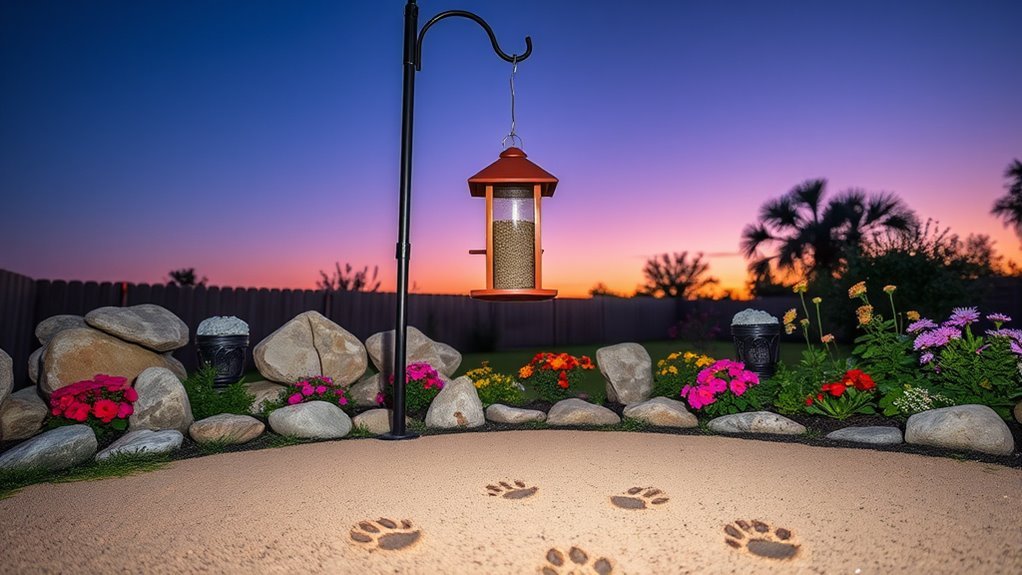
To deter raccoons from your bird feeders, placement is key. Keep feeders at least ten feet away from trees and structures. This distance makes it harder for raccoons to reach them.
Install feeders five to six feet above the ground to further limit their access. You can also use a pole with baffles to prevent climbing.
These steps will create a less inviting space for raccoons. At the same time, they'll attract more birds to your yard.
With these simple strategies, you can enjoy watching birds while minimizing raccoon interference.
Employ Natural Deterrents

To keep raccoons away from your bird feeders, use natural deterrents.
These can include repellents made from peppermint oil or vinegar. The strong scents of these ingredients can help repel raccoons without harming them. Mix essential oils with water and spray the area around your feeders. Raccoons usually dislike these strong smells.
Additionally, you can sprinkle paprika or chili powder around the base of your feeders. This acts as a natural barrier.
Using scent deterrents not only protects your feeders but also creates a more inviting space for your backyard birds. By applying these methods, you can ensure a safe feeding area while enjoying nature.
Install Motion-Activated Lights
To protect your bird feeders, consider installing motion-activated lights with motion sensors. These lights turn on when raccoons approach, startling them and preventing them from coming back. This method not only lights up your yard but also boosts your outdoor security.
Many of these lights use energy-efficient LED technology, which lowers electricity costs while providing bright light. They create a friendly atmosphere in your yard while keeping raccoons away.
Using motion-activated lights along with other deterrents gives you a strong solution to safeguard your bird feeders and enhance your backyard experience.
Use a Baffle System
Installing a baffle system helps keep raccoons away from your bird feeders. A baffle creates a barrier that stops these clever animals from climbing onto the feeders. Choose a dome-shaped or cylindrical baffle for better results.
Place the baffle at least five feet above the ground. Ensure the feeder is at least ten feet away from any trees or buildings.
Proper installation is important. Secure the baffle so it doesn't wobble, making it hard for raccoons to bypass.
Follow these steps to protect your bird feeders and create a safe place for your feathered friends.
Choose the Right Bird Seed
To attract a variety of birds while keeping raccoons away, choosing the right bird seed is essential. Sunflower seeds are popular among bird watchers because many birds enjoy them. However, these seeds can also attract raccoons.
Instead, use safflower seeds. Cardinals and some finches like safflower seeds, but raccoons generally avoid them because of their bitter flavor.
Mixing safflower with sunflower seeds can create a blend that delights your feathered friends while deterring raccoons.
Regularly Clean Bird Feeders
To stop raccoons from getting into your bird feeders, clean them regularly.
Here's how to maintain your feeders effectively:
- Empty the feeder and remove old seeds and debris.
- Use warm soapy water or a vinegar solution to disinfect the feeder. This helps eliminate mold and bacteria that attract pests.
- Rinse the feeder thoroughly and let it dry completely.
- Fill it with fresh seed.
Cleaning your bird feeders every few weeks will keep raccoons away and create a healthier space for your birds.
By maintaining this routine, you'll invite more birds while reducing unwanted visitors.
Enjoy watching your feathered friends!
Frequently Asked Questions
Can Raccoons Climb Trees to Reach Bird Feeders?
Raccoons are great at climbing trees. They can easily reach bird feeders that are hung in trees. Their agility helps them move around branches and get to the feeders. If you have bird feeders, think carefully about where you place them to keep raccoons away.
What Time of Day Are Raccoons Most Active?
Raccoons are most active at night because they are nocturnal animals. They usually come out at dusk. Their feeding times peak in the late evening. This allows them to search for food in a safer and quieter environment.
Do Raccoons Have Any Natural Predators?
Raccoons have natural predators. Coyotes and foxes hunt raccoons. Domestic dogs and mountain lions can also pose a threat. Recognizing these relationships is important for understanding local ecosystems.
Can Raccoons Damage My Bird Feeder?
Yes, raccoons can damage your bird feeder if it is made from weak materials. To protect your bird feeder, use strong materials and effective raccoon deterrents. This will help keep your feeder safe and provide a secure feeding place for birds.
Are Raccoons Attracted to Other Food Sources Nearby?
Raccoons are drawn to various food sources nearby because they have diverse food preferences. They are often found in areas where food is easy to access. Common food sources include unsealed trash and pet food. This easy access to food brings raccoons into your yard.

Hello, I’m Amelia White, the founder of birdsfanatic.com. As a lifelong bird enthusiast and spiritual seeker, I’ve always been fascinated by the mystical connections between birds and the human experience. On this site, I share my knowledge and insights into the symbolic meanings and spiritual significance of various bird species, exploring their roles in mythology, folklore, and cultural traditions. Join me on this journey into the world of birds, where we’ll discover the hidden wisdom and guidance that these magnificent creatures have to offer.