Keeping Birds Out of Hanging Ferns: Proven Methods
If you want to keep birds away from your hanging ferns, it helps to know how they behave and what they like. You can use different methods to protect your plants from birds. These include picking the right spot for your ferns, using physical barriers like nets, and adding reflective items to scare birds off. Each method has its benefits, and combining them can lead to better results. Test out different approaches to find what works best for your ferns while keeping them safe and healthy.
Key Takeaways
- Hang ferns in shaded areas away from bird perches to reduce nesting and roosting opportunities.
- Implement lightweight netting or grids to physically block birds while allowing sunlight and air.
- Use reflective objects like aluminum foil or Mylar balloons to deter birds through light and movement.
- Incorporate sound deterrents, such as ultrasonic devices or distress signals, to scare away birds.
- Regularly check and replace deterrents to maintain their effectiveness in keeping birds away.
Understanding Bird Behavior and Preferences
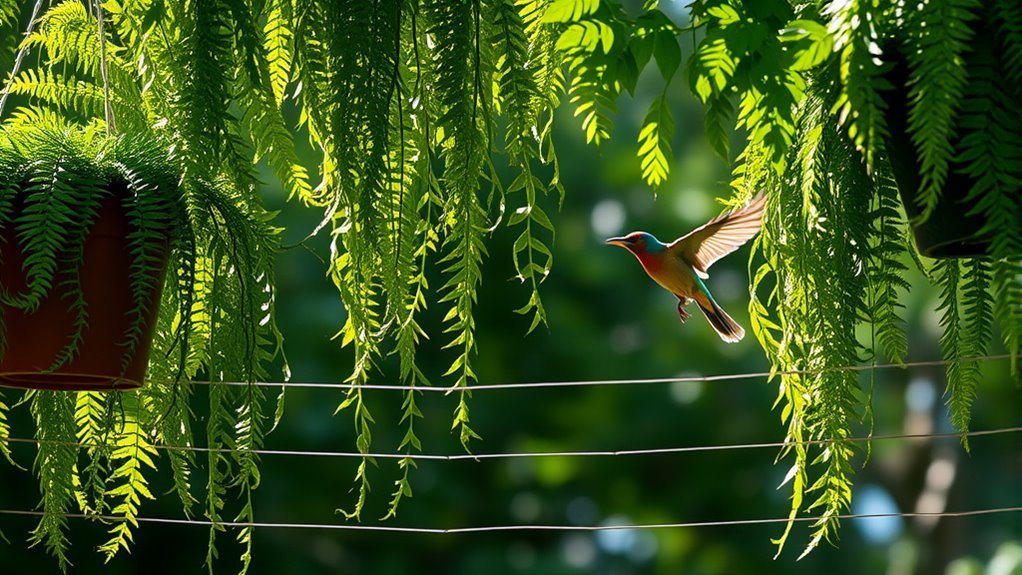
To keep birds away from your hanging ferns, it helps to understand how they behave. Birds like green areas because they offer shelter and nesting spots. Your ferns might look attractive to them.
Additionally, if you have bird feeders nearby, they may draw in more birds, as they search for food and safety.
Birds often nest in protected spots, away from disturbances. To discourage them from settling in your ferns, consider limiting nearby food sources and adding barriers.
This way, your ferns can stay safe while you enjoy a lively outdoor space.
Choosing the Right Location for Your Hanging Ferns
Where should you hang your ferns to avoid bird interference? Choosing the right spot is important for the health of your ferns and to keep birds away. Here are some factors to consider:
- Shade: Select areas that offer shade. Too much sunlight can harm your ferns.
- Accessibility: Place your ferns where you can easily reach them for watering and care, while also deterring birds.
- Distance from perches: Avoid hanging ferns near anything that birds might land on, such as nearby structures or plants.
These tips will help you create an ideal environment for your ferns while minimizing bird activity. Enjoy the beauty of your plants without the distraction of birds!
Physical Barriers: Netting and Grids
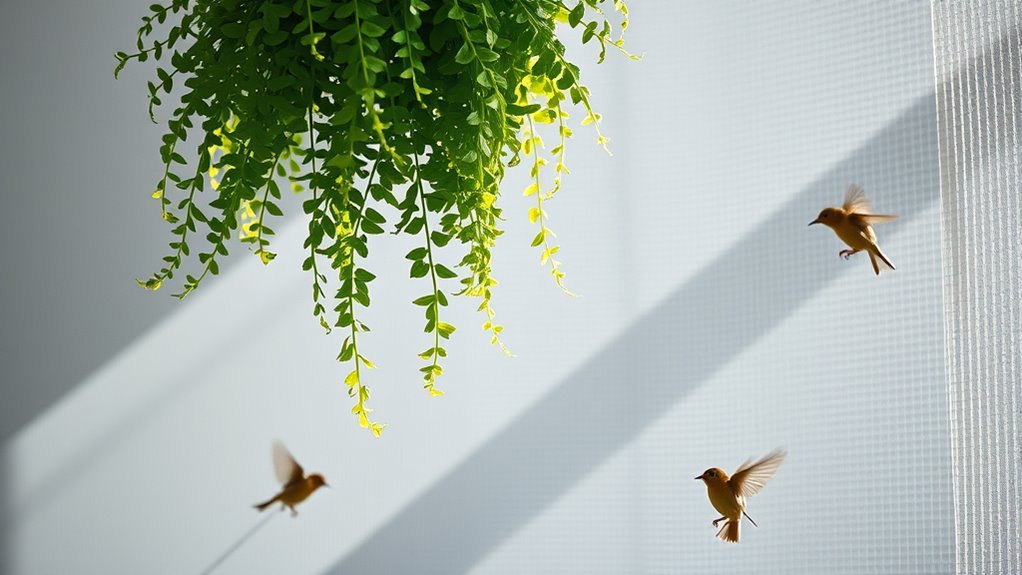
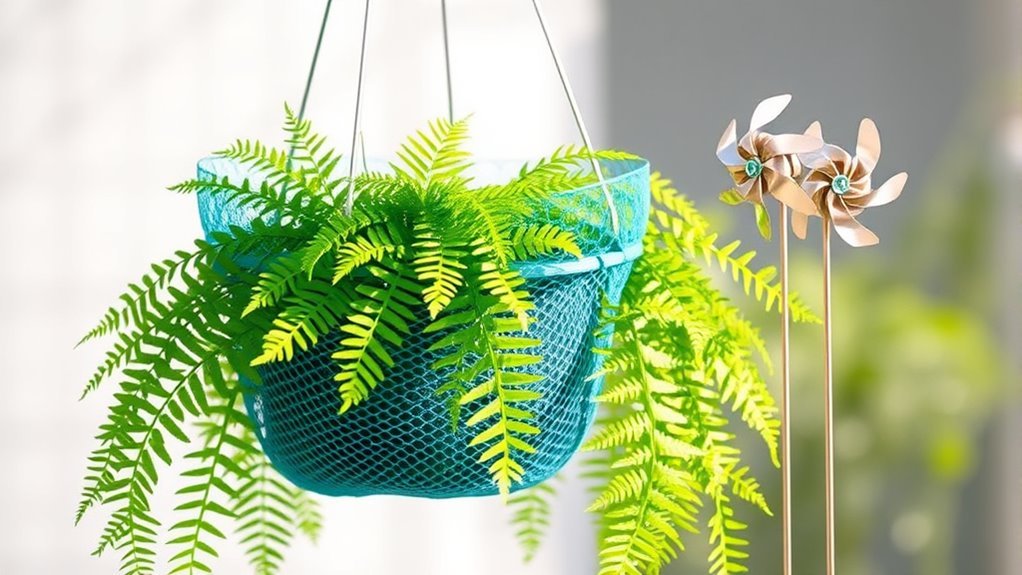
To protect your hanging ferns from birds, use physical barriers like netting and grids.
Choose netting types such as mesh or bird netting based on the level of protection you need. Select lightweight, UV-resistant materials that won't harm your ferns while keeping birds away.
When installing netting, ensure that the grid spacing is small enough to block birds but large enough to let sunlight and air flow through. Secure the netting tightly to prevent gaps where birds might enter.
Reflective Objects: Scaring Away Birds
To protect your hanging ferns from birds, use reflective objects that scare them away.
These items create light reflections that make your plants less appealing to birds. Consider these effective options:
- Reflective tape: Hang strips around your ferns. The tape moves and reflects light, which deters birds.
- Shiny objects: Use old CDs or pieces of aluminum foil. Their surfaces reflect light well.
- Mylar balloons: Let them float in the breeze. The movement and shine will help keep birds away.
Using these methods can help safeguard your hanging ferns successfully.
Sound Deterrents: Using Noise to Keep Birds Away
Sound can effectively deter birds from your hanging ferns. You can use sound devices that mimic bird calls or distress signals to create an unwelcoming environment for unwanted birds. These devices can imitate sounds of natural threats, encouraging birds to leave.
Handheld ultrasonic devices repel birds silently without disturbing your space, while traditional sound options can provide a more noticeable deterrent. Try different sounds to see which ones work best for your ferns.
With these sound strategies, you can protect your plants and keep them bird-free. A little noise can help maintain the beauty of your hanging ferns.
Plant Companions: Using Companion Plants
To protect your hanging ferns from birds, use companion plants that naturally deter them.
Choosing the right plants can make your space more appealing and less inviting to birds.
Here are three helpful companion plants:
- Lavender: Its strong scent can confuse birds and keep them away.
- Marigolds: The bright colors and scent help cover your ferns and make them less noticeable.
- Mint: Its strong aroma can discourage birds from approaching your ferns.
Water Features: Utilizing Motion to Deter Birds
When creating a calm outdoor space, consider adding water features to help keep birds away from your hanging ferns. Moving water can disturb birds, making them feel uneasy. You might choose to install a small fountain or a cascading water feature. The constant movement of water can disrupt their usual habits, prompting them to seek quieter areas.
The sounds of flowing water can also mask the noise of rustling leaves, making your ferns less attractive to birds. Place the water feature close to your ferns for the best effect.
This way, you can protect your plants while enhancing the beauty of your garden. By incorporating these elements, you create a relaxing retreat that allows your greenery to thrive, free from feathered visitors.
Regular Maintenance: Keeping Your Ferns Pruned
Pruning your ferns is important for their health and appearance. Effective pruning encourages growth and helps keep unwanted birds away.
Regular maintenance improves the look of your ferns and helps them thrive. Follow these key steps:
- Remove dead or yellow fronds to improve overall health.
- Trim overgrown areas to create a balanced look.
- Clean your pruning tools between cuts to avoid spreading disease.
Regular pruning keeps your ferns healthy, discourages unwanted visitors, and creates a vibrant environment.
With consistent care, you can enjoy lush, beautiful ferns in your space.
Creating a Bird-Friendly Area Nearby
After pruning your ferns, create a bird-friendly area nearby. This can attract birds away from your hanging ferns.
Place bird feeders filled with seeds and suet to draw in various bird species. Position the feeders at a safe distance from your ferns. This step will help keep birds from pecking at them.
Also, add nesting materials like twigs, dried grass, and feathers in this area. This encourages birds to build nests close by instead of in your ferns.
Seasonal Strategies: Adjusting for Changing Wildlife Patterns
As the seasons change, bird behaviors shift. This affects your efforts to protect hanging ferns.
Understanding seasonal migrations and habitat changes helps you plan effectively. Here are practical steps to consider:
- Watch bird activity: Observe which birds visit your area in different seasons.
- Change deterrents: Use deterrents that match the specific birds arriving or leaving each season.
- Seasonal planting: Grow plants that attract different birds, keeping them away from your ferns.
Frequently Asked Questions
How Do I Identify Which Birds Are Visiting My Ferns?
To identify the birds visiting your ferns, observe them at different times of the day. Pay attention to their size, colors, and markings. Use a feather identification guide to compare features and determine the bird species. This process will deepen your appreciation for these feathered visitors. Enjoy watching and learning about the birds in your garden!
Can Hanging Ferns Be Toxic to Birds?
Yes, some hanging ferns can be toxic to birds. This can pose risks to their health and safety. It is important to research specific types of hanging ferns before adding them to your home. This research will help you create a safe environment for both your plants and any visiting birds. Always prioritize the well-being of wildlife while enjoying your plants.
What Time of Year Are Birds Most Likely to Invade Ferns?
Birds are most likely to invade ferns during the spring. This is when they migrate and build nests. They look for safe places to rest and lay eggs. It is important to protect ferns during this time.
Are There Specific Birds That Prefer Nesting in Hanging Ferns?
Certain bird species, such as wrens and sparrows, prefer to nest in hanging ferns. They find the dense leaves of ferns safe and cozy for their nests. If you want to protect your plants, it is important to keep this nesting behavior in mind.
How Can I Safely Relocate Birds From My Hanging Ferns?
To safely relocate birds from hanging ferns, use humane methods. Start by gently encouraging the birds to leave. You can do this by making noise or waving your hands near the ferns. Also, place alternative nesting options close by, like small birdhouses. This gives the birds a new place to settle. Make sure to keep the area calm and quiet during the process. This helps reduce stress for the birds as they move to a new location.

Hello, I’m Amelia White, the founder of birdsfanatic.com. As a lifelong bird enthusiast and spiritual seeker, I’ve always been fascinated by the mystical connections between birds and the human experience. On this site, I share my knowledge and insights into the symbolic meanings and spiritual significance of various bird species, exploring their roles in mythology, folklore, and cultural traditions. Join me on this journey into the world of birds, where we’ll discover the hidden wisdom and guidance that these magnificent creatures have to offer.