
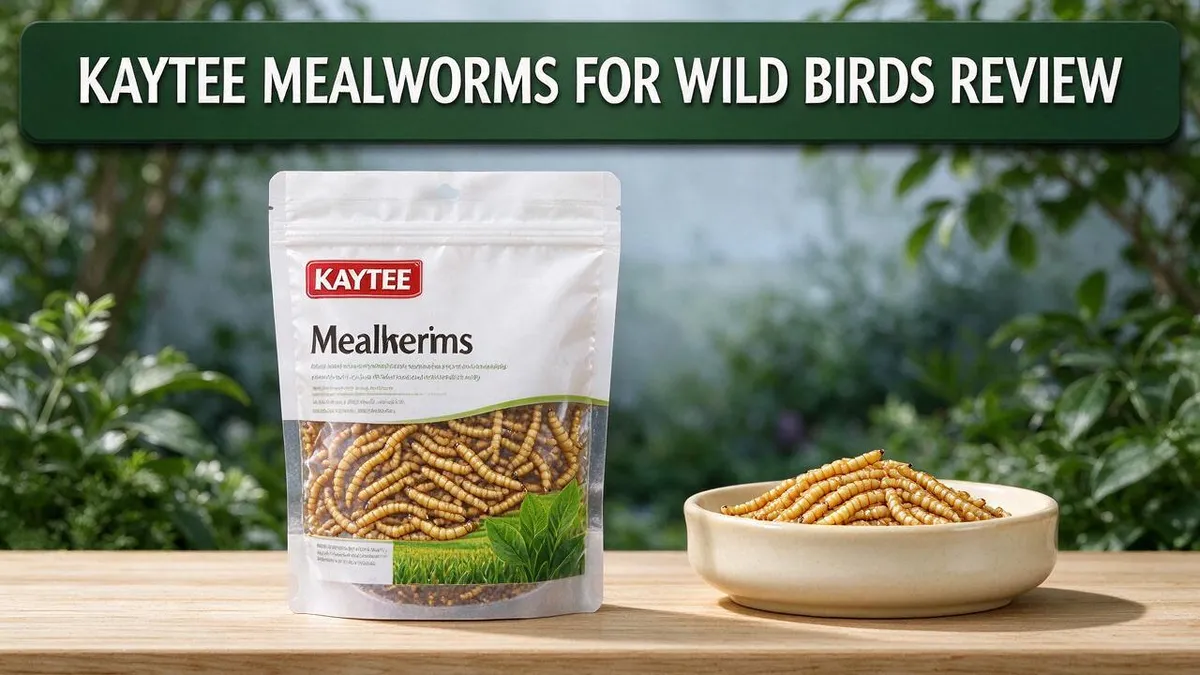
Kaytee Mealworms for Wild Birds Review 2026: Value for Money?
Do you want more bluebirds, wrens, and chickadees in your yard? Kaytee Mealworms for Wild Birds may help you get there.
This treat comes as dried mealworms. Birds get a protein and calcium boost, which matters during spring nesting. Cornell Bird Lab notes that this food helps baby birds too.
Shoppers like it. The Chewy listing shows 4.8 out of 5 stars from 1.1K reviews. Robins, woodpeckers, and cardinals also visit feeders with mealworms.
In a Nutshell
- Wide bird appeal: Robins, woodpeckers, and cardinals visit feeders with this treat too. Bluebirds and wrens remain the main fans.
- Nutrition boost: The mealworms give birds high energy, protein, and calcium. Cornell Lab of Ornithology notes this helps during spring nesting.
- Baby bird support: Parent birds often carry mealworms to their young. This makes the treat a useful food in nesting season.
- Mixed seed caution: Some users say Kaytee wild bird mixes contain too much filler, such as red millet. A pure mealworm treat avoids that problem.
- Live option: One source says live mealworms work better in several ways. They may also suit baby birds better.
- Main alternative: The Wild Birds Unlimited exclusive mix offers high fat seeds, Bark Butter Bits, dried mealworms, and peanuts. It suits people who want more variety in one feeder.
Ingredients and Nutritional Value

- Kaytee Mealworms are an excellent, high-protein food source for many wild birds. They are a high-energy treat that will attract many species of birds that are difficult to attract with traditional seed blends.
- Attract Bluebirds, Wrens, Robins, Chickadees, Woodpeckers and Cardinals

Last update on 2026-06-10 / Affiliate links / Images from Amazon Product Advertising API Some of the links on this website are affiliate links, which means that at no additional cost to you, I earn a commission if you click through and make a purchase. I only recommend products and services that I believe will add value to my readers. Thank you for your support!
Ingredients matter when you pick a treat for your feeder. This product keeps things simple. Its main ingredient is 100% dried mealworm, so you know exactly what birds eat.
Mealworms are insect larvae that many birds recognize as natural prey. Birds already hunt insects during spring and summer. This treat offers that familiar food in a dry, easy form.
Dry food also stores easily. You can keep a sealed pouch on a shelf. Live mealworms need special containers and daily care, so many people find dried versions simpler.
Still, the nutrition is not complete on its own. Birds also need seeds, fruit, or suet for fat and carbohydrates. Pair this treat with other foods for a balanced menu.
Read labels with care. Ingredient lists can change over time, so check each new bag. Look for dried mealworm listed first. This helps you know what your birds receive.
Choose a fresh pouch each time. Dried foods lose quality when air gets in. Keep the bag closed tightly to protect nutrients.
Filler matters too. Many seed blends include fillers that birds often toss aside. A single ingredient treat avoids that waste. Less waste means cleaner feeders and fewer leftovers on the ground.
Think about moisture too. Dried mealworms stay crisp and do not spoil like fresh food when kept dry. Store the pouch in a dry spot to keep them that way.
Mix the treat into a bowl with cracked nuts or fruit slices. Small pieces attract a wider range of visitors. Try a few styles to see what your yard prefers. Think of this treat as a helper, not a full meal.
Bird Species Attracted and Feeding Response
Feeding response depends on the bird and the setting. Some visitors dive in right away. Others take several days to notice the new treat.
Bluebirds and robins often search the ground and nearby branches first. Chickadees and woodpeckers usually grab pieces from a tray or a feeder perch. Cardinals may wait until the yard feels calm and quiet.
Ignoring the treat is normal. Birds that already enjoy a favorite mix may skip new food at first. This does not mean the treat fails. It simply means the birds need more time to trust it.
Try a gradual introduction. Start with a small amount on a clean tray. Place it beside the usual seed so birds can compare both options. Keep the offer fresh every day.
Remove leftovers quickly. Old pieces can attract pests and spoil in damp weather. Check the tray each morning and clear anything uneaten.
Watch for steady visits. Regular trips to the tray show real interest. Few or no visits suggest the birds need more time or a different feeding spot. Patience works best here.
Track which birds respond. Keep a simple log of the species that visit each day. Notes show which birds like the treat most. Over several weeks, the patterns become clear.
Expect seasonal changes. Interest often rises during busy nesting months. Birds look for extra energy then. Activity may drop during hot weather, so keep the tray shaded and fresh.
Packaging, Sizes and Freshness
Kaytee sells this treat in three sizes. You can choose a 3.5 oz pouch, a 7 oz treat size, or a large 17.6 oz bag. Each size suits a different feeding plan.
The small pouch works well for a first try. Trying a small size first lets you see whether your birds show interest before you buy more. It also fits easily in a kitchen cupboard.
The 17.6 oz bag makes more sense for daily feeding. Busy feeders empty food quickly, so a larger bag saves frequent trips to the store. Keep the bag sealed tightly between uses.
Packaging plays a big role in freshness. Look for a package with no tears, holes, or crushed corners. Damaged packaging lets air and moisture reach the food.
Once you open a bag, move a portion into a clean container. Pour out only what you need for the week. This keeps the rest protected from light and warm air. Write the opening date on the bag with a marker so you know how long it has been open.
Check the mealworms before each refill. Fresh pieces look light and dry with a mild smell. Pieces that look clumped, discolored, or musty should go in the trash, not the feeder.
Your feeding habits matter too. A single family of birds may eat only a handful each day, while a busy yard may need much more. Estimate your daily use for a few days, then choose the size that matches your routine.
Plan your purchases around your bird activity. Buy a smaller size during quiet months and a larger bag when your feeder stays busy. This approach helps you use the food while it still tastes fresh and looks appealing to birds.
Top 3 Alternatives
Kaytee Mealworms are a popular choice for backyard birds. If you want other options, these three products are worth a look. Each one offers a simple way to add protein to your feeder.
Pine Tree Farms Mealworms

- Package of 8 large seed cakes for your backyard birds
Last update on 2026-11-13 / Affiliate links / Images from Amazon Product Advertising API Some of the links on this website are affiliate links, which means that at no additional cost to you, I earn a commission if you click through and make a purchase. I only recommend products and services that I believe will add value to my readers. Thank you for your support!
Pine Tree Farms Mealworms give birds a natural treat that many feeder visitors enjoy. Bluebirds, wrens, and chickadees often come to feeders stocked with mealworms like these. They work well for people who want a simple, familiar snack for their yard.
You can scatter them on a platform feeder or fill a small dish. Wild birds tend to find them quickly.
Wild Delight Mealworms

- High protein content gives birds plenty of sustained energy.
- The convenient resealable package provides lasting freshness.
Last update on 2026-11-13 / Affiliate links / Images from Amazon Product Advertising API Some of the links on this website are affiliate links, which means that at no additional cost to you, I earn a commission if you click through and make a purchase. I only recommend products and services that I believe will add value to my readers. Thank you for your support!
Wild Delight Mealworms are a good pick for busy bird feeders. They offer a steady source of protein during nesting season. Parent birds need extra energy to feed their young, and this food helps them do that.
Store the bag in a cool, dry place. Keep the container sealed so the mealworms stay fresh longer.
Sunseed Dried Mealworms

- TRAIL MIX FOR HEDGEHOGS; Chock-full of freeze dried mealworms and strawberries, plus tasty add-ins like celery, bell pepper, and egg, this trail mix snack is fun for both you and your hedgehog!
- SIMULATES FORAGING; Wigglers & Berries activates your hedgehog's natural feeding behaviors and foraging instincts, making them feel like they're back in the great outdoors.
Last update on 2026-11-13 / Affiliate links / Images from Amazon Product Advertising API Some of the links on this website are affiliate links, which means that at no additional cost to you, I earn a commission if you click through and make a purchase. I only recommend products and services that I believe will add value to my readers. Thank you for your support!
Sunseed Dried Mealworms are easy to serve and easy to store. The dried form means less mess than live options. Robins, jays, and many other birds will eat them right from a tray.
Try mixing them with other seed for a varied meal. Birds enjoy a little variety.
Pick the option that fits your feeder style and the birds you see most. Offering a few choices can keep your yard busy all year long.
Dried vs. Live Mealworms: Which Is Better for Baby Birds?
Baby birds need soft and moist food. Live mealworms offer that texture naturally. Dried mealworms feel firmer and drier in the beak.
Parent birds usually hunt live insects for their chicks. This habit explains why many people think live mealworms suit nestlings better. One source makes that same claim in several ways.
Dried mealworms still have value. They avoid the mess of live pests escaping into the yard. Many families use them as a steady backup.
Chick size matters too. Very young nestlings struggle with hard bits. Chop dried pieces into tiny crumbs so chicks can swallow them safely.
Live worms trigger a strong hunting response. Adult birds often react fast to movement. That reaction can draw parents to the feeder during nesting. Dried pieces lack that motion, so adults may ignore them at first.
Live worms also carry real drawbacks. They need a cool container and daily care. Large worms can also be hard for small chicks to handle.
A mixed plan often works best. Offer dried mealworms at the feeder for the adults. Provide a small amount of live insects only when nests are active and you can manage them safely. Keep the feeder clean every day.
Give the parents space. Watch from a distance so they feel safe. Frequent visits by people can scare adults away from the feeder during nesting.
Final thoughts for new feeders. Dried mealworms suit most backyard setups. Live mealworms may suit experienced keepers who want a closer match to natural prey. Choose the option that fits your setup and your local birds. Watch your yard and adjust over time. Small changes often lead to better results.
How to Offer Mealworms: Feeders and Seasonal Tips
Pick the right feeder first. A shallow platform feeder gives birds plenty of landing room. Cup style feeders also work well because they hold the worms in one spot.
Add a small roof above the tray. A roof keeps the mealworms dry during light rain and snow. Birds also feel safer when they can see cover overhead.
Place the feeder near shelter. Put it a few feet from shrubs or a fence line. Birds can dart to cover if a hawk or cat appears. Avoid spots right under busy windows, since birds may crash into the glass.
Scatter a thin layer instead of a heap. Spread the mealworms out so several birds can eat at once. Crowded piles often leave some birds waiting their turn.
Think about the season. In winter, birds burn more energy to stay warm. Offer a fresh supply on cold mornings. In hot summer weather, offer smaller amounts so the treat stays cool and dry.
Plan for molting season. Many adult birds lose feathers in late summer. They need extra protein to grow new ones. Keep the feeder stocked through this period so they have steady fuel.
Adjust for fall migration. Migrating birds stop to refuel along their route. A steady supply can help them rest and build fat reserves. Keep the tray filled for several weeks.
Consider your local birds. Check which species live in your area during each season. Winter residents and summer visitors need different amounts of food. Adjust your offerings to match them.
Watch the weather closely. Heavy rain can wash mealworms off the tray. Bring the feeder inside or move it under a roof when storms arrive.
Value for Money and Where to Buy
Many backyard feeders need food that birds want to eat every day. Kaytee Mealworms for Wild Birds fits that role well. Bluebirds, wrens, robins, chickadees, woodpeckers, and cardinals all seek it out.
This mix earns strong reviews from shoppers. Chewy shows a 4.8 out of 5 star rating from 1.1K reviews. That rating suggests many owners feel satisfied with their results.
The Cornell Bird Lab notes its energy benefits. The worms offer protein and calcium. Parent birds often need that boost during spring nesting.
Check the label before you buy. Look for the words 100 percent dried mealworm. Some shoppers find too much red millet filler in Kaytee wild bird mixes, so read the ingredients list closely.
Chewy is a popular place to buy. The online retailer lists this product with easy delivery to your door. Online shopping also lets you compare reviews before you order.
Local stores are another option. Many feed and garden shops carry Kaytee products. Call ahead to confirm stock, since some shelves run low during busy seasons.
Compare other options too. Wild Birds Unlimited sells a mix with high fat seeds, Bark Butter Bits, dried mealworms, and peanuts. Live mealworms are another choice, and one source calls them better for baby birds.
Some birds ignore the mix at first. Many birds stick with old habits. Offer a small amount next to familiar food and give them time to try it.
Watch your yard after the first week. Note which birds show up daily. Keep a simple log of visits, which helps you decide whether to reorder the same mix or try something new.
Start with one bag and observe. See which birds visit and how fast the food disappears. That simple test shows you whether this mix fits your backyard.
Pros and Cons
Pros
- Bluebirds, wrens, robins, and cardinals often visit for this treat.
- Chickadees and woodpeckers also go for it.
- It draws in a mix of backyard songbirds.
- It gives a quick energy boost to busy feeders.
- It works well as a simple, single ingredient snack.
Cons
- Some Kaytee mixes include red millet filler.
- Birds used to other food may skip it at first.
- Some bird experts rank live mealworms higher for young birds.
- A bag can empty fast at a busy feeder.
Who Should Buy It
This treat suits people who want a simple feeding plan. Many shoppers feel lost in long ingredient lists. One item makes the choice easy to understand and track.
Nest box owners also benefit from this product. Parents raising chicks need extra protein during the busy season. A reliable supply helps them feed hungry young without constant trips to the store.
Gardeners who love close bird watching should consider it. Birds often stay longer at a feeder when they find a favorite food. Longer visits give you more chances to see bright colors and fun behaviors up close.
People who already use a seed mix full of filler may want to switch slowly. Some birds ignore new food at first. Mixing a small amount into their usual blend can help them adjust over several days.
Shoppers who prefer live food might look elsewhere. Some people want fresh, moving food for their birds, and that choice makes sense. Live options also feel more natural to some keepers, so they may suit you better.
Busy households should plan for regular restocks. A pouch can run out quickly during peak months. Keeping a spare on hand helps your feeder stay full when the birds arrive. It also saves a trip during rainy weeks.
Beginners who want to start feeding birds can try it first. It offers a low risk way to see which species visit your yard. Watch the feeder for a week and write down each bird you spot.
In short, this product fits people who want clear and simple feeding goals. It suits nest box owners, close watchers, and new feeders alike. Choose it if you want birds to visit often and stay close.
Final Verdict
Kaytee Mealworms for Wild Birds earns a clear recommendation from me. It does one job, and it does that job well.
The 4.8 out of 5 rating from over 1,100 shoppers backs that view. Happy buyers keep coming back for more.
This treat works best as a bonus food, not a full meal. Birds still need seed, suet, and clean water.
Start with a small handful on a tray feeder. Watch which birds arrive first. Then adjust the amount.
Place the treat near your nest boxes in spring. Parent birds will spot it fast and carry it to their young.
Keep the pouch sealed and stored in a cool, dry spot. Dry food stays fresh longer when moisture stays out.
Mix a few worms into your usual seed. This gentle switch helps picky birds accept the new flavor.
Be patient with shy visitors. Some birds need a week or two before they try something new.
Birds also gain a steady energy source on cold mornings and busy migration days.
Pair the worms with a shallow dish of water. Birds love a drink and a splash after a snack.
Check the tray each evening. Remove leftovers so pests stay away. Clean your feeder often, too.
Who should skip it? Anyone who insists on live food should look at live mealworms instead. Those birds will enjoy the movement and moisture.
My verdict: Kaytee Mealworms is a simple, protein rich treat that brings lively songbirds close to your window. I recommend it for any backyard feeder.
Give it a try this season. Your backyard birds may thank you with daily visits.
Frequently Asked Questions
Can baby birds eat dried mealworms?
Yes, parent birds often bring protein to their young during nesting season. Dried mealworms offer protein and calcium, which help growing chicks. Live worms may suit nestlings even better, so treat the dried version as a helpful extra rather than the only option. Watch the nest area, and avoid placing food where chicks could choke on large pieces.
Can I serve this treat in winter?
Yes, the high energy content helps birds handle chilly weather. Keep the pouch dry, because damp food can spoil fast and grow mold. Sprinkle only what birds eat in a day or two, and remove any clumped or stale worms right away.
Can I mix it with other treats?
Yes, you can scatter it beside fresh fruit or suet cakes. Small portions work best so birds still eat their regular food. Clean the feeding tray often, since leftover bits can attract insects and pests.
How can I keep squirrels and pests away?
Choose a feeder with a squirrel baffle or a protective cage. Offer only a small handful at a time. Sweep up spills each day so unwanted visitors have less reason to stay.

Hello, I’m Amelia White, the founder of birdsfanatic.com. As a lifelong bird enthusiast and spiritual seeker, I’ve always been fascinated by the mystical connections between birds and the human experience. On this site, I share my knowledge and insights into the symbolic meanings and spiritual significance of various bird species, exploring their roles in mythology, folklore, and cultural traditions. Join me on this journey into the world of birds, where we’ll discover the hidden wisdom and guidance that these magnificent creatures have to offer.


