

How to Stop Birds From Eating Your Strawberries and Blueberries
Birds often eat strawberries and blueberries, which can be frustrating for gardeners. To protect your fruit, it's important to understand how birds behave and what they like. There are several methods you can use to prevent birds from damaging your crops.
- Netting: Cover your plants with bird netting. This physical barrier stops birds from reaching the fruit but allows sunlight and rain to nourish your plants.
- Scare Tactics: Use scare devices, like reflective surfaces or fake predators, to deter birds from coming near your garden. These can include shiny tinsel strips or plastic owls.
- Environment Alteration: Make your garden less appealing to birds. Keep the area tidy and remove any food sources, like fallen fruits and seeds.
By combining these methods, you can create a protective environment for your strawberries and blueberries, reducing the chances of bird damage and ensuring a better harvest.
Key Takeaways
- Use lightweight netting with a mesh size between 3/8 inch to 1 inch to protect your strawberries and blueberries from birds.
- Install visual deterrents like fake owls or shiny objects to scare birds away from your crops.
- Hang reflective materials such as old CDs or aluminum foil strips to create flashes that frighten birds.
- Employ noise-making devices like wind chimes to disrupt the feeding habits of nearby birds.
- Position garden decoys of predators and regularly change their placements to maintain their effectiveness against birds.
Understanding Bird Behavior and Preferences
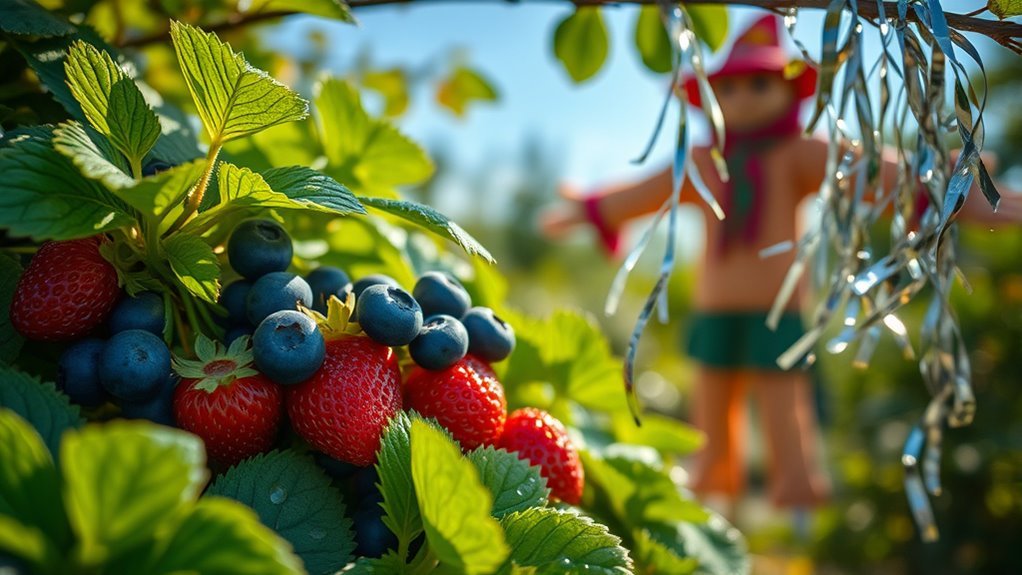
To stop birds from eating your fruit, you need to understand their behavior and food choices. Birds have specific habits for finding food and different preferences for each season. In spring and summer, many birds look for ripe fruits.
They're drawn to bright colors and sweet smells. Birds often pick fruit when it's at its peak ripeness.
Watch the local bird species in your area. Take note of when they search for food and which fruits they like best. You can adjust your gardening methods based on what you observe.
This will help you protect your strawberries and blueberries. With these tips, you can enjoy your harvest and the fruits of your labor.
Use Netting to Protect Your Berries
To protect your berries from birds, use netting. You can choose from lightweight polypropylene or heavier options that resist UV damage.
Select a mesh size between 3/8 inch to 1 inch. This size will deter birds while still allowing sunlight and rain to nourish your plants.
Install the netting with support from stakes or hoops. Make sure the netting sits above the plants, preventing birds from landing on the berries.
Regularly check for any gaps or holes where birds might enter. This simple method keeps your harvest safe and helps your garden thrive with delicious fruit.
Install Scare Tactics
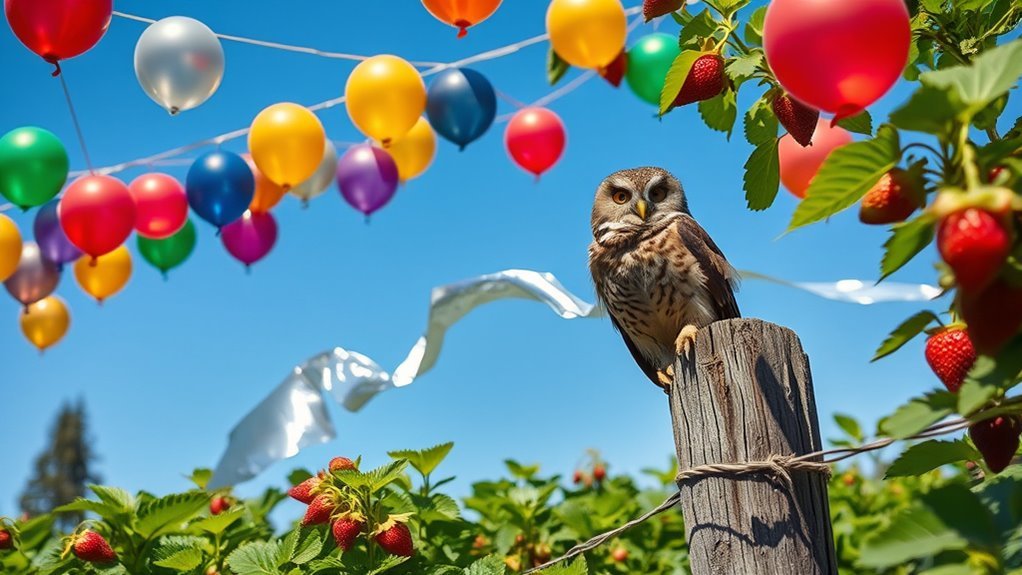
After you cover your berries with netting, you can use scare tactics to keep birds away from your fruit.
Visual deterrents like fake owls or shiny objects can effectively make birds avoid your garden. Place these items around your strawberries and blueberries to create a strong presence.
You can also use noise-making devices, such as wind chimes or aluminum foil strips, to create unexpected sounds that can disrupt birds while they feed.
Change the placement of these deterrents often so birds don't get used to them.
Employ Reflective Materials
Using reflective materials can help keep birds away from your fruit. Birds are often frightened by bright flashes of light from shiny surfaces. This makes reflective materials useful for your garden.
You can hang old CDs, strips of aluminum foil, or reflective tape near your strawberry and blueberry plants. The light and movement from these items confuse birds and disrupt their view, making your fruit less tempting.
By using these simple methods, you can create a bird-free space for your fruit plants. This ensures your harvest stays safe and plentiful.
Enjoy a good yield of berries without the worry of bird damage.
Consider Garden Decoys

To protect your fruits from birds, use garden decoys. Place reflective materials and natural decoys, such as decorative statues or predator replicas, in your garden. Choose ornaments that look like hawks or owls, as birds recognize these predators.
Place the decoys near your strawberries and blueberries to reduce bird presence.
To maintain their effectiveness, change the positions of the decoys regularly. Birds can get used to stationary threats, so rotating them can help.
This strategy not only protects your harvest but also adds beauty to your garden. Try these simple tactics and enjoy a fruitful yield!
Use Bird Spikes and Physical Barriers
Using physical barriers like bird spikes and netting is an effective way to protect your fruit from birds.
Bird spikes, made from plastic or metal, are easy to install on ledges or fences. They prevent birds from landing near your strawberries and blueberries without harming them.
Netting is another strong option. It covers your plants while allowing sunlight and rain to reach them. Make sure to choose netting with small openings to keep birds out without letting them get trapped.
By using these barriers, you create a safe space for your fruit to grow and thrive.
You'll also connect with other gardeners who share similar struggles. Together, you can find effective solutions for keeping birds away from your plants.
Create a Sound Environment
To keep birds away from your fruit, you can create a sound environment that's effective and simple. Noise deterrents can imitate natural dangers, making birds less likely to visit your garden. You can use devices that produce high-frequency sounds or random bird calls. These signals warn birds of potential threats. This strategy helps protect your strawberries and blueberries.
You can also add wind chimes or reflective tape. These items create unexpected sounds that can further disturb birds.
Using a mix of sound sources improves your results. By doing this, you not only safeguard your harvest but also create a pleasant atmosphere in your outdoor space, making it inviting for you and your plants.
Plant Companion Plants
Planting companion plants helps keep birds away from your fruit. Flowers like marigolds and nasturtiums confuse birds and distract them from strawberries and blueberries.
Herbs such as basil and mint repel birds while attracting pollinators that benefit your garden.
You can also create barriers using taller plants or trellises to hide your fruit, making it harder for birds to reach.
Consider using netting over your plants to protect your harvest.
Harvesting Strategies for Success
Effective harvesting strategies can help prevent birds from eating your fruit. Start by choosing the right time to harvest. Pick berries in the early morning or late afternoon, as birds are less active during these times.
To ensure the berries are ripe, observe their color. Strawberries should be fully red, while blueberries should be a deep blue.
When harvesting, handle the berries gently to avoid bruising. Consider involving friends in your harvest to create noise and movement, which can deter birds.
Regularly check your fruit and harvest it promptly to reduce the risk of bird interference. Enjoy your delicious berries!
Frequently Asked Questions
What Types of Birds Are Most Attracted to Strawberries and Blueberries?
When you watch birds like robins, sparrows, and blue jays, you see their clear behaviors. These birds love strawberries and blueberries. They are attracted by the bright colors and sweet smells of these fruits.
Are There Specific Times When Birds Are More Likely to Eat Berries?
Birds usually eat during dawn and dusk. These times are when food is most available. Seasonal migration can also lead to increased berry eating. Birds look for food sources during migration, making your garden a good place for them to find berries.
What Natural Repellents Can Deter Birds Without Harming Them?
To naturally deter birds, use spicy sprays made from capsicum or chili extracts. These sprays irritate their senses. You can also place reflective objects, such as old CDs, around your garden. The light reflections can confuse and scare the birds away. These methods help protect your garden while keeping the birds safe.
Do Certain Berry Varieties Attract More Birds Than Others?
Certain types of berries attract more birds because of their taste and nutritional value. For instance, elderberries, blueberries, and blackberries are popular among many bird species. When you choose specific berry plants, you can invite more birds to your garden. This choice not only brings enjoyment but also supports local wildlife, making your gardening experience more vibrant and diverse. Choose wisely to create a welcoming environment for these feathered friends.
Can I Use Organic Methods to Protect My Berries From Birds?
You can use organic methods to protect your berries from birds. Here are some effective strategies:
- Companion Planting: Plant strong-smelling herbs or flowers near your berries. This can keep birds away.
- Scare Tactics: Use reflective materials like aluminum foil or old CDs. You can also place predator decoys, like plastic owls, in your garden to frighten the birds.
These methods can help you safeguard your berries while keeping your garden natural and healthy.

Hello, I’m Amelia White, the founder of birdsfanatic.com. As a lifelong bird enthusiast and spiritual seeker, I’ve always been fascinated by the mystical connections between birds and the human experience. On this site, I share my knowledge and insights into the symbolic meanings and spiritual significance of various bird species, exploring their roles in mythology, folklore, and cultural traditions. Join me on this journey into the world of birds, where we’ll discover the hidden wisdom and guidance that these magnificent creatures have to offer.


