
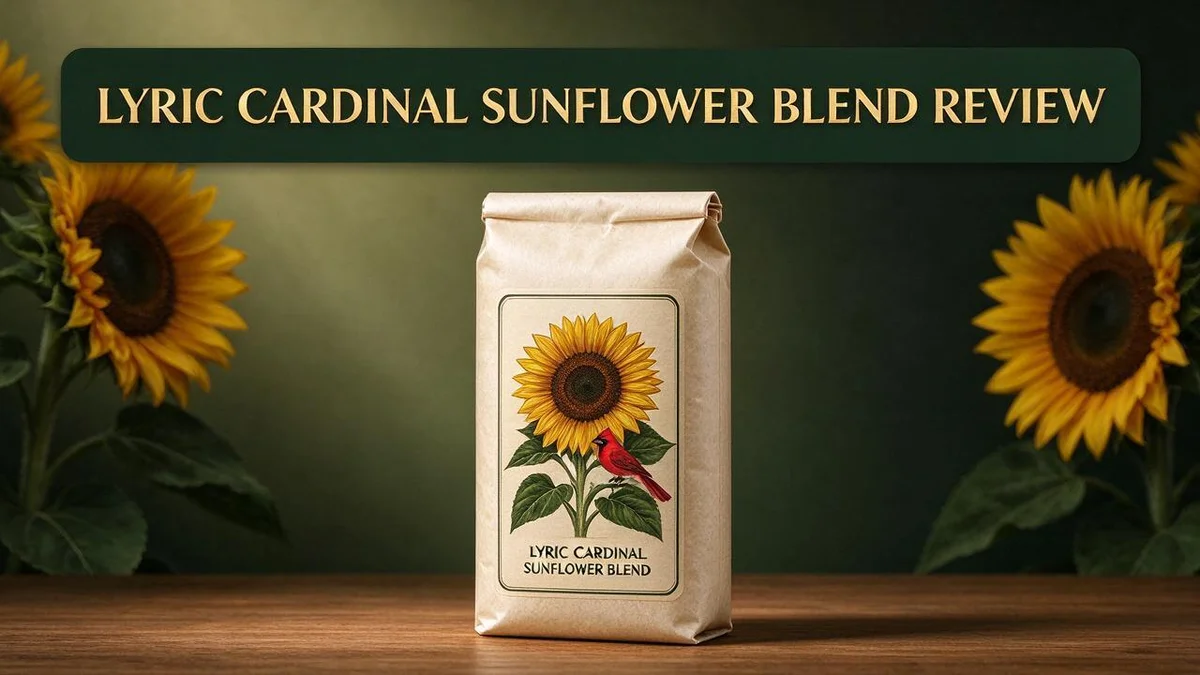
Lyric Cardinal Sunflower Blend Review 2026: Worth the Price?
Do you want more cardinals at your feeder? The Lyric Cardinal Sunflower Blend aims to help you do that. This 18 lb bag mixes sunflower seeds with golden safflower. The maker describes the safflower as an organic hybrid that is free of chemicals.
The blend is marketed with 25% higher protein. The brand does not say what it compares against. Reviewers call the seed high quality. They also say the bags are easy to handle.
One reviewer adds a little of this blend to plain sunflower seed. That trick helps reduce waste at the feeder. In this review, we look at what the blend offers and how it compares with other cardinal mixes. You will know if it fits your backyard by the end.
In a Nutshell
- Best for: Backyard birders who want to attract cardinals with a seed mix they can trust. Cardinals love both sunflower and safflower.
- Organic angle: The golden safflower is described as an organic hybrid grown free of chemicals. This appeals to people who care about what birds eat.
- Easy handling: Reviewers say the bags are easy to handle. Filling feeders feels simple, even for a large bag.
- Protein claim: The brand promotes higher protein. It does not state what it compares against, so treat the number as a marketing point.
- Documented drawbacks: Our research found no clear complaints. Still, few detailed reviews exist, so results may vary by yard and bird traffic.
- Main rivals: Cardinals’ Choice, Birdfood Cardinal Sunflower and Safflower Mix, Cardinal Confetti, and plain black oil sunflower seed. Each gives you a different balance of seed types.
Seed Composition and Ingredients

- Year-Round Wild Bird Food - For all seasons, this birdseed for outside feeders has nutrient-rich safflower and black oil sunflower seeds. Whether they're foraging in winter or nesting in spring our bird seeds for outside wild birds are a great choice
- Nutrient-Dense Sunflower Bird Seed - This premium mix contains over 70% black striped and black oil sunflower seeds for birds, ideal for bird feeders for outdoors

Last update on 2026-11-13 / Affiliate links / Images from Amazon Product Advertising API Some of the links on this website are affiliate links, which means that at no additional cost to you, I earn a commission if you click through and make a purchase. I only recommend products and services that I believe will add value to my readers. Thank you for your support!
Seed composition matters more than most people think. A good cardinal mix depends on the right balance of seeds. Sunflower seed sits at the center of this blend.
Listings for a similar sunflower and safflower mix claim over 70% sunflower. That share gives birds real food value in every scoop. Less filler means fewer seeds left scattered on the ground.
Those listings also describe a thin hull on the sunflower kernels. Thin hulls are easier for birds to crack open. Cardinals have strong beaks, yet easier seeds save them energy during busy feeding days.
Golden safflower adds a second seed type to the mix. Birds sort through the blend and pick their favorites. This mixed texture can keep your feeder busy for longer.
Plain black oil sunflower seed serves as the baseline in reviews. Reviewers often compare this blend against it. Our research did not record any ingredient concerns.
A short ingredient list makes the label easy to read. Check for seed types, hull details, and any added fillers. Simple labels help you compare rival mixes with confidence.
Storage also matters for any seed mix. Store the bag in a dry bin with a tight lid. Damp air can spoil sunflower and safflower kernels, so keep moisture away.
Thin hulls also leave less mess under the feeder. Less shell debris means a cleaner patio for you and your birds.
Shoppers who feed many species should also think about variety. Pair this blend with millet or nyjer in a separate feeder. Cardinals prefer the sunflower, while other birds may enjoy the smaller seeds.
Use a sturdy feeder with a tray for best results. Seed spills less when the tray has a low edge. Clean the tray often to prevent mold.
Protein Claims and Nutritional Value
The protein claim sounds exciting, but it needs a closer look. The research does not say what the 25% higher figure is compared with. Many seed labels leave out that detail, so shoppers should ask.
Protein plays a key role in a cardinal’s diet. Birds need it to grow new feathers during their yearly molt. Females also need extra protein when they lay eggs in spring, and this demand adds up over the season.
Sunflower kernels bring fat and energy to the mix. Cardinals burn a lot of energy on cold winter mornings. A rich seed helps them stay warm and active when food is harder to find.
Golden safflower adds a second seed type with its own nutrients. Birds that eat several seeds often get a wider range of nutrients. This can give your feeder visitors a more varied diet than one seed alone.
Your best tool is the guaranteed analysis panel on the bag. It lists minimum protein and fat percentages. Compare those numbers across brands before you decide. A clear number tells you more than a bold marketing claim.
Seed alone does not cover every need, though. Cardinals also eat insects, especially during the breeding season. Fresh water and fruit can fill other gaps in their diet. Pairing this blend with these extras gives your birds a fuller menu.
Treat the 25% figure as a starting point, not a final answer. Read the label, check the numbers, and watch which seeds your birds eat most. Your cardinals will show you what they like.
Cardinal Appeal and Feeder Performance
Northern cardinals are one of the most striking visitors to any yard. Bright red males often stop by first. Females visit too, with their soft brown coats. Both sexes enjoy a steady seed supply.
Cardinals prefer to feed while perched. They like a sturdy platform or a wide tray. This blend suits that style because the seeds sit within easy reach.
Feeder placement matters a lot. Hang the feeder near dense shrubs. Cardinals feel safer when they can dart in and out quickly.
Tray feeders work well for this mix. Larger seeds spread across the tray. Several birds can eat at once, which means less crowding.
Watch for other visitors too. Jays, doves, and finches may crowd the tray. Adding a second feeder nearby can ease the pressure.
Rain can ruin any seed mix. Keep the tray dry and clean. Wet seed can grow mold, which harms birds.
Cleaning keeps cardinals coming back. Sweep the tray every week or two. Rinse it with a mild soap solution and let it dry fully.
Patience helps too. Cardinals may take a few days to find a new feeder. Keep filling it, and they often return with their mates.
Cardinals also respond to routine. They learn feeding times quickly. Fill the feeder at the same hour each day so they know when to visit.
Winter brings the biggest feeding rush. Cold nights make birds hungry, so keep the tray stocked during snowy weeks.
Check the feeder after strong wind. Look for spilled seed and clear it away quickly. Clean seed keeps the whole flock healthy.
Top 3 Alternatives
Kaytee Wild Bird Food

- AMERICA’S EVERYDAY FAVORITE blend and a mainstay in backyard feeders. Complete with a number of different grains to attract many birds year-round.
- NOW CONTAINS 2X MORE SUNFLOWER with new formula, as well as added nutrition. Fortified with vitamins to help wild birds throughout the seasons.
Last update on 2026-06-10 / Affiliate links / Images from Amazon Product Advertising API Some of the links on this website are affiliate links, which means that at no additional cost to you, I earn a commission if you click through and make a purchase. I only recommend products and services that I believe will add value to my readers. Thank you for your support!
Kaytee Wild Bird Food gives birds a simple, everyday meal. It mixes seeds that many common backyard visitors enjoy.
It also suits beginners who are new to feeding birds. Fill the feeder and let the birds come to you. Cleanup feels easy with this mix.
Morning Song Wild Bird Food

- No Waste, No Mess Bird Food – Every ingredient is edible, making cleanup a thing of the past
- 100% Shell-Free Blend – Includes sunflower chips, peanuts, and canary seed for a no-shell, no-mess feeding experience
Last update on 2026-11-13 / Affiliate links / Images from Amazon Product Advertising API Some of the links on this website are affiliate links, which means that at no additional cost to you, I earn a commission if you click through and make a purchase. I only recommend products and services that I believe will add value to my readers. Thank you for your support!
Morning Song Wild Bird Food suits people who want a clean seed mix. The blend focuses on natural ingredients that wild birds seek out.
Many feeder fans say the seed attracts a lively crowd. Many people enjoy watching the birds from a kitchen window. Keep the feeding area tidy so birds feel safe.
Audubon Park Wild Bird Food

- No Mess Formula – Shell-free blend with sunflower hearts, chips, and peanut pieces helps keep feeding areas clean
- High-Energy Nutrition – Packed with premium ingredients birds love and need
Last update on 2026-07-01 / Affiliate links / Images from Amazon Product Advertising API Some of the links on this website are affiliate links, which means that at no additional cost to you, I earn a commission if you click through and make a purchase. I only recommend products and services that I believe will add value to my readers. Thank you for your support!
Audubon Park Wild Bird Food brings variety to the feeder. Its mix includes sunflower hearts and millet that many songbirds love.
Fewer shells fall to the ground, which helps keep your yard neat. Choose this blend if you want to attract a range of species. Doves, sparrows, and jays often stop by for a bite. Keep an eye on the seed level so the feeder never runs empty. Watch your feeder and see which birds return most often.
Hull Quality and Waste Reduction
Hulls are the hard outer shells on each seed. Cardinals crack them open and eat the soft kernel inside. The empty shell then drops to the ground below the feeder.
Hull quality changes how much waste you see. A seed with an easy to open shell takes less effort from the bird. Fewer empty shells end up scattered across the ground.
Waste is more than a messy problem. Piles of shells can crowd the tray. Good seed gets buried, so birds may skip the feeder and look elsewhere.
One reviewer found a clever workaround. They add a small amount of this blend to plain black oil sunflower seed. That simple step appears to reduce waste while keeping some variety.
Try this method in your own yard. Start with a small scoop of the blend mixed into your usual seed. Watch which seeds disappear first each day.
Look at the ground each morning. Empty shells show what birds leave behind. If the pile grows, cut back the mix or clear the tray sooner.
Less waste can also stretch your seed. When birds eat more kernels and fewer shells, your supply lasts longer. You refill the feeder less often, which keeps your routine easy.
Hull claims need a check on the bag. The thin hull details come from a similar listing, not this exact brand. Check the label for the hull description and seed percentage. Clear wording makes it easier to compare products.
Reviews of this blend do not list any hull complaints. That is a good sign for anyone who wants less mess. Still, your own feeder tells the final story.
Bag Size, Handling and Storage
The Lyric Cardinal Sunflower Blend comes in an 18 lb bag. That size suits yards with steady bird traffic. Most backyard feeders will use it over several weeks, so plan storage before you open it.
Reviewers say the bags are easy to handle. Lifting and pouring feels simple, even on cold mornings. A firm grip helps you avoid spills at the feeder.
Storage is the key to fresh seed. Moisture is the main enemy of any bird food. Damp seed can grow mold, and mold can make birds sick.
Keep the bag in a cool, dry spot. A garage shelf or closet works well. Direct sunlight and heat can dry out the oils and shorten shelf life.
Move the seed into a sealed container. Use a metal or heavy plastic bin with a tight lid. Mice and squirrels can chew through paper and thin plastic, so a solid bin keeps pests out.
Check the seed before each refill. Look for clumps, a musty smell, or bugs. Toss anything that looks off. Fresh seed draws more cardinals than stale seed does.
Try this simple routine. Write the open date on the bag with a marker. Use older seed first. This habit keeps your supply moving.
Only transfer what you need to a small feeder container. Keep the rest sealed in the bin. Each time you open the main supply, air and humidity get in.
If you feed only a few birds, you may need less than a full bag. Use the blend within several weeks of opening for the best taste and quality.
Value for Money and Pricing
Smart shoppers ask what they get from every bag. The real answer depends on how many birds visit your yard and how fast they eat. Use the bag as a planning tool, not just a container.
Track your use for two weeks. Measure a daily scoop, note how many days it lasts, and count the birds you see. This simple record shows whether the blend fits your yard.
Compare it with the other choices on the shelf. Cardinals’ Choice, Birdfood Cardinal Sunflower and Safflower Mix, and Cardinal Confetti each target the same crowd. Plain black oil sunflower seed remains a useful baseline that reviewers often mention.
Think about seed that birds actually finish. Cardinals and other songbirds pick out favorite pieces and leave the rest. Mixes with safflower may reduce that sorting, so more of each bag gets eaten.
Plan your restock dates too. Mark the day you open a bag, then check the calendar every few weeks. This habit helps you avoid running empty during busy seasons.
Mixed flocks bring chickadees, finches, and doves. Each species eats seed differently, so the mix may feed more types at once. A single bag can then serve a wider crowd, which makes each scoop work harder.
The research found no documented downsides for this blend. Still, a trial in your own yard tells you more. Run a small trial first. Fill one feeder, watch the tray for a week, and decide from real results.
Ask what the birds need in your region. Local weather and food sources shift through the year. A mix that works in one state may need small tweaks elsewhere. Watch which birds show up most often and adjust from there.
Pros and Cons
Pros
- Reviewers describe the blend as high quality.
- The mix pairs sunflower seeds with golden safflower for variety.
- The seed is organic and grown without chemicals.
- The brand markets it as 25% higher in protein.
- It sits alongside well known cardinal mixes on store shelves.
Cons
- The research did not document any downsides for this blend.
- The 25% protein claim does not say what it compares against.
- Few direct reviewer details appear in the research.
- Some product claims come from a similar mix, not this brand.
Who Should Buy It
Backyard bird lovers who want cardinals at their feeders should look closely at this blend. Cardinals enjoy sunflower seed and safflower, so the mix speaks to their taste.
Beginners also gain from a simple choice. You do not need to guess which seeds to buy first. A mix built around cardinal favorites keeps the feeder focused on the birds you want.
Families with children often want birds that stay close to the window.
Cardinals are bright red and easy to spot, so kids can learn their names. This blend can turn a simple window feeder into a fun weekend project.
Owners of several feeding stations can also benefit from a large supply. Keeping every station filled means fewer gaps when the weather turns cold.
Gardeners who avoid chemicals across their whole yard may appreciate that match. Their goals and the seed’s clean origin line up well.
Shoppers who feed only one bird type may prefer a single seed. Plain black oil sunflower seed works well as a simple baseline.
Think about your visitors first. Start by listing the birds you hope to see most often. If cardinals top that list, this blend deserves a close look.
Some shoppers simply enjoy a daily routine with nature. Filling a feeder each morning can become a calm habit.
Retirees and home workers often watch feeders from a favorite chair. For them, a dependable mix with clear bird appeal can bring daily joy.
A quick look at your yard can settle the decision. Picture your feeder, your visitors, and your daily routine before you buy.
In the end, a good match feels like a happy feeder full of visitors.
Final Verdict
Lyric Cardinal Sunflower Blend earns a solid recommendation from me. It gives cardinal fans a simple and dependable option. Reviewers point to good quality and bags that are easy to handle.
Handling matters more than most people expect. You lift, carry, and pour this seed often. A manageable bag makes feeder refills quick.
One reviewer shares a smart trick. They add a little of this blend to plain sunflower seed. That approach cuts waste and still adds variety. You can use it to test the blend before a full switch.
The blend also holds its own against rivals. Cardinals’ Choice, Birdfood Cardinal Sunflower and Safflower Mix, and Cardinal Confetti all chase the same shoppers. Plain black oil sunflower seed remains the baseline reviewers mention most.
Keep one caution in mind. The research gives limited detail on long term results. I rate the evidence as encouraging, not final.
Here is my simple advice:
- Buy it if you want a cardinal focused blend with a good reputation.
- Mix it with plain sunflower seed if you want to start slow.
- Skip it if you prefer one single seed type.
Overall, this blend is a safe pick for most backyard feeders. Fill your feeder, watch the flock, and trust what you see. Your cardinals will give you the final answer.
Frequently Asked Questions
Which birds does this blend attract?
Cardinals, finches, and doves often visit feeders that offer sunflower and safflower. Smaller birds like chickadees may also stop by for an easy meal.
How should I store an 18 lb bag?
Keep the bag sealed in a dry, cool spot. Moisture and pests can spoil seed fast, so a sturdy bin with a tight lid works well.
How does it compare with plain black oil sunflower seed?
Reviewers use plain black oil sunflower seed as the baseline. This blend adds golden safflower, which gives birds more variety at the feeder.
Will this mix work in a tube feeder?
Many tube feeders handle seed mixes, but check the port size first. Larger safflower pieces can clog small openings, so a platform or hopper feeder often works better.
Do squirrels eat safflower?
Many backyard feeders see less squirrel interest with safflower. Some squirrels still find ways to reach feeders, so a squirrel baffle can help protect your seed.

Hello, I’m Amelia White, the founder of birdsfanatic.com. As a lifelong bird enthusiast and spiritual seeker, I’ve always been fascinated by the mystical connections between birds and the human experience. On this site, I share my knowledge and insights into the symbolic meanings and spiritual significance of various bird species, exploring their roles in mythology, folklore, and cultural traditions. Join me on this journey into the world of birds, where we’ll discover the hidden wisdom and guidance that these magnificent creatures have to offer.


