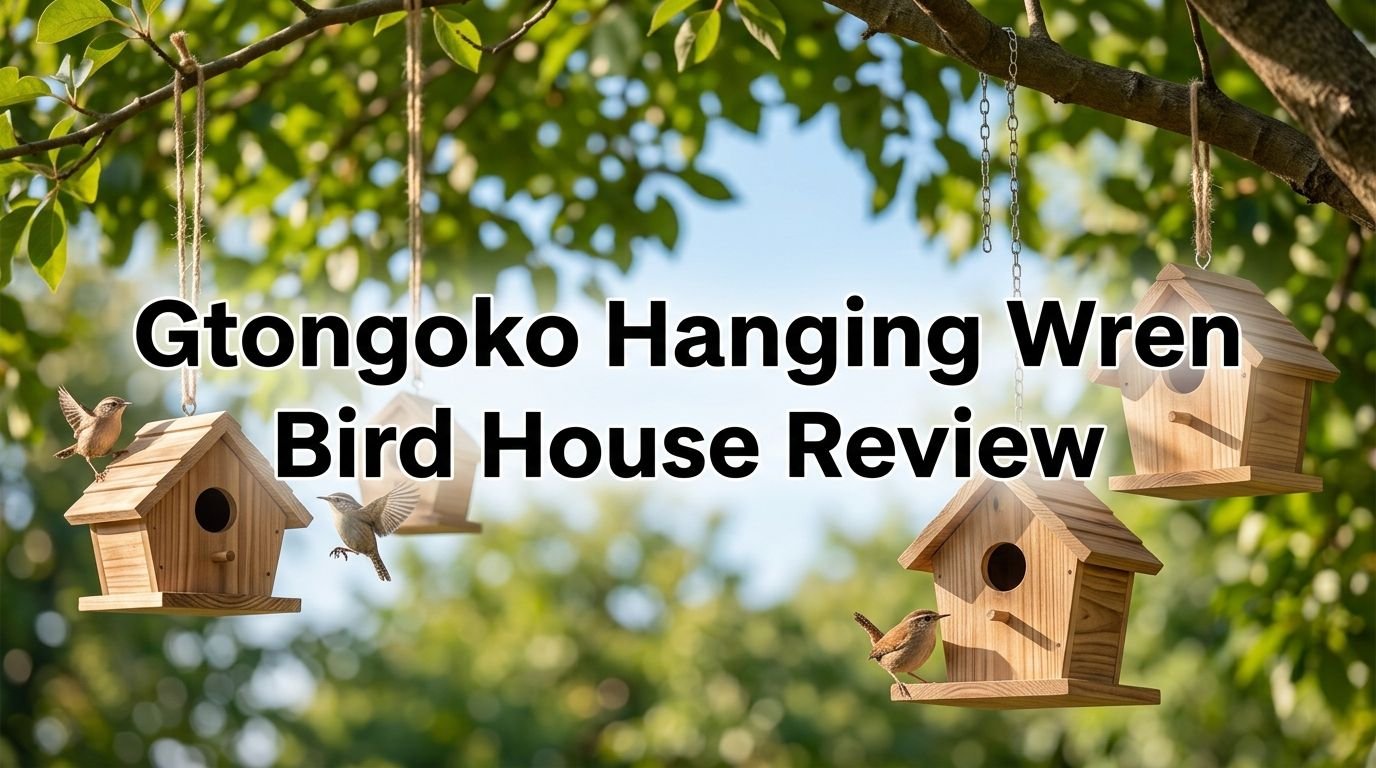
Gtongoko Hanging Wren Bird House Review 2026: Worth It?
If you love watching wrens flutter around your backyard, you already know the right birdhouse makes all the difference.
The Gtongoko Hanging Wren Bird House has been one of the best sellers on Amazon in the birdhouse category. It promises premium cedar construction, proper ventilation, and a hanging design that wrens actually prefer. But does it live up to the hype?
In this review, we break down every detail of the Gtongoko Hanging Wren Bird House. We cover the build quality, the design choices, the ease of installation, and how real birds respond to it.
Key Takeaways
- The Gtongoko Hanging Wren Bird House uses premium cedar wood that resists rot and stands up to outdoor weather conditions for years. Cedar is a top choice among birding experts for natural insulation and durability.
- The 1-1/8 inch entrance hole is perfectly sized for wrens. This small opening keeps larger, aggressive birds like starlings and house sparrows out while giving wrens easy access.
- Built-in air vents promote healthy airflow inside the nesting box. Good ventilation helps regulate temperature during hot summer days and reduces moisture buildup.
- The hanging design increases occupancy rates. Wrens and chickadees prefer houses tucked under branches or near shrubs. A hanging birdhouse mimics the natural shelter they seek.
- A clean-out door on the side makes seasonal maintenance fast and simple. You can remove old nesting material between broods without any special tools.
- Fledgling grooves on the interior walls help young birds climb out safely. This small design detail can make a big difference in the survival rate of baby wrens leaving the nest.

- 【Designed Specifically for Wrens】The 1-1/8" entrance hole is sized for wrens and Carolina wrens while helping discourage larger birds from entering. A reinforced metal predator guard helps protect the entrance from damage, creating a suitable nesting space for wrens to rest, nest, and raise their young.
- 【Comfortable Nesting Habitat】Crafted from solid wood and equipped with built-in air vents, this bird house promotes airflow and helps maintain a comfortable environment during spring and summer nesting seasons. Ideal for creating a welcoming backyard habitat that provides a comfortable nesting place for local birds.

Last update on 2026-08-28 / Affiliate links / Images from Amazon Product Advertising API Some of the links on this website are affiliate links, which means that at no additional cost to you, I earn a commission if you click through and make a purchase. I only recommend products and services that I believe will add value to my readers. Thank you for your support!
Gtongoko Hanging Wren Bird House Overview
The Gtongoko Hanging Wren Bird House is a single-pack cedar birdhouse built for outdoor use. It targets wren species with a 1-1/8 inch entrance hole, which is the recommended size by most wildlife organizations. The house comes in a black finish and includes a strong twine cord for hanging.
Gtongoko is a brand that focuses on outdoor birding products. They sell shepherd hooks, bird feeder poles, and various birdhouses. This wren house is one of their most popular items and frequently appears on Amazon’s Best Sellers list in the birdhouse category.
The overall dimensions make it compact enough to hang on a branch, a shepherd’s hook, or a bird feeder pole. It does not require any assembly. You take it out of the box, find a good spot, and hang it up.
Cedar Wood Construction and Durability
Cedar is one of the best materials for outdoor birdhouses. The Gtongoko wren house uses premium cedar wood that naturally resists decay, insects, and moisture. This means the birdhouse lasts for multiple nesting seasons without breaking down.
Unlike pine or plywood birdhouses, cedar does not warp quickly in rain or humidity. It also contains natural oils that repel many wood-boring insects. You do not need to apply any sealant or paint, which is a good thing since chemical coatings can harm nesting birds.
The wood has a rough exterior finish. This is intentional. Wrens grip rough surfaces more easily than smooth, polished wood. The texture helps adult birds land and enter the house with confidence.
After several months of outdoor exposure, cedar weathers to a soft gray color. This natural aging process does not weaken the wood. It actually helps the birdhouse blend into its surroundings, making it less visible to predators.
The 1-1/8 Inch Entrance Hole
The entrance hole size is one of the most important features of any birdhouse. The Gtongoko wren house features a 1-1/8 inch diameter opening. This size is the standard recommendation for house wrens from the Wildlife Center of Virginia and other bird conservation groups.
A hole this size allows wrens to enter and exit easily. But it blocks larger, more aggressive species like European starlings and house sparrows. These birds can take over nesting boxes and harm wren eggs or chicks.
Some versions of this Gtongoko model also include a metal guard ring around the entrance hole. Metal guards prevent squirrels and woodpeckers from enlarging the hole over time. This is a helpful addition if you have active squirrels in your yard.
The hole is positioned at the right height above the floor of the box, giving wrens enough room to build their twig nests below the opening.
Air Ventilation System
Proper ventilation is a key factor in birdhouse health. The Gtongoko wren house includes two built-in air vents on the walls. These small openings allow fresh air to circulate through the nesting area.
During summer months, temperatures inside a birdhouse can climb quickly. Without vents, the interior becomes dangerously hot for eggs and chicks. The air vents on this model help release excess heat and keep conditions safe.
The vents also reduce moisture buildup during rainy seasons. Damp conditions inside a nesting box can lead to mold growth, which is harmful to birds. The combination of cedar’s natural moisture resistance and active ventilation makes this house a healthy environment for nesting families.
The vent openings are small enough to prevent drafts during cooler weather. This balance between airflow and insulation is what makes a well-designed birdhouse stand out from cheaper alternatives.
Top 3 Alternatives for Gtongoko Hanging Wren Bird House

Last update on 2026-08-28 / Affiliate links / Images from Amazon Product Advertising API Some of the links on this website are affiliate links, which means that at no additional cost to you, I earn a commission if you click through and make a purchase. I only recommend products and services that I believe will add value to my readers. Thank you for your support!

- Audubon cedar wren chickadee house
- Made of natural cedar
Last update on 2026-08-28 / Affiliate links / Images from Amazon Product Advertising API Some of the links on this website are affiliate links, which means that at no additional cost to you, I earn a commission if you click through and make a purchase. I only recommend products and services that I believe will add value to my readers. Thank you for your support!

Last update on 2026-08-28 / Affiliate links / Images from Amazon Product Advertising API Some of the links on this website are affiliate links, which means that at no additional cost to you, I earn a commission if you click through and make a purchase. I only recommend products and services that I believe will add value to my readers. Thank you for your support!
Hanging Design and Installation
The Gtongoko wren house uses a strong twine cord attached to the top of the house for hanging. This design choice is deliberate. Wrens are one of the few bird species that actually prefer hanging birdhouses over mounted ones.
You can hang this house from a tree branch, a shepherd’s hook, or a bird feeder pole. The ideal height is 6 to 10 feet off the ground, according to the Missouri Department of Conservation. Place it near trees or shrubs where wrens like to forage.
The hanging motion does not bother wrens. In fact, it can deter some predators that prefer stable surfaces. A swinging birdhouse is harder for cats and raccoons to reach compared to a house bolted to a post.
Installation takes less than one minute. There are no screws to attach, no brackets to mount, and no tools required. Simply tie or loop the cord over your chosen support and adjust the height.
Fledgling Climbing Grooves
One feature that separates the Gtongoko wren house from many budget alternatives is the interior climbing grooves. The inside walls have small indentations carved into the wood. These grooves give baby wrens grip as they climb toward the entrance hole.
Young wrens leave the nest around 15 to 17 days after hatching. At this stage, they are not strong flyers. They need to climb from the bottom of the nesting box to the entrance hole before taking their first flight.
Smooth interior walls can trap fledglings inside the box. They slip and fall back down, unable to gain traction. This can lead to exhaustion or even death if the birds cannot escape.
The grooved texture on the Gtongoko house solves this problem. It is a simple design choice, but it has a real impact on fledgling survival rates. If you care about the birds using your house, this feature matters.
Easy Clean-Out Door
Cleaning your birdhouse between nesting seasons is important. Old nesting material can harbor parasites, mites, and bacteria. The Gtongoko wren house has a side clean-out door that opens for quick access to the interior.
You do not need any special tools to open it. A simple latch or screw holds the door shut during use. Open it after the nesting season ends, remove the old material, and let the house dry before the next season.
The National Wildlife Federation recommends cleaning birdhouses at least once per year. Some birders clean them between broods if wrens raise a second family in the same season.
The clean-out door fits snugly when closed. It does not rattle or come loose during wind. This is important because a loose door can let rain in or create gaps that predators might exploit.
Weather Resistance and Longevity
The Gtongoko wren house is built for year-round outdoor exposure. Cedar wood handles sun, rain, wind, and snow better than most other birdhouse materials. The natural oils in cedar protect the wood from rot and insect damage without any artificial treatment.
Users report that this birdhouse holds up well across multiple nesting seasons. The twine cord may need replacement after a year or two of heavy weather, but the house itself stays solid.
The black finish on some models adds a layer of visual contrast. It does not peel or chip because the stain penetrates the wood rather than sitting on the surface. If you prefer the natural cedar look, Gtongoko also offers unfinished versions.
For best results, hang the house in a sheltered location where it gets some protection from direct rain. Under an eave or within the canopy of a tree is ideal. This extends the life of the birdhouse even further.
Ideal Placement Tips for Wren Houses
Where you hang your Gtongoko wren house matters as much as the house itself. Wrens prefer shaded, sheltered areas close to trees and shrubs. Avoid placing the house in open fields or direct sunlight.
Face the entrance hole away from prevailing winds. This keeps rain from blowing into the nesting area. In most parts of the United States, facing the hole east or southeast works well.
Keep the house within 100 feet of a wooded area. House wrens forage in brushy, shrubby environments. They are more likely to discover and use a birdhouse that sits close to their natural habitat.
Avoid placing the wren house too close to bird feeders. High-traffic feeding areas attract predators and competing species. Give the wrens their own quiet space for nesting.
Do not hang multiple wren houses too close together. Male wrens are territorial and will fill nearby boxes with dummy nests to keep rivals away. Space your houses at least 50 to 100 feet apart for best results.
What Birds Will Use This House
The 1-1/8 inch entrance hole on the Gtongoko wren house makes it suitable for several small cavity-nesting species. The primary target is the house wren, one of the most common backyard birds in North America.
Carolina wrens may also use this house, though they sometimes prefer a slightly larger entrance. Black-capped chickadees and tufted titmice fit through the 1-1/8 inch hole and may nest in the box if wrens do not claim it first.
The small entrance size keeps out bluebirds, swallows, and sparrows. This selective access is a benefit if your goal is to attract wrens specifically.
Wrens are active, vocal birds that eat large numbers of insects. Attracting them to your yard provides natural pest control along with enjoyable bird watching.
Gtongoko Wren House vs. Mounted Birdhouses
Many birdhouses on the market are designed to mount on a post, tree, or building wall. The Gtongoko model takes a different approach with its hanging design. Both styles work, but each has advantages.
Hanging birdhouses are easier to install and relocate. You can move a hanging house to a new spot in seconds. Mounted houses require tools, screws, and more permanent placement.
Wrens and chickadees are among the few species that accept swinging houses. Most other birds, like bluebirds and tree swallows, prefer stable, mounted boxes. If wrens are your target species, a hanging design is an excellent match.
Mounted houses can be more predator-resistant if you add a baffle to the pole. However, hanging houses naturally deter climbing predators because of their instability. A raccoon or snake has a harder time reaching a house that swings freely.
Price and Value Assessment
The Gtongoko Hanging Wren Bird House is priced around $18.99 for a single pack. This places it in the affordable range for cedar birdhouses. Many competing cedar wren houses cost $20 to $35 or more.
For the price, you get cedar construction, ventilation, a clean-out door, fledgling grooves, and a ready-to-hang design. This is a strong value compared to basic pine or plywood birdhouses in the same price range.
The brand also offers multi-pack options if you want to set up several houses across your property. Buying in packs often reduces the per-unit cost.
Compared to the alternatives listed earlier in this post, the Gtongoko house delivers similar quality at a slightly lower price point. It competes well with established brands like Songbird Essentials and Woodlink.
Pros and Cons Summary
Every product has strengths and weaknesses. Here is an honest look at the Gtongoko Hanging Wren Bird House.
The pros include premium cedar wood that lasts outdoors, a correctly sized entrance hole, proper air ventilation, interior fledgling grooves, easy installation with no tools, and a clean-out door for seasonal maintenance. The price point is also competitive.
The cons are minor but worth noting. The twine cord may wear out after extended outdoor use and need replacement. The black finish, while attractive, may fade slightly over time. The house does not include a metal predator guard on all versions, so check the specific listing before you buy.
Overall, the positives far outweigh the negatives. For backyard birders who want a reliable, affordable wren house, this model delivers on its promises.
Final Verdict on the Gtongoko Hanging Wren Bird House
The Gtongoko Hanging Wren Bird House earns a strong recommendation for anyone who wants to attract wrens to their yard. The cedar construction, correct entrance hole sizing, ventilation, and hanging design all align with expert recommendations for wren nesting boxes.
It is affordable, requires zero assembly, and works right out of the box. Cleaning is simple, and the fledgling grooves show that Gtongoko thought about the birds, not just the buyers.
If you already have a Gtongoko shepherd’s hook or bird feeder pole, this wren house pairs perfectly. Hang it in a shaded spot near shrubs, and you have an excellent chance of hosting a wren family this spring.
For the price and quality, this is one of the best wren houses available on Amazon in 2026.
Frequently Asked Questions
Do wrens actually use hanging birdhouses?
Yes. Wrens and chickadees are among the few bird species that accept hanging birdhouses. The swinging motion does not bother them. House wrens readily nest in hanging boxes placed near trees and shrubs at a height of 6 to 10 feet.
What size entrance hole do wrens need?
House wrens need an entrance hole that measures 1 to 1-1/8 inches in diameter. The Gtongoko wren house uses a 1-1/8 inch opening, which meets the standard recommendation from wildlife organizations. This size allows wrens in but keeps larger birds out.
How often should I clean a wren birdhouse?
Clean your wren birdhouse at least once per year after the nesting season ends. If wrens raise two broods in a season, you can clean between broods as well. Remove old nesting material, check for damage, and let the house dry before the next use.
Where is the best place to hang a wren house?
Hang it in a shaded, sheltered area near trees or shrubs. The entrance hole should face away from prevailing winds, ideally pointing east or southeast. Keep the house 6 to 10 feet off the ground and within 100 feet of a wooded or brushy area.
Is cedar safe for birds?
Cedar is one of the safest and most recommended woods for birdhouses. It is natural, non-toxic, and resistant to rot and insects. Avoid using treated or painted wood, which can release harmful chemicals. Cedar provides natural insulation that keeps the nesting box cool in summer and warm in spring.
How long does the Gtongoko wren house last outdoors?
With proper placement, a cedar birdhouse like the Gtongoko model can last 3 to 5 years or more outdoors. Hanging it in a partially sheltered location extends its lifespan. The twine cord may need replacement sooner, but the cedar box itself holds up well across multiple seasons.
Can I paint or stain the Gtongoko wren house?
It is best to leave cedar birdhouses unfinished or use only non-toxic, water-based stains on the exterior. Never paint or stain the interior. Chemical fumes can harm nesting birds and their eggs. The natural cedar surface is safe and attractive to wrens as it is.

Hello, I’m Amelia White, the founder of birdsfanatic.com. As a lifelong bird enthusiast and spiritual seeker, I’ve always been fascinated by the mystical connections between birds and the human experience. On this site, I share my knowledge and insights into the symbolic meanings and spiritual significance of various bird species, exploring their roles in mythology, folklore, and cultural traditions. Join me on this journey into the world of birds, where we’ll discover the hidden wisdom and guidance that these magnificent creatures have to offer.