Using Owls and Other Decoys to Keep Birds Away
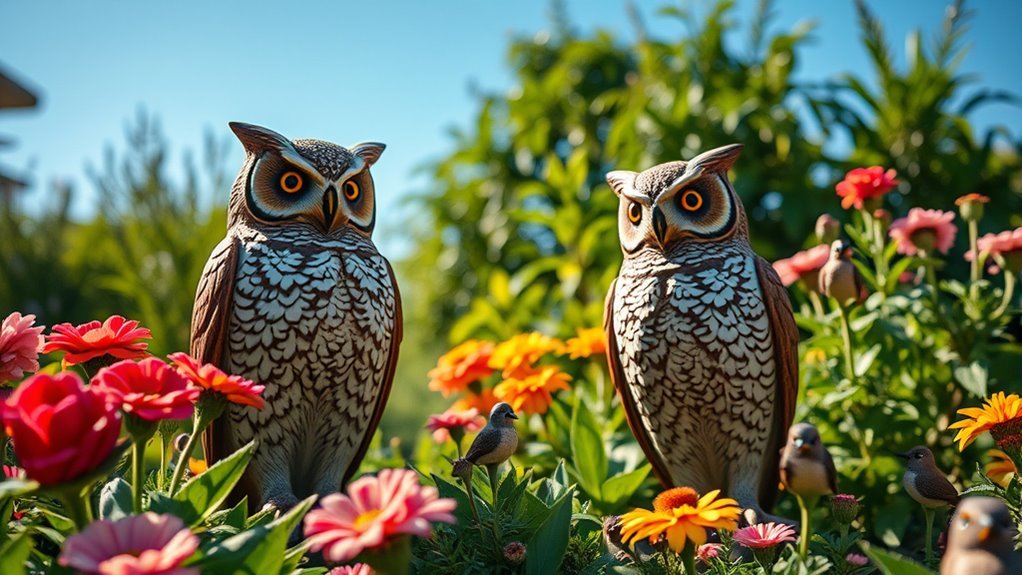
If unwanted birds are invading your garden, using decoys like owls can help. These figures mimic natural predators, which can stop smaller birds from eating your plants or visiting your feeders. To increase their effectiveness, pay attention to where you place them and keep them maintained. Knowing how birds behave will also improve your results. Here are key points to consider when choosing and positioning these decoys for the best results.
- Choose Realistic Decoys: Select owl figures that look lifelike and resemble local predatory birds.
- Placement: Position decoys where they are visible to smaller birds. High spots or open areas work well.
- Movement: Use decoys that can move slightly in the wind or add materials that flutter. Motion captures attention.
- Variety: Mix different types of decoys. This helps trick birds into believing predators are nearby.
- Maintenance: Regularly check and clean the decoys. A dirty decoy looks less convincing.
- Change Locations: Shift the decoys' position every few weeks. Birds may adapt if they see the same static decoy for too long.
By following these tips, you can effectively use owls and other decoys to keep unwanted birds away from your garden.
Key Takeaways
- Owl decoys effectively mimic natural predators, scaring away unwanted birds from gardens and plants.
- Choose realistic decoys made from durable materials to withstand outdoor conditions and increase effectiveness.
- Place decoys in high-visibility areas and at varied heights to imitate predator behavior and enhance deterrent impact.
- Regularly rotate and reposition decoys to prevent birds from becoming accustomed to static figures.
- Maintain decoys by checking for damage and cleanliness to ensure they continue to deter effectively.
Understanding Bird Behavior and Their Attraction to Your Garden
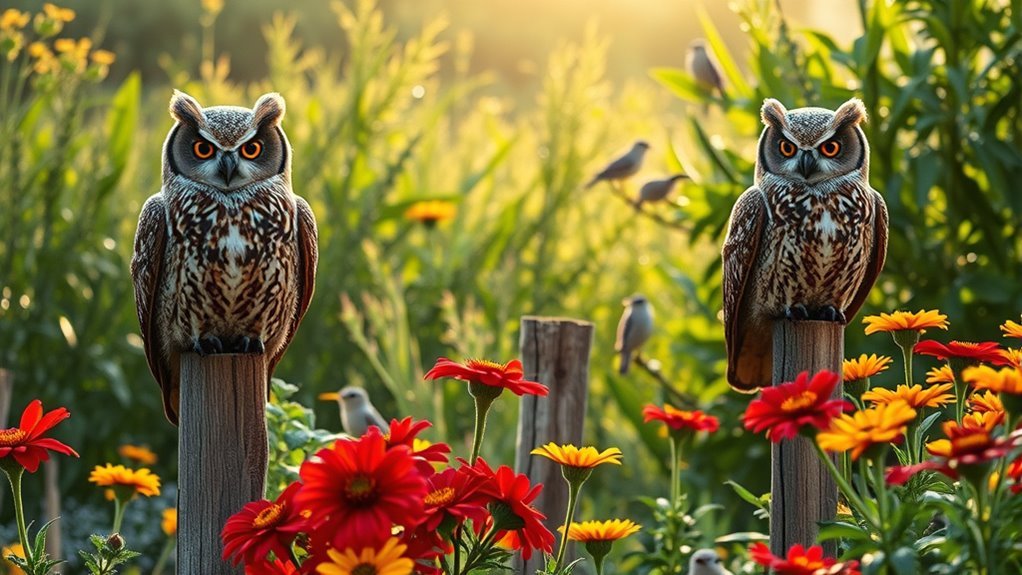
As you grow your garden, it's important to know why birds visit. Their presence can bring benefits and challenges.
Birds often come to your garden for food and shelter. If you have bird feeders, they'll come for seeds and nectar. The plants you choose matter too; bright flowers and local plants attract more birds.
However, this attraction can have downsides. Some birds may harm your plants or eat your fruits. To manage this, watch their behavior and adjust your garden design.
You can create a space that supports birds while protecting your plants. Balancing these factors is essential for a pleasant garden.
The Benefits of Using Decoy Animals
Decoy animals can help protect your garden from unwanted birds. Using figures like owls can frighten other birds away. These decoys mimic natural predators. When birds see them, they often leave the area to avoid danger. This protects your plants and makes your garden a more peaceful place.
Decoy animals are also budget-friendly. They need little care compared to other methods of bird control. Placing decoys in key spots can increase their effectiveness.
Choosing the Right Decoys: Owls and Beyond
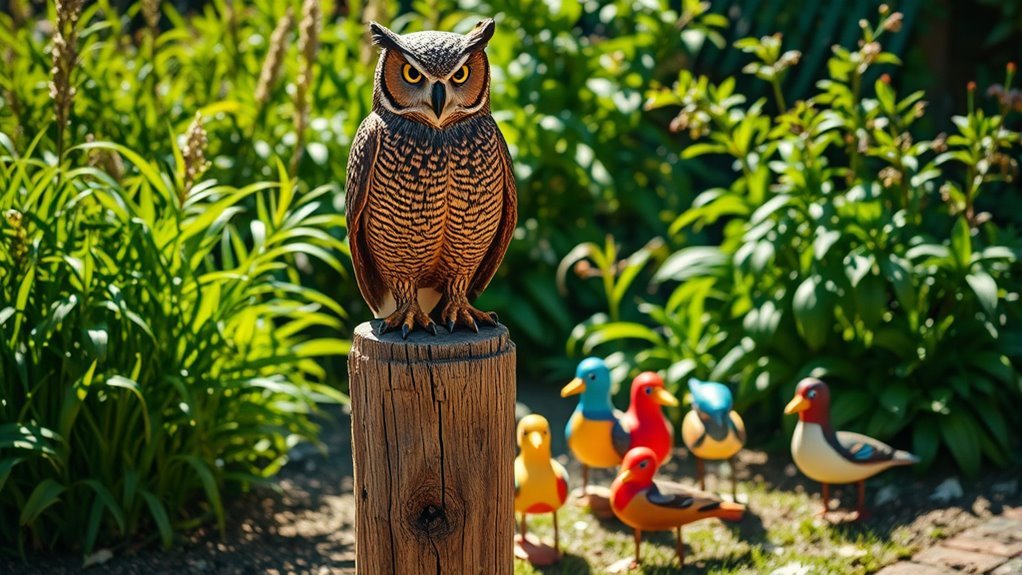
Selecting the right decoys is key for effective bird management. To keep unwanted birds away, use owl decoys made from realistic plastic or inflatable materials. These options mimic the presence of predators, deterring other birds.
Choose decoys made from painted wood, metal, or durable plastic to resist outdoor conditions. Look for vibrant colors and lifelike features that grab attention and signal danger to birds. Check their weight to ensure they stay in place during wind or rain.
The right decoy can enhance your bird deterrent strategy and contribute to a better community environment.
Effective Placement Strategies for Your Decoys
Properly placing your decoys can significantly improve their ability to deter unwanted birds. Start by positioning decoys in locations where birds generally gather, such as near feeders or gardens. Choose high-visibility areas to enhance their visual effect.
For example, position decoys at different heights, like on a post or tree branch, to imitate a natural predator's lookout. Using a variety of decoy types can create a more convincing scene. Pay attention to wind direction, as movement can increase their effectiveness.
Regularly evaluate your setup and adjust it as needed to keep the decoys appealing. This method ensures that your efforts are successful and fosters a shared interest among fellow bird enthusiasts.
Maintenance and Rotation of Decoys for Optimal Results
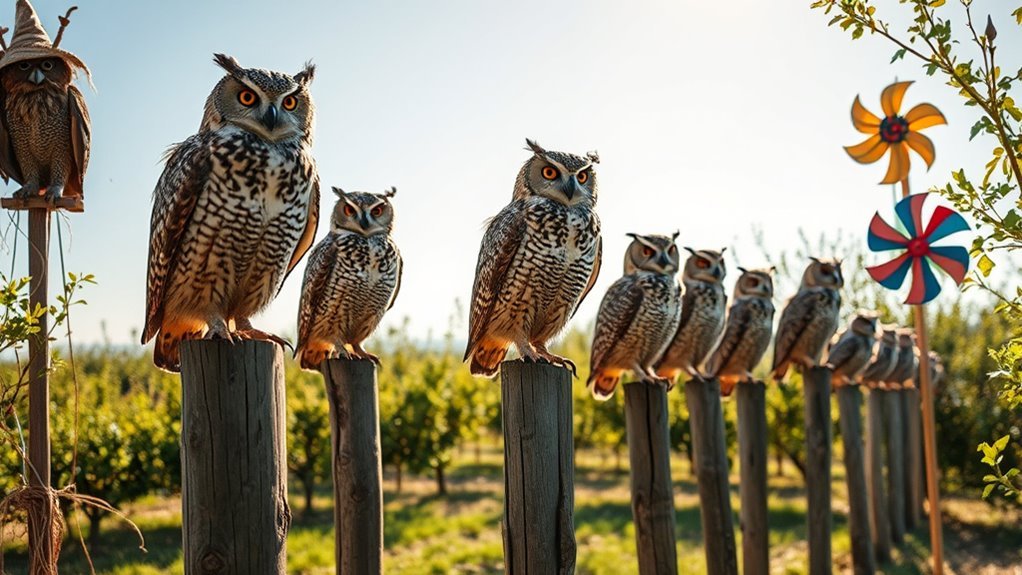
Regularly maintaining and rotating your decoys is crucial for keeping unwanted birds away. Check your decoys often for damage and clean them to remove dirt that can reduce their effectiveness.
Using high-quality materials can help your decoys last longer and work better.
Seasonal rotation is also important. Birds can get used to one decoy if it stays in the same spot for too long. By moving your decoys to different locations and changing their designs, you keep birds unsure and less likely to settle.
Change your decoys every few weeks or with the seasons to improve their deterrent effect. Following these simple practices can greatly increase your success in keeping birds at bay.
Additional Tips for a Bird-Free Garden Environment
To keep birds out of your garden, use a mix of strategies.
First, rotate your decoys regularly to confuse the birds. Use natural repellents like garlic or cayenne pepper to deter them safely. You can add sound deterrents such as wind chimes or predator calls to create a negative environment for birds.
Next, remove any food sources. This means cleaning up fallen fruits and taking down bird feeders. A garden with fewer food options is less attractive to birds.
Finally, plant dense vegetation. This gives shelter to smaller animals, which can help keep birds away.
Frequently Asked Questions
Can Decoys Scare Away All Bird Species?
Decoy effectiveness depends on the bird species. Some species may avoid decoys, while others may not respond as expected due to their specific behaviors. Understanding these behaviors will help you choose the right decoy strategy. By selecting appropriate decoys, you can improve your chances of keeping unwanted birds away.
How Long Do Decoys Last Outdoors?
Decoys can last for several months when placed outdoors. Their durability depends on their materials. Strong materials resist the effects of rain and sun. Weaker materials may break down quickly. Regular checks and care can help make them last longer.
Are There Any Dangers to Using Decoys?
Using decoys has risks. They may disturb wildlife, especially if drones are involved. There can be environmental impacts as well. It is important to consider these risks alongside the benefits. Strive for choices that promote coexistence and reduce harm to nature.
How Much Do Effective Decoys Cost?
Effective decoys come in various price ranges. Budget options typically cost less than premium models. When comparing costs, think about how well the decoys will work over time versus your current budget. This will help you choose the best bird control solution for your needs.
Do Decoys Attract Other Wildlife Unexpectedly?
Decoys can attract unexpected wildlife. This can affect how well the decoys work. You may see more animals interacting with the decoys, which can create new challenges. Knowing how this works helps you use decoys effectively in your environment.

Hello, I’m Amelia White, the founder of birdsfanatic.com. As a lifelong bird enthusiast and spiritual seeker, I’ve always been fascinated by the mystical connections between birds and the human experience. On this site, I share my knowledge and insights into the symbolic meanings and spiritual significance of various bird species, exploring their roles in mythology, folklore, and cultural traditions. Join me on this journey into the world of birds, where we’ll discover the hidden wisdom and guidance that these magnificent creatures have to offer.