
How to Deter Blackbirds and Crows From Your Bird Feeder
If you want to keep blackbirds and crows away from your bird feeder, try these effective strategies. First, choose a feeder that limits access. Some designs allow only small birds to feed. Second, select bird food that appeals to smaller species, which can help keep larger birds away. These steps are important, but also consider the area around your feeder. The right placement can help prevent unwanted visitors. By following these tips, you can create a better feeding environment for the birds you want to attract.
Key Takeaways
- Choose feeders with small access ports to limit entry of larger birds like blackbirds and crows.
- Use thistle or nyjer seeds, which are less appealing to blackbirds and attract smaller birds.
- Implement cage feeders designed specifically for small birds to physically block larger birds.
- Limit mixed bird seeds as they often contain grains that attract blackbirds and crows.
- Position feeders near shrubs or trees to provide cover for smaller birds, making it less accessible to larger species.
Choose the Right Feeder Design
Choose the Right Feeder Design
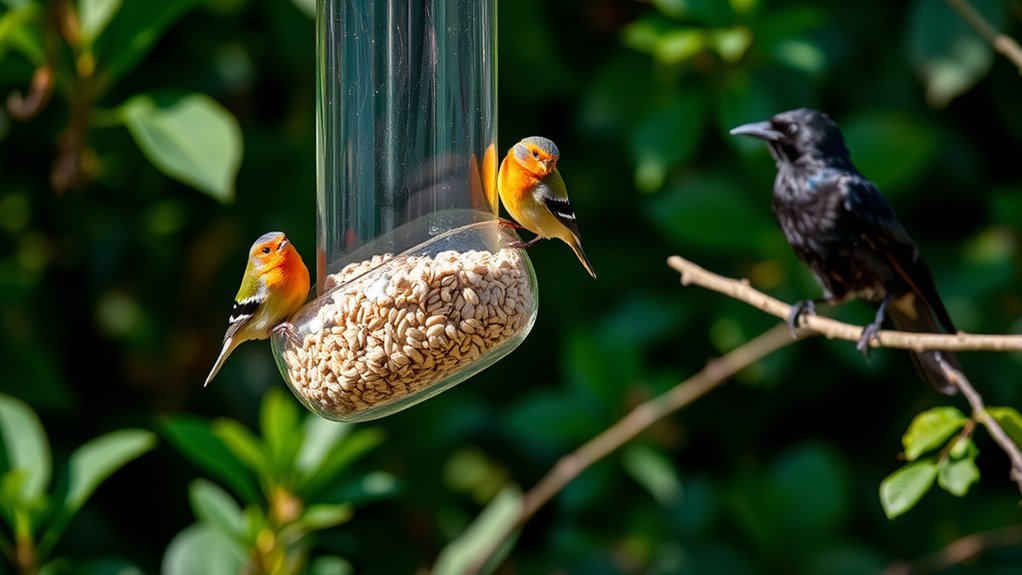
Select a bird feeder that keeps larger birds, like blackbirds and crows, from dominating your feeding area. Look for feeders with small access ports. These ports limit how many large birds can feed at once.
Position the feeder at least five feet above the ground. This height helps smaller birds feel safe while they eat.
Also, consider where you place the feeder. Avoid open areas that give larger birds easy access. Instead, choose spots near bushes or trees. These locations provide cover for smaller birds and make it harder for blackbirds and crows to approach.
Your choices can help create a friendly space for the birds you want to attract.
Select Specific Bird Food
Choosing the right bird food helps keep blackbirds and crows away while attracting smaller birds. Focus on specific seeds that smaller birds prefer.
Use thistle or nyjer seeds for finches, as they appeal less to larger birds. Consider adding millet, which smaller birds like.
Avoid mixed bird seed with grains that attract blackbirds. Offering high-quality seed-only mixes can further prevent unwanted visitors.
Selecting bird food based on the preferences of your target species creates a welcoming space for charming smaller birds in your backyard. Enjoy watching them thrive.
Implement Feeding Schedule

To deter blackbirds and crows while attracting smaller birds, follow this feeding schedule:
- Feed in the Early Morning: Smaller birds are active at dawn.
- Limit Feedings: Feed once or twice daily to reduce larger bird competition.
- Watch the Weather: Adjust feeding times based on rain or wind. These factors affect bird activity.
- Change with the Seasons: Different species have unique needs during migration and breeding.
By sticking to this schedule, you create a better environment for smaller bird species.
Enjoy the beauty of birdwatching!
Use Physical Barriers
Using physical barriers can make it easier to manage your bird feeder. They can help keep blackbirds and crows away from the food.
One good option is to use mesh netting. Placing fine mesh over your feeder stops larger birds from reaching the seeds but allows smaller birds to feed.
Another choice is a cage feeder that's made for smaller birds. These feeders have bars that let little birds eat while keeping larger ones out.
Both methods create a friendly atmosphere for songbirds, encouraging them to visit often. By adding these barriers, you can enjoy birdwatching and attract a variety of birds.
Create a Balanced Habitat
Create a Balanced Habitat
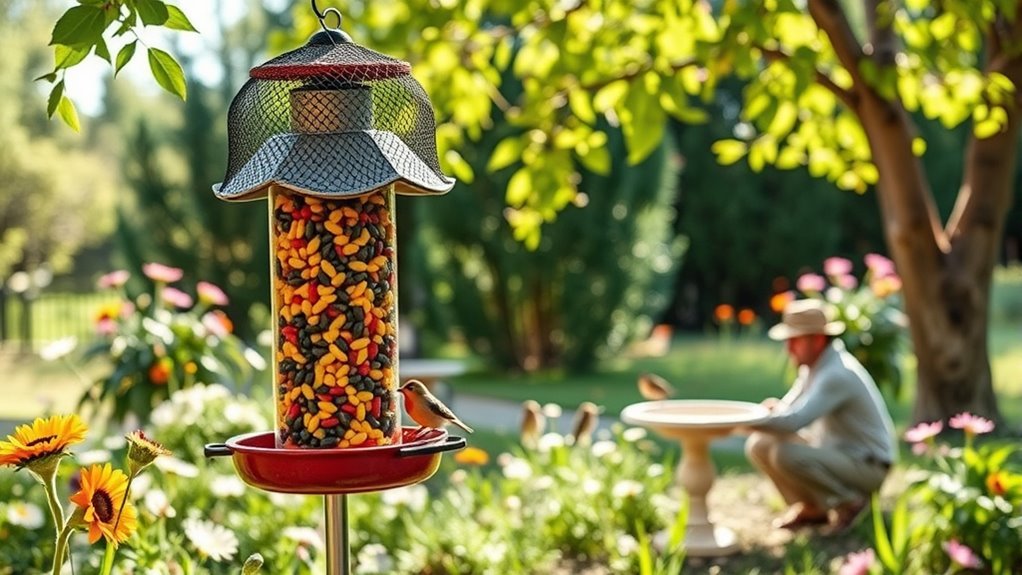
A balanced habitat boosts your backyard's ecological value and keeps away unwanted birds like blackbirds and crows. By attracting songbirds, you can naturally discourage these larger birds.
Use the following strategies:
- Plant native plants that produce seeds and fruits for local wildlife.
- Create sheltered areas with shrubs and trees, giving smaller birds a safe space.
- Add water sources such as birdbaths to draw in birds and deter larger ones.
- Design varied terrain with rocks and logs to provide hiding spots, making your yard a safe haven for songbirds.
These simple steps can help you create an inviting environment for beneficial birds while reducing the presence of less desirable species.
Enjoy the beauty and sounds of songbirds in your backyard!
Frequently Asked Questions
Do Blackbirds and Crows Scare Away Other Bird Species?
Blackbirds and crows can scare away smaller birds. Their size and assertiveness make timid species feel threatened. This behavior can cause these smaller birds to avoid feeders. As a result, you may attract fewer types of birds to your garden.
Will Using Shiny Objects Really Deter Blackbirds and Crows?
Using shiny objects like reflective materials can effectively keep blackbirds and crows away. These birds often feel uneasy around unusual reflections. This reaction can help other bird species feel safer.
Are There Specific Planting Choices That Help Repel These Birds?
When choosing plants, consider using companion planting. Select native plants that attract helpful insects and keep away unwanted birds. This method builds a healthy garden ecosystem, promoting a lively and diverse environment.
Can I Use Scents to Keep Blackbirds and Crows Away?
You can use certain scents to deter blackbirds and crows. Essential oils like peppermint and eucalyptus may help keep these birds away. Test different scents to see which one works best for your situation. Remember, results can vary, so persistence is key.
How Do Seasonal Changes Affect Blackbird and Crow Behavior?
Seasonal changes significantly affect the behavior of blackbirds and crows. In spring, their activity increases as they engage in breeding. They build nests and display courtship behaviors. In autumn, food availability decreases, which drives some species to migrate to warmer areas. Understanding these seasonal behaviors helps us appreciate their lives and adaptations. Observing their actions can be both interesting and enlightening.

Hello, I’m Amelia White, the founder of birdsfanatic.com. As a lifelong bird enthusiast and spiritual seeker, I’ve always been fascinated by the mystical connections between birds and the human experience. On this site, I share my knowledge and insights into the symbolic meanings and spiritual significance of various bird species, exploring their roles in mythology, folklore, and cultural traditions. Join me on this journey into the world of birds, where we’ll discover the hidden wisdom and guidance that these magnificent creatures have to offer.

