PINVNBY Parakeet Nesting Box Bird House Review 2026: Worth Buying?
Your budgie pair keeps hovering near the same cage corner. She chews the seed cup. He sings at her nonstop. Those are nesting signals, and a bare cage floor will not satisfy them. A proper nest box changes everything.
The PINVNBY Parakeet Nesting Box shows up in almost every search for budgie breeding gear. It costs less than a bag of premium pellets. It carries an Amazon’s Choice badge. Hundreds of buyers grab one every month. But cheap pine boxes have a reputation, and not all of it is good.
I bought one, mounted it, cleaned it, and watched two lovebirds decide whether they liked it. This review covers the real wood quality, the assembly headaches, the sizing trap most first time buyers fall into, and the things this box genuinely fails at. No fluff. Just what you need before you spend the money.
In a Nutshell:
- The price is the main attraction. This box sits in the budget tier, usually under twenty dollars. You get untreated pine, a top opening lid, a front perch, and mounting hardware. For a first time breeder testing the waters, that value is hard to beat.
- Size selection matters more than anything else. The M size measures roughly 7.9 x 4.7 x 4.7 inches. That works for finches and canaries. Budgies and lovebirds need the L or XL. Order too small and your hen will refuse it or crush her clutch.
- Assembly takes ten minutes and needs patience. Bolts, spacers, and nuts arrive in a small bag. The pre drilled holes sometimes sit slightly off. A screwdriver and gentle pressure fix it.
- The wood is thin. It measures under half an inch on most panels. Insulation is weak in cold rooms, and a determined lovebird will chew the entrance hole wider within weeks.
- Cleaning is genuinely easy. The hinged top lifts fully, so you scoop bedding out without dismantling anything.
- It is a breeding box, not a sleeping hut. Give it to birds you do not want breeding and you invite egg laying, hormonal aggression, and calcium problems.
What Is the PINVNBY Parakeet Nesting Box Bird House?

- Good Materials: The cockatiel nesting box is made of natural pine, has no paint, and is safe and durable. Bird nest for cage suitable for parakeet budgie lovebirds conure finch parrot canary, create a warm, comfortable, and safe paradise for your birds
- Multifunctional Design: The top-hinged lid opening lets you quickly clean the inside of the bird box and provide a hygienic habitat for your bird. The built-in baffle protects the eggs by preventing them from rolling
Last update on 2026-08-27 / Affiliate links / Images from Amazon Product Advertising API Some of the links on this website are affiliate links, which means that at no additional cost to you, I earn a commission if you click through and make a purchase. I only recommend products and services that I believe will add value to my readers. Thank you for your support!
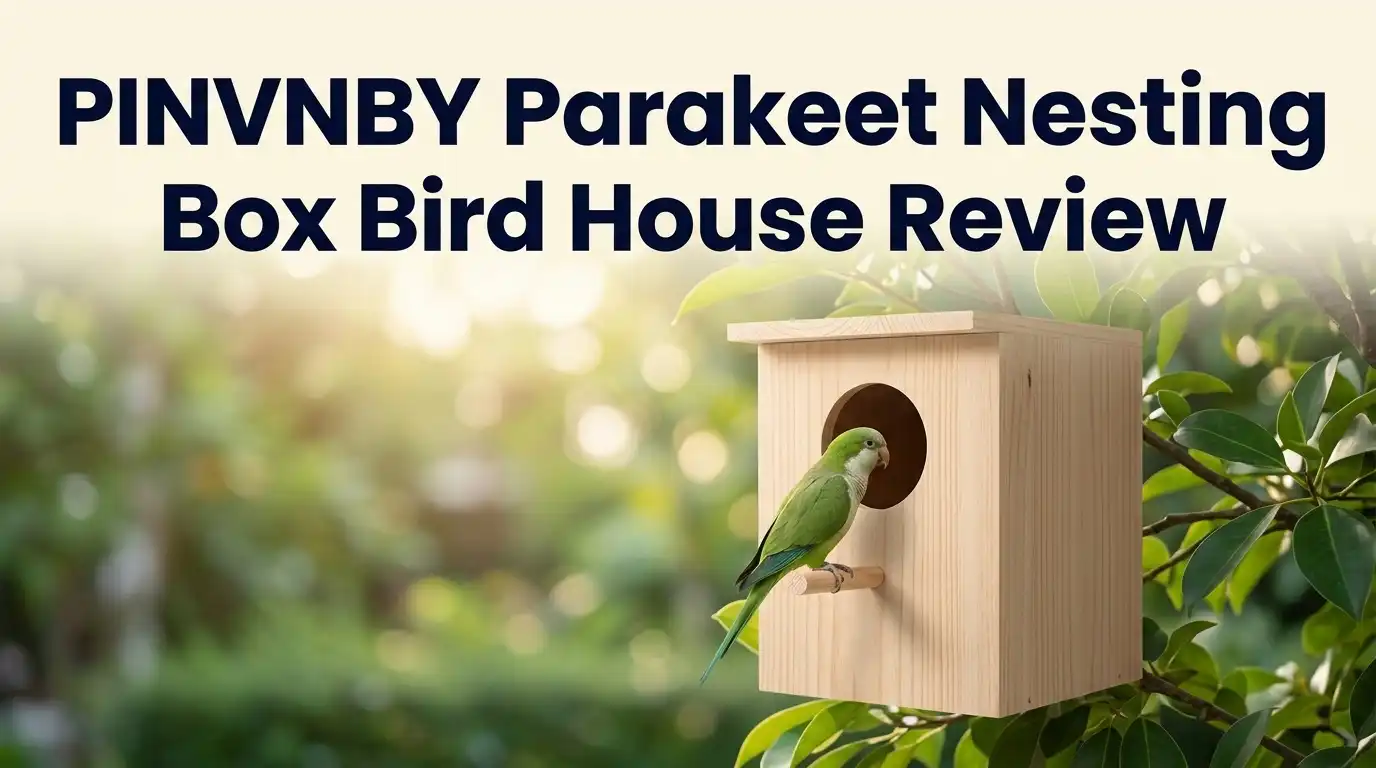
The PINVNBY nesting box is a rectangular pine breeding box that hangs on the outside or inside of a bird cage. Birds enter through a round hole cut near the front. Inside, they find a flat or lightly concave floor where the hen lays her eggs.
PINVNBY is an Amazon focused pet brand. It sells bird nests, hamster hideouts, reptile decor, and small animal beds. The company does not run a large retail presence outside marketplaces, so support happens through Amazon messages.
The box targets small and medium birds. The listing names budgies, parakeets, lovebirds, cockatiels, finches, canaries, parrotlets, and conures. That list stretches a bit far, because a cockatiel needs far more floor space than a canary.
Construction stays simple on purpose. Six flat pine panels join with bolts rather than glue or nails. A metal hinge holds the top lid. A short dowel perch sits below the entrance hole so the parent bird can land before stepping inside.
Two mounting bolts pass through the back panel. You feed them between cage bars and tighten nuts on the inside. No drilling into your cage required.
The wood arrives raw. No paint, no varnish, no stain. That is exactly what you want, because birds chew nest boxes constantly and coatings introduce toxins.
Unboxing Experience and First Impressions
Mine arrived in a plain brown box with almost no padding. The nest box came pre assembled at the corners, wrapped in a thin plastic sleeve. One small zip bag held the bolts, washers, and nuts.
The first thing I noticed was the smell. Fresh pine, strong and clean. No chemical odor at all, which is a good sign for bird safety.
The second thing I noticed was the weight. It feels light. Almost too light. The medium size weighs around five ounces. Panels flex slightly if you squeeze the sides.
Sawdust dusted the interior floor. A quick shake outdoors cleared it. Two edges had rough splinters that I smoothed with a nail file in about thirty seconds. Nothing dangerous, but worth checking before your birds get access.
The hinge impressed me more than expected. It is a real metal hinge with two screws on each leaf, not a stapled strip. The lid swings back and stays open while your hands work inside.
The perch dowel sat firm and level. The entrance hole edges came out clean and round with no rough burrs.
My honest first impression was this. It looks like what it costs. The wood is basic, the joints are plain, and the finish is unremarkable. But nothing felt broken, unsafe, or badly cut. For the price, that counts as a win.
Build Quality and Wood Material
PINVNBY uses natural pine on most sizes and paulownia or carbonized wood on a few variants. Pine is soft, light, breathable, and safe for birds to nibble. It also dents easily.
Panel thickness runs roughly a quarter inch to a third of an inch. Compare that to a serious breeder box at three quarters of an inch. The difference shows up in two ways: insulation and chew resistance.
In a heated indoor room, thin walls cause no problem. Chicks stay warm under the hen. In a cold garage or an unheated aviary, thin pine loses heat fast, and that matters during a winter clutch.
Chew resistance is the bigger issue. Budgies gnaw entrance holes as part of normal nesting behavior. Lovebirds are worse. My pair widened the hole edges noticeably within three weeks. The box survived, but the hole no longer looked factory fresh.
The bolt and nut system deserves credit. Bolts hold better than staples, and you can retighten them when the wood settles. Many cheap boxes fail at the corners. This one does not.
Grain quality varies between units. Some buyers report knots and small gaps. Mine had one knot on a side panel and a hairline seam at the base corner. Neither affected function.
Verdict on build quality: acceptable, not premium. Expect one or two breeding seasons of use, then replace it. At this price, that math still works.
Size Options and How to Pick the Right One
This is where most buyers go wrong, so read carefully.
PINVNBY sells this box in several sizes, and dimensions differ between product listings. Common measurements include S at roughly 7.7 x 4.7 x 4.7 inches, M at 7.9 x 4.7 x 4.7 inches, L at 9.8 x 5.3 x 5.3 inches, another L at 11.4 x 5.9 x 5.9 inches, and XL at about 13.4 x 6.9 x 7.7 inches.
Here is the practical guidance. Finches and canaries do fine in S or M. Budgies need the L at minimum. A budgie hen lays four to six eggs, and chicks grow fast. Cramped floors lead to crushed eggs and splayed legs.
Lovebirds also want L or larger, because they haul nesting material inside and build a real cup. Cockatiels need the XL, and honestly even XL sits at the low end of what cockatiel breeders recommend.
Measure your cage bar spacing before ordering. The mounting bolts need to pass between bars. Wide spaced bars on a large cage work best. Narrow finch cage bars can make mounting awkward.
Also measure interior cage height. An inside mounted box eats floor space and blocks flight room. Many owners mount it on the cage door opening instead, which keeps the interior clear.
One more tip. Order one size up from what the listing suggests. PINVNBY sizing runs optimistic. The extra inch costs almost nothing and prevents the single most common complaint about this product.
Top 3 Alternative for PINVNBY Parakeet Nesting Box

- Transparent design: Acrylic transparent breeding box offers you clear visibility to observe the inside situations easily, so that children can easily watch the breeding and hatching process of birds, to achieve harmony between man and nature
- Natural wood: Bird house is made of 100% natural paulownia and pine wood, has good thermal insulation effect, cool in summer and warm in winter, with the flavor of natural forest, so that your parakeet can adapt to the new environment. Log products are safe; They are the best choice for your parakeet breeding and nesting
Last update on 2026-06-09 / Affiliate links / Images from Amazon Product Advertising API Some of the links on this website are affiliate links, which means that at no additional cost to you, I earn a commission if you click through and make a purchase. I only recommend products and services that I believe will add value to my readers. Thank you for your support!
Rypet Parakeet Nesting Box with Perch

- 【Safe Material】This bird nesting box is made from solid wood — safe, durable, and with excellent thermal insulation. It stays warm in winter and cool in summer, carrying the natural scent of a rainforest, making it an ideal place for your parrot to rest and nest. The wood surface is smoothly polished with no burrs, ensuring safety for your pet bird.
- 【Thoughtful Design】This parrot nest box features a top-side opening design for easy bedding placement and cleaning. The rubber band door design makes it easy to open and close the door. The perch at the entrance not only facilitates easy entry and exit but also meets their need to rest on perches. The entrance is reinforced with a metal ring, which prevents chewing and protects birds from sharp edges.
Last update on 2026-09-08 / Affiliate links / Images from Amazon Product Advertising API Some of the links on this website are affiliate links, which means that at no additional cost to you, I earn a commission if you click through and make a purchase. I only recommend products and services that I believe will add value to my readers. Thank you for your support!
kathson Parakeet Nesting Box Bird Nest House

- 【Enriching the Life of Birds】This parakeet nesting box adopts combination of natural pine and high-quality transparent acrylic window. Not only makes it easy for us to clear see the state of parrots in the bird breeding box through the acrylic side, but also can observe and record the breeding and hatching process between parrots. In addition, we added a wooden board that is very easy to install and remove, so that the parrot can have a dark environment at night while sleeping.
- 【Safe and Durable Material】 Bird nesting box is respectively made of natural pine wood, acrylic window which are warm and cozy, safe, non-toxic, chewable and transparent field of view to ensure healthy breeding for parakeet birds. After you observe the activities of the parrot, if you feel that the bird box is too bright, you can install a small wooden board at any time, so that you will be at ease.
Last update on 2026-06-09 / Affiliate links / Images from Amazon Product Advertising API Some of the links on this website are affiliate links, which means that at no additional cost to you, I earn a commission if you click through and make a purchase. I only recommend products and services that I believe will add value to my readers. Thank you for your support!
CooShou Parakeet Nesting Box with Transparent Acrylic Panel
PINVNBY Parakeet Nesting Box Large Wood Breeding Box Version

- High Quality Material: Made is 100% natural high quality wood carefully,eco-friendly, non-toxic, safe and strong,birds are not allergic, send out wood fragrance
- Features:Top Hinged lid opening design for easy cleaning and removal of bedding materials. parrot love the ability to lounge around on the perching ledge. Bolt lock stable shape beautiful arc design is not easy to fall off. The small bird entrance protects birds from wind, rain and predators such as cats and rodents
Last update on 2026-09-12 / Affiliate links / Images from Amazon Product Advertising API Some of the links on this website are affiliate links, which means that at no additional cost to you, I earn a commission if you click through and make a purchase. I only recommend products and services that I believe will add value to my readers. Thank you for your support!
The larger listing deserves separate attention because it solves the main weakness of the smaller sizes.
This version measures around 11.4 x 5.9 x 5.9 inches. Floor area jumps significantly compared to the M. A budgie hen with five chicks has room to turn, feed, and move without stepping on anyone.
The lid design stays the same. Top hinged, full opening, metal hardware. Wood is still pine with no coating.
Price climbs only a few dollars over the medium. That makes the L version the smarter buy for almost every parakeet and lovebird owner.
One trade off appears. The bigger box weighs more and hangs with more leverage on the cage bars. On a flimsy cage, the mounting point flexes. I recommend supporting the bottom with a small shelf bracket or zip tie loop if your cage uses thin wire.
Interior depth also matters here. Deeper boxes feel safer to hens, and hens that feel safe sit tighter on eggs. Several owners report better hatch rates after moving from a shallow box to a deeper one.
The XL sits above this, at roughly 13.4 x 6.9 x 7.7 inches. Choose XL only for cockatiels or if you plan a large clutch. For standard budgies, XL wastes cage space and can make chicks harder to reach during health checks.
Installation on a Cage
Installation took me eight minutes including reading the sheet, and the sheet is mostly pictures.
Two bolts pass through pre drilled holes in the back panel. You slide them between two cage bars, add the spacer, then thread the nut and tighten by hand. A screwdriver helps for the final turn.
The spacers matter. They fill the gap between the wood and the bars so the box does not rock. Do not skip them. A rocking nest box unsettles a brooding hen.
Mounting on the cage door is the cleanest approach. Open the door, hang the box over the opening, and secure it. Birds enter through the door frame and the cage interior stays open for flight.
Inside mounting works too. Place the box high in a corner, since birds prefer elevated nest sites. Keep it away from food and water bowls so droppings do not contaminate them.
One installation flaw showed up on my unit. One pre drilled hole sat slightly narrow, and the bolt needed a firm push. Reports from other buyers mention the same thing. A drill bit widens it in seconds if needed.
Check tightness weekly during breeding season. Pine compresses under bolt pressure, so nuts loosen over time. A quarter turn keeps everything solid.
The Concave Bottom, Perch, and Interior Design
Wild budgies nest in tree hollows with a rounded floor. That curve keeps eggs together under the hen. A flat floor lets eggs roll to the corners where they chill and fail.
PINVNBY includes a shallow scoop on some models and a flat floor on others. This inconsistency is a real weakness. Check your unit when it arrives.
The fix is simple and cheap. Add a wooden nesting concave disc, or line the floor with a two centimeter layer of pine shavings and press a shallow depression in the center. Aspen shavings work. Avoid cedar, which releases oils harmful to birds.
The exterior perch below the entrance is well placed. Parents land, pause, then enter. Without it, birds cling to the hole edge and widen it faster.
Interior height gives adult birds room to stand upright. Nothing inside creates a trap or pinch point, which is important because chicks explore before they can fly.
The entrance hole diameter measures around 1.5 inches on the smaller sizes. That fits budgies and lovebirds well. Cockatiels find it tight, so XL buyers should confirm hole size before committing.
Cleaning and Maintenance
This is the area where the PINVNBY box genuinely shines.
The top lid opens fully on its hinge. You reach in with a scoop, clear old bedding, and wipe the floor. No unbolting, no removing the box from the cage.
Between clutches, take it off the cage entirely. Brush out debris, wipe with a diluted vinegar solution, then dry it in direct sun for a few hours. Never use bleach or scented cleaners on a nest box. Residue harms birds.
Raw pine absorbs moisture and droppings. That is the trade off for an untreated safe surface. After two or three clutches, the floor will stain and hold odor no matter how well you clean.
Some owners line the base with removable brown paper or a thin cardboard insert. Bedding goes on top. At cleanout, the whole liner lifts away and the wood stays cleaner longer.
Mid clutch cleaning needs care. Open the lid slowly, keep visits short, and avoid handling eggs unless necessary. A stressed hen may abandon the nest.
Expected lifespan with regular cleaning is one to two seasons. Chewed entrance holes and stained floors eventually make replacement the better choice. At this price, that is a reasonable cycle.
Pros and Cons of the PINVNBY Parakeet Nesting Box
Pros
- Low price puts a real nest box within reach of first time breeders and casual bird owners.
- Untreated natural pine carries no paint or varnish, so chewing stays safe.
- Top hinged lid opens fully for quick cleaning and egg checks without dismantling.
- Bolt and nut mounting attaches to standard cage bars in under ten minutes with no drilling.
- Multiple size options cover finches through cockatiels across the product range.
- External perch gives parents a landing spot and reduces damage around the entrance hole.
- Light weight means most cages handle it without structural worry.
Cons
- Thin panels insulate poorly in cold rooms and lose chew battles with lovebirds.
- Inconsistent concave floor appears on some units, which forces a bedding workaround.
- Optimistic sizing in listings leads buyers to order boxes too small for budgies.
- Occasional misaligned holes require a drill bit or firm pressure during assembly.
- Rough edges and sawdust show up in some units and need light sanding.
- Short lifespan of roughly one to two breeding seasons before replacement.
- No breeding instructions included, so beginners get no guidance on bedding or timing.
What This Nesting Box Does Not Do Well
Honest reviews name the failures, so here they are plainly.
It does not insulate. If your bird room drops below sixty degrees Fahrenheit, thin pine will not hold brood heat well. Serious cold weather breeders need thicker wood or a heated setup.
It does not resist heavy chewers. Lovebirds, conures, and cockatiels reshape the entrance hole quickly. After one season, the hole may be visibly enlarged. That admits drafts and reduces the enclosed feel hens want.
It does not come with a proper nesting concave on every unit. Buyers expecting a curved floor sometimes receive a flat one. That is a meaningful miss on a product sold for breeding.
It does not include bedding. Many buyers assume shavings come in the box. They do not. Order aspen or pine shavings separately.
It does not fit every cage. Narrow bar spacing blocks the mounting bolts. Small cages lose too much interior space. Check your cage before ordering.
It does not offer any brand support beyond Amazon messaging. No warranty documentation, no replacement parts, no assembly video from the manufacturer.
It also does not stop hormonal behavior. Adding this box to a cage with a single hen often triggers chronic egg laying, which drains calcium and risks egg binding. That is a husbandry issue rather than a product flaw, but new owners need the warning.
Real Owner Feedback and Common Complaints
Aggregate feedback across Amazon and reseller listings lands in the four to five star range for most PINVNBY nest box variants. That is strong for a budget product.
Positive comments cluster around three themes. Buyers like the price, they like how fast birds accepted the box, and they like the easy lid access. Multiple owners report successful clutches within weeks of installation.
Negative comments cluster just as tightly. Size complaints lead the list. Buyers order medium for budgies, then discover the floor is cramped. Read the dimensions, not the bird list.
Thin wood comes second. Several owners describe panels as flimsy or note that the box arrived with a cracked corner. Shipping damage appears occasionally, likely due to minimal packaging.
Assembly frustration comes third. Misaligned holes, missing hardware, and unclear instructions show up in a minority of reviews.
A smaller group reports that birds ignored the box entirely. That usually reflects timing, lighting, diet, or pair bonding rather than the box itself. Birds breed when conditions feel right, not when a box appears.
Interesting note from breeder forums: hens often reject nest boxes with clear acrylic viewing panels because the interior feels exposed. If privacy matters to your pair, the solid wood PINVNBY may actually outperform fancier transparent alternatives.
Tips to Get Your Birds to Use the Box
Mount the box high. Birds instinctively choose elevated cavities, and a low box reads as unsafe.
Add bedding before introduction. Two to three centimeters of aspen or pine shavings, pressed into a shallow cup at the center, mimics a natural hollow.
Give the pair privacy. Place the cage against a wall, away from foot traffic and loud televisions. Cover one side with a light cloth during the first week.
Lengthen daylight gradually. Twelve to fourteen hours of light signals breeding season. Sudden light changes confuse the cycle.
Improve the diet before you hang the box. Add a cuttlebone or mineral block for calcium, plus soft foods like sprouted seed and chopped vegetables. Egg binding often traces back to poor calcium intake.
Confirm you have a true pair. A male shows a blue cere, a hen shows brown or tan when in breeding condition. Two hens will lay infertile eggs and fight over the box.
Be patient. Some pairs inspect a new box within hours. Others take a month. Resist the urge to reposition it repeatedly, since constant change discourages nesting.
Finally, plan ahead. Remove the box after the chicks fledge. Leaving it up year round pushes hens into back to back clutches, and that shortens their lives.
Price and Value in 2026
The PINVNBY nest box typically sells between twelve and twenty five dollars depending on size and variant. XL versions and acrylic panel models reach the high end.
Compare that to a hardwood breeder box from a specialty bird supplier, which runs forty to seventy dollars. The premium box lasts years. The PINVNBY lasts a season or two.
For a first time breeder, the cheaper box is the smarter starting point. You learn whether your pair will breed at all before investing in equipment. If your pair produces successfully, upgrade next season.
For an established breeder running multiple pairs, thin pine becomes a false economy. Repeated replacement costs add up, and cold weather performance matters more.
Value also depends on the size you choose. The L version costs only slightly more than the M and performs far better for budgies. Paying three extra dollars to avoid a cramped clutch is obvious value.
Watch for coupon discounts on Amazon listings, which appear regularly on PINVNBY products. Prices shift often, so verify current cost before buying.
Overall value rating from me: strong for beginners, moderate for hobbyists, weak for commercial breeding.
Final Verdict: Should You Buy It?
The PINVNBY Parakeet Nesting Box does what it promises at a price that removes risk. Natural pine, safe construction, easy mounting, and a lid that makes cleaning painless. Birds accept it readily when conditions are right.
It is not a heirloom piece of equipment. The wood is thin, the sizing runs small, and heavy chewers will damage it. Some units need light sanding and a bedding workaround for the floor.
Buy it if you are breeding budgies, lovebirds, finches, or canaries for the first time and want a low cost entry point. Order the L or XL, add proper bedding, and mount it high.
Skip it if you breed in cold conditions, keep large chewers, or need a box that survives multiple seasons. Invest in thicker hardwood instead.
Rating: 4 out of 5 for beginners. 3 out of 5 for experienced breeders.
The honest summary is simple. This box is a good tool for the right job. Match the size to your bird, understand the limits, and it will serve you well through a clutch or two.
Frequently Asked Questions
What size PINVNBY nesting box do budgies need?
Budgies need the L size at minimum, around 9.8 x 5.3 x 5.3 inches or larger. The M size at 7.9 x 4.7 x 4.7 inches is too cramped for a full clutch of four to six chicks.
Does the PINVNBY nest box come with bedding?
No. Bedding is sold separately. Use aspen or pine shavings, roughly two to three centimeters deep. Avoid cedar shavings because the oils irritate bird airways.
Is the wood safe for birds to chew?
Yes. The box uses untreated natural pine with no paint, stain, or varnish. Birds chew nest boxes as normal behavior, and raw pine causes no toxicity concern.
How do I mount it if my cage bars are narrow?
Mount the box over the open cage door instead of between bars. Alternatively, hang it with heavy duty zip ties looped through the mounting holes and around the bars.
Will my birds definitely use the box?
Not guaranteed. Birds nest when light, diet, privacy, and pair bonding align. Mount it high, add bedding, provide twelve to fourteen hours of light, and give the pair several weeks.
Can I use this box for cockatiels?
Only the XL size, and even then it sits at the small end of cockatiel recommendations. The entrance hole may also be tight. A dedicated cockatiel box is a better choice.
How often should I clean the nesting box?
Clean thoroughly between clutches. During brooding, limit disturbance and remove only soiled bedding. Full cleanouts mid clutch stress the hen and risk nest abandonment.
Should I leave the nest box up all year?
No. Remove it after chicks fledge. A permanent nest box encourages continuous egg laying, which depletes calcium and creates health risks for the hen.
Does the box have a concave floor?
Some units include a shallow scoop and others arrive flat. If yours is flat, press a shallow depression into the bedding layer or add a wooden nesting concave disc.
How long does the PINVNBY nest box last?
Expect one to two breeding seasons with regular cleaning. Chewed entrance holes and stained floors usually prompt replacement. The low price makes that cycle affordable.

Hello, I’m Amelia White, the founder of birdsfanatic.com. As a lifelong bird enthusiast and spiritual seeker, I’ve always been fascinated by the mystical connections between birds and the human experience. On this site, I share my knowledge and insights into the symbolic meanings and spiritual significance of various bird species, exploring their roles in mythology, folklore, and cultural traditions. Join me on this journey into the world of birds, where we’ll discover the hidden wisdom and guidance that these magnificent creatures have to offer.