
VOREEN Glass Bird Feeder Review 2026: Worth Hanging?
Glass bird feeders promise two things at once. They feed wild birds, and they look pretty in a garden. Most products deliver only one of those things well. The VOREEN Mosaic Glass Bird Feeder sits right in the middle of that promise, and it has become one of the more talked about decorative feeders on Amazon this year.
I bought one, filled it, hung it, cleaned it, and watched it through rain and heat. This review shares what actually happened, including the parts that annoyed me.
If you want a feeder that doubles as garden art, keep reading. If you want a high capacity workhorse feeder, you may want to know the limits before you spend the money.
In a Nutshell:
- Best use case: The VOREEN feeder works as decorative garden art that also feeds birds. It shines on a patio hook, a shepherd pole, or a low tree branch where you can see it clearly from a window.
- Price and rating: It sells around $28.99 on Amazon and carries a 4.7 star average from roughly 108 shopper ratings. That places it in the mid price band for handcrafted mosaic feeders.
- Real capacity is small: The donut shaped tray holds roughly one to two cups of seed. Busy yards with many finches will empty it in a day or two, so plan on frequent refills.
- Build quality is genuinely nice: Real glass pieces, visible grout lines, and a steel wire cable. Each unit looks slightly different because the mosaic work is applied by hand.
- Main weaknesses: No dome, no drainage holes, and no squirrel protection. Rain sits in the tray and seed can clump if you overfill it.
- Who should skip it: Anyone who wants a set it and forget it feeder, or anyone in a heavy squirrel area without a baffle.
What Is the VOREEN Glass Bird Feeder?

- HANDCRAFTED MOSAIC DESIGN: Features beautiful multicolored flower patterns made from mosaic glass pieces, creating an eye-catching decorative accent that enhances any outdoor garden or backyard space
- FLY-THROUGH FEEDER STYLE: Unique donut-shaped design with open center allows birds to perch and feed from multiple angles, providing easy access for various wild bird species
Last update on 2026-08-26 / Affiliate links / Images from Amazon Product Advertising API Some of the links on this website are affiliate links, which means that at no additional cost to you, I earn a commission if you click through and make a purchase. I only recommend products and services that I believe will add value to my readers. Thank you for your support!
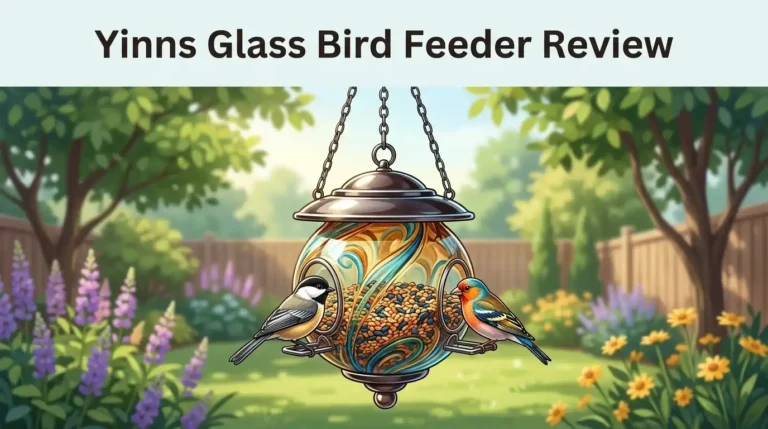
The VOREEN Mosaic Glass Bird Feeder is a hanging fly through feeder built from a glass base with mosaic glass pieces applied on top. The shape is the key detail. It uses a donut style ring with an open center, so seed sits in a shallow circular channel instead of a deep tube.
VOREEN sells the feeder in several color options. The lineup includes Multicolor, Blue Peacock, Multicolor Kiss, Blue Flower, and two teardrop styles in red and blue. My unit came in the multicolored flower pattern, and the glass pieces read as bright but not gaudy in daylight.
The listed dimensions run about 6.25 inches long by 4.4 inches wide by 6.25 inches high for the round mosaic version. Some color variants measure slightly differently because the shapes differ. The whole piece weighs less than two pounds when empty, which matters for hanging.
Amazon currently tags the multicolor version as an Amazon’s Choice product in the wild bird feeder category. The brand also sells matching mosaic hummingbird feeders with ant moats, so you can build a small set if you like the style.
What you get in the box is simple. One glass feeder, one steel wire hanging cable already attached, and nothing else. There is no seed, no pole, no baffle, and no instruction sheet worth reading. That simplicity is fine, because assembly does not exist here.
Unboxing Experience: What Arrives at Your Door
My package arrived in the product box with no extra Amazon shipping carton. VOREEN uses the ships in product packaging program, so the retail box does double duty. I braced for a cracked feeder. It arrived intact.
Inside, the feeder sat inside a molded foam shell with a thin plastic sleeve around the glass. The steel cable came coiled and taped so it could not scratch the mosaic surface. The packing is basic but effective, and the foam took the abuse instead of the glass.
First impressions were positive. The glass has real weight in your hand, roughly the heft of a small ceramic bowl. The mosaic pieces felt firmly set. I ran a thumb over the grout lines and found them slightly rough, which is normal for hand applied mosaic work and not a defect.
Two small things stood out. First, there was a faint dusty film on the glass from the grouting process, so I rinsed it before the first fill. Second, one tile on the underside sat a hair lower than its neighbors. Nobody will see it, but hand made means small imperfections.
Setup took under two minutes. I unwound the cable, hooked it on a shepherd pole, poured seed in, and walked away. No screws, no tools, no confusing diagram. That is the whole unboxing story, and for a decorative feeder that is exactly what you want.
Design and Build Quality Explained
The construction is straightforward. A pressed glass body forms the bowl and the raised center. Mosaic glass tiles get applied over the outer surface with adhesive, then grout fills the gaps. The interior stays smooth glass, which is the right choice for cleaning.
The fly through ring shape does real work. Birds land on the rim, walk the channel, and feed facing outward. They can approach from any angle and keep a clear escape path. Timid species like chickadees seem to prefer this layout over enclosed tube feeders.
Glass brings advantages that plastic cannot match. It does not fade in sunlight. It does not absorb odors or oils from seed. It does not scratch into a cloudy mess after two seasons. My unit looks the same today as it did on day one, which is more than I can say for cheap acrylic feeders.
Glass also brings one obvious risk. Drop it on concrete and the review ends there. The feeder feels sturdy in normal use, but it is not something you want swinging into a brick wall during a storm. Hang it where it has room.
The steel wire cable deserves a note. It is thin but strong, and it holds the loaded feeder without stretching. I would still swap it for a short chain if you hang the feeder somewhere windy, simply because a thicker line reduces spin and keeps seed in the tray.
Top 3 Alternative for VOREEN Glass Bird Feeder

- IDEAL FOR THE GARDEN OR PATIO: The Hanging Outdoor Fly Through Wild Bird Feeder from Lily's Home offers a beautifully designed bird feeder that looks amazing in any garden or backyard.
- ATTRACTS BIRDS AND IS EASY TO USE: Made of glass in a colorful mosaic pattern, the bright red coloring helps to attract birds and encourages them to feed. While the fly-through design allows birds to simply access seed and then easily fly away after enjoying a meal.
Last update on 2026-08-26 / Affiliate links / Images from Amazon Product Advertising API Some of the links on this website are affiliate links, which means that at no additional cost to you, I earn a commission if you click through and make a purchase. I only recommend products and services that I believe will add value to my readers. Thank you for your support!
Lily’s Home 8 Inches Glass Mosaic Hanging Bird Feeder

- Fly Through Bird Feeder: Features a fly-through design that allows birds to easily access seed. After they're done eating, they can fly away with ease as well. It's fun to watch them eat and fly back and forth to the feeder
- Solar Design: This bird feeder is equipped with a solar light, which can convert solar energy into electric energy and automatically emit light at night, saving energy and protecting environment. The waterproof design of solar panels can provide a longer service life in most weather conditions
Last update on 2026-08-26 / Affiliate links / Images from Amazon Product Advertising API Some of the links on this website are affiliate links, which means that at no additional cost to you, I earn a commission if you click through and make a purchase. I only recommend products and services that I believe will add value to my readers. Thank you for your support!
VCUTEKA Glass Bird Feeder Fly Through Solar Birdfeeder

- Fly Through Bird Feeders - Hanging bird feeder's fly through design attracts more wild birds to forage. The wire hanger attached to the bird feeder makes it easy to hang outdoors and use
- Mosaic Bird Feeder - Outdoor bird feeder is made of glass with a colorful mosaic pattern, which attracts birds to forage and is also an attractive decoration. Glass bird feeders can be hung in gardens, terraces, windows and other space
Last update on 2026-08-26 / Affiliate links / Images from Amazon Product Advertising API Some of the links on this website are affiliate links, which means that at no additional cost to you, I earn a commission if you click through and make a purchase. I only recommend products and services that I believe will add value to my readers. Thank you for your support!
Hanging Bird Feeders for Outdoor Glass Mosaic Fly Through Round Shape Birdfeeder
Setting Up and Hanging the Feeder Correctly
Placement decides whether this feeder succeeds or disappoints. The feeder is shallow and open, so exposure matters more than it would with a covered tube feeder. I moved mine three times before I found the right spot.
Hang it under some cover if you can. A porch overhang, a dense branch, or an eave keeps rain out of the tray. Open sky placement means wet seed after every shower. That single choice changed my refill experience more than anything else.
Height should sit around five to six feet. That keeps the tray at eye level for viewing and above the reach of most cats. Keep the feeder about ten feet from a fence, deck rail, or tree trunk so squirrels cannot jump straight into it.
Distance from windows matters for bird safety. Place feeders either within three feet of glass or more than thirty feet away. The middle zone gives birds enough runway to hit the window at speed, and that is where most collisions happen.
Shepherd poles work well with this feeder because you can add a baffle below the tray. A pole also lets you rotate the feeder for the best viewing angle from indoors. I use a curved pole with the feeder hanging about eight inches from the hook.
One practical tip: fill the feeder after you hang it. Carrying a loaded glass tray across a yard invites a spill, and the open ring shape does not forgive tilting.
Which Birds Actually Visit This Feeder
Real results took four days. Nothing touched the feeder on day one, which is normal because birds need time to notice a new object. By day five it had steady traffic.
Small perching birds took to it first. House finches, chickadees, tufted titmice, and juncos all used the rim comfortably. The shallow tray suits birds that prefer to stand and feed rather than cling to a wire mesh.
Medium birds followed. Cardinals used it happily because the open design gives their tails clearance, which tube feeders often fail to do. Mourning doves landed on the rim and cleaned it out fast. Doves are the reason my feeder empties in a day sometimes.
Ground feeding species also benefited. Sparrows and towhees worked the spilled seed below the feeder, which is a normal part of any tray setup. Expect some seed on the ground and plan for a little cleanup.
The feeder does not attract woodpeckers or nuthatches well, since those species prefer suet cages and vertical surfaces. It also does not draw hummingbirds, because it holds seed rather than nectar. VOREEN sells a separate mosaic hummingbird feeder for that job.
Seed choice steers the guest list. Black oil sunflower seed brought the widest variety in my yard. Safflower reduced grackle visits. A cheap mixed seed with red milo mostly brought starlings and waste, so I stopped using it.
Seed Capacity and Refilling Reality
Here is where honest reviewing matters. The listing sells the design, not the volume. This feeder holds a modest amount of seed, roughly one to two cups depending on the color variant and how carefully you fill the channel.
That capacity works fine for a quiet yard with a handful of daily visitors. It does not work as your only feeder in a busy yard. Mine needed refilling every one to two days during peak activity, and every three days in slow weeks.
Overfilling does not help. Pour seed above the rim line and birds simply kick the excess out while feeding. I found the sweet spot at about three quarters full, which reduced waste noticeably and still lasted a full day.
Refilling itself is easy, and that is a genuine strength. There is no lid to unscrew, no clip to fight, and no narrow port. You pour seed straight into an open ring and you are done in five seconds. Anyone with limited hand strength will appreciate that.
The open top does invite unwanted guests. Squirrels can empty the tray in one sitting. Larger birds like grackles can do the same. If your yard has heavy competition, budget for a baffle or accept that refills will feel constant.
Think of this feeder as a supplement rather than a main food source. Pair it with a larger tube or hopper feeder and the small capacity stops being a problem.
Cleaning and Maintenance Routine
Cleaning is where glass earns its price. The interior surface is smooth and nonporous, so old seed oils wipe away instead of soaking in. I clean mine every two weeks and it takes about five minutes.
My routine is simple. Dump the leftover seed, rinse with warm water, scrub with a soft brush, then wipe dry with a cloth. For a deeper clean I use a solution of one part white vinegar to nine parts water, then rinse well and dry fully before refilling.
Avoid two things. Do not put this feeder in a dishwasher, because heat cycles can loosen the mosaic adhesive and grout. Do not use bleach on the mosaic surface either, since it can dull the grout over time.
The grout lines need gentle handling. A stiff wire brush will scratch them and eventually loosen tiles. A soft dish brush or an old toothbrush handles the job without damage.
Regular cleaning is not optional with any tray feeder. Wet seed grows mold, and moldy seed spreads disease among birds. A shallow open tray collects moisture faster than a covered feeder, so the two week schedule is a floor, not a suggestion.
Drying matters as much as washing. Water left in the channel starts the clumping cycle again immediately. I tip the feeder upside down for ten minutes in the sun before refilling, and that solves it completely.
Weather Performance Across Four Seasons
Weather is this feeder’s weak point, and I want to be clear about it. There is no dome, no roof, and no drainage hole. Rain lands directly in the seed tray and stays there until it evaporates or you dump it.
Spring rain caused the most trouble. After a heavy shower I found a shallow puddle of water and swollen seed. Wet seed turns into a solid clump within a day in warm weather, and clumped seed grows mold quickly.
Summer heat was fine. Glass handled full sun without fading or warping. The mosaic colors held perfectly through months of direct light, which is a real advantage over painted metal feeders that chalk and peel.
Winter brought a different issue. Water that freezes inside glass expands, and expansion cracks glass. I bring mine indoors when hard freezes arrive and use a plastic feeder for the coldest weeks. That is standard practice with any glass feeder, not a flaw unique to VOREEN.
Wind exposed the weight problem. An empty feeder on a thin wire spins and swings in gusts. A loaded feeder behaves much better. In an exposed yard, a heavier chain or a second anchor point will stop the spinning.
The fix for most of this is placement. Hang it under cover and the weather complaints mostly disappear. Hang it in the open and you will be dumping wet seed regularly.
What the VOREEN Glass Bird Feeder Does Not Do Well
Authentic reviews name the failures, so here they are in plain terms.
It does not stop squirrels. The open ring is an invitation, and squirrels can sit in the tray and eat at leisure. You need a baffle, a pole placement strategy, or acceptance.
It does not hold much seed. One to two cups is genuinely small for a feeder at this price. Anyone expecting a week of feeding will be disappointed by day two.
It does not drain. The absence of drainage holes is the single most requested change in shopper feedback, and I agree with that feedback completely. A few small holes would fix the wet seed problem entirely.
It does not survive freezing well. Glass plus trapped water plus a hard freeze equals cracks. Seasonal storage is required in cold climates.
It does not come with mounting hardware beyond the wire. No hook, no pole, no baffle. Budget an extra ten to fifteen dollars for a shepherd pole or a sturdy hanger.
It does not offer perfect consistency. Because the mosaic work is applied by hand, color patterns vary between units. Most shoppers find this charming. A few receive a piece that looks different from the listing photo and feel misled.
It does not suit windy open yards. The light weight and thin cable make spinning a real issue without extra anchoring.
Pros and Cons of the VOREEN Glass Bird Feeder
Pros
- Genuine handcrafted look. The mosaic glass reads as garden art rather than a plastic garden accessory, and the colors stay vivid in full sun.
- Fly through design attracts variety. The open donut shape lets cardinals, finches, chickadees, and doves all feed comfortably from any angle.
- Refilling takes five seconds. No lid, no clips, no ports. You pour seed straight in, which helps anyone with limited hand mobility.
- Easy to clean properly. Smooth glass interior releases seed oils and residue with warm water and a soft brush.
- Great gift value. At around $28.99 it presents well as a gift for gardeners, retirees, and new bird watchers.
- Strong shopper rating. A 4.7 star average and Amazon’s Choice status suggest most buyers get what they expected.
Cons
- No drainage holes. Rain collects in the tray and clumps seed, which forces extra maintenance after wet weather.
- Small seed capacity. One to two cups means frequent refills in an active yard.
- Zero squirrel protection. The open tray offers no barrier, so you will need a baffle.
- Fragile in freezing weather. Trapped water can crack the glass, so seasonal storage is necessary in cold regions.
- Nothing included but the wire. No hook, pole, or baffle comes in the box.
- Pattern varies by unit. Hand applied mosaic means your feeder may not match the listing photo exactly.
VOREEN Mosaic Versus the Teardrop and Hummingbird Models

- HANDCRAFTED GLASS ART: Each VOREEN bird feeder is individually handcrafted with vibrant, colorful glass in unique patterns including blue, red, yellow, and multi-colored designs that add artistic beauty to any garden or backyard
- FLY-THROUGH DESIGN: Features a teardrop shape with a center opening that allows birds to perch and feed from multiple angles, providing easy access for various wild bird species
Last update on 2026-08-26 / Affiliate links / Images from Amazon Product Advertising API Some of the links on this website are affiliate links, which means that at no additional cost to you, I earn a commission if you click through and make a purchase. I only recommend products and services that I believe will add value to my readers. Thank you for your support!
VOREEN sells more than one shape, and picking the right one saves regret. The three main options are the round mosaic fly through, the teardrop fly through, and the mosaic hummingbird nectar feeder.
The round mosaic version is the most practical seed feeder in the lineup. Its flat ring holds seed evenly and gives birds the widest perching surface. This is the model I recommend for general seed feeding.
The teardrop version in red or blue leans more decorative. The elongated shape looks striking on a hook, but the seed channel is narrower and holds slightly less. Choose this one if visual impact matters more than capacity.
The mosaic hummingbird feeder is a different product entirely. It holds 34 to 35 ounces of nectar, includes four feeding ports, an adjustable perch, and a built in ant moat. If you want hummingbirds, this is the model to buy, since the seed feeders do nothing for nectar species.
Price differences are small. The seed feeders run roughly $27 to $29, and the hummingbird models sit slightly higher. All three share the same handcrafted glass quality and the same weather caution about freezing.
My pick for most yards is the round mosaic feeder plus the hummingbird model as a pair. Together they cover both seed eaters and nectar feeders, and the matching mosaic style ties a garden together nicely.
Who Should Buy It and Who Should Skip It
Buy it if you want a feeder that looks good first and feeds birds second. Gardeners who care about how a patio looks will love this piece. It reads as intentional decor rather than utility hardware.
Buy it if you have a covered spot. A porch, pergola, or eave placement removes the rain problem and makes the feeder low maintenance. Covered placement transforms this product from average to genuinely good.
Buy it as a gift. The price point, the presentation, and the visual appeal make it a strong choice for a birthday, housewarming, or Mother’s Day gift. New bird watchers appreciate that it needs no assembly.
Skip it if you feed birds at volume. Anyone filling multiple feeders for a busy flock will find the capacity frustrating. A hopper feeder serves that need far better for similar money.
Skip it if squirrels dominate your yard and you refuse to install a baffle. The open tray simply has no defense, and you will spend more on seed than the feeder cost.
Skip it if you live somewhere with long hard winters and no storage space. Glass and ice do not mix, and hauling the feeder in and out gets old.
Consider it as a second feeder. That is honestly its best role. Pair it with a workhorse tube feeder and enjoy the mosaic version as the pretty one you watch from the kitchen window.
Price and Final Verdict
At around $28.99, this feeder sits in fair territory. Comparable handcrafted mosaic feeders like the Lily’s Home 8 inch model run about $29.99, while simpler round mosaic feeders from unbranded sellers drop to roughly $18.95. VOREEN lands right between budget and premium.
What you pay for is craftsmanship and appearance. The glass quality is real and the mosaic work holds up. You are not paying for capacity, engineering, or weather features, because the feeder has none of those.
The 4.7 star average across about 108 ratings tells a consistent story. Buyers who wanted garden art that feeds birds are happy. Buyers who wanted a functional high volume feeder are the ones leaving lower scores.
My verdict is a qualified recommendation. This is a good product with clear limits. Hang it under cover, keep it three quarters full, clean it every two weeks, add a baffle, and store it before hard freezes. Do those five things and you will enjoy it for years.
Skip it if any of those five steps sound like too much work. There is no shame in choosing a plastic hopper feeder that handles rain and holds five pounds of seed. Function and beauty rarely arrive in the same package at this price.
Final score: 4 out of 5 for design, ease of use, and value, with points lost for drainage and capacity.
Frequently Asked Questions
Does the VOREEN glass bird feeder have drainage holes?
No. The tray has no drainage holes, so rainwater collects in the seed channel. Hang it under cover, or dump and dry the tray after wet weather to prevent clumping and mold.
How much seed does it hold?
Roughly one to two cups depending on the color variant. Fill it about three quarters full to reduce waste, and expect refills every one to three days in an active yard.
Can I leave it outside in winter?
Not in freezing climates. Water trapped in the glass can freeze, expand, and crack the feeder. Bring it indoors before hard freezes and use a plastic feeder during the coldest weeks.
Is it dishwasher safe?
No. Heat and detergent cycles can loosen the mosaic adhesive and dull the grout. Wash it by hand with warm water and a soft brush, then dry it fully before refilling.
Will squirrels get into it?
Yes, easily. The open fly through design offers no barrier. Add a baffle below the feeder and place it at least ten feet from any launching point like a fence or tree trunk.
What seed works best in this feeder?
Black oil sunflower seed attracts the widest variety. Safflower reduces visits from grackles and starlings. Avoid cheap mixes heavy in red milo, since most birds discard it and it creates waste.
Does it attract hummingbirds?
No. This model holds seed, not nectar. VOREEN sells a separate mosaic hummingbird feeder with four ports and an ant moat if you want nectar feeding species.
How long until birds find it?
Usually three to seven days. Birds need time to recognize a new object as a food source. Scatter a little seed on the ground nearby to speed up discovery.

Hello, I’m Amelia White, the founder of birdsfanatic.com. As a lifelong bird enthusiast and spiritual seeker, I’ve always been fascinated by the mystical connections between birds and the human experience. On this site, I share my knowledge and insights into the symbolic meanings and spiritual significance of various bird species, exploring their roles in mythology, folklore, and cultural traditions. Join me on this journey into the world of birds, where we’ll discover the hidden wisdom and guidance that these magnificent creatures have to offer.