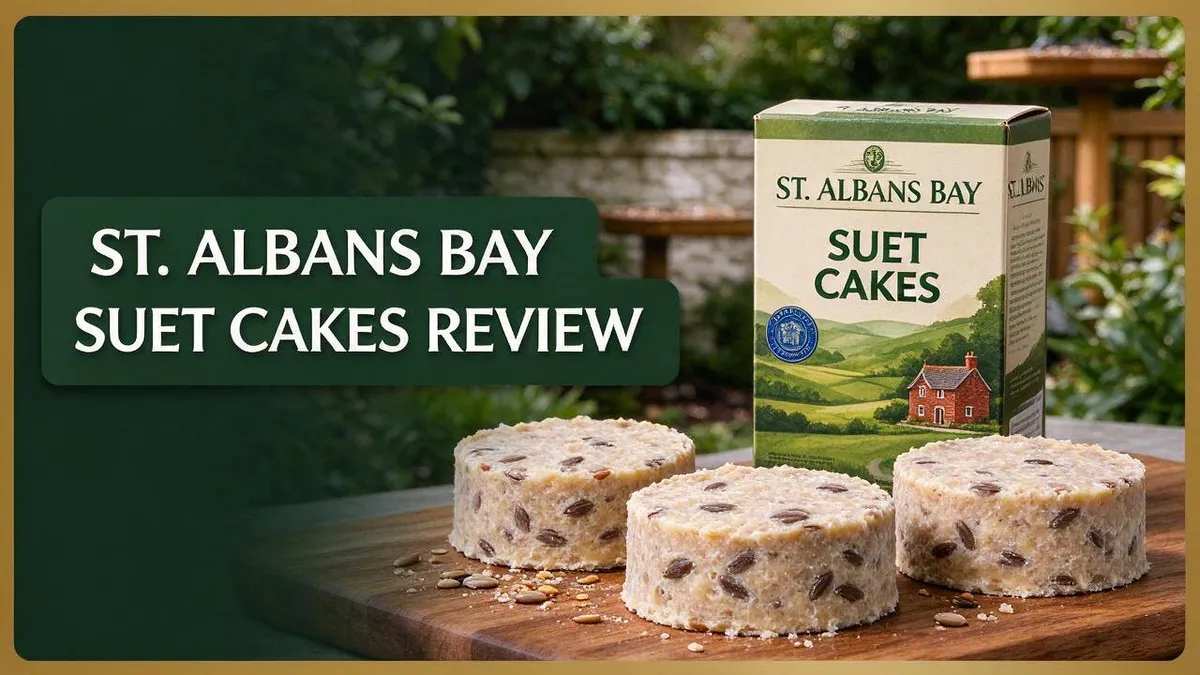
St. Albans Bay Suet Cakes Review: Is It Worth It in 2026?
Do you want more birds at your feeder this season? St. Albans Bay Suet Cakes may help you get there. These 11 oz cakes come in packs of 8, 10, and 20. You can pick High Energy, Berry, Peanut, or Mealworms & Nuts.
The No Melt formula stays firm and lasts longer. It leaves no fat or grease on your hands. The tear open pack needs no scissors, and the cakes reload easily in suet cages.
In this review, we look at how these cakes perform. You will learn what works, what does not, and who should buy them.
In a Nutshell
- Four flavors to try: The lineup includes High Energy, Berry, Peanut, and Mealworms & Nuts. You can test which one your local birds like best.
- Mealworm recipe: The Mealworms & Nuts cake uses dehydrated mealworms as the main ingredient. It also has cracked corn and peanut pieces.
- Easy to handle: The cakes leave no greasy residue on your hands. They also slide into suet cages quickly, so reloading takes seconds.
- Simple packaging: You tear the pack open by hand, so you do not need scissors. The packaging is also environmentally friendly.
- Possible drawbacks: One reviewer says grackles eat large amounts. A forum poster also said their birds ignored a new brand, but that report is anecdotal.
- Compared with other suet: Woodpecker Blend gets criticism for its corn content. Birds often prefer walnut or peanut suet over greasier options, and these cakes fit that preference.
Ingredients and Flavor Options

- High Quality 11 oz. Suet Cakes. Approx. Size: 5” x 5” x 1”
- Premium Quality, Melt-Resistant Formula. Store in a cool dry area to ensure long lasting quality for your wild birds.
Last update on 2026-06-10 / Affiliate links / Images from Amazon Product Advertising API Some of the links on this website are affiliate links, which means that at no additional cost to you, I earn a commission if you click through and make a purchase. I only recommend products and services that I believe will add value to my readers. Thank you for your support!
Good suet starts with what goes inside each cake. St. Albans Bay keeps its recipes simple, so you can read the label and know what your birds will eat.
The Mealworms & Nuts cake does more than rely on one ingredient. It also includes cracked corn and peanut pieces, which give birds on the ground something to pick at.
Those cracked corn pieces matter for certain visitors. Sparrows, doves, and juncos often gather below the feeder to eat fallen bits.
The Peanut flavor suits a different crowd. Research shows birds often prefer peanut and walnut suet over greasier options.
The Berry cake brings a sweeter option to the mix. Fruit eaters like robins, catbirds, and orioles may stop by more often when they spot it.
High Energy focuses on fuel. It works well during cold months when birds need extra calories to stay warm.
Every cake starts with a fat base, which is what makes suet so attractive to birds. Fat supplies quick energy, especially when temperatures drop.
Nuts add crunch and extra flavor, so birds can nibble longer at each visit. Longer visits mean more time for you to enjoy watching them.
Mealworms deserve special mention for insect eaters. Many bluebirds and wrens search for insects, so a cake built around dried mealworms may suit them well.
Try offering two or three flavors at once. This helps you see which cake your visitors like best.
Check your feeder after each refill. If one flavor sits untouched, swap it for another option.
Keep flavor choices in mind for your location. Birds in your area depend on seasonal food sources, so a mix of options can attract more species through the year.
Read the ingredient list before you try a new flavor for the first time. Look for simple ingredients that match the birds you hope to attract.
Your feathered guests will show you their favorites over time.
No-Melt Formula and Longevity
Heat is the biggest enemy of most suet cakes. On a sunny afternoon, plain fat can soften and drip onto the ground. This makes the feeder messy and wastes food.
The formula resists melting even when temperatures rise. So the cake keeps its shape in the cage. Birds can cling and feed without a mess.
Think about how long a cake sits out. A busy feeder with many birds uses cakes faster. Keep a note of refill dates.
Weather plays a role too. Rain and snow can still reach an open feeder. Firm cakes often hold their shape better in damp conditions.
Cold weather brings a different challenge. Fat can harden and crack when temperatures drop. Check each cake for cracks before you hang it.
Storage matters before feeding even starts. Keep unopened packs somewhere cool and dry. Leaving them in a hot car or garage can change their texture.
Plan your refills around the weather. Hang fresh cakes early in the morning. Many birds feed most during the first hours of daylight.
Watch for signs of spoilage. Remove any cake with mold, a sour smell, or heavy insect damage. Clean feeders help keep cakes safe for birds.
Cage size matters too. A cage that holds the whole cake keeps it secure. Less loss to wind means more food for your birds.
The cake’s shape helps as well. A solid block sits flat in the cage. Birds get a steady surface to peck and grip.
Small crumbs can still fall. Place a tray or ground cloth under the feeder to catch them. Clean crumbs also help reduce waste.
In short, the firm texture helps in hot weather. Good storage and smart timing help cakes last longer. Your birds get a steady meal all season long.
Bird Appeal and Species Attracted
Suet draws a surprising range of birds to your yard. Many backyard visitors find it hard to resist.
Woodpeckers are often the first to arrive. Downy and hairy woodpeckers cling to the cage and feed for a long time.
Nuthatches and chickadees also visit often. They grab a bite, fly off, and come back again within minutes.
Titmice often join the crowd too. They like to take a piece and carry it away to eat somewhere safe.
The mealworm cake appeals to insect eaters. Bluebirds and robins are known to enjoy mealworms, so this flavor can bring in birds that rarely visit feeders.
Blue jays often go for the peanut pieces. They may hide extra bits nearby for later, which means you might see them return again and again.
Fruit eaters such as catbirds may show interest in the Berry cake. The sweet smell can catch their attention from a distance.
Your location shapes which species show up first. Local birds usually find new food sources before migrating visitors do.
Give your birds some time, though. Not every bird will try suet right away. Some species need a few days to feel comfortable with a new feeding spot.
Placement helps too. Hang the feeder near trees or shrubs, since birds feel safer there and tend to stay longer. A quiet spot with nearby cover works well.
Watch which species arrive first. Your visitors will show you which flavor and location work best for your yard.
Top 3 Alternatives
Looking for other suet options? Here are three strong alternatives to St. Albans Bay Suet Cakes. Each one brings its own benefits to your backyard.
Pine Tree Farms Suet

- No Melt Suet Cakes For Wild Birds - These bird suet cakes are great for year-round feeding with no mess and no melting
- Energy Boost - These outdoor bird food cakes are a great source of energy that deliver essential fats and fiber for feeding wild birds that are active

Last update on 2026-11-13 / Affiliate links / Images from Amazon Product Advertising API Some of the links on this website are affiliate links, which means that at no additional cost to you, I earn a commission if you click through and make a purchase. I only recommend products and services that I believe will add value to my readers. Thank you for your support!
This brand makes suet cakes from real rendered beef suet. The rich fat gives birds the energy they need during cold months.
Woodpeckers, chickadees, and nuthatches often visit these feeders. Many blends also include seeds, nuts, or dried fruit. Those extras add variety to your feeder.
Set the cake in a sturdy wire cage. Refill it when it looks empty, and check it often for mold in warm weather.
Wild Birds Unlimited Suet

- MADE WITH ROASTED PEANUTS, this no melt suet delivers a concentrated energy boost wild birds need to forage, nest, migrate and more
- APPEALS TO NUT EATING BIRDS; C&S Peanut Butter Delight No Melt Suet Dough attracts wrens, woodpeckers, cardinals, songbirds, jays and more bringing more variety and vibrancy to your feeders
Last update on 2026-11-13 / Affiliate links / Images from Amazon Product Advertising API Some of the links on this website are affiliate links, which means that at no additional cost to you, I earn a commission if you click through and make a purchase. I only recommend products and services that I believe will add value to my readers. Thank you for your support!
This option comes from a well known chain of backyard bird stores. The company offers suet blends designed for different bird species.
Bluebirds, wrens, and other songbirds may stop by for certain flavors. Store staff can guide you to the right mix for your yard.
Many shoppers like having so many choices. Trying a few different flavors helps you learn what your local birds enjoy most.
Kaytee Suet Cakes

- A high-energy treat to attract bluebirds, chickadees, woodpeckers and more
- Excellent, high-protein food source for wild birds
Last update on 2026-11-13 / Affiliate links / Images from Amazon Product Advertising API Some of the links on this website are affiliate links, which means that at no additional cost to you, I earn a commission if you click through and make a purchase. I only recommend products and services that I believe will add value to my readers. Thank you for your support!
Kaytee is a familiar name in bird feed. You can find these cakes at many large retailers and grocery stores.
These cakes are easy to set up and simple to store. They suit beginners who want a fast start with suet feeding.
Pick a flavor that matches the birds you want to attract. Watch your feeder closely during the first week to see which birds arrive.
Packaging, Cake Size and Pack Counts
St. Albans Bay sells its suet cakes in three pack sizes. You can pick 8, 10, or 20 count boxes. Each cake weighs 11 oz, so every pack offers the same solid portion.
Small packs suit new bird feeders. They let you test flavors without filling your shelf. If your birds ignore one flavor, you lose less.
Large packs suit busy backyards. A 20 count box can keep a feeder stocked for many weeks. You also make fewer trips to the store, which saves time.
Think about how often you refill. Count how many cakes you use each week. Then choose the pack that fits your routine. Matching the count to your habits keeps the feeder full without waste.
Consider your yard size and bird traffic too. A busy yard with many visitors may empty a 10 count box quickly. A quieter yard may need only the 8 count pack for weeks.
Each box follows the same format, so you know what to expect. Every cake weighs 11 oz, and every pack lists its count clearly. This makes restocking quick and simple.
The packaging deserves a closer look as well. It is eco friendly, so it cuts down on waste. Many nature lovers appreciate that small detail. Recycling the packaging keeps waste low when your area supports it.
Mixing pack sizes works well for many people. Buy a small box of a new flavor first. Then stock up on the favorites in a larger count.
Check the box after each refill and note how fast the cakes disappear. That record helps you pick the right size next time. Keep unopened boxes in a cool, dry spot until you need them.
Ease of Handling and Feeder Loading
Opening a suet cake should feel quick and simple. The St. Albans Bay cakes make this part easy. You tear the packaging open by hand, so no scissors or knife are needed.
The cake stays firm while you hold it. It does not smear across your palms like a soft, greasy block. Your hands stay cleaner, and you can focus on the feeder.
Loading the feeder takes only a few seconds. Remove the old cake, slide the new one into the cage, and press it gently so it sits flat. Then close the cage door and step back.
Rotate the cake until the flat side faces the bars. This small step helps it sit snugly. A loose cake can wobble in strong wind and slip out of place.
Use the same motion each time. Many people find a simple routine speeds up refills. Keep the wrapper nearby so you can seal any leftover cakes right away. Gloves are optional, but they feel nice on very cold days.
Wrap leftovers tightly. Store unused cakes in their original packaging or a sealed bag. This keeps the fat clean and free from dust, odors, or pests. Label the bag with the date so you know which cakes to use first.
Rinse your hands after each refill. Even clean fat can leave a light film on your skin. A quick wash keeps door handles and kitchen towels free of residue.
Children often enjoy helping with refills. Give them a cake and let them place it in the cage while you stand nearby. Adult supervision keeps everyone safe and keeps the feeder neat.
Stock a few cakes in a dry spot so you always have one ready. Keeping a spare reduces the time your feeder sits empty during busy weeks.
Reloading becomes a habit. Once you learn the steps, the job takes less than a minute. Your birds get fresh food sooner, and you spend less time outside in the cold.
Pros and Cons
Pros
- Cakes resist melting, so they keep their shape outdoors for a long time.
- Little fat or grease residue stays on your hands after handling.
- Refills slide into suet cages with ease.
- The mealworm flavor draws insect eating birds to your feeder.
- Four flavors give you choices for different birds.
Cons
- Grackles can eat large amounts, according to one reviewer.
- Some birds may ignore a new brand at first, based on a forum report.
- Cracked corn in the Mealworms & Nuts cake may not suit every bird.
Who Should Buy It
Many backyard watchers will find these cakes a good match. Think about your daily routine before you buy. If you want a simple way to feed wild birds, this product fits well.
Households in warm regions often struggle with melting suet. These cakes hold their shape on sunny days, so summer feeding becomes far less of a chore.
Gardeners who hope to attract woodpeckers and nuthatches may favor the mealworm flavor. Woodpeckers often seek high protein food, and this cake offers plenty of it.
Shy or cautious birds may need a gentle start. Offer the Berry or Peanut cake first. Then watch which birds react before you buy more.
Yards with heavy grackle traffic need extra planning. Choose a cage that limits access for larger birds. Place the feeder away from open lawns so smaller birds feel safe nearby.
Teachers and parents can turn feeding into a learning activity. Children can log which birds visit each day and draw what they see. This builds curiosity about nature.
Renters and apartment dwellers with balconies can also enjoy these cakes. A small cage hung from a railing works well for many people. Birds quickly notice fresh food in unexpected places.
Winter feeders benefit most from a steady energy source. Birds burn more calories when temperatures drop. A reliable suet supply helps them stay active and healthy during cold weeks.
Who should skip this product? Shoppers who want only seed feeding may prefer a different style. Suet works best as an extra energy source, not a complete diet.
Start with one flavor and learn your local visitors. Then expand your collection as your bird list grows. Keep notes on each flavor so you remember what worked.
Final Verdict
St. Albans Bay Suet Cakes earn a solid recommendation from us. They handle the main job well. They give backyard birds a steady source of energy through cold months.
The no melt formula is the biggest win. It keeps your feeder tidy and your routine simple. You spend less time fixing problems and more time watching birds.
The flavor lineup adds flexibility. You can try one flavor, see which visitors arrive, and then adjust. Mealworms & Nuts looks like the best starting point for most yards.
Some limits remain. Cracked corn can attract bold eaters like grackles. Woodpecker Blend faces the same corn concern, so this issue is not unique to one brand.
Our research also shows birds often favor walnut or peanut suet over greasier options. That makes the peanut flavor a smart second pick. Results will still vary by region and season.
Here is our simple advice for new buyers.
Start small. Hang one cake and give birds a week or two to find it. Patience matters with any new food.
Watch your visitors. Note which species show up and which ones stay. Then switch flavors if the crowd is not what you hoped for.
Keep notes. A quick log of dates, flavors, and bird sightings helps you spot patterns. You will learn what your yard prefers.
Our final score: 4 out of 5 stars. The cakes lose a point for the corn content and the lack of a guaranteed welcome from every bird. They earn the rest through reliable performance and low fuss design.
If you want a dependable suet cake that stays put and keeps birds returning, this one deserves a place at your feeder. Hang one, sit back, and enjoy the show.
Frequently Asked Questions
What pack sizes does St. Albans Bay offer?
Shoppers can choose 8, 10, or 20 count packs. A smaller pack works well for one feeder. A larger pack suits yards with several feeders or frequent refills.
How easy is it to open the packaging?
The wrappers tear open by hand, so you never need scissors. This helps when your fingers feel cold outdoors.
Is the Peanut flavor a good choice?
Research shows birds often favor walnut or peanut suet over greasier options. The Peanut flavor may appeal to birds that enjoy peanut foods. Watch your feeder to see which birds visit most.
How does it compare to Woodpecker Blend?
Woodpecker Blend comes in a case of 12. Reviewers note its corn content as a drawback. Compare the labels side by side so you can pick the best fit for your garden.

Hello, I’m Amelia White, the founder of birdsfanatic.com. As a lifelong bird enthusiast and spiritual seeker, I’ve always been fascinated by the mystical connections between birds and the human experience. On this site, I share my knowledge and insights into the symbolic meanings and spiritual significance of various bird species, exploring their roles in mythology, folklore, and cultural traditions. Join me on this journey into the world of birds, where we’ll discover the hidden wisdom and guidance that these magnificent creatures have to offer.
