
How to Keep Birds Off Your Blueberry Bushes
If you grow blueberry bushes, you know how determined birds can be when it comes to stealing your fruit. Understanding how birds behave can help you protect your blueberries. Here are some effective ways to keep birds away from your crop.
- Netting: Cover your blueberry bushes with netting. This physical barrier stops birds from reaching the berries. Ensure the netting is secure to avoid any openings.
- Scare Tactics: Use shiny objects, like aluminum foil or old CDs, around your bushes. The light reflection may scare birds away. You can also hang wind chimes or use plastic predators to create a fear factor.
- Sound Devices: Consider using noise-making devices. Recorded bird distress calls or wind-up toys can deter birds by creating an uncomfortable atmosphere.
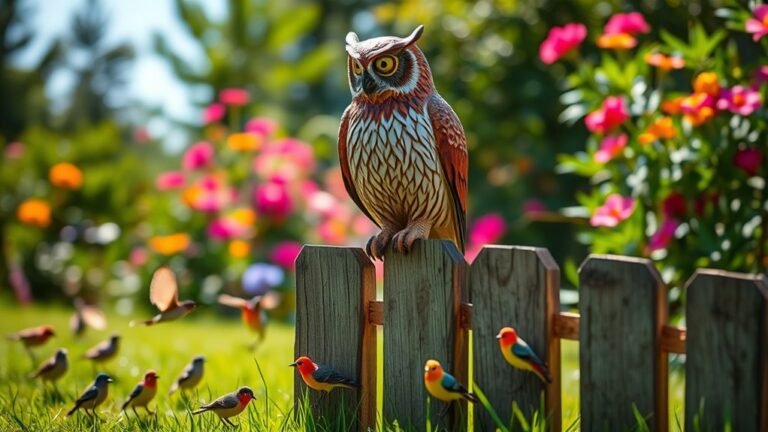
- Decoys: Place fake birds of prey, like owls or hawks, nearby. These decoys can make birds think twice before approaching your bushes.
- Regular Monitoring: Keep an eye on your bushes. Regularly check for any bird activity and adjust your methods if necessary.
By using these methods, you can help ensure your blueberries remain safe and ripe for harvest. Enjoy your gardening!
Key Takeaways
- Use lightweight netting to cover blueberry bushes, securing the edges to prevent bird access.
- Install scare tactics like plastic owls and shiny objects to deter birds visually.
- Create natural barriers by planting dense or thorny shrubs around your blueberry bushes.
- Monitor and maintain netting regularly to ensure it remains effective against birds.
- Time protective measures according to bird migration patterns and feeding habits.
Understanding Bird Behavior

Understanding bird behavior helps you protect your blueberry bushes. Many bird species are drawn to ripe blueberries and eat them in large amounts. Knowing this allows you to plan how to safeguard your plants effectively.
Also, observe bird migration patterns. Certain birds visit your bushes during specific times of the year. Migratory birds often stop to feed where there's plenty of fruit. Timing your protective actions around these periods can greatly benefit your crop.
Choosing the Right Location for Your Blueberry Bushes
Choosing the right location for your blueberry bushes is crucial for their health and growth. These plants need full sunlight, so pick a spot that gets at least six to eight hours of direct sunlight every day. This will help boost fruit production and promote strong growth.
Soil drainage is also important. Blueberries grow best in well-drained, acidic soils. Stay away from areas where water collects after rain, as this can lead to root rot and weak plants.
To improve soil quality, adding organic matter can be beneficial.
Using Netting for Protection
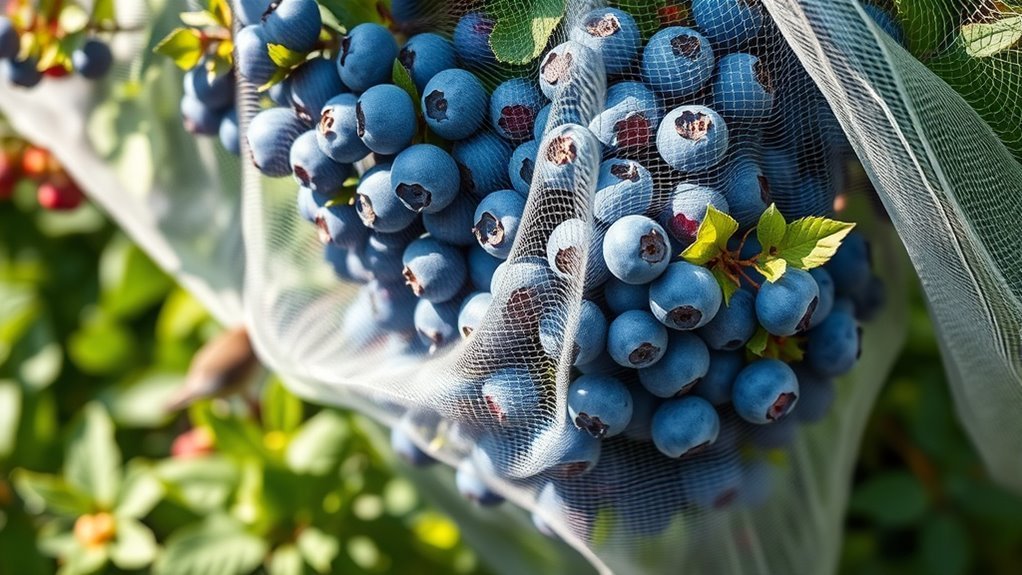
Birds can quickly damage your blueberry harvest. To protect your plants, use netting as a simple solution. Choose lightweight polyethylene or nylon netting. This allows sunlight and rain to reach your blueberries while keeping birds out.
For installation, drape the netting over your bushes. Secure it with stakes or weights to prevent it from blowing away. Make sure the edges are anchored to the ground to block birds and avoid trapping any wildlife.
Check your netting regularly for holes or wear. Keeping it in good condition is important for your blueberry crop.
With these steps, you can enjoy a successful and plentiful harvest while maintaining a healthy garden.
Employing Scare Tactics
To protect your blueberry bushes from birds, use netting and scare tactics.
Decoys like plastic owls or realistic-looking predators can make birds believe there's danger nearby, keeping them away from your bushes.
Shiny objects, such as old CDs or strips of aluminum foil, reflect light and move in the wind, which can scare birds effectively.
You can also use noise makers that emit distress calls or sudden sounds to frighten them.
Combining these methods will strengthen your defense against birds. This approach not only helps your blueberries but also gives you a sense of achievement in gardening.
Creating Natural Barriers
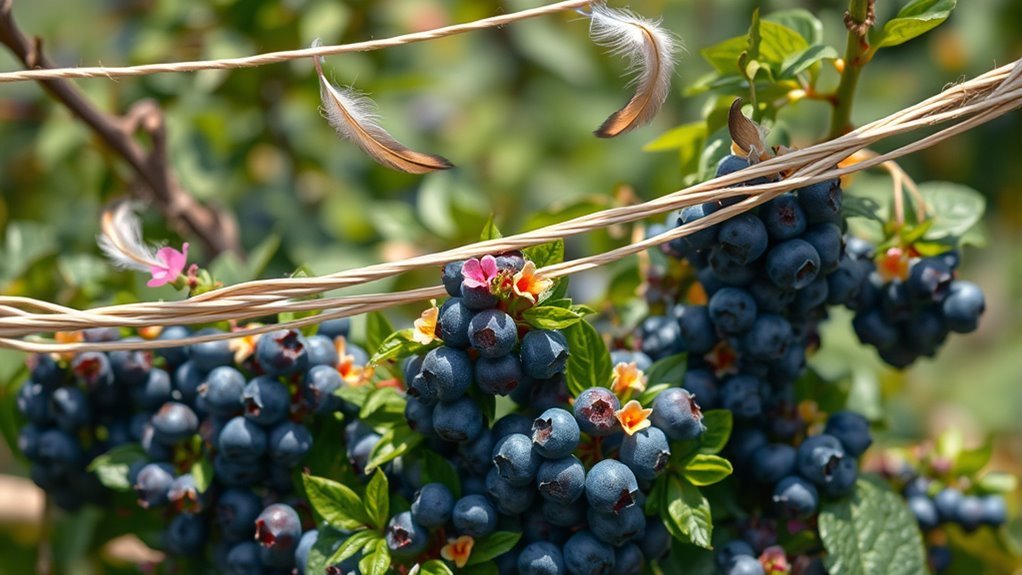
To prevent birds from stealing your blueberries, create natural barriers in your garden. Use dense shrubs or thorny plants to form a fence around your blueberry bushes.
These plants will make it hard for birds to enter your garden while also attracting helpful wildlife. Good choices for perimeter plants include barberry and blackthorn due to their thick growth.
Adding taller plants can further block the view and make the space less appealing to birds. These natural barriers will protect your blueberries and enhance the overall beauty and biodiversity of your garden.
Adding Decoys and Visual Deterrents
To deter birds from your blueberry bushes, use decoys and visual deterrents. Start with decoys like plastic owls or hawks that look like natural predators. Place these decoys throughout your garden for better results.
Also, use reflective materials like aluminum foil strips or CDs. These can confuse birds and keep them away from your crops.
By using different deterrents together, you increase your chances of success. Change the arrangement of your decoys and distractions often to prevent birds from getting used to them.
These simple methods help protect your blueberries and create an environment where they can thrive. Enjoy your gardening while keeping those feathered intruders at bay!
Utilizing Sound Devices
To protect your blueberry bushes, you can use sound devices alongside visual deterrents. Sound devices can confuse birds and keep them away from your plants.
One effective option is an ultrasonic device that emits high-frequency sounds annoying to birds but inaudible to humans. These devices can activate when birds come near, making them efficient. Try different sound patterns to see which ones work best for your garden.
It can be helpful to use sound devices with other protective measures for better results. Positioning these devices thoughtfully will help maintain a peaceful atmosphere while keeping birds away.
With some patience and creativity, you can safeguard your blueberries from birds effectively.
Implementing Water Sprays or Misters
Water sprays or misters can effectively keep birds away from your blueberries. By using a misting system at peak water pressure, you create a fine mist that distracts birds without harming your plants.
Set your misters on a timer to operate at dawn and dusk, the times when birds are most active. This method protects your berries while conserving water by reducing runoff.
Ensure your misting system covers the entire bush evenly, creating a barrier that birds avoid. Keeping your berries safe is important, and this technique helps create a pleasant environment for your garden.
Regular Harvesting Practices
To protect your blueberry bushes from birds, use regular harvesting practices. Timely picking helps reduce avian damage and ensures high fruit quality. Aim to harvest every few days during peak season. This way, you can collect ripe berries before birds take them.
Use berry-picking tools like clamps or baskets to make the process easier. These tools save time and help prevent bruising.
Invite family or friends to join your harvesting. This creates a fun atmosphere and makes the task feel rewarding. Enjoy the experience of cultivating blueberries together.
Planting Companion Plants to Distract Birds
To keep birds away from your blueberry bushes, plant companion plants that will attract them instead. Use flowering herbs like basil and dill. These herbs attract beneficial insects and provide food for birds, reducing their interest in your blueberries.
Sunflowers and marigolds also help by offering bright colors and plentiful seeds, distracting the birds visually.
Companion planting not only protects your blueberries but also promotes a healthy garden ecosystem. These plants help keep pests at bay while attracting pollinators to your berries.
Frequently Asked Questions
What Types of Birds Are Attracted to Blueberry Bushes?
Blueberry bushes attract many birds. Common visitors include robins and blue jays. These birds enjoy eating berries, making your garden a tasty stop for them. Watching these birds can add joy to your gardening experience.
Can I Use Chemical Repellents on My Blueberry Plants?
You can use chemical repellents on your blueberry plants. However, consider using organic options first. Organic repellents can be safer for your plants and the environment. This choice helps you grow a healthier harvest while reducing chemical exposure. Stay informed and responsible in your gardening practices!
How Often Should I Replace Decoys or Visual Deterrents?
Replace decoys every few weeks to keep them effective. Birds adapt quickly. Changing the types of visual deterrents, like shiny objects or fake predators, prevents them from getting used to the same sights. This keeps your approach fresh and helps deter birds more successfully.
Are There Specific Companion Plants That Work Best for Blueberries?
For companion planting with blueberries, choose helpful herbs like mint, thyme, or oregano. These plants improve soil health and keep pests away. They also encourage more variety around your blueberries. This support can lead to better growth and flavor in your blueberries, making your garden a thriving and enjoyable space.
Do Birds Damage Other Garden Plants Besides Blueberries?
Yes, birds can damage many garden plants besides blueberries. They often eat seeds, fruits, and young shoots. To protect your plants, you can use netting or scare devices. These methods can help keep your garden safe from birds.

Hello, I’m Amelia White, the founder of birdsfanatic.com. As a lifelong bird enthusiast and spiritual seeker, I’ve always been fascinated by the mystical connections between birds and the human experience. On this site, I share my knowledge and insights into the symbolic meanings and spiritual significance of various bird species, exploring their roles in mythology, folklore, and cultural traditions. Join me on this journey into the world of birds, where we’ll discover the hidden wisdom and guidance that these magnificent creatures have to offer.