Tips for Keeping Algae Out of Your Bird Bath
To keep algae out of your bird bath, follow these simple strategies. First, choose a spot that gets partial sunlight. Too much sun encourages algae growth. Next, consider adding beneficial bacteria or aquatic plants. These elements help control algae levels. Regularly clean your bird bath and keep the water moving. This also aids in algae prevention. These methods will help you maintain a clean and inviting bird bath for your feathered visitors.
Key Takeaways
- Select a location for the bird bath that receives partial sunlight to limit algae growth.
- Regularly clean the bird bath using a vinegar and water solution to minimize algae buildup.
- Introduce aquatic plants like water lilies to provide shade and reduce sunlight exposure.
- Use beneficial bacteria to break down waste and help control algae naturally.
- Incorporate water movement with a fountain or dripper to attract birds and deter algae growth.
Choose the Right Location for Your Bird Bath

When you set up your bird bath, pick the right location. This choice affects how often birds come and how quickly algae grow.
Choose a spot with partial sunlight. This gives warmth and some shade. Too much sun can lead to algae, while too much shade may keep birds away.
Look for nearby plants, like shrubs or trees, which offer shelter and attract birds. They also help reduce water evaporation.
Place the bath where you can easily see it, so you can enjoy watching the birds.
Finding the right spot creates a welcoming environment for birds and makes it enjoyable for you too!
Use Natural Algae Preventatives
After selecting the best location for your bird bath, focus on keeping it clean for birds.
Using natural algae preventatives is helpful. Introduce beneficial bacteria to the bird bath; these bacteria break down waste and reduce algae.
Adding aquatic plants like water lilies can provide shade, limiting sunlight that causes algae growth. Small plant frogs can also be placed near the bath. They improve the look and help keep algae under control.
These natural solutions create a healthy space for birds and keep your bird bath clean.
Regular Cleaning and Maintenance

Regular cleaning and maintenance of your bird bath is important for attracting birds.
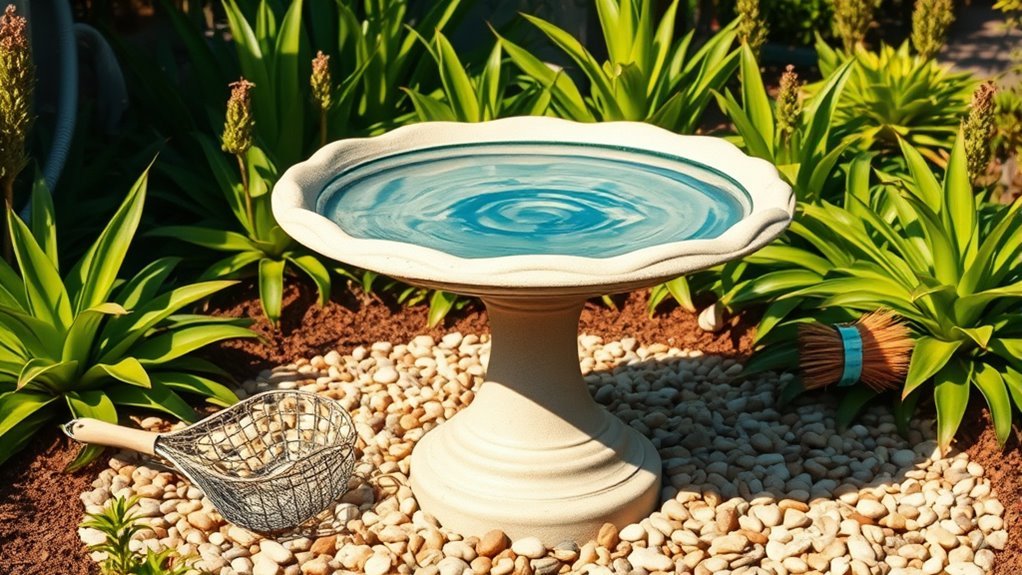
Set a cleaning schedule to minimize algae growth and keep the water fresh. Scrub the bath weekly with a mix of vinegar and water to remove dirt without harmful chemicals. Rinse thoroughly to ensure no residue remains. For tough stains, use a gentle brush.
Change the water regularly, ideally every two to three days, especially in hot weather.
Following this routine will create a clean and safe space for birds, allowing you to enjoy their presence in your backyard.
Add Movement to the Water
To keep algae away and attract birds, add movement to the water in your bird bath. A small fountain or dripper can help.
This movement increases water aeration and draws in different bird species. The sound of splashing or trickling water creates an inviting space for birds to bathe and drink.
Moving water discourages algae growth. If you worry about energy use, you can choose solar-powered options.
Regularly check that the water movement is working well and make adjustments if needed. By keeping the water lively, you create a vibrant area that invites birds and minimizes algae.
Monitor and Maintain Water Levels

Maintaining the right water level in your bird bath is important for cleanliness and attractiveness to birds. Regularly checking and adjusting water levels can reduce algae growth, especially in hot weather when evaporation increases.
Seasonal changes may also impact how often you need to refill the bird bath.
Here are simple tips to monitor and maintain water levels:
- Check the water level daily during warm months.
- Refill with fresh water as needed.
- Consider using a float or water level alarm for ease.
- Observe water loss patterns after rain or dry spells.
- Clean the bird bath weekly to keep the water clear.
Frequently Asked Questions
What Type of Water Should I Use in My Bird Bath?
Use fresh, clean water for your bird bath. Rainwater or distilled water is best. You can improve water quality by boiling or filtering it. This creates a safe and inviting space for your birds. Take care of their needs, and they will enjoy bathing in your yard.
Can I Use Chemicals to Eliminate Algae?
You can use chemicals to remove algae, but it's best to try natural options first. Simple choices like vinegar or baking soda are safer for birds and other wildlife. Remember, while chemical solutions might work quickly, they can harm animals. Always think about the safety of your feathered friends when choosing a method.
How Often Should I Replace the Water?
You should change the water every few days, especially in hot weather. Changes in the seasons affect the water temperature, so monitor it regularly. This practice will keep a clean and welcoming area for your birds.
Which Plants Help Prevent Algae Growth?
To prevent algae growth, add aquatic plants like water lilies or floating plants such as duckweed. These plants absorb nutrients that algae need, creating a cleaner environment for your pond. Additionally, they can attract birds, making your outdoor space more lively and enjoyable.
What Are the Signs of an Algae Problem?
You can identify an algae problem by observing green, brown, or red colors in the water. When algae grow quickly, they can make the water look cloudy and murky, which reduces its natural beauty.

Hello, I’m Amelia White, the founder of birdsfanatic.com. As a lifelong bird enthusiast and spiritual seeker, I’ve always been fascinated by the mystical connections between birds and the human experience. On this site, I share my knowledge and insights into the symbolic meanings and spiritual significance of various bird species, exploring their roles in mythology, folklore, and cultural traditions. Join me on this journey into the world of birds, where we’ll discover the hidden wisdom and guidance that these magnificent creatures have to offer.