
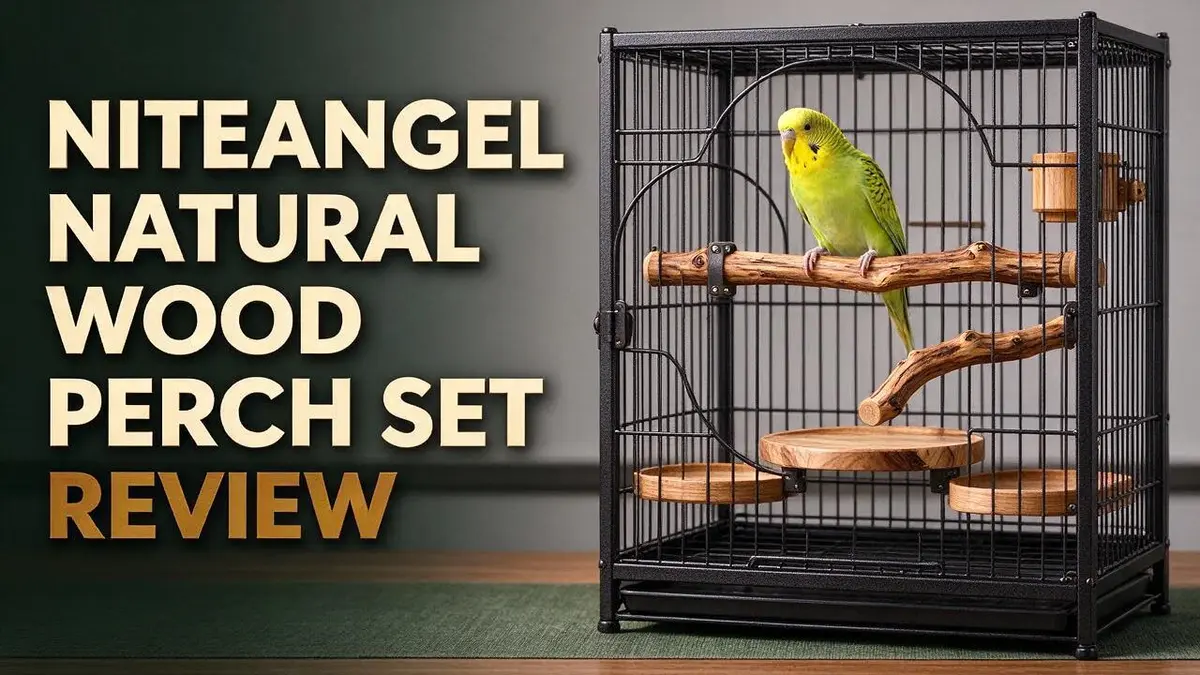
Niteangel Natural Wood Perch Set Review 2026: Materials and Cage Fit
Looking for a perch that keeps your bird active and happy? The Niteangel Natural Wood Perch Set may be the right pick. It offers a unique shape that invites play and foot exercise.
Natural wood feels good under little feet. The textured bark gives a firm grip, and the flat platform lets feet rest. Many owners also like the wing nuts, which make installation quick and tool free.
Each set includes two untreated willow perches. The bark can help wear down nails over time. It may also support healthy foot structure and help prevent bumblefoot.
Still, some buyers warn that bigger chewers, like cockatoos, can wear through it fast. This review looks at what works well, what to watch for, and whether it fits your flock.
In a Nutshell
-
Easy setup: The wing nuts let you install the perches without any tools. Setup takes little effort, even for new bird owners.
-
Support for healthy feet: The unique shape encourages foot exercise and play. It may also help prevent bumblefoot, a common foot problem in pet birds. Good foot care matters for birds that spend most of their day on perches.
-
Natural nail care: The textured bark helps wear down nails during everyday perching. The bark also gives your bird a natural way to keep busy.
-
A break from gripping: The flat platform lets feet rest between grips. Your bird can shift its weight and relax. Pauses in gripping can ease tired toes.
-
Roomy platform and good fit: Each platform measures 7 x 3 inches and fits most cages. That size gives birds room to stand, turn, and stretch. Many owners can use it right away.
-
Other options to compare: Grapevine perches and parrot-safe fruit branches are popular alternatives. Dowel perches offer another choice for varied grip. Comparing these choices helps you pick the best fit for your bird.
Materials and Construction

- Natural Willow Wood Bird Perch – Ideal for Your pet : Crafted from untreated willow wood, Niteangel bird perch provides a natural and safe resting spot for your feathered companion. The textured bark surface offers excellent grip, making it a perfect budgie perch or cockatiel branch stand for everyday standing, climbing, or exploring inside the cage.
- Promotes Foot Health & Comfort : With a gentle natural curve, this bird cage platform perch helps reduce foot strain and supports joint comfort. Birds need flat and stable areas to rest, and the bird platform design helps far away foot fatigue, making it a thoughtful choice for parakeets, conures, finches, and other small to medium birds.
Last update on 2026-10-31 / Affiliate links / Images from Amazon Product Advertising API Some of the links on this website are affiliate links, which means that at no additional cost to you, I earn a commission if you click through and make a purchase. I only recommend products and services that I believe will add value to my readers. Thank you for your support!
Materials play a big role in how a perch performs. The Niteangel set is built from natural wood, not plastic or painted dowels.
Willow is a common choice for bird perches. Its grain feels varied under the feet, so birds get more variety than they would with a smooth rod.
The wood sits in its natural state, with no added finish that a bird might chew or lick. This matters because parrots explore with their beaks all day.
Texture plays a quiet role too. The bark surface is not sanded away, so the perch keeps its natural look over time.
Simple construction also means fewer parts that can loosen or wear out. A clean design is easier to check during daily care.
Inspect your perches often. Look for cracks, splinters, or loose wing nuts. Replace any damaged piece quickly so your bird stays safe.
Wood wears down with use, so plan for replacements. Rotating perches in the cage can slow wear and keep surfaces fresh.
Good materials matter for lasting health. Natural wood gives birds a safe chewing outlet and a comfortable grip.
Wood also feels warm and natural to the touch. Birds often seem more settled on surfaces that feel like their natural environment.
Think about your bird’s beak size. Small birds may only nibble lightly, while larger birds can strip wood quickly. Willow suits moderate chewing best.
Cleaning is simple with natural wood. Scrub with warm water and let it dry fully before returning it to the cage. Skip harsh soaps, since wood can hold residue.
Pair the set with other textures. Mix in a rope or cotton perch for variety. Your bird will then switch between surfaces through the day. Variety keeps feet healthy and minds busy.
Design and Foot Health
Foot health starts with the right shape. A perch that is too thin or too round can strain tiny toes. This set gives your bird several contact points, so each foot stays active.
Think about how your bird stands all day. Many birds grip with their toes for hours. That constant effort can tire muscles and add pressure to the soles. A wider platform lets the foot spread out and relax.
Watch your bird’s feet every week. Look for redness, swelling, or dark spots on the soles. These signs can point to bumblefoot, a condition that needs a vet visit. Early checks often make a big difference.
Placement matters too. Put one perch near food and water, and place the other on a higher side of the cage. Your bird will hop between spots and shift its weight. This small change keeps the feet from staying in one position.
Size is another key factor. The platform should let your bird rest both feet together without sliding. If the bird wobbles or struggles to balance, the perch may be too large. A smaller bird may need a narrower choice.
Mix your perch options over time. Pair this set with a rope perch or a grapevine ring for variety. Different textures and diameters give the feet new challenges. Your bird will stay balanced and comfortable.
Rest days matter as well. Birds need time away from constant gripping, so keep some low resting areas in the cage. A flat spot, a soft towel on the cage floor, or a shallow dish can help. Feet recover best when they get a break.
Foot comfort also affects sleep. A bird that rests well often keeps its feet relaxed at night. Check that the perch sits level, so the bird does not sleep on a tilt.
Installation and Cage Fit
Before you open the box, measure your cage. Take the width from one side to the other. This simple step helps you place the perches with confidence.
Check the bar spacing first. Small birds can get a toe caught between wide bars. Narrow spacing keeps little feet safe and secure.
Placement matters a lot. Put one perch near the food dish so your bird can hop over easily. Avoid mounting it directly above the water bowl, because droppings can land in the water.
Think about height too. A perch near the top gives your bird a good view. A lower perch helps your bird rest without strain. Mix heights so your bird can move up and down during the day.
Keep the perch clear of the cage door. A bird that lands near the door may try to fly out when you open it. Place the perch on the opposite side so your bird stays calm.
Give the perch some space from the cage wall. Leave a gap of a few inches so your bird can turn around without bumping its tail. Also keep the perch away from heat sources and drafts.
If you add a second perch, keep the distance between them comfortable. Birds need room to hop between spots without crowding. Two or three feet of space works well in most cages.
After mounting, test the perch. Gently push and pull on it. A solid perch should not wobble or spin. If it moves, tighten the mount again before your bird gets close.
Watch your bird on day one. Some birds ignore a new perch at first. Others climb on right away. Both reactions are normal. Offer a treat near the perch to encourage your bird to step onto it.
Clean the area around the mounts each week. Food bits can collect in the gaps and attract germs. A quick wipe keeps the setup fresh and safe.
Top 3 Alternatives
Prevue Bird Perch
No products found.
Looking for a simple perch for your feathered friend? The Prevue Bird Perch gives birds a solid place to rest. It features natural wood that birds can chew and enjoy. Small birds, like finches and canaries, feel comfortable on it. Your bird gets a steady spot to perch and play every day.
Check the perch often for cracks or wear. Replace it when the wood looks worn. Most owners find it easy to clean and swap out when needed.
Super Bird Creations Perch

- TAILORED FOR LARGE BIRDS, LOVED BY ALL!: Designed with large birds in mind, this bungee bird toy is an ideal fit for amazons, african greys, eclectus, small cockatoos, mini macaws, and similarly sized pet birds. and other similarly sized avian friends. Its 9/10" diameter ensures a comfortable grip for your pet, promoting healthy exercise and play.
- COLORFUL ENTERTAINMENT FOR HAPPY BIRDS: The Bungee Bird Toy is not just a toy; it's a burst of vibrant colors that add a cheerful touch to your bird's environment. Watch as your pet delights in exploring the colorful twists and turns, creating a visually stimulating experience that promotes exercise and physical health.
Last update on 2026-10-28 / Affiliate links / Images from Amazon Product Advertising API Some of the links on this website are affiliate links, which means that at no additional cost to you, I earn a commission if you click through and make a purchase. I only recommend products and services that I believe will add value to my readers. Thank you for your support!
Want a perch that doubles as a toy? The Super Bird Creations Perch offers natural wood with varied textures. Birds love to scratch and nibble on it. Its different sizes help keep little feet healthy. This option works well for parrots and other medium birds.
Your bird will stay busy for hours. Mix it with other perches for extra variety in the cage.
Kaytee Wood Perch

- Variety of Perches: Natural bird perches are an 8-piece set designed like branches, forks, and platforms. Bird toys mimic a natural environment, creating a stimulating space that encourages climbing, play, and relaxation.
- Natural Wood Perches: These parrot perches are crafted from untreated, high-quality natural wood, ensuring durability and sturdiness. It provides a natural environment while naturally helping birds grind their trim their claws.
Last update on 2026-06-09 / Affiliate links / Images from Amazon Product Advertising API Some of the links on this website are affiliate links, which means that at no additional cost to you, I earn a commission if you click through and make a purchase. I only recommend products and services that I believe will add value to my readers. Thank you for your support!
Need an easy choice for everyday use? The Kaytee Wood Perch is a classic pick. It sits comfortably in most cages and installs quickly. Birds enjoy the rough surface, which helps keep their nails trimmed. The wood also gives chewing fun for curious birds.
Measure your cage before you buy. A good fit keeps your bird safe and happy. It also works well as a simple starter perch for new bird owners.
Chewing Behavior and Durability
Chewing is a normal and healthy part of bird life. Parrots and small birds use their beaks to explore, play, and stay busy.
Not every bird chews the same way. Some birds nibble lightly on the bark. Others go straight for the platform edges. Watch which spot your bird picks first. This tells you how it likes to work its beak.
One reviewer found that a cockatoo chewed through the perch fairly quickly. Cockatoos have very strong beaks. So this result makes sense. If you own a powerful chewer, expect a shorter lifespan. You can still enjoy the perch while it lasts.
Keep an eye out for pieces that break off. Small wood chips can be swallowed. Pick them up right away. If your bird starts tearing off large chunks, remove the perch and offer a new option.
Heavy chewers often need a backup. Keep a second chew item ready, such as a dowel or a fresh branch. Swap items every week or two. Rotation keeps your bird interested and gives the beak a new job.
Chewing can also signal boredom. A bird that chews hard may need more play time. Hide a treat in a paper cup or add a shredding toy. A busy bird often chews less on the perch itself.
Shredding is different from hard chewing. Shredding paper or leaves gives birds a gentle outlet. Hard wood chewing needs closer watching.
Choose toys that match your bird’s beak strength. A small bird needs softer options than a large parrot.
Beak health depends on steady, varied wear. Your bird should have several chewing options each day. The Niteangel perch can be one part of that plan. Mix it with safe branches and toys for the best results.
Chewing habits tell you a lot. Smooth beak edges and mild wear usually mean healthy use. Rapid damage means you should adjust your setup.
Safety and Maintenance
Untreated willow needs gentle cleaning. This wood has no protective coating. Harsh chemicals can soak in and stay there. Warm water and a soft brush work best for most messes.
Always rinse the perch well after scrubbing. Soap residue can irritate your bird’s feet and beak. Let the wood dry fully before you return it to the cage.
Damp wood invites mold. Wet bark holds moisture for hours, especially in humid rooms. Dry the perch in open air, away from direct sunlight that can warp it.
Check the wing nuts every few weeks. Birds move, climb, and push on perches all day. Loose hardware can shift the perch and cause a fall.
Know when to replace it. Look for deep grooves, soft spots, or wood that crumbles under your thumb. Old wood can trap droppings and bacteria in its cracks.
Replace the perch if the surface turns gray, sticky, or smells sour. A worn perch no longer gives your bird a healthy grip. Keep a spare on hand so swapping stays simple.
Store spares properly. Keep unused perches in a dry, cool spot away from pets. Wood can absorb odors and dust if left in a damp garage.
Think about your cage cleaning routine too. Remove the perch during deep cleaning days so you can wash the cage floor and bars. Reinstall it and check the fit afterward. Never leave wet wood in the cage overnight.
Note any scent changes. Fresh willow has a mild, natural smell. A strong or chemical odor after setup means something went wrong. Rinse again before your bird touches it.
Keep notes on each cleaning date. A simple calendar reminder helps you stay on track. Consistent care prevents small problems from becoming big ones.
Your bird depends on you for a safe home. Small habits make a big difference over time. A clean perch supports healthy feet, calm days, and happy play. Start this routine today.
Pros and Cons
Pros
– The unique shape invites play and movement.
– Foot exercise can help keep your bird’s feet healthy.
– The bark texture helps wear down nails naturally.
– The flat platform gives tired feet a break from gripping.
– It fits most standard cages.
Cons
– One reviewer says it may not hold up to a cockatoo.
– Research offers few documented drawbacks so far.
– Feedback on how it lasts over time is limited.
– Some birds may prefer a rounded perch instead.
Who Should Buy It
This perch set suits bird owners who want a simple upgrade. It fits well in cages that hold parrots or small birds.
Owners of small and medium parrots often find it useful. Their daily routine gains a mix of perch shapes and textures.
New bird owners may also like this choice. Setting up a cage can feel confusing at first. This set gives you a clear starting point.
Households with more than one bird can spread perches across the cage. Each bird can claim its favorite spot without fuss.
Placement matters as much as the perch itself. Put the set near food and water, but keep it away from drafts. Birds feel safer when they can see the whole room.
Owners of older birds should watch closely. Senior birds may struggle with balance or joint comfort. A vet can help you judge whether a flat surface suits your pet.
Anyone shopping for a large parrot should check sizing first. The platform may feel small for a big bird. Watch how your bird stands and grips before you commit.
Owners who enjoy hands on bird time may appreciate this set too. Rearranging perches gives you a reason to sit close and talk with your feathered friend.
Overall, this set fits everyday bird keepers who want natural wood variety. Check your bird type and cage size, then decide with confidence.
Final Verdict
The Niteangel Natural Wood Perch Set earns a solid place in most bird cages. It gives your bird natural texture and a flat resting spot. Most everyday bird keepers will be happy with it.
Still, no product fits every bird. The research shows few documented drawbacks, but feedback on long term durability stays limited. Treat this set as a starting point and watch how it holds up. Real world results will vary from home to home. Cage size, bird size, and room conditions all shape the outcome.
A simple test helps you judge fit. Place the perch at a comfortable height and see if your bird climbs onto it within a day. Many birds test a new perch quickly. Pay attention to how your bird uses it at different times of day. Morning activity often differs from evening rest. Note which spot gets the most traffic. Those patterns show whether the height and angle suit your bird.
Rotation keeps interest high. Swap this set with a dowel or a fresh branch every week or two. Changing options gives your bird new footing and fresh things to explore. Rotation also prevents boredom on long days when you work away from home.
Think about your bird’s health goals too. If your bird shows limping, frequent slipping, or sore feet, call an avian vet before relying on any perch alone. Good perches support daily care, but they do not replace a professional check.
Our overall pick is a yes for most households. Choose this set if you want natural wood variety in a single pack. Skip it if you own a powerful chewer, and look for sturdier options instead.
Buy with confidence, observe closely, and adjust as needed. A good perch supports daily life, and your bird’s behavior gives the final answer.
Frequently Asked Questions
Is the wood safe for my bird?
The listing says this perch uses untreated willow wood. That matters because paint or chemical finishes can harm birds that chew. Check the packaging when it arrives, and make sure nothing has been added to the wood.
Can this perch help with foot problems?
The research says it may help prevent bumblefoot. It does not treat existing sores. If you notice redness, swelling, or limping, see an avian vet right away.
How should I introduce the perch to my bird?
Place it next to a familiar perch first. This lets your bird see it without feeling pushed. Watch your bird step onto it. Some birds need a few days to trust a new texture, so stay patient during this time.
What are some other options to consider?
Grapevine perches give a natural, chewable choice. Dowel perches come in several widths, which helps your bird’s feet adjust. Apple, pear, and citrus branches also work well. Choose only branches that are parrot-safe and free of pesticides.

Hello, I’m Amelia White, the founder of birdsfanatic.com. As a lifelong bird enthusiast and spiritual seeker, I’ve always been fascinated by the mystical connections between birds and the human experience. On this site, I share my knowledge and insights into the symbolic meanings and spiritual significance of various bird species, exploring their roles in mythology, folklore, and cultural traditions. Join me on this journey into the world of birds, where we’ll discover the hidden wisdom and guidance that these magnificent creatures have to offer.


