
Keeping Pigeons Away From Bird Feeders: Effective Strategies
If you want to watch smaller birds at your feeders without disturbances from pigeons, use effective strategies. Start by choosing bird feeders designed to keep larger birds away. Consider using specific seed blends that attract smaller birds. Elevate your feeders to make it harder for pigeons to reach the food. You can also use scare tactics, like reflective objects or sound devices, to deter pigeons. These steps will help ensure your bird feeding experience is enjoyable and focused on the birds you want to see.
Key Takeaways
- Select bird feeders designed with small perches or enclosed areas to discourage larger birds like pigeons from accessing food.
- Use pigeon-resistant bird seed blends that appeal to smaller bird species while being less attractive to pigeons.
- Position feeders at a height of 5 to 6 feet and near natural cover to create a safer environment for small birds.
- Implement scare tactics such as decoy predators, reflective surfaces, or movement to deter pigeons from approaching the feeders.
- Maintain cleanliness around feeders by removing spilled seeds and droppings, reducing the attraction for pigeons and pests.
Choose the Right Bird Feeder Design
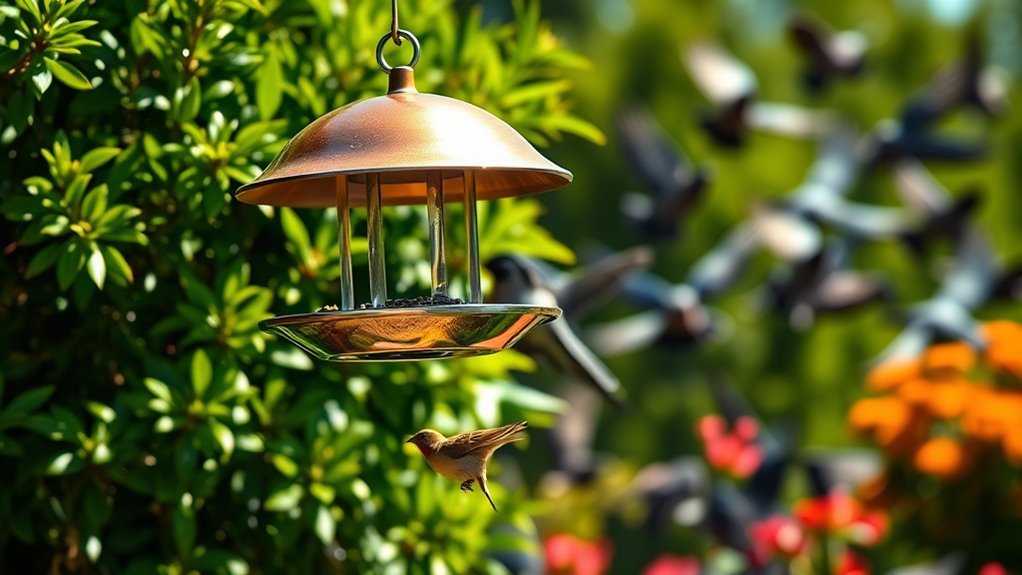
When choosing a bird feeder, consider features that keep pigeons away while attracting smaller birds.
Use sturdy but lightweight materials like metal or durable plastic. These materials make it hard for pigeons to land.
Set the feeder height around 5 to 6 feet off the ground. This height is suitable for smaller birds and helps prevent larger pigeons from accessing it.
Look for feeders with small perches or enclosed areas. These designs discourage unwanted visitors.
Use Pigeon-Resistant Bird Seed
Choosing the right bird feeder helps keep pigeons away.
To effectively deter them, use pigeon-resistant bird seed. Look for special blends made for smaller birds.
These blends have seeds that larger birds find less tasty. This way, only your favored birds will come to eat.
Elevate Your Feeders

Elevate your feeders to keep pigeons away and attract small birds.
Place your feeders at least five to six feet high.
Position them near shrubs or trees for natural cover. This setup helps small birds feel safe while eating.
Regularly check the feeder's height to see what works best for your local birds.
Implement Feeding Schedules
To manage pigeons around your feeders, setting up a feeding schedule can be very effective. Timed feeding helps you control when food is available, reducing the chance of attracting pigeons.
To start, choose specific times to feed, such as morning and evening. This can help the birds learn to come at those times, encouraging your desired species while deterring pigeons.
You can also try different feeding times to see which ones work best. Observing bird behavior can be enjoyable and rewarding.
Utilize Feeders With Perches

Using feeders with perches can improve your bird feeding experience and help keep pigeons away.
Choosing the right length for the perch is important. Shorter perches can stop larger birds like pigeons while letting smaller birds land and eat comfortably.
Also, think about the feeder height; placing feeders higher can keep pigeons from reaching them, which can attract more of your preferred birds.
To make your feeders more effective, select those with narrow openings that smaller birds can access easily.
These changes will create a welcoming environment for small birds while reducing unwanted visitors.
You'll enjoy a peaceful feeding space and a lively presence of the charming small birds you love.
Incorporate Scare Tactics
Many bird enthusiasts find scare tactics helpful in keeping pigeons away from their feeders.
By using items that look like predators, you can reduce the number of pigeons visiting. Here are some clear strategies:
- Decoy predators: Set up fake owls or hawks near your feeders. These can make pigeons feel threatened and less likely to come around.
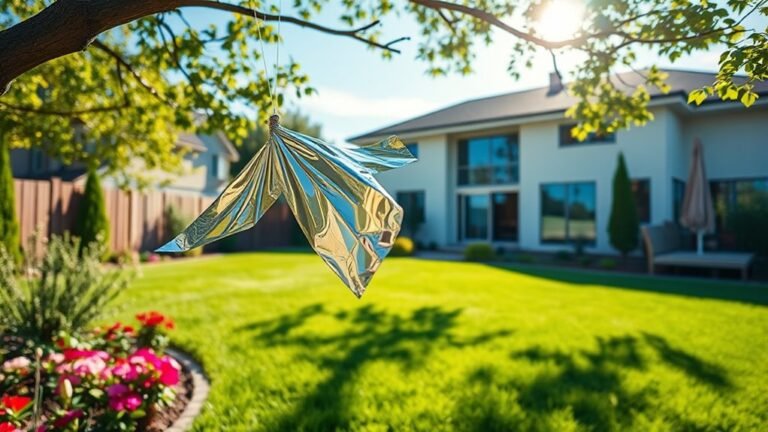
- Reflective surfaces: Hang shiny objects such as CDs or strips of aluminum foil. These can startle and confuse pigeons, making them avoid the area.
- Noise-makers: Use wind chimes or small bells. The sounds can serve as a deterrent, discouraging pigeons from settling near your feeders.
- Movement: Add flags or pinwheels that move with the wind. This creates an unpredictable environment, which pigeons may find unwelcoming.
These simple tactics can help you enjoy birdwatching without the interference of pigeons.
Maintain a Clean Feeding Area
A clean feeding area is important for keeping pigeons away and making your bird feeding experience pleasant. Regular cleaning helps create a welcoming space for birds and keeps unwanted animals at bay.
Start by removing spilled seeds and bird droppings every day; this is key to reducing odors and pests. Use a broom or vacuum for easy cleanup. A designated mat can also help keep the area neat.
This not only improves your garden's appearance but also creates a safe place for local birds. Take on this task—your efforts will enhance your bird feeding experience and connect you to nature and your community of birds.
Surround Feeders With Barriers
To keep pigeons away and attract smaller birds, use barriers around your feeders. This method effectively reduces pigeon access.
Here are some practical options:
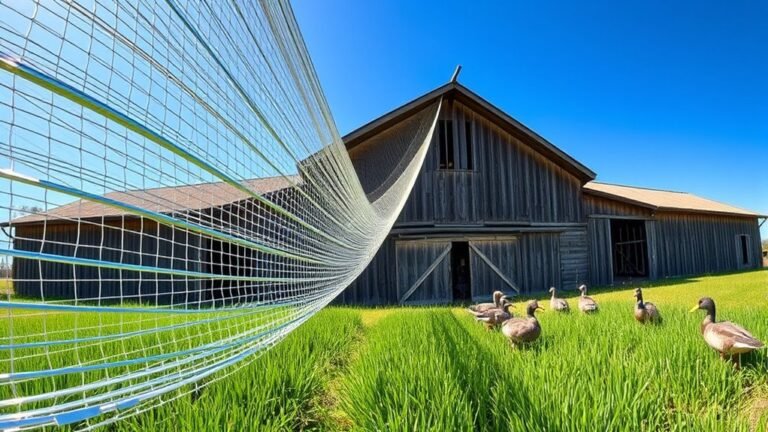
- Wire Fencing: This is light and easy to set up. It's ideal for small areas.
- Plastic Mesh Netting: This option blocks larger birds while letting smaller ones through.
- A-Frame Structures: Build a strong barrier that keeps pigeons out and provides shelter for smaller birds.
- Hanging Planters: Use vertical barriers to deter pigeons and add beauty to your space.
These barriers protect your feeders and make your backyard more appealing for birds!
Frequently Asked Questions
Are There Specific Bird Species That Attract Pigeons to Feeders?
Certain bird species, such as doves and sparrows, can attract pigeons to your feeders. These birds often share similar feeding habits, which makes pigeons feel comfortable. Keep this in mind when selecting bird feed for your feeders. Providing food that doves and sparrows enjoy can help attract pigeons as well, creating a lively birdwatching experience for you.
Can Feeding Pigeons Harm Other Bird Populations?
Feeding pigeons can harm other bird populations. When people feed pigeons, it increases competition for food at feeders. This makes it harder for smaller bird species to find enough nourishment. As a result, these smaller birds may struggle to survive in your backyard. Keeping feeders clear of excess food can help support a diverse range of bird species.
What Are Natural Repellents for Pigeons?
To naturally deter pigeons, use essential oils like peppermint or eucalyptus. You can also create a vinegar solution and spray it around affected areas. These methods effectively keep pigeons away and help maintain a pleasant environment for other birds.
How Do Weather Conditions Affect Pigeon Feeding Behavior?
Weather and seasons influence pigeon feeding habits. Pigeons gather in larger groups during calm and mild weather. In contrast, severe weather leads them to find food in different places. By observing these patterns, you can improve your feeding methods and attract more pigeons effectively. Understanding how weather affects their behavior helps you provide food at the right times and conditions, making feeding easier and more successful.
Is It Illegal to Feed Pigeons in Some Areas?
Feeding pigeons can be illegal in some areas. Local laws differ, so check your local ordinances. Some places prohibit pigeon feeding to prevent health issues or pest problems. Knowing these rules helps create a better community environment.

Hello, I’m Amelia White, the founder of birdsfanatic.com. As a lifelong bird enthusiast and spiritual seeker, I’ve always been fascinated by the mystical connections between birds and the human experience. On this site, I share my knowledge and insights into the symbolic meanings and spiritual significance of various bird species, exploring their roles in mythology, folklore, and cultural traditions. Join me on this journey into the world of birds, where we’ll discover the hidden wisdom and guidance that these magnificent creatures have to offer.