
Kathson Parakeet Nesting Box Review 2026: Worth Buying?
Breeding season arrives fast. One week your budgies are chattering on a swing, and the next week your hen is chewing the cage bars and looking for a dark corner. That is her signal. She wants a nest box, and she wants it now.
The kathson Parakeet Nesting Box shows up in almost every search for budget breeding boxes. It sits under twenty dollars in most sizes. It uses real wood. It sells steadily on Amazon month after month. But cheap wooden boxes have a reputation, and that reputation is not always kind.
I bought one, mounted it, cleaned it, and watched a pair of budgies decide what they thought of it. This review covers the good parts, the annoying parts, and the parts that genuinely need a screwdriver and ten minutes of your own labor. If you want an honest look before you spend the money, keep reading.
In A Nutshell:
- The price is the main selling point. Most kathson sizes land between $12 and $23. That is roughly half the cost of a name brand breeder box, and the wood quality is better than the price suggests.
- The concave floor is real and it matters. The bottom panel has a scooped dip in the center. This keeps eggs grouped together and helps prevent splayed legs in chicks. Many cheap boxes skip this entirely.
- Assembly is required and the hardware is weak. Screws are soft, and the pilot holes do not always line up. Budget ten to twenty minutes and keep your own screws nearby.
- Wood thickness is thin. The panels are light paulownia or pine. Determined chewers will notch the entry hole within a season. Heavy chewing species will destroy it faster.
- Sizing confuses buyers constantly. The small size fits budgies and lovebirds. Cockatiels need the large or extra large. Check the listed inches, not the letter.
- It works, with one caveat. The box does its job for casual and first time breeders. Serious aviary breeders with many pairs will want thicker plywood boxes instead.
What Is The kathson Parakeet Nesting Box?

- Safe & Comfortable Bird Nest Box: This parrot nesting box is made of natural paulownia wood, which is soft, durable. With excellent heat insulation, it provides a warm and comfortable nesting environment. The natural wood emits a gentle forest scent that is bird-friendly, offering your parrots a safe and cozy bird house.
- Encourages Natural Breeding Behavior: Carefully designed to provide ample space for activity and incubation, this wooden parakeet nest box helps birds practice nesting skills and effectively stimulates their natural mating and hatching instincts, improving breeding success. The built-in baffle prevents eggs from accidentally rolling and being damaged.
Last update on 2026-07-11 / Affiliate links / Images from Amazon Product Advertising API Some of the links on this website are affiliate links, which means that at no additional cost to you, I earn a commission if you click through and make a purchase. I only recommend products and services that I believe will add value to my readers. Thank you for your support!
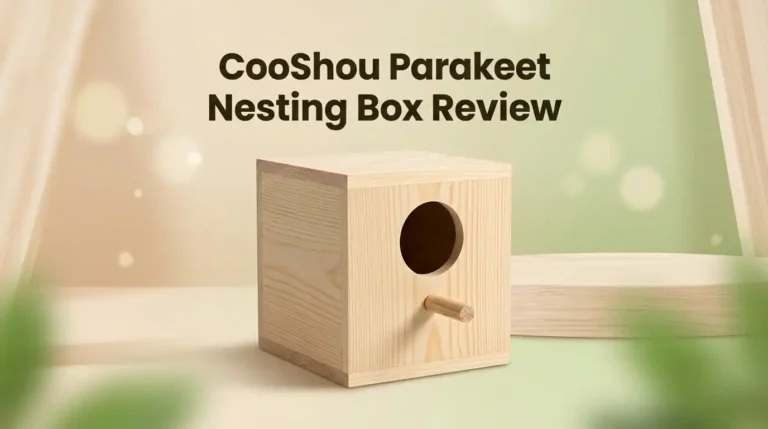
The kathson Parakeet Nesting Box is a wooden breeding house that hangs on the outside or inside of a bird cage. Birds enter through a round hole, sit inside the dark cavity, and lay eggs on the scooped wooden floor. That is the whole concept, and the concept has not changed in a hundred years of aviculture.
kathson builds the box from natural paulownia wood or pine, depending on the model you pick. Paulownia is light, soft, and insulates well. The wood stays cool in summer heat and holds warmth during cold nights. Birds sense that difference, and hens often settle faster in wooden boxes than in plastic ones.
The company sells the box in several sizes labeled S, M, L, and XL. Common measurements include roughly 7.87 by 4.72 by 4.72 inches for the small, and around 10.1 by 8.5 by 7.3 inches for larger versions. Always read the inches in the listing before you order. The letters alone mislead people.
Each box includes a perch below the entry hole, a hinged or sliding top lid, and mounting hardware. Some versions add a small clear acrylic window so you can peek without opening anything. The kit arrives flat packed with screws and a tiny hex tool or nothing at all, which is one of my complaints later in this review.
The target buyer is clear. This box aims at hobby keepers with one or two pairs of small birds. It suits budgies, lovebirds, canaries, finches, parrotlets, and conures. It does not aim at commercial breeders, and pretending otherwise sets you up for disappointment.
Unboxing Experience: What Actually Arrives
The package showed up in a plain brown mailer, not a retail box. Inside sat the wooden panels wrapped in a thin plastic sleeve, plus a small bag of screws taped to one panel. There was no manual. There was no illustrated guide. There was a single sheet with a diagram that a five year old could have drawn.
My first reaction was surprise at the smell. The wood carried a fresh sawmill scent, clean and slightly sweet. No chemical odor, no varnish fumes, no glue stink. That matters more than people realize, because coated or treated wood is dangerous around birds.
The second reaction was less positive. Sawdust coated everything. Fine wood dust sat in the corners of the plastic sleeve and puffed out when I lifted the panels. Plan to wipe every piece down before assembly. I used a dry cloth first, then a barely damp one, then let the wood dry completely.
The panels themselves felt light, almost surprisingly so. Paulownia weighs very little. The edges were cut cleanly, though two corners had small chips and one panel showed a rough splinter along the grain. I sanded that spot with fine sandpaper in about thirty seconds.
The concave floor impressed me most. The dip is genuinely carved, not stamped or pressed. It measures around half an inch deep at the center and feels smooth to the touch. This single detail separates a real nest box from a decorative bird house.
Overall the unboxing feels like buying raw materials, not a finished product. That is the honest description. If you expect a polished retail experience, you will feel let down. If you expect functional lumber at a low price, you will feel fine.
Top 3 Alternative for kathson Parakeet Nesting Box

- High Quality Material: Made is 100% natural high quality wood carefully,eco-friendly, non-toxic, safe and strong,birds are not allergic, send out wood fragrance
- Features:Top Hinged lid opening design for easy cleaning and removal of bedding materials. parrot love the ability to lounge around on the perching ledge. Bolt lock stable shape beautiful arc design is not easy to fall off. The small bird entrance protects birds from wind, rain and predators such as cats and rodents
Last update on 2026-09-12 / Affiliate links / Images from Amazon Product Advertising API Some of the links on this website are affiliate links, which means that at no additional cost to you, I earn a commission if you click through and make a purchase. I only recommend products and services that I believe will add value to my readers. Thank you for your support!
PINVNBY Parakeet Nesting Box Bird House Wood Breeding Box

- Transparent design: Acrylic transparent breeding box offers you clear visibility to observe the inside situations easily, so that children can easily watch the breeding and hatching process of birds, to achieve harmony between man and nature
- Natural wood: Bird house is made of 100% natural paulownia and pine wood, has good thermal insulation effect, cool in summer and warm in winter, with the flavor of natural forest, so that your parakeet can adapt to the new environment. Log products are safe; They are the best choice for your parakeet breeding and nesting
Last update on 2026-06-09 / Affiliate links / Images from Amazon Product Advertising API Some of the links on this website are affiliate links, which means that at no additional cost to you, I earn a commission if you click through and make a purchase. I only recommend products and services that I believe will add value to my readers. Thank you for your support!
Rypet Parakeet Nesting Box Transparent Design With Perch

- Hiceeden 2 pack small wooden bird nest measure 7.7"×4.7"×4.7", the entry measures 2.2 inch in diameter. Bird with size shorter than 6 inches is recommended for this bird nest.
- Good Wood Material: Our parakeet nesting box is made of solid premium paulownia, flat and seamless surface, with the flavor of natural forest, your parakeet will enjoy these comfortable and relaxing home. Light weight but durable that can last for long time.
Last update on 2026-06-09 / Affiliate links / Images from Amazon Product Advertising API Some of the links on this website are affiliate links, which means that at no additional cost to you, I earn a commission if you click through and make a purchase. I only recommend products and services that I believe will add value to my readers. Thank you for your support!
Hiceeden 2 Pack Parakeet Nest Box Natural Wood
Build Quality And Materials Explained
Let us talk about wood, because wood decides everything here.
kathson uses paulownia in most models. Paulownia grows fast, weighs almost nothing, and resists warping better than pine. It also dents easily. Press a fingernail into the panel and you leave a mark. That softness is the tradeoff for good insulation.
Panel thickness sits around 8 to 10 millimeters on the smaller boxes. Compare that to the 18 or 19 millimeter plywood that competition breeders use in Australia and the United Kingdom. The kathson box is roughly half as thick. Thin walls transfer more outside temperature and survive less chewing.
Joinery relies on screws through predrilled holes. There is no glue, no dowels, no interlocking joints. That design makes cleaning easier because you can partly disassemble the box. It also means the structure loosens over time if you move it often.
The entry hole is cut cleanly with a smooth interior edge. My budgie hen chewed the rim within four days, which is completely normal behavior. Hens shape the entrance as part of nesting instinct. Expect chew marks and treat them as a good sign, not a defect.
The perch below the hole is solid hardwood and screws in tightly. It held both adult birds at once without flexing. That is a small win, since flimsy perches are a common failure point on cheap boxes.
Hinges vary by model. Some boxes use a metal hinge on the lid. Others use a sliding top panel that lifts out. The sliding version is better for nervous hens because it makes almost no noise when you open it. The hinged version squeaks slightly until you work it in.
Verdict on build quality: acceptable for the money, clearly below professional standard, and safe in terms of materials.
Assembly: How Hard Is It Really?
Assembly is the weakest part of the whole product, so let me be direct about it.
The box arrives in five or six flat panels. Screws come loose in a bag. Some units include a tiny wrench, and some include nothing. The instruction sheet shows an exploded diagram with no words.
I finished assembly in about fifteen minutes. Someone who has never built flat pack furniture might take thirty. The steps are simple, and the panels only fit together one way, so mistakes are unlikely.
The problems are the screws. They are soft metal with shallow heads. My screwdriver stripped one head immediately. Two other screws refused to bite because the pilot holes were slightly off center. I redrilled two holes with a 2 millimeter bit and the rest went in fine.
My advice: keep a handful of your own small wood screws ready. Any hardware store sells better ones for a few dollars. Swapping them makes the whole box feel twice as sturdy.
The mounting brackets deserve their own warning. They hook over cage wire and rely on the box weight to stay put. That works on a stable cage. On a light cage with thin bars, the box can shift when both birds land on the perch at once. I added two plastic zip ties through the bracket holes and the wobble disappeared completely.
Alignment is another small issue. My lid sat about a millimeter proud on one corner. It closed fine and nothing gapped, but a picky builder would notice. Nothing here is a dealbreaker. Everything here is a reminder that you are paying under twenty dollars.
Sizing Guide For Different Bird Species
Wrong size ruins breeding attempts. This section may save you a return shipment.
Budgies and parakeets need an interior floor around 7 to 8 inches long and 5 inches wide, with roughly 6 to 8 inches of height. The kathson small size fits budgies well. Two adults plus four eggs fit without crowding.
Lovebirds prefer slightly more depth because they carry nesting material inside. The small works, but the medium works better. Lovebirds build actual nests, so give them room for bark strips and paper.
Cockatiels need considerably more space. A cockatiel hen lays four to seven eggs and both parents sit inside. Order the large or extra large. Anything smaller crushes eggs and stresses the pair.
Finches and canaries technically fit the small size, but many finch keepers prefer open cup nests instead. A closed box can work for society finches and zebra finches. Canaries usually reject boxes entirely and choose wicker cups.
Conures vary wildly by species. Green cheek conures manage in the extra large. Sun conures need bigger boxes than kathson sells. Match the box to the bird, never the other way around.
Here is the rule I follow. The hen should turn around comfortably inside without touching the walls. If she has to squeeze, size up.
One more note on the letters. kathson uses S, M, L, and XL inconsistently across listings. Two boxes both labeled M can differ by an inch. Read the numeric dimensions in the product details every single time. That single habit prevents most sizing complaints in reviews.
Do Birds Actually Use It?
A nest box only counts as successful if birds accept it. Mine did, but not instantly.
My pair ignored the box for three days. The hen perched on top, walked around the outside, and refused to enter. This is normal caution. Birds distrust new objects, and the technical word for that is neophobia.
On day four she stuck her head in the hole. On day five she went inside and stayed for twenty minutes. On day six she began chewing the entrance rim and hauling bits of wood shaving around. That chewing is the acceptance signal.
Placement made a difference. I first hung the box low on the cage side and she showed no interest. I moved it high, near the top corner, and interest jumped. Birds want nests high and dark. Height beats every other placement factor.
Light control matters too. The acrylic window version lets in more light than a solid wooden box. Some hens dislike that. I taped a small card over the window between checks and she settled faster. Remove the card when you want to observe.
The concave floor performed exactly as advertised. Eggs rolled to the center and stayed grouped. Nothing scattered to the corners. In a flat bottomed box, eggs drift apart and hens struggle to cover them all.
One honest observation: my birds preferred the box for sleeping before they used it for breeding. That is very common and it is fine. A nest box doubles as a sleeping hut during cold months, which stretches the value of the purchase.
Cleaning And Maintenance
Cleaning a nest box is unglamorous and unavoidable. Old bedding, droppings, and food remnants attract mites and bacteria fast.
The kathson box scores decently here. The removable top panel gives full access from above. On models with a hinged lid, you flip it open and reach straight in. On sliding lid models, you lift the panel out completely, which gives even better access.
The concave floor is a separate piece on most models. That is excellent design. You can lift the floor out, scrape it, wash it, and dry it without touching the rest of the box. Fixed floors are far worse to clean.
Wood does absorb moisture, and that is the real limitation. Never soak the box. I scrape dry waste with a plastic putty knife, wipe with a cloth dampened in diluted white vinegar, then dry the box in sunlight for several hours. Sunlight kills more mites than most sprays.
Bleach is a bad idea on soft wood. It soaks in, lingers, and irritates bird lungs. Vinegar and sun handle routine cleaning. For a serious mite problem, replace the box entirely, since it costs less than most veterinary visits.
Bedding choice affects cleaning frequency. I use plain pine shavings about an inch deep. Some keepers use nothing at all. Avoid cedar shavings, avoid scented bedding, and avoid cotton fluff that can wrap around chick legs.
Realistic lifespan is one to two breeding seasons with regular cleaning. Treat this box as a consumable item. At this price, replacing it annually costs less than a bag of premium seed, and fresh wood is genuinely healthier for chicks.
What The kathson Nesting Box Does Not Do Well
Every honest review needs this section, so here are the real weaknesses without any sugarcoating.
Screws and hardware are the worst component. Soft heads strip easily. Pilot holes miss their marks. Some buyers receive fewer screws than the diagram shows. Plan to supplement with your own hardware.
The wood is too thin for heavy chewers. Paulownia is soft. A determined lovebird pair can widen the entry hole into an oval within weeks. Larger parrots will reduce the box to splinters. This is a small bird product only.
Quality control varies between units. Some arrive perfect. Others show chipped corners, splinters, or panels that sit slightly out of square. Read recent reviews and expect a small amount of sanding.
Mounting is not secure enough by default. The hook style brackets rely on gravity. Cages with thin or widely spaced bars need zip ties or extra screws to hold the box steady.
Size labels mislead people. The S, M, L system does not map consistently across listings. Buyers order cockatiel boxes and receive budgie boxes. The fault lies with the listing structure, not the buyer.
No inspection door on most models. You open from the top, which disturbs a sitting hen more than a side door would. Premium boxes include side inspection hatches. This one does not.
Acrylic windows can scratch and fog. The clear panel looks great on day one. After chewing and cleaning, visibility drops noticeably.
None of these flaws make the box unusable. All of them explain why it costs what it costs. Know the limits before you buy and you will not feel cheated.
Pros And Cons
Here is the balanced summary in list form.
Pros
- Very low price compared to branded breeder boxes, usually between $12 and $23 depending on size.
- Real concave floor that keeps eggs centered and supports healthy chick leg development.
- Natural untreated wood with no chemical smell, safe for birds that chew constantly.
- Removable floor panel on most models, which makes deep cleaning genuinely quick.
- Good insulation from paulownia, keeping the interior stable in both hot and cold rooms.
- Multiple sizes available, covering budgies through cockatiels and small conures.
- Solid perch below the entry hole that holds two adult birds without flexing.
- Doubles as a winter sleeping hut when you are not breeding, which adds year round value.
Cons
- Weak included screws that strip and sometimes miss their pilot holes during assembly.
- Thin wood panels that heavy chewers can damage within a single season.
- Inconsistent quality control, with chips and splinters appearing on some units.
- Confusing size labels that lead buyers to order the wrong box for their species.
- Mounting brackets need reinforcement with zip ties on lighter cages.
- No side inspection door, so every check disturbs the hen from above.
- Instructions are a single wordless diagram with no written guidance.
- Limited lifespan, realistically one or two breeding seasons before replacement.
Who Should Buy It And Who Should Skip It
Buy this box if you keep one or two pairs of small birds and you want a functional wooden nest without spending forty dollars. First time budgie breeders get the most value here. You learn the process, you see what works, and you spend very little while learning.
Buy it also if you want a winter sleeping hut. Many owners never breed at all and simply give their bird a dark private space. The kathson box handles that job perfectly and costs less than most fabric huts.
Buy it if you clean often and replace willingly. Treating nest boxes as annual consumables is actually good hygiene practice. Cheap wooden boxes support that approach.
Skip this box if you run a serious breeding operation with many pairs. Thick plywood boxes with side inspection doors save you time and last for years. The upfront cost is higher and the long term cost is lower.
Skip it if you keep medium or large parrots. African greys, amazons, and larger conures need boxes built from lumber several times thicker. This box would not survive a week.
Skip it if assembly frustrates you. There is no way around the screws and the vague diagram. If you hate flat pack projects, buy a preassembled box instead.
Skip it also if you need immediate breeding results with a fussy hen. Some hens reject any box for months. That is bird behavior, not a product flaw, but it is worth knowing before you expect eggs next week.
Final Verdict
The kathson Parakeet Nesting Box is a good product at its price and a mediocre product in absolute terms. Both statements are true, and holding both is the key to a fair judgment.
What it gets right is the fundamentals. Real wood. No chemicals. A properly carved concave floor. A removable base for cleaning. A perch that holds weight. Those are the things that affect whether eggs hatch and chicks survive, and kathson delivers all of them.
What it gets wrong is the finish. Soft screws, thin panels, vague instructions, and uneven quality control. These are irritations, not failures. Fifteen minutes of work and a few of your own screws resolve nearly all of them.
My budgies accepted the box, used it, and slept in it. Eggs stayed centered. Cleaning took under five minutes. The wood shows chew marks now, which tells me the birds treated it as their own space.
I would buy it again for a hobby setup. I would not buy it for an aviary with twelve pairs. Match the tool to the job and this box earns its place.
For a first breeding attempt with budgies or lovebirds, spending twenty dollars to learn the process is smart. Spend the savings on a good vet fund instead. That is better advice than any box review.
Frequently Asked Questions
What size kathson box do budgies need?
Budgies need an interior floor around 7 to 8 inches long by 5 inches wide, with 6 to 8 inches of height. The kathson small size, listed near 7.87 by 4.72 by 4.72 inches, fits a budgie pair with eggs. Always confirm the numeric dimensions in the listing rather than trusting the letter label.
Should I put bedding inside the nesting box?
Yes, a shallow layer helps. Use plain pine shavings about an inch deep, or plain shredded paper. Avoid cedar shavings, scented bedding, and cotton fluff. Cotton fibers can wrap around chick legs and cause injury. Some budgie keepers use no bedding at all and rely on the concave floor alone, which also works.
How high should I mount the nest box?
Mount it as high as the cage allows. Birds instinctively prefer elevated nesting sites because height means safety. Position the box in a corner away from food and water bowls so droppings and seed do not fall inside. High placement noticeably increases the chance a hen accepts the box.
Can cockatiels use this nesting box?
Only the large or extra large versions. Cockatiels lay four to seven eggs and both parents sit inside, so they need considerably more floor area than budgies. A small box crowds the pair and risks broken eggs. Check that the interior floor measures at least 10 inches by 8 inches for a cockatiel pair.
How do I clean the box between clutches?
Remove the top panel and lift out the concave floor if your model allows it. Scrape dry waste with a plastic scraper, wipe surfaces with a cloth dampened in diluted white vinegar, then dry the box in direct sunlight for several hours. Never soak the wood and never use bleach, since soft wood absorbs both.
Will my birds definitely breed after I add the box?
No. A nest box encourages breeding but guarantees nothing. Birds need the right age, good health, a bonded pair, adequate daylight hours, and a calcium rich diet. Some hens ignore a box for months. Others move in within a week. Many owners find their birds use the box purely for sleeping, which is still a useful outcome.
How long does the kathson box last?
Plan on one to two breeding seasons with regular cleaning. The soft paulownia wood absorbs moisture over time and chewing gradually widens the entry hole. At this price point, annual replacement is reasonable and arguably healthier than reusing an old box for years.

Hello, I’m Amelia White, the founder of birdsfanatic.com. As a lifelong bird enthusiast and spiritual seeker, I’ve always been fascinated by the mystical connections between birds and the human experience. On this site, I share my knowledge and insights into the symbolic meanings and spiritual significance of various bird species, exploring their roles in mythology, folklore, and cultural traditions. Join me on this journey into the world of birds, where we’ll discover the hidden wisdom and guidance that these magnificent creatures have to offer.