Hypeety Pet Bird Breeding Nest Review 2026: Worth Buying?
Your budgie keeps pacing along the cage floor. Your lovebird shreds paper and stuffs it behind the food dish. Those are nesting signals, and they mean your bird wants a private, dark, cozy spot to settle into.
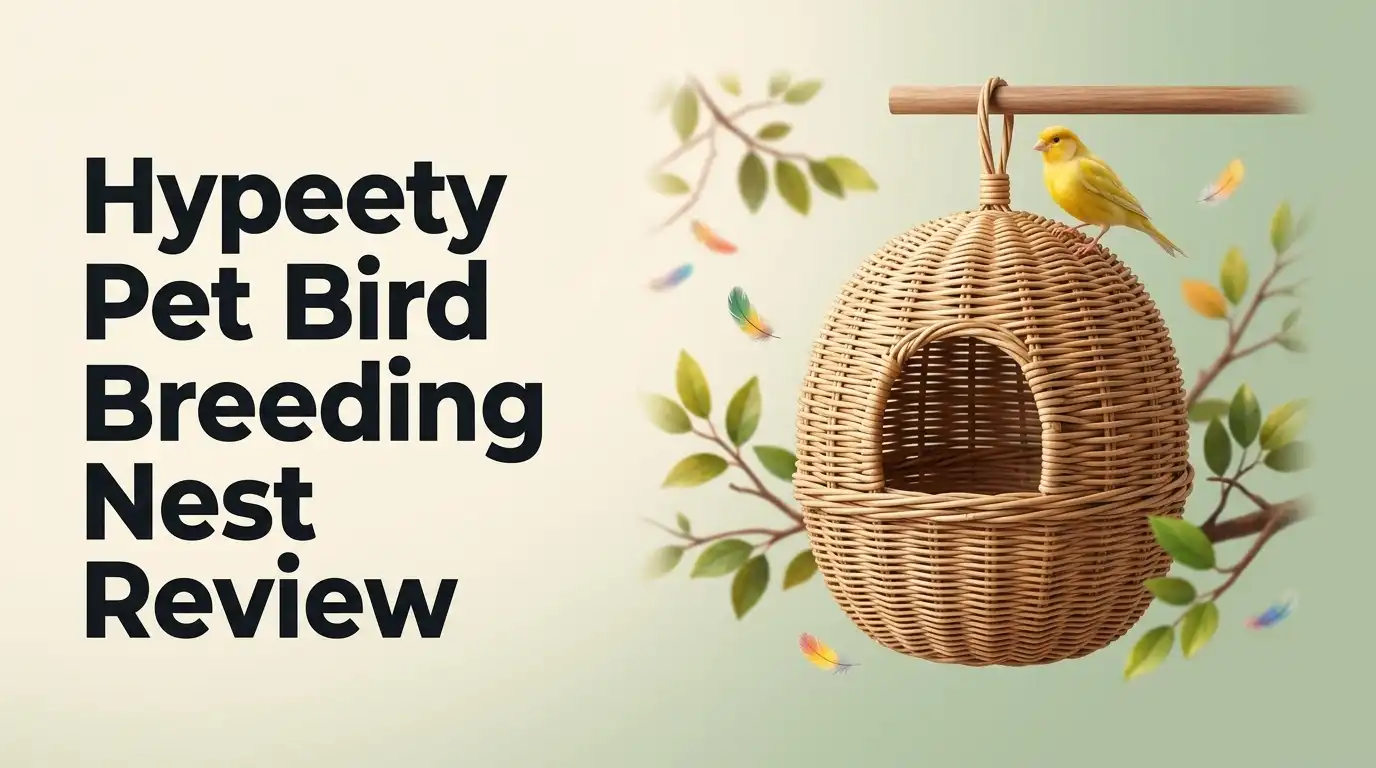
The Hypeety Pet Bird Breeding Nest is one of the cheapest ways to give them that spot. It is a real coconut shell, hollowed out, sanded, drilled with an entry hole, and hung with a small wooden ladder or perch.
It first hit Amazon back in 2018 and it still sells well in 2026, mostly because it costs less than a bag of premium seed.
In a Nutshell:
- It is a hideout first, a breeding nest second. The coconut shell works beautifully as a sleeping hut, a shy bird retreat, and a chew toy. As a serious breeding chamber it falls short, because the inside is round and small. Eggs roll. Chicks pile up. Dedicated wooden boxes with a flat floor and a concave hollow do this job far better.
- The build is genuinely natural. Real coconut husk, real shell, natural fiber rope, and untreated wood. There is no paint and no plastic, which matters because birds chew everything they perch on.
- Sizing is small. Expect roughly 5 to 6 inches across, with a package around 6.3 x 6 x 5.5 inches and a weight near 9 ounces. That fits budgies, finches, canaries, parrotlets, and lovebirds. Cockatiels and conures will not be comfortable inside.
- Value is excellent for the price. For the cost of two coffees you get a hideout, a swing, a climbing ladder, and a chew item in one piece. Few bird accessories offer that much per dollar.
- Durability depends on your bird’s beak. Gentle finches may use it for a year. A determined lovebird can crack the rim in weeks. Treat it as a consumable item, not furniture.
- Best use case: a cozy sleeping and hiding spot for small birds, plus a natural enrichment toy. Buy a wooden box if breeding is your real goal.
Hypeety Pet Bird Breeding Nest: A Closer Look at the Product

- ★ Toy connects easily to cage with quick-link attachments.
- ★ Made with Hevea wood branches, coconut shell and cotton rope, encouraging foot and beak exercise.
Last update on 2026-09-09 / Affiliate links / Images from Amazon Product Advertising API Some of the links on this website are affiliate links, which means that at no additional cost to you, I earn a commission if you click through and make a purchase. I only recommend products and services that I believe will add value to my readers. Thank you for your support!
The Hypeety nest is a single coconut, cut open at one end, cleaned out, and turned into a hanging house. The outer surface keeps some of its brown husk fiber, which gives birds a grippy texture to hold. The inner wall is smooth and pale, sanded down so there are no sharp edges near the opening.
A metal hook or a fiber rope runs through the top. That lets you hang the shell from cage bars, a play stand, or a branch. Most versions ship with a small wooden ladder or a perch stick attached below the entrance, so your bird can climb in without flapping.
Hypeety markets it for parakeets, budgies, finches, canaries, lovebirds, sparrows, parrotlets, and even hamsters. That last one is not a typo. The same shell works as a rodent hideout, which explains the odd product photos showing a hamster inside.
What makes it appealing is the honesty of the material. Coconut is naturally antibacterial, it breathes, and it holds warmth without trapping moisture the way plastic does. Birds also enjoy nibbling the husk, which keeps beaks busy.
The catch is simple: a coconut is a sphere, and nature never intended it to hold eggs. That single fact shapes almost every strength and weakness in this review.
Unboxing Experience and First Impressions
The package arrives small and light. Mine came in a plain padded envelope with the coconut wrapped in thin plastic film. No fancy box, no instruction card, no branding beyond a sticker. For a product in this price bracket, that is expected.
The first thing you notice is the smell. It is a dry, sweet, woody coconut scent, faint but real. That smell tells you the shell was not soaked in chemicals or sealant. It fades within a week.
The second thing you notice is loose fiber. Pulling off the wrapper released a small shower of brown husk strands across my table. Plan to shake it outdoors before it goes in the cage. Otherwise your cage tray collects fiber for days.
The shell felt lighter than I expected, almost hollow like a drum when tapped. Weight sits around half a pound. The rim of the entry hole was smooth under my thumb, with only one slightly rough patch that took ten seconds with fine sandpaper.
The wooden ladder arrived attached but loose. I tightened the fiber knots by hand before hanging it. The metal hook was thin, and it bends with finger pressure, which is worth knowing if your cage bars are thick.
Overall impression: honest, rustic, and clearly handmade. It looks like something you would find on a jungle floor rather than a factory shelf. That charm is a big part of why buyers keep choosing it.
Build Quality and Natural Coconut Material
Coconut shell is surprisingly tough. It resists cracking under squeeze pressure, and it does not splinter into sharp shards the way thin plywood can. Hypeety sands both the rim and the interior, which removes the fibrous burrs that could snag a toenail.
The wall thickness is the real quality marker. A good coconut nest has a shell around 3 to 5 millimeters thick. Thinner shells crack when a bird lands hard on the rim. Buyers report a mix here, with most units feeling solid and a small number arriving thin or already hairline cracked.
The rope and ladder use natural fiber and untreated wood. No dye, no varnish, no glue smell. That matters because parrots strip and swallow small pieces of whatever they chew.
Where quality slips is consistency. Every coconut grows differently, so no two units match. One buyer receives a deep bowl with a neat round hole. Another receives a shallow shell with an oval hole slightly too big, which lets in light and makes shy birds avoid it.
Coconut also has a natural enemy: moisture. Water and droppings soak into the husk fiber and stay there. Once damp, the shell can grow mold along the inner seam. Keeping it away from water dishes solves most of this problem.
Verdict on build: good materials, average consistency, and a lifespan measured in months rather than years.
Top 3 Alternative for Hypeety Pet Bird Breeding Nest

- Transparent design: Acrylic transparent breeding box offers you clear visibility to observe the inside situations easily, so that children can easily watch the breeding and hatching process of birds, to achieve harmony between man and nature
- Natural wood: Bird house is made of 100% natural paulownia and pine wood, has good thermal insulation effect, cool in summer and warm in winter, with the flavor of natural forest, so that your parakeet can adapt to the new environment. Log products are safe; They are the best choice for your parakeet breeding and nesting
Last update on 2026-06-09 / Affiliate links / Images from Amazon Product Advertising API Some of the links on this website are affiliate links, which means that at no additional cost to you, I earn a commission if you click through and make a purchase. I only recommend products and services that I believe will add value to my readers. Thank you for your support!
Rypet Parakeet Nesting Box with Perch

- High Quality Material: Made is 100% natural high quality wood carefully,eco-friendly, non-toxic, safe and strong,birds are not allergic, send out wood fragrance
- Features:Top Hinged lid opening design for easy cleaning and removal of bedding materials. parrot love the ability to lounge around on the perching ledge. Bolt lock stable shape beautiful arc design is not easy to fall off. The small bird entrance protects birds from wind, rain and predators such as cats and rodents
Last update on 2026-06-08 / Affiliate links / Images from Amazon Product Advertising API Some of the links on this website are affiliate links, which means that at no additional cost to you, I earn a commission if you click through and make a purchase. I only recommend products and services that I believe will add value to my readers. Thank you for your support!
PINVNBY Parakeet Nesting Box Wood Mating Box

- Resting House: Designed for small animals, such as birds and hamsters. Provides small pets with a luxury snooze spot. They love to have somewhere sheltered and private where they can nest and hide
- Activity Platform: Comes with Ladder, keep your feathered friend active, engaged and entertained in a way that satisfies natural instincts
Last update on 2026-09-09 / Affiliate links / Images from Amazon Product Advertising API Some of the links on this website are affiliate links, which means that at no additional cost to you, I earn a commission if you click through and make a purchase. I only recommend products and services that I believe will add value to my readers. Thank you for your support!
andwe Coconut Bird Nest Hut with Ladder
Size and Fit Inside Your Cage
Measurements matter more than photos here. The listed package size runs about 6.3 inches long, 6 inches wide, and 5.5 inches tall, with the shell itself closer to 5 inches across. Shipping weight sits near 9 ounces.
That is roughly the size of a grapefruit. Inside, usable floor space is much smaller because the walls curve inward. Think of a soup bowl rather than a room.
Before ordering, measure the free vertical space in your cage. You need clearance for the shell plus the ladder hanging below it, which adds another 3 to 5 inches. In a small budgie cage, this single item can eat a third of the flight space.
Placement rules that make a difference:
Hang it high, in a back corner, away from food and water. Birds feel safest when they can look down at the room. Keep it clear of the main perch runway so droppings do not land on the roof of the nest.
One common mistake is hanging it right beside the food cup. Seed hulls and water spray both end up inside the shell, and your bird stops using it.
For larger species, skip this product. A cockatiel can squeeze its head and shoulders in, then get stuck turning around. Conures and Quakers simply cannot fit. Stick to birds under about 30 grams for comfortable use.
Which Birds Actually Use This Nest
Not every bird takes to a coconut. Some claim it within an hour. Others treat it like a floating threat for two weeks.
Birds that usually love it: finches, canaries, budgies, parrotlets, lovebirds, and small sparrows. These species naturally nest in cavities, so a dark round hole reads as safe to them. Zebra finches in particular adopt it almost instantly.
Birds that usually ignore it: cockatiels, conures, lorikeets, and anything larger. They either cannot fit or prefer wide flat platforms.
Introduction technique changes the outcome more than you might think. Hang the nest and leave it alone. Do not push your bird toward it. Drop a few millet pieces near the entrance for two days, and curiosity handles the rest.
Shy or rescued birds gain the most from it. Having a place to disappear lowers stress, and many owners report calmer behavior within a week. A hiding spot is not spoiling your bird. It is basic security.
One caution worth repeating. Adding a nest can trigger hormonal behavior in single pet birds. That means territorial biting, egg laying without a mate, and screaming. If you are not planning to breed, watch for these signs and remove the nest if they appear.
Pairs behave differently. Bonded couples will inspect the shell together, then start carrying fiber inside.
Breeding Performance and Egg Safety
This is the section that decides whether you buy. The product name says breeding nest, so let us test that claim honestly.
Small finches breed fine in it. Zebra finches, society finches, and canaries build a cup of coconut fiber or coco peat inside the shell, and that cup holds eggs in place. Success rates look reasonable when owners add nesting material.
Budgies and lovebirds struggle. Budgie hens lay eggs directly onto a hard surface with no nest building at all. In a round shell, those eggs roll to the lowest point and collect against each other. Cracked eggs are a real risk. Chicks also slide into a pile, and the smallest hatchling ends up crushed at the bottom.
The fix is simple but essential. Add a flat base. Pack the bottom with coco fiber, then press in a shallow concave dish or a layer of untreated wood shavings. Level the floor before the hen lays anything.
Size limits also matter. A budgie clutch runs four to eight eggs, and chicks grow fast. By week two, a 5 inch shell is crowded. By week three it is genuinely too small.
My honest assessment: use this for finches, or use it as a hideout for everyone else. For budgie and lovebird breeding, a wooden box with a proper hollow and a hinged inspection lid is the correct tool. Coconut is charming, but biology wins.
Installation and Cleaning Routine
Setup takes under five minutes. Hook it over a cage bar, or thread the rope through and tie it off. Two anchor points beat one, because a single hook lets the shell spin when a bird jumps in.
Tighten everything by hand first. Test the load by pressing down on the ladder. If it swings wildly, add a second tie point near the rim to steady it.
Cleaning is where coconut shows its limits. You cannot soak it. Water enters the husk fiber and stays for days, which invites mold and softens the shell. Deep soaking ruins the nest.
Here is the routine that works. Empty the loose bedding weekly. Wipe the interior with a dry cloth or a lightly damp cloth, then let it dry in open air for several hours. Use a stiff dry brush on the outer husk. For disinfecting, a light mist of diluted white vinegar works, followed by full air drying.
During breeding, do not clean it at all. Disturbing a sitting hen causes abandonment. Wait until the chicks fledge, then decide whether to keep the shell or replace it.
Replacement is the smart plan. After one breeding cycle, the interior often carries dried droppings deep in the fiber that no wipe removes. At this price, a fresh coconut is cheaper than the risk of bacteria near hatchlings.
What This Nest Does Not Do Well
Every review needs a section like this, so here is the plain truth.
The round interior is a design flaw for egg layers. No amount of marketing changes that geometry. Without added bedding, eggs roll and knock together.
There is no inspection access. Wooden breeding boxes have a lid you can lift to check chicks. With a coconut, your only view is through the entry hole, which means you either disturb the bird or fly blind for three weeks.
Chewers destroy it. Lovebirds and parrotlets widen the entry hole for fun. Once the hole grows, the nest loses its dark, enclosed feel and birds abandon it. Expect anywhere from four weeks to a year of life depending on the species.
Quality varies between units. Some arrive with hairline cracks, thin walls, or an oversized opening. A small share of buyers receive shells that shed fiber constantly.
Hardware is weak. The thin metal hook bends easily, and knots loosen over time. Check them monthly.
It cannot be washed properly. For a nesting product that will hold droppings and food debris, that is a genuine hygiene limit.
Finally, the hormone problem. Giving a lone pet bird a nest can start behaviors you did not want, including chronic egg laying in hens. That is a health risk, not a quirk. Know your goal before you hang it.
Pros and Cons of the Hypeety Pet Bird Breeding Nest
- ★ Toy connects easily to cage with quick-link attachments.
- ★ Made with Hevea wood branches, coconut shell and cotton rope, encouraging foot and beak exercise.
Last update on 2026-09-09 / Affiliate links / Images from Amazon Product Advertising API Some of the links on this website are affiliate links, which means that at no additional cost to you, I earn a commission if you click through and make a purchase. I only recommend products and services that I believe will add value to my readers. Thank you for your support!
Here is the balanced summary.
Pros
- Fully natural build using real coconut shell, husk fiber, and untreated wood, with no paint, plastic, or sealant near your bird.
- Very low price compared with wooden breeding boxes, which makes replacement painless.
- Four functions in one item, working as a hideout, a swing, a climbing ladder, and a chew toy.
- Breathable and warm, since coconut holds heat without trapping condensation the way plastic huts do.
- Excellent for shy birds, giving nervous or newly rehomed birds a private retreat that lowers stress.
- Proven with finches and canaries, which build their own cup inside and raise chicks successfully.
- Simple installation that takes minutes with no tools required.
Cons
- Round floor lets eggs roll, which makes it risky for budgies and lovebirds unless you add a level base.
- No inspection lid, so checking on eggs or chicks means disturbing the parents.
- Small internal space that becomes crowded once chicks are a couple of weeks old.
- Cannot be washed or soaked, limiting how hygienic it stays over time.
- Inconsistent units, with some shells arriving thin, cracked, or with an oversized opening.
- Short life with strong chewers, sometimes only a few weeks.
- Thin hook and loose knots that need regular checking.
- May trigger hormonal behavior in single pet birds, including unwanted egg laying.
Price and Value for Money
The Hypeety nest usually sits in the low single digit to low teen dollar range, depending on the seller and whether the ladder is included. That places it among the cheapest cage accessories you can buy.
Value looks strong when you judge it correctly. As a hideout and enrichment item, it delivers far more than its cost. Birds get a private space, a swing, a climbing surface, and something safe to shred. Buying those four things separately would cost three times more.
Value looks weak if you buy it as breeding equipment. A proper wooden mating box costs perhaps two or three times as much, and it includes a concave nesting hollow, a flat floor, a hinged lid for inspection, and a perch outside the entrance. For raising chicks, that extra spend pays for itself immediately.
Here is the way I would frame the decision. Ask yourself whether the eggs matter. If you want chicks from budgies, lovebirds, or cockatiels, put your money into wood. If you want a happier, calmer small bird with a place to nap, the coconut wins on price and charm.
Buying two is also sensible. Rotate them, so one airs out while the other is in use. At this price, that is easy on the wallet and better for hygiene.
Safety Checklist Before You Hang It
Run through these steps before the nest goes into the cage.
Inspect the shell. Look for cracks along the rim and inside the bowl. Press firmly with your thumb. A shell that flexes or creaks should go back.
Sand any rough spots. Fine grit sandpaper on the entry rim removes fibers that could catch a nail or a toe.
Shake out loose husk outdoors. This prevents a cage full of brown strands and keeps fiber out of water dishes.
Check the opening size. The hole should be just wide enough for your bird to slip through. Oversized holes make birds feel exposed. A too tight hole risks a bird getting stuck.
Secure two anchor points. One hook allows spinning and swaying, which discourages nervous birds and can dislodge eggs.
Position it high and dry. Back corner, above perch height, far from food and water.
Add a level base for egg layers. Coco fiber packed flat, or a shallow concave insert, prevents rolling.
Watch the first week closely. Look for chewing at the rim, damp patches, or any sign of mold. Remove the nest at the first hint of mildew.
Monitor behavior. If a lone bird starts guarding the nest aggressively or laying eggs, take it out. Chronic laying drains calcium and causes serious health problems.
Final Verdict: Should You Buy It in 2026?
The Hypeety Pet Bird Breeding Nest is a good product with a slightly misleading name. It is a wonderful natural hideout and a poor dedicated breeding chamber for most species.
Buy it if you keep finches, canaries, budgies, parrotlets, or lovebirds and you want to give them a cozy, dark, private spot. Buy it if you have a nervous bird that needs somewhere to hide. Buy it if you want a chewable enrichment item that costs almost nothing. In those roles it earns a solid recommendation.
Skip it if your main goal is raising healthy chicks from budgies, lovebirds, or cockatiels. The round floor, the missing inspection lid, and the small interior all work against you. A pine mating box solves every one of those problems.
My rating lands around 3.5 out of 5. The materials are honest, the price is fair, and birds genuinely enjoy it. Points come off for inconsistent units, weak hardware, poor cleaning options, and the geometry problem that no coconut can escape.
Set your expectations correctly and you will be happy with this purchase. Expect a breeding box and you will be disappointed. Buy it as a hideout, and it is one of the best few dollars you can spend on a small bird.
Frequently Asked Questions
Is the Hypeety coconut nest safe for budgies?
Yes, the materials are safe. Real coconut shell, natural fiber, and untreated wood pose no toxicity risk. The concern is not safety but suitability. Budgies lay eggs on a bare surface, and a curved shell lets those eggs roll together. Add a flat packed base of coco fiber if you plan to breed.
Can cockatiels use this nest?
Not comfortably. At roughly 5 to 6 inches across, the shell is too small for a cockatiel to turn around inside. Some birds squeeze their head and chest in, which creates a risk of getting stuck. Choose a wooden nesting box sized for cockatiels instead.
How do I clean a coconut bird nest?
Never soak it. Empty the bedding, wipe the interior with a dry or barely damp cloth, brush the outer husk, then air dry for several hours. A light mist of diluted white vinegar disinfects without saturating the fiber. Replace the shell after each breeding cycle.
How long does the coconut shell last?
It depends entirely on your bird. Finches and canaries may use one for a year or more. Lovebirds and parrotlets often chew the entry hole wider within four to eight weeks. Treat it as a replaceable item and keep a spare ready.
Will it make my bird lay eggs?
It can. Adding a nest sends a breeding signal, especially to hens. Single pet birds sometimes begin laying eggs without a mate, which drains calcium and causes health problems. If you notice nest guarding, aggression, or egg laying, remove the nest and shorten daylight hours.
Does it come with nesting material?
No. The shell arrives empty apart from loose husk fiber. Buy coco fiber, coco peat, or untreated aspen shavings separately. Finches will weave their own cup from the material you provide.
Is it better than a wooden breeding box?
For hiding and sleeping, yes, because it feels natural and costs less. For raising chicks, no. Wooden boxes give you a flat floor, a concave egg hollow, more interior room, and a lid for checking on the babies. Serious breeders choose wood every time.

Hello, I’m Amelia White, the founder of birdsfanatic.com. As a lifelong bird enthusiast and spiritual seeker, I’ve always been fascinated by the mystical connections between birds and the human experience. On this site, I share my knowledge and insights into the symbolic meanings and spiritual significance of various bird species, exploring their roles in mythology, folklore, and cultural traditions. Join me on this journey into the world of birds, where we’ll discover the hidden wisdom and guidance that these magnificent creatures have to offer.