Methods to Keep Birds Out of Trees
To manage birds in trees, consider several effective strategies. Use visual deterrents, sound devices, physical barriers, repellent scents, and strategic planting. Each method has its own benefits. Combining these methods can make the area less inviting for birds, reducing their chances of nesting or foraging. Some techniques may work better in specific situations. Knowing how each method functions can influence your success. What combination fits your needs?
Key Takeaways
- Use reflective items like foil strips or shiny tape to create a glimmering effect, which makes birds feel unsafe.
- Deploy decoys of predatory birds, such as owls or hawks, to create a perceived threat.
- Install netting around trees to act as a physical barrier while allowing light and air to pass through.
- Apply essential oils like peppermint or cinnamon around trees to create repellent scents that deter birds.
- Practice strategic planting by mixing different tree species and creating dense foliage to limit bird access and nesting opportunities.
Visual Deterrents
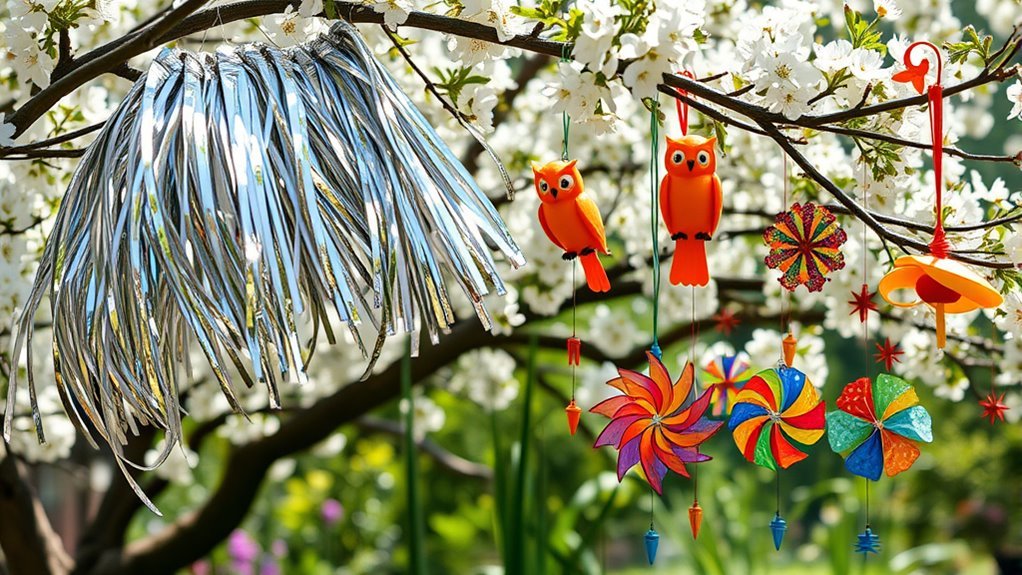
Visual deterrents can help keep birds away from your trees.
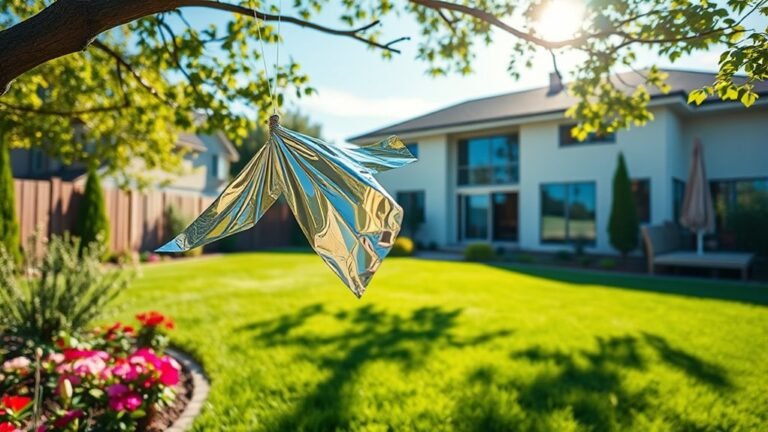
Use reflective items like foil strips, shiny tape, or old CDs to create a glimmering effect that birds find unsettling. These shiny surfaces imitate the presence of predators, making birds think the area is unsafe.
You can also set up decoys of predatory birds, such as owls or hawks, in your trees. Seeing these decoys can make birds feel threatened, encouraging them to leave.
By using these visual techniques, you can prevent birds from nesting or loitering in your trees.
This will create a more enjoyable environment for the wildlife and plants you want to attract.
Create a balanced ecosystem that you'll appreciate.
Sound Devices
Sound devices can effectively keep birds away from your trees. These devices produce specific sounds that make birds feel unwelcome. Ultrasonic devices create sound waves that humans can't hear, making birds uncomfortable in your area.
Additionally, using predator calls mimics the sounds of natural threats, encouraging birds to avoid your trees. Research shows that combining these sounds often works better, as it confuses and alarms birds.
Position these devices around your trees for a stronger deterrent effect. By using sound devices, you create a safer space for yourself while making your trees less appealing to birds, helping you maintain a peaceful outdoor area without using aggressive methods.
Physical Barriers

Physical barriers help stop birds from nesting or foraging in your trees. One effective option is netting. Netting creates a barrier while still allowing light and air to reach your leaves.
Ensure the netting is secured to prevent birds from getting through.
Fencing can also be useful, especially around the base of trees, to keep ground-foraging birds out. Choose tall, strong fences that deter birds without ruining your garden's appearance.
Using these methods together provides a strong defense for your trees while keeping your garden inviting for other wildlife.
With the right physical barriers, you can enjoy your trees without the disturbances bird activity might cause.
Repellent Scents
Birds can harm your trees, but you can deter them by using repellent scents. Certain essential oils naturally repel birds and create an undesirable environment for them.
Here are some effective oils to consider:
- Peppermint oil: Many birds dislike its strong scent.
- Lavender oil: Its pleasant aroma can mask other smells that attract birds.
- Cinnamon oil: This spicy scent is known to deter birds.
- Eucalyptus oil: Its fresh scent can make birds avoid your trees.
To use these oils, mix them with water and spray the solution around your trees.
Reapply regularly to keep your trees protected while maintaining an inviting atmosphere in your garden.
This simple method can help keep birds at bay and preserve the beauty of your trees.
Strategic Planting Techniques
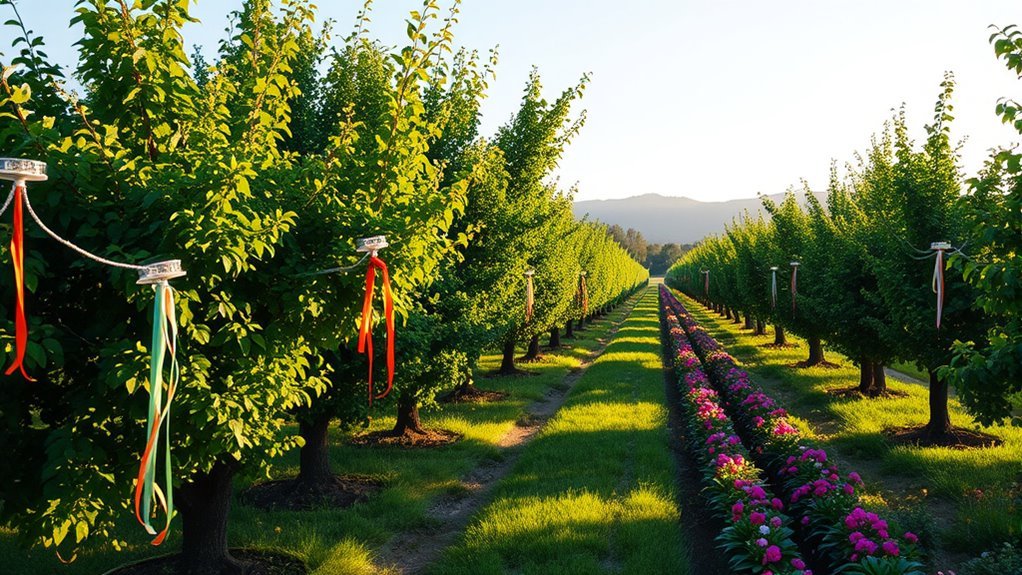
Strategic planting techniques can help reduce bird activity around your trees. Planting a variety of species can make the area less attractive to birds. Mixing different kinds of plants disrupts their habits because specific plants draw certain birds.
Focus on creating a thick canopy. Dense foliage at different heights can hide nesting spots and make it hard for birds to get in. Space your trees wisely to ensure they get enough sunlight and air. This improves the health of the plants and discourages unwanted birds.
Frequently Asked Questions
Are There Specific Bird Species That React Better to These Methods?
Some bird species react differently to deterrent methods. For example, starlings often respond strongly to these tactics. In contrast, sparrows usually show less change in behavior. Knowing these differences can help you manage bird presence more effectively.
How Can I Ensure My Methods Are Environmentally Friendly?
To make your methods environmentally friendly, choose eco-friendly materials and use natural repellents. Consider options like reflective tape or essential oils. These choices help keep birds away without harming the environment or affecting local ecosystems.
Will These Methods Affect Beneficial Insects or Animals?
You need to assess how these methods might disrupt ecosystem balance. Identifying potential risks to beneficial insects and animals is important. This helps keep a balanced environment where all species can thrive. Ensuring the safety of these creatures is essential for maintaining harmony in nature.
How Long Do These Deterrents Typically Remain Effective?
The effectiveness of bird deterrents usually lasts from a few weeks to several months. This duration depends on factors like the environment and the type of deterrent used. To ensure you keep birds away, regularly check the deterrents and their condition.
Can I Combine Multiple Methods for Better Results?
Yes, combining multiple methods can improve your results. Different strategies can work well together. By using various approaches, you can support and strengthen each one. This teamwork helps you reach your goals more effectively.

Hello, I’m Amelia White, the founder of birdsfanatic.com. As a lifelong bird enthusiast and spiritual seeker, I’ve always been fascinated by the mystical connections between birds and the human experience. On this site, I share my knowledge and insights into the symbolic meanings and spiritual significance of various bird species, exploring their roles in mythology, folklore, and cultural traditions. Join me on this journey into the world of birds, where we’ll discover the hidden wisdom and guidance that these magnificent creatures have to offer.