How to Prevent Birds From Eating Your Fruit Trees
If you have fruit trees in your yard, you know how birds can be drawn to ripe berries and apples. They may quickly turn your harvest into their meal, which can be frustrating. However, there are simple ways to protect your crops without harming the birds.
You can use physical barriers, such as nets or row covers, to keep birds away. These barriers are easy to set up and effective. Additionally, providing alternative food sources, like bird feeders stocked with seeds, can draw birds away from your fruit trees.
Let's look at these options to safeguard your harvest and enjoy a successful fruit season.
Key Takeaways
- Use lightweight bird netting securely around fruit trees to provide protection without hindering sunlight and rain access.
- Opt for fruit varieties with thicker skins or tart flavors that are less attractive to birds.
- Install tall fences and combine them with netting to create a more effective barrier against larger birds.
- Utilize sound deterrents like ultrasonic devices and wind chimes to scare birds away without harming them.
- Offer alternative food sources away from main crops to divert birds and encourage natural predators to balance the bird population.
Understanding the Bird Problem

Birds can be a challenge for fruit tree growers. Understanding their behavior is key to protecting your harvest.
Many birds like certain fruits, especially when they're ripe. For instance, songbirds and crows prefer soft, sweet fruits like strawberries and apples.
Knowing which fruits attract birds can help you take action to protect your garden. You can use netting or sound devices to keep birds away from your trees.
Choosing the Right Fruit Tree Varieties
Choosing the right fruit tree varieties can help reduce bird damage and improve your garden's output.
Select trees that are resistant to pests and birds. Fast-maturing trees can produce fruit before birds arrive. Look for varieties with thicker skins or tart flavors, as birds often prefer sweeter fruit.
Focus on species that yield dense amounts of fruit, which can discourage birds and make your efforts more rewarding.
Timing Your Harvest

Harvesting fruit at the right time is important to prevent bird damage and increase yield. Keep an eye on your fruit as it ripens. Birds tend to come when the fruit is ripe and smells good.
Check the color, firmness, and taste of your fruit often. Harvesting early in the morning or late in the evening can help you collect fruit before birds arrive. This timing can protect your harvest.
Establishing a routine for your harvest can help you meet both your schedule and your trees' needs. This will support a healthy and fruitful relationship with your fruit trees.
Employing Physical Barriers
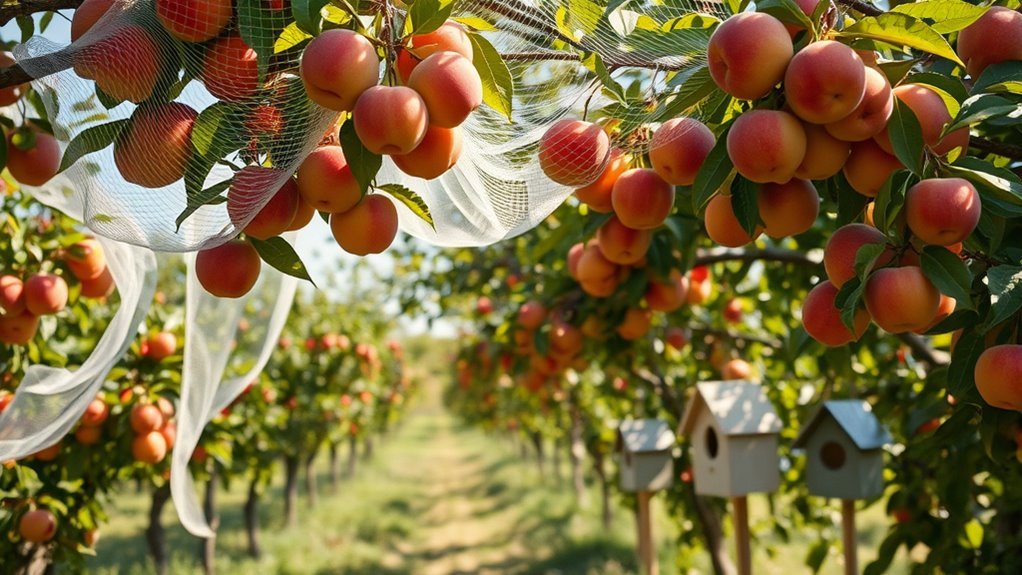
To protect your fruit trees from birds, use physical barriers. One effective method is to apply lightweight bird netting around your trees. This netting allows sunlight and rain to reach the plants while keeping birds out.
Make sure to secure the net tightly to block any gaps that birds could exploit.
For larger birds, consider fencing your trees. A tall and sturdy fence can help deter them, but design it in a way that prevents birds from landing nearby.
By combining netting and fencing, you can create a secure environment for your fruit trees.
Taking these simple steps allows your trees to grow and produce fruit, while also keeping unwanted birds away.
Enjoy a thriving garden and protect your harvest with these straightforward methods.
Using Reflective Objects to Deter Birds

Reflective objects can effectively keep birds away from your fruit trees. They create visual distractions and help protect your harvest. Here are some simple options:
- Reflective tape: Hang strips around your trees to create a shimmering effect.
- Shiny objects: Use old CDs or aluminum foil to confuse birds with their dazzling shine.
- Foil balloons: Inflate and tie them nearby; their movement and shine can scare off many birds.
- Homemade deterrents: Make shiny ornaments from reflective materials to catch light and deter pests.
Using these devices not only protects your trees but also adds some sparkle to your garden, creating a space you can enjoy and share with others.
Installing Bird Spikes
Installing bird spikes is a useful way to protect your fruit trees from birds. These spikes, made from durable materials like stainless steel or plastic, create a barrier that keeps birds away without harming them.
To install, select a spot where birds often perch, such as branches or fences. First, clean the surface to ensure good adhesion. Then, use strong adhesive or screws for installation, depending on your choice.
Space the spikes a few inches apart for the best coverage. Regularly check the spikes to make sure they're still effective.
Utilizing Sound Deterrents
Many gardeners use sound deterrents to keep birds away from fruit trees. These methods can make the area less inviting for birds. Here are some options to consider:
- Ultrasonic sound devices: These produce high-frequency sounds that humans can't hear, but birds find disruptive.
- Wind chimes: The sounds from wind chimes can confuse birds and make them avoid your trees.
- Recorded distress calls: Playing recordings of distressed birds can signal danger to other birds.
- Smart sonic deterrents: These devices detect birds and change their sounds to increase effectiveness.
Using these methods together can help protect your fruit trees while being kind to wildlife. Enjoy your gardening!
Creating a Bird-Friendly Habitat Away From Your Trees
Using sound deterrents can help protect your fruit trees, but creating a bird-friendly area away from them offers a better solution.
By planting native plants in your garden, you can attract birds that will eat insects instead of your fruit. Native plants provide shelter and food, making your garden appealing to local bird species.
Adding bird baths allows birds to drink and cool off, enhancing their habitat. This approach nurtures a healthy ecosystem that benefits both you and the birds.
Balancing these needs helps keep your fruit trees safe while connecting you with nature and bringing life to your yard.
Offering Alternative Food Sources
To prevent birds from eating your fruit trees, offer them alternative food sources. This will satisfy their hunger and encourage them to find food elsewhere. Here are some straightforward suggestions:
- Bird Feeders: Place feeders filled with seeds or nuts to attract different bird species.
- Alternative Fruits: Grow berry bushes or fruit trees away from your main trees to draw birds away.
- Homemade Treats: Mix corn and millet to provide extra snacks that birds enjoy.
- Water Sources: Set up shallow water baths for birds to drink and cool off, keeping them near but away from your fruits.
These tips will help you maintain a peaceful garden while keeping birds happy!
Implementing Natural Predators
Using natural predators can effectively keep birds away from your fruit trees. Encouraging predatory birds like hawks and owls in your area helps maintain a natural balance that deters smaller birds.
You can install nesting boxes to attract these raptors, which assists in controlling the bird population.
You can also improve your garden by introducing beneficial insects, such as ladybugs and lacewings. These insects help manage pests, reducing the reasons for birds to invade your trees.
Collaborating with your neighbors can strengthen your efforts against fruit-stealing birds. Together, you can create an environment that protects your crops and supports local wildlife.
Monitoring and Adapting Your Strategy
To keep birds away from your fruit trees, you need to observe and adapt your methods continuously.
Here are some straightforward steps to improve your strategy:
- Monitor bird activity and the timing of fruit ripening.
- Change your deterrents based on the bird species that are present.
- Check which methods, like netting or visual deterrents, work best for you.
- Be willing to try new methods when necessary.
Frequently Asked Questions
Can Certain Bird Species Be More Damaging to Fruit Trees Than Others?
Yes, some bird species can harm fruit trees more than others. Certain birds eat fruit quickly and aggressively, making fruit trees more vulnerable. It's important to identify which birds pose a greater threat to protect your trees effectively.
Are There Specific Times of Day When Birds Are Most Active?
Birds are most active in the morning and evening. In the morning, they search for food. In the evening, they return to feed again. Knowing these times can help you protect your fruit trees from hungry birds before they arrive. This understanding allows you to take steps to safeguard your crops effectively. Enjoy observing these lively creatures during their active hours!
Will Using Multiple Deterrent Methods Be More Effective?
Using multiple deterrent methods can improve effectiveness. Combining strategies like physical barriers and visual distractions can lead to better protection for your fruit trees. By integrating these approaches, you increase the chances of keeping pests away and maintaining a healthy crop.
How Do Weather Conditions Affect Bird Behavior Around Fruit Trees?
Weather conditions affect how birds behave around fruit trees. Changes in temperature and seasonal patterns influence migration, feeding habits, and nesting. Understanding these changes helps you predict when birds will visit your fruit. This information allows you to take action to protect your crops effectively.
Are Specific Fruit Trees More Attractive to Birds Than Others?
Certain fruit tree types attract birds more than others. Trees like cherries and berries offer sweet and easy-to-reach fruits. Knowing what birds like can help you pick the right trees for your garden. This choice supports a vibrant ecosystem and brings more wildlife to your space. If you want to enjoy watching birds, consider planting these fruit trees. They can enhance the beauty and life in your garden.

Hello, I’m Amelia White, the founder of birdsfanatic.com. As a lifelong bird enthusiast and spiritual seeker, I’ve always been fascinated by the mystical connections between birds and the human experience. On this site, I share my knowledge and insights into the symbolic meanings and spiritual significance of various bird species, exploring their roles in mythology, folklore, and cultural traditions. Join me on this journey into the world of birds, where we’ll discover the hidden wisdom and guidance that these magnificent creatures have to offer.