Do Owl Statues Really Work to Keep Birds Away?
Do owl statues really keep birds away? Some studies show that these statues can scare smaller birds. However, their effectiveness may decrease over time. To improve their impact, it helps to understand bird behavior. You can consider combining owl statues with other methods for better results. What are some strategies you could try for effective bird deterrence?
Key Takeaways
- Owl statues can deter birds by exploiting their instinctual fear of owls, which are natural predators of many species.
- The effectiveness of owl statues varies based on the type of birds; smaller birds are generally more impacted by perceived threats.
- Static owl statues may lose effectiveness over time as birds become desensitized, necessitating movement or combination with other deterrent methods.
- Proper placement and visibility of owl statues enhance their deterrent function, making them appear more realistic to birds.
- Combining owl statues with sound devices or reflective materials creates a layered approach, increasing overall effectiveness in keeping birds away.
Understanding Bird Behavior

To keep birds away, you need to understand their behavior. Birds follow strong instincts based on their environments and habitat needs. Knowing what attracts birds to specific areas helps you create effective strategies to deter them.
For example, many birds gather where food and shelter are plentiful. If you identify the shrubs or trees that attract them, you can change your landscape to make it less inviting.
Also, understanding bird breeding patterns and seasonal migrations helps predict when they might visit your space.
With this knowledge, you can adjust your environment to reduce their presence. This makes it easier to maintain your area without relying only on visual deterrents like owl statues.
The Psychology of Scare Tactics
Animals often react to threats based on instinct. Visual deterrents, like owl statues, can trigger a fear response in birds. This response helps them avoid predators, which is crucial for their survival.
Over time, however, animals may adapt and become desensitized to these visual cues. To maintain effectiveness, combine visual scares with sounds or movement. This strategy reinforces their fear response and makes it less likely for birds to return.
How Owl Statues Are Designed

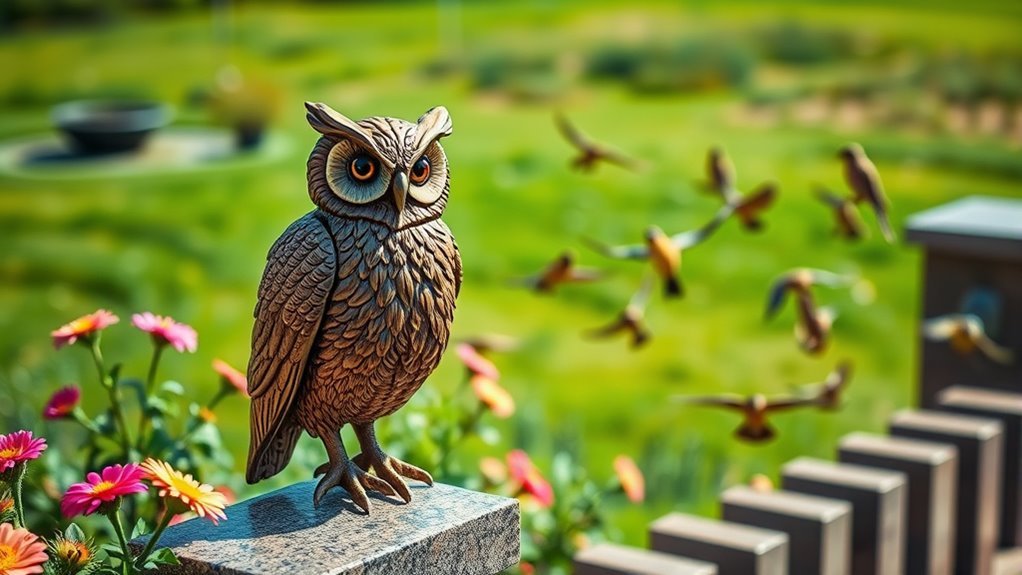
Owl statues are designed to look like real owls. They feature large eyes, feather textures, and accurate proportions. These elements help create lifelike representations.
Artists use durable materials like plastic, resin, or wood to make these statues. This ensures they can handle outdoor conditions. The colors of the statues can vary. Some use realistic browns and grays, while others use bright, whimsical colors.
Certain designs may include moving parts or reflective materials to catch attention. Understanding these features can highlight the effectiveness of owl statues as deterrents for unwanted birds.
These statues not only serve a decorative purpose but also play a practical role in keeping other birds away.
Historical Use of Owl Statues in Agriculture
Farmers use owl statues to protect their crops. This practice comes from historical traditions where communities placed figures of owls to scare away birds.
Many cultures, from ancient Egyptians to modern farmers, recognized owls as natural predators. Placing these statues in fields helps keep crops safe.
Today, even as technology advances in farming, owl statues remain a simple and effective method to address agricultural challenges. They link current farmers with generations before them who found creative ways to safeguard their harvests.
Comparing Owl Statues With Other Deterrents

Many methods exist for deterring birds from crops. Each method has its own advantages and disadvantages.
Owl statues can be effective but aren't the only option. Owl scarecrows act like predators and can be visually appealing, but they need to be moved regularly to stay effective.
Bird netting offers a physical barrier that protects crops, but it can be expensive and hard to install.
Each method serves a different purpose. Owl statues and scarecrows can discourage some bird species through sight, while bird netting provides a stronger solution.
It's important to find the right combination that works for your specific needs and environment. By considering these options, you can better protect your crops while maintaining a balance with nature.
The Effectiveness of Owl Statues: Evidence and Research
Many bird deterrents are available, but research shows that owl statues can effectively reduce bird activity around crops.
Studies indicate that these statues resemble natural predators, helping to deter smaller birds. A stationary owl creates a sense of danger, encouraging birds to avoid the area.
However, their effectiveness depends on how and where they're placed. Birds may become accustomed to the statues if they remain still in the same location for too long.
To improve their deterrent effect, consider rotating the statues or combining them with other deterrents.
Understanding these factors can help you protect your crops from unwanted birds effectively.
Real-life Experiences: Success Stories
Many gardeners and small farmers report success using owl statues to keep unwanted birds away.
These lifelike decoys can protect vegetable patches and fruit orchards. For example, one gardener saw fewer pigeons after she placed an owl statue near her tomatoes. A small farmer mentioned that his owl figurine successfully kept crows away, saving his berry crops.
Users suggest changing the statue's location regularly, as this helps prevent birds from getting used to it.
These accounts show that owl statues can be a simple and effective way to safeguard gardens from birds.
Common Misconceptions About Owl Statues
Many gardeners use owl statues to scare away birds, but some misconceptions can lead to disappointment. One myth is that owl symbolism will lead to immediate results. While owls represent wisdom and predator instincts, a statue may not always work to deter birds.
Another belief is that placing an owl statue alone is enough. Its success depends on factors like where you put it and how realistic it looks.
Some people also think using owl statues is unethical to bird welfare. In truth, using these decorations in a respectful way aims to keep ecological balance and enjoyable gardens.
Knowing these myths can help you manage your expectations and create a thriving garden that reflects your values.
Factors That Influence Effectiveness
Several factors affect how well owl statues deter birds in your garden. First, the type of birds you want to keep away matters. Some birds may not react to the sight of an owl.
The location of the statue is essential too. Just like scarecrows, an owl statue placed in the right spot can be more effective.
Birds also adapt quickly to their surroundings, so moving the statue regularly can help maintain its ability to scare them off.
Additionally, changing the environment—like trimming bushes or removing food sources—can improve how well the owl statue works.
Understanding these factors can help you make better choices for a bird-free garden.
How to Position Your Owl Statue for Maximum Impact
To get the best results from your owl statue, position it well in your garden. Follow these simple steps for effective placement:
- Raise the statue so it stands out. This mimics how real owls perch up high.
- Point the statue at areas where birds often go. Make sure it can be seen from all sides.
- Move the statue around from time to time. This keeps birds alert, as they may become accustomed to a fixed position.
Maintaining Your Owl Statue for Longevity
After placing your owl statue where it can be easily seen, the next step is to keep it in good shape for years to come.
Regular care is important for its effectiveness. Clean the statue often to get rid of dirt and grime that can affect how it looks. During seasonal checks, look for signs of wear or damage, especially after bad weather.
If you find worn spots, repaint or fix them to help the statue last longer. If your statue has movable parts, ensure they work correctly to keep it looking realistic.
Alternative Methods to Keep Birds Away
To keep birds away from your garden, consider several effective methods besides owl statues.
These options can enhance your garden's beauty while providing protection.
- Scare devices: Use reflective objects or sound devices that startle and confuse birds.
- Garden nets: Install nets to prevent birds from reaching your plants and food.
- Natural repellents: Certain scents, such as peppermint or predator urine, can discourage birds from visiting.
Personalizing Your Garden Deterrent Strategy
Creating a personalized garden deterrent strategy helps you address the specific bird issues you encounter. Start by identifying the types of birds that visit your garden and how they behave. This information guides you in selecting suitable solutions that fit your garden's look.
You can create a design that harmonizes with your landscape, such as using owl statues along with colorful plants or decorative features. This combination enhances both the visual appeal and effectiveness of your deterrents.
You might also try using sound devices or reflective materials for added interest and to deter birds. A personalized method nurtures your connection to the garden, making it a peaceful space for you while keeping unwanted birds away.
This unique approach can bring balance and efficiency to your efforts in deterring birds.
Frequently Asked Questions
Can Owl Statues Attract More Birds Instead of Deterring Them?
Owl statues can sometimes attract birds instead of scaring them away. Some birds may approach these decoys out of curiosity. The effectiveness of owl statues often depends on the environment and the species of birds present.
How Long Do Owl Statues Last Outdoors?
Owl statues last outdoors based on their materials and the weather. Common materials include plastic, wood, and ceramic. The lifespan typically ranges from one to three years. After that, you may need to replace or maintain them. Factors like sunlight, rain, and temperature can affect how long they last. Choose quality statues for better durability.
Do Different Types of Birds React Differently to Owl Statues?
Different bird species react differently to owl statues. Some birds may become scared when they see the statue, while others may not respond at all. Knowing how various birds react can help you improve your bird control strategies. This understanding is important for achieving better results in managing bird populations effectively.
Can Owl Statues Deter Pests Other Than Birds?
Owl statues are mainly intended to scare away birds, but they may also help deter small pests like rodents. Keep in mind, their ability to control all pests is limited. For better results, use owl statues alongside traditional pest control methods.
Where Is the Best Place to Buy Owl Statues?
You can buy owl statues from online retailers and local garden centers. Compare prices and styles to find one that suits your needs. Read customer reviews to ensure you receive a quality product that meets your expectations.

Hello, I’m Amelia White, the founder of birdsfanatic.com. As a lifelong bird enthusiast and spiritual seeker, I’ve always been fascinated by the mystical connections between birds and the human experience. On this site, I share my knowledge and insights into the symbolic meanings and spiritual significance of various bird species, exploring their roles in mythology, folklore, and cultural traditions. Join me on this journey into the world of birds, where we’ll discover the hidden wisdom and guidance that these magnificent creatures have to offer.