Best Methods to Keep Birds Out of Your Garden
If you want to keep birds out of your garden, use simple and effective methods. First, learn about bird behavior to understand why they visit your plants. Then, use methods like bird netting to physically block them. You can also use scare tactics, such as shiny objects or noise makers, to frighten them away. Another option is to create distractions, like placing bird feeders far from your garden to draw their attention elsewhere. With these strategies, you can protect your plants while ensuring the birds remain safe. Let's look at some easy ways to make your garden less appealing to birds.
Key Takeaways
- Use lightweight mesh or heavier netting secured to the ground to protect vulnerable plants from birds.
- Place bird feeders 20-30 feet away from the garden to divert birds to designated feeding areas.
- Experiment with visual deterrents like reflective tape, old CDs, or scarecrows to disrupt bird activity.
- Plant bird-repelling herbs like peppermint and lavender to naturally deter unwanted visitors while enhancing garden aesthetics.
- Regularly check and maintain any protective measures like netting and deterrents to ensure their effectiveness.
Understanding Bird Behavior
To keep birds out of your garden, understanding their behaviors is important. Birds follow their instincts, especially when looking for food. They're attracted to easy food sources, such as ripe fruits and seeds. Knowing what draws them can help you develop strategies.
For example, plant bird-friendly options away from your main garden. This way, you can enjoy nature while protecting your crops.
Pay attention to when birds are most active, typically in the mornings and late afternoons. Observing their feeding times will allow you to create effective deterrents.
You can use distraction methods by placing alternative food sources nearby. This strategy can redirect their focus and help keep your garden safe and healthy.
Netting for Protection
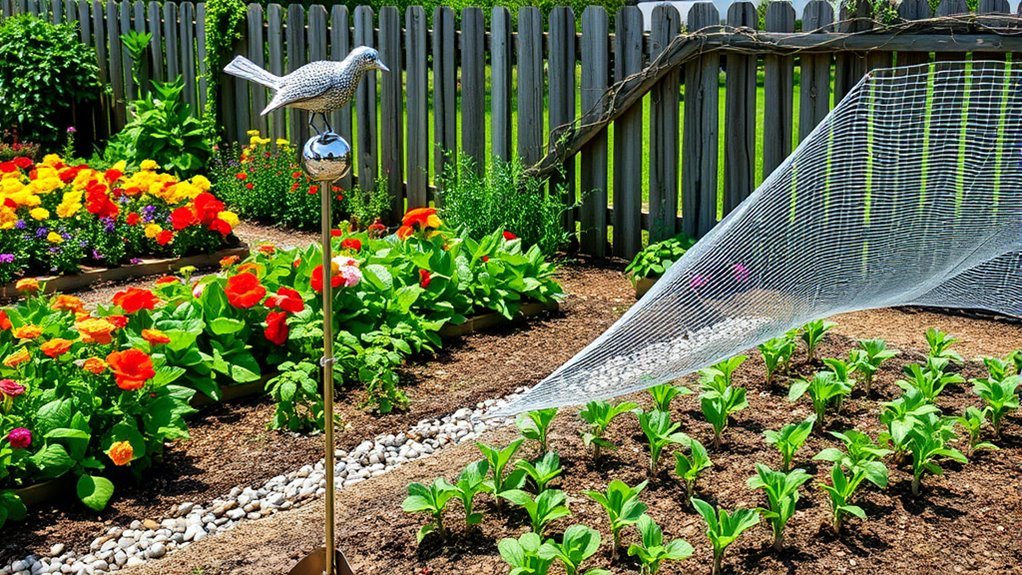
Birds can harm your garden, but netting can protect it. There are different types of netting such as mesh, plastic, and bird-proof options. Each type has its advantages, so pick one that fits your needs.
For example, lightweight mesh works well for fruits, while heavier netting is better for larger plants.
When you install netting, secure it to the ground to stop birds from getting underneath. Use stakes or weights to keep it tight.
Check the net regularly for tears and fix any damage. By following these steps, you'll create a barrier that keeps your plants safe and helps your garden grow.
Scare Tactics
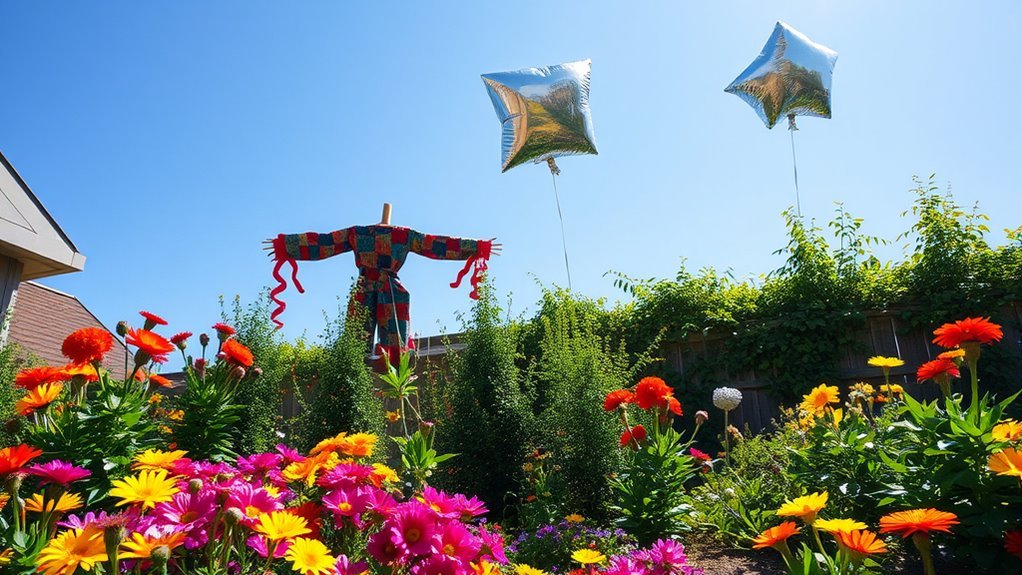
To keep birds out of your garden, use scare tactics.
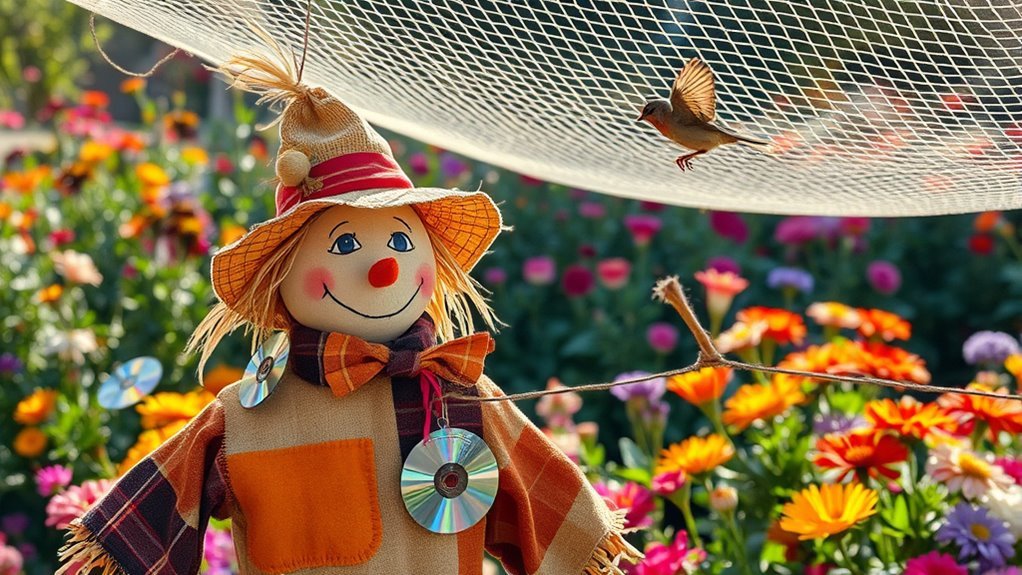
Visual deterrents like reflective tape and shiny objects, such as old CDs, can make your garden less appealing to birds. These items reflect light and move in the wind, creating an unsettling atmosphere.
You can also add noise distractions. Hang wind chimes or use devices that mimic predator sounds to keep birds alert and cautious.
Try different methods to see which ones work best for you. With these scare tactics, you'll protect your plants and enjoy a bird-free garden.
Garden Decoys
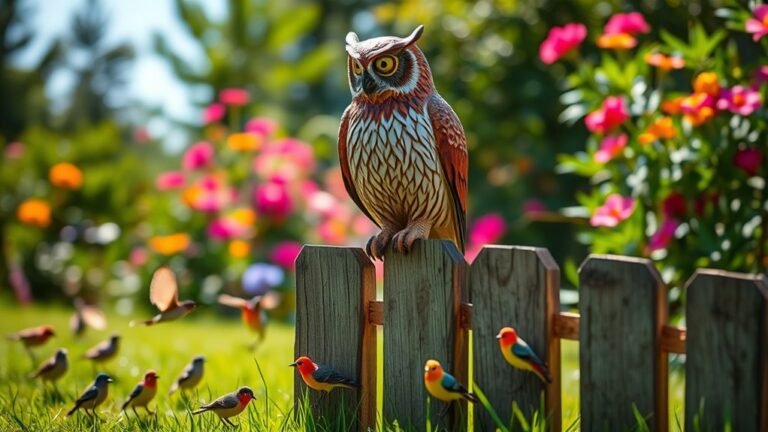
Using garden decoys can effectively keep unwanted birds out of your garden. You can choose decoys made from plastic, rubber, or carved wood.
To make them work best, think about where you put them. Place decoys around the edge of your garden, especially in spots where birds like to gather. This setup can make birds believe there's a predator nearby, encouraging them to stay away.
Watch how birds respond and move your decoys if necessary. By selecting the right materials and placing them wisely, you'll create a space free from birds for your plants to grow.
Reflective Materials
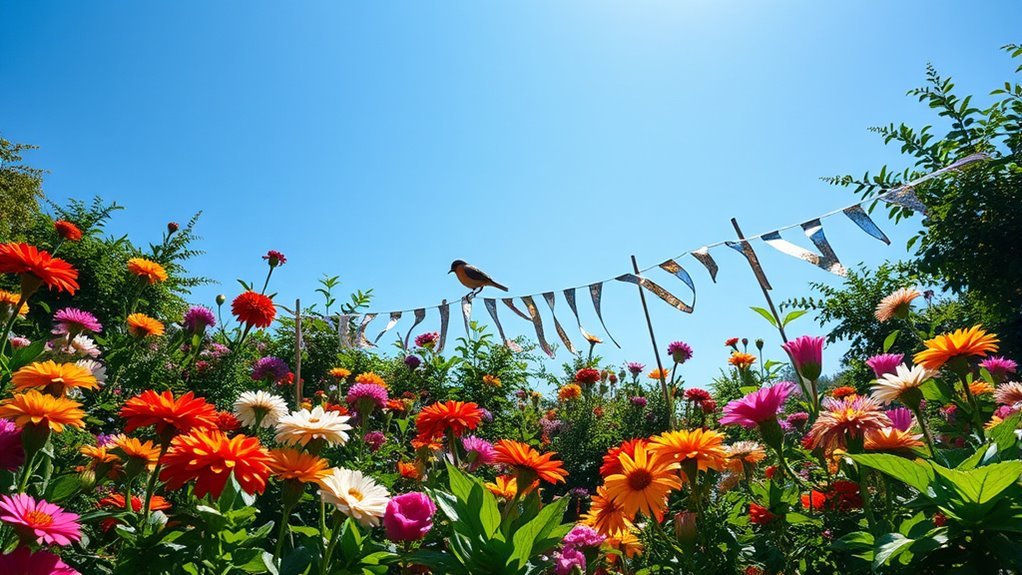
To keep birds away from your garden, use reflective materials in your design. Shiny objects can create an effect that birds dislike.
Hang strips of reflective tape in your garden; they move in the wind and reflect light, making it hard for birds to settle. You can also use aluminum foil or old CDs, which reflect sunlight well.
Additionally, place reflective garden stakes or pinwheels throughout your space. These items add beauty and serve a purpose.
Pruning and Plant Selection
To prevent birds from visiting your garden, choose specific plants that birds find unappealing. Select thorny shrubs or dense foliage that can block their access. For example, consider planting barberry or holly, as these can make it difficult for birds to reach soft fruits and seeds.
Regular pruning is also important. Trim your plants to keep your garden looking neat and to minimize hiding spots for birds.
Well-maintained plants create fewer areas for nesting, making your garden less inviting to them. A well-selected and pruned garden not only looks good but also helps reduce the likelihood of attracting unwanted birds.
Feeding Stations Away From the Garden
To reduce bird visits to your garden, choose the right plants and set up feeding stations at a distance.
Place your feeders at least 20-30 feet away from your garden. This distance helps direct birds to feed in specific areas instead of your plants. Additionally, consider when you feed the birds. Timing can influence their migration patterns and limit visits during busy seasons.
Using Wind Chimes
Wind chimes can help keep birds away from your garden. By selecting the right types of wind chimes, you can create sounds that birds don't like.
Choose chimes made from metal or bamboo, as they create different sound frequencies that can confuse birds.
Place your wind chimes where they can catch the wind easily to ensure they make noise often. Try out various sizes and shapes to find which one creates the best sound for your garden.
This choice will enhance your garden's look and help keep it free from unwanted birds. With careful placement and selection, you can enjoy pleasant sounds while protecting your plants.
Motion-Activated Devices
To keep birds out of your garden, use motion-activated devices.
These devices sense movement and scare birds away. Place them near bird feeders, flowers, or any areas you want to protect.
You can find different types of devices, like ultrasonic repellents or water sprayers.
Both options surprise birds but don't harm them.
When choosing a device, think about your garden's layout and which areas need protection.
By positioning these devices wisely, you create a garden that birds want to avoid.
This helps your plants grow without disturbance.
Planting Birds' Favorite Foods
If you want to keep birds away from your garden, plant their favorite foods in specific spots. Use bird-friendly plants like sunflowers, native berries, and zinnias.
These plants can create a food source that draws birds away from your vegetables. Place them around the edges of your garden or in certain areas. This strategy allows wildlife to thrive while protecting your crops.
It's important to attract the birds you want while also keeping pests away. A diverse garden helps create a balance in nature, giving your plants a better chance.
With careful placement of these plants, you can enjoy a flourishing garden that benefits both you and the local wildlife.
Natural Deterrents
While enjoying your garden, you can use natural deterrents to keep unwanted birds away. One method is to plant herbs like peppermint or lavender.
These herbs not only enhance your garden's beauty but also emit scents that birds dislike.
You can also use essential oils as deterrents. Mix oils such as eucalyptus or citronella with water in a spray bottle. This creates a natural solution to mist around your plants.
Be careful not to overapply, as this may affect beneficial pollinators in your garden.
Building a Birdhouse (But Not in the Garden)
To attract birds without affecting your plants, build a birdhouse away from your garden. Use local materials that match the surroundings for a natural look. Make sure the birdhouse has good ventilation and is weather-resistant to keep birds safe.
Place the birdhouse in a quiet spot near trees or shrubs for security. Fill it with nesting materials like dried grass, twigs, and feathers to encourage birds to make it their home.
Clean the birdhouse each year to keep it inviting. This effort will support local wildlife and allow you to enjoy their presence without interfering with your garden.
Frequently Asked Questions
What Are the Best Plants to Deter Birds Naturally?
To naturally deter birds, you can plant herbs such as rosemary, basil, and mint. These herbs act as natural repellents. Their strong scents create a barrier that keeps birds away. Additionally, they add beauty and practicality to your garden.
How Can I Use Colors to Keep Birds Away?
You can keep birds away using bright colors and reflective materials. Use items like shiny tapes or bold decorations to create visual barriers. These elements confuse birds and make your area less appealing to them. This approach adds a touch of style to your space while protecting it from unwanted visitors.
Do Certain Bird Species Cause More Garden Damage?
Yes, some bird species, like pigeons and starlings, can damage gardens. These birds often steal seeds and peck at fruits, which can lead to lower harvests. Managing their presence is important to protect your garden.
Is There a Specific Time of Year Birds Are More Troublesome?
Birds are often more troublesome during their migration and breeding seasons, which typically occur in spring and early summer. During this time, birds search for food, leading to increased activity in gardens. This can result in more noise and disruption as they flock to feed and establish nests.
How Can I Safely Relocate Birds From My Garden?
To safely relocate birds from your garden, use humane traps that capture them without causing harm. Once you have trapped a bird, take it to a suitable habitat that is far from your garden. Always check and follow your local wildlife laws and guidelines regarding bird relocation. This way, you can ensure the process is safe for both you and the birds.

Hello, I’m Amelia White, the founder of birdsfanatic.com. As a lifelong bird enthusiast and spiritual seeker, I’ve always been fascinated by the mystical connections between birds and the human experience. On this site, I share my knowledge and insights into the symbolic meanings and spiritual significance of various bird species, exploring their roles in mythology, folklore, and cultural traditions. Join me on this journey into the world of birds, where we’ll discover the hidden wisdom and guidance that these magnificent creatures have to offer.