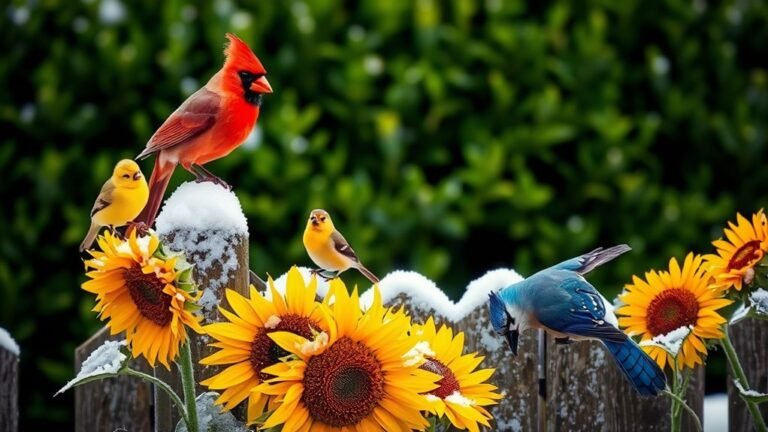

Backyard Birds of Indiana
In Indiana, backyards showcase a variety of birds, including the Northern Cardinal and American Robin. These birds enhance the visual appeal of your yard and support the ecosystem. For example, Blue Jays display interesting behaviors that affect their environment. As you watch these birds, think about how each species interacts with its surroundings and what this means for local wildlife. Enjoy spotting these birds and observing their unique traits.
Key Takeaways
- Common backyard birds in Indiana include Northern Cardinals, American Robins, Blue Jays, American Goldfinches, and Downy Woodpeckers.
- Each bird species has unique characteristics, such as the bright color of the Indigo Bunting and the melodic song of the American Robin.
- Birds like the Downy Woodpecker and Blue Jay help maintain forest health through their foraging behavior.
- To attract Indigo Buntings, plant native shrubs and trees, and provide suitable bird feeders stocked with their preferred seeds.
- Engaging with the local birdwatching community can enhance backyard experiences and provide valuable tips for attracting diverse bird species.
Northern Cardinal

In your backyard during warmer months, you might see a bright red Northern Cardinal. This bird, called Cardinalis cardinalis, displays interesting behaviors.
Male cardinals have bright feathers and sing to mark their territory and attract mates. They mainly eat seeds, especially sunflower seeds, but also enjoy fruits and insects.
You can find them feeding on the ground or at bird feeders. They use their strong beaks to crack open seeds.
American Robin
The American Robin, known as Turdus migratorius, is a common sight in Indiana's backyards during spring and summer.
These birds live in various habitats, including cities, gardens, and parks. They search for food like worms and insects by hopping on the ground.
Robins sing a beautiful song that announces their presence. Look for their nests, which are often built in tree branches or shrubs.
Observing these details enhances your experience and appreciation for these wonderful birds.
Blue Jay

The Blue Jay (Cyanocitta cristata) is a notable bird in Indiana. Its bright blue color and sharp call catch the eye.
Blue Jays show intelligence and display social structures in their flocks. They communicate through various calls, alerting others to dangers or food.
Blue Jays eat a wide range of food. They enjoy seeds, fruits, and insects. They also store food by hiding acorns for future use. This behavior is important for forest health.
Learning about Blue Jays can enhance your experience in your backyard and build a connection with local wildlife. This understanding helps you appreciate nature even more.
American Goldfinch
One of the most colorful birds in Indiana is the American Goldfinch (Spinus tristis).
In summer, male goldfinches display bright yellow feathers. You can often see them in your garden, happily eating seeds from plants like sunflowers and asters. They feed by hanging upside down to reach the seeds, which shows their cleverness.
As fall comes, they start nesting. They usually build nests in thick shrubs or trees. They use natural materials such as plant fibers and spider silk to create safe homes for their young.
Watching these cheerful birds can help you connect with nature in your own backyard.
House Finch

House Finches (Haemorhous mexicanus) are colorful birds commonly found in Indiana backyards. They thrive in urban and suburban areas, especially in gardens, parks, and residential spaces with plenty of vegetation.
You might see them searching for seeds and fruits, showing a friendly disposition towards humans. House Finches often gather in small groups, chirping and adding life to your garden.
Their lively presence can enhance your outdoor space and create a sense of community as you enjoy watching them. Connecting with these charming birds can make your backyard a delightful place for both you and them.
Downy Woodpecker
The Downy Woodpecker (Picoides pubescens) is a small bird that visits Indiana backyards. You can identify it by its black and white feathers and the white spots on its wings.
This bird lives in different places, such as deciduous trees, orchards, and urban gardens, where it looks for insects in softwood trees. The Downy Woodpecker makes unique tapping sounds as it pecks on tree bark to find food.
You may see it clinging to horizontal branches or even hanging upside down, showing its agility. Planting native trees can attract more Downy Woodpeckers to your yard, boosting your backyard's wildlife.
Enjoy watching these delightful woodpeckers as they bring life to your outdoor space!
Mourning Dove
The Mourning Dove (Zenaida macroura) is often seen resting on power lines or searching for food on the ground. Their soft cooing adds a soothing sound to Indiana backyards.
These birds are adaptable and live in various places like cities, open fields, and edges of forests. They prefer to nest in shrubs or trees, which benefits your backyard's wildlife.
When you watch them, you'll notice their long tails and slender bodies, giving them a graceful look. To attract Mourning Doves, provide seeds and keep your area quiet. This can help create a stronger bond with these lovely birds in your outdoor space.
Red-winged Blackbird
The Red-winged Blackbird (Agelaius phoeniceus) is a bird that stands out with its bright colors and distinct calls. After you enjoy the Mourning Dove in your backyard, look for the Red-winged Blackbird next.
Here are some things you might see:
- Male Red-winged Blackbirds show their shiny black feathers and bright red shoulder patches to attract mates and defend their territory.
- Female Red-winged Blackbirds build nests in grasslands near water to keep their young safe.
- Pairs work together to find food, eating insects and seeds.
In spring and summer, these birds add energy and beauty to your backyard, helping you feel connected to Indiana's diverse bird population.
Consider adding the Red-winged Blackbird to your list of favorite backyard visitors.
Chickadee
Chickadees are small, lively birds that capture attention with their curious actions and clear calls. You can see them hopping from branch to branch, often interacting playfully with each other.
Their call, "chick-a-dee-dee-dee," is a form of communication that changes in intensity based on how safe they feel. Chickadees eat a mix of food, including insects, seeds, and berries.
They're smart and remember where they store their food. To attract chickadees to your yard, place feeders filled with sunflower seeds or suet.
Watching them up close can enrich your experience of nature.
Tufted Titmouse
The Tufted Titmouse is a small bird related to the chickadee. It lives in mature deciduous forests and suburban parks, where it finds food and places to nest.
Here are some behaviors you might observe in Tufted Titmice:
- They move quickly between branches, often in small groups.
- They produce a series of cheerful whistles that create a pleasant background sound.
- They store seeds and nuts for later use, demonstrating their cleverness.
These birds show intelligence and enjoy being social.
They form strong connections with their environment. If you offer the right food and nesting places, you can attract these charming birds to your yard and deepen your bond with nature.
Nuthatch
Nuthatches are interesting birds that contribute significantly to Indiana's ecosystems.
They search for food on tree bark and can move upside-down, helping them find insects and seeds that many other birds may miss. This behavior supports pest control and promotes a healthy environment.
For nesting, nuthatches often use old woodpecker holes or create their own cavities in deciduous trees. These nests protect both the chicks and adult birds from predators and bad weather.
Watching nuthatches can deepen your appreciation for nature and enhance your enjoyment of your backyard ecosystem.
Baltimore Oriole
As nuthatches move quickly around tree trunks, you may see the colorful Baltimore Oriole. These birds are a bright splash of orange and black in Indiana. They've specific feeding habits.
You can often find them:
- Drinking nectar from flowers.
- Eating ripe fruits like oranges and berries.
- Catching insects from branches.
Every spring, the Baltimore Oriole migrates from Central America to Indiana, arriving in mid-April. They look for places with plenty of trees and fruit during migration.
To attract them to your backyard, offer fruit and nectar. This can create a friendly environment for birdwatchers and nature lovers alike. Enjoy the beauty of these birds!
Indigo Bunting
The Indigo Bunting is bright blue during spring and summer, attracting birdwatchers in Indiana. Male Indigo Buntings sing to attract females and build nests in shrubs and small trees. After mating, they may reuse nests for their next broods, showing their adaptability.
Indigo Buntings breed in Indiana from late April to August. In winter, they migrate south to Central America. During migration, they often travel in flocks, giving you a chance to see these beautiful birds up close.
You can connect with other bird enthusiasts and share tips on attracting Indigo Buntings to your backyard, enriching your experience with Indiana's bird community.
Frequently Asked Questions
What Food Attracts Backyard Birds in Indiana?
To attract backyard birds in Indiana, use a variety of seeds, such as sunflower seeds and millet. Place feeding stations where they can be easily seen and accessed by birds. This method will create a lively bird community in your yard, making your outdoor space more enjoyable.
When Is the Best Time to Observe These Birds?
To observe birds effectively, pay attention to their migration patterns in spring and fall. Knowing this behavior helps you find the best times for birdwatching. During these seasons, birds are more active and easier to see as they search for food and nesting sites. Plan your observations around these peak times for the best experience.
How Can I Create a Bird-Friendly Backyard?
To create a bird-friendly backyard, build different types of birdhouses for various bird species. Use native plants to attract local birds. These steps provide food, shelter, and nesting sites, making your backyard a welcoming space for birds. Enjoy observing them as they thrive in your garden.
What Are the Common Birdwatching Tools for Beginners?
For beginners, two essential tools can greatly improve your birdwatching experience: binoculars and a field guide. Binoculars allow you to see birds up close, improving your observation skills. A field guide helps you recognize different bird species. With these tools, you can deepen your connection with nature and engage more fully in the birdwatching community. Enjoy your time outdoors as you observe and learn about birds.
Are There Any Conservation Efforts for Indiana's Backyard Birds?
Yes, there are conservation efforts for Indiana's backyard birds. These efforts focus on preserving habitats and protecting species. You can get involved in local programs, support bird-friendly practices, and help spread awareness about threats to birds. These actions will help ensure that these beautiful creatures continue to thrive in your community.

Hello, I’m Amelia White, the founder of birdsfanatic.com. As a lifelong bird enthusiast and spiritual seeker, I’ve always been fascinated by the mystical connections between birds and the human experience. On this site, I share my knowledge and insights into the symbolic meanings and spiritual significance of various bird species, exploring their roles in mythology, folklore, and cultural traditions. Join me on this journey into the world of birds, where we’ll discover the hidden wisdom and guidance that these magnificent creatures have to offer.