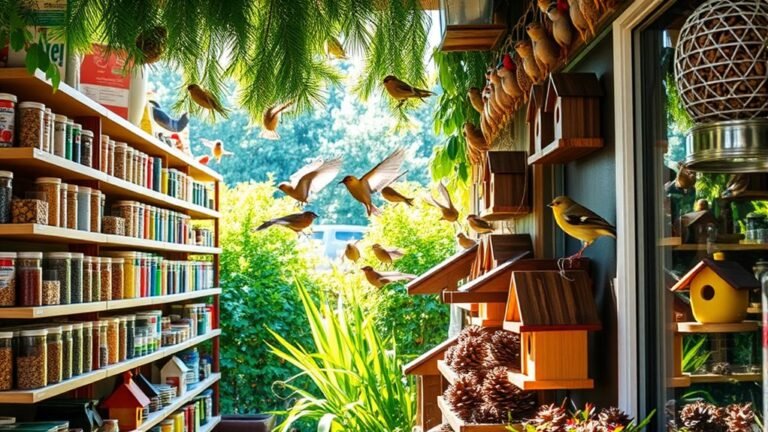

Wisconsin Local Backyard Bird Guide
To enjoy your backyard more, learn about the bird species in Wisconsin. Birds like the American Robin and the Black-capped Chickadee each play a role in nature. Identifying them and using methods to attract them can make your outdoor area lively and welcoming. Where should you begin your birdwatching journey?
Key Takeaways
- Identify common Wisconsin backyard birds like the American Robin, Northern Cardinal, and Black-capped Chickadee by their unique colors and distinct calls.
- Use specific bird seeds to attract local species; sunflower seeds are great for cardinals, while nyjer seeds appeal to finches.
- Ensure feeders are placed in safe, visible locations, and keep them clean to promote bird health and increase visits.
- Explore local birdwatching apps and field guides to enhance your identification skills and connect with the birdwatching community.
- Engage in community activities like crafting bird feeders or organizing nature outings to foster a love for birds and their habitats.
Understanding Wisconsin's Bird Habitats

Wisconsin has diverse bird habitats that support many local species. Understanding these habitats can help you appreciate and attract birds. You can find woodlands, wetlands, and grasslands across the state. Each environment offers different conditions suited for various birds.
Seasonal changes affect which bird species you'll see at different times of the year. Some birds migrate while others stay and adapt to Wisconsin's climate.
Commonly Seen Backyard Birds
Wisconsin has many types of birds that may visit your backyard. Some common birds you might see are the American Robin, Northern Cardinal, and Black-capped Chickadee.
These birds bring color to your yard and provide a chance for you to identify different species. Watching their vibrant colors, listening to their calls, and observing their behaviors can deepen your enjoyment of nature.
You can attract even more birds, like Blue Jays and Goldfinches, by setting up bird feeders.
To help with bird identification, you can use field guides or mobile apps. This hobby can connect you with your local ecosystem and the community of bird watchers around you.
Enjoy observing these beautiful creatures in your outdoor space.
Attracting Birds With Feeders

Setting up bird feeders is a simple and effective way to attract various birds to your backyard.
Choose the right seeds: use sunflower seeds for cardinals, nyjer seeds for finches, and mixed seeds for different species. This variety will attract a lively group of birds.
Think about where to place your feeders. Put them in spots that have shelter and allow birds to see any approaching predators. Positioning them near trees or shrubs gives birds quick access to cover.
Keep your feeders clean to avoid spreading disease. With the right seeds and placement, you'll create an inviting space for both birds and birdwatchers.
The Importance of Native Plants
Bird feeders attract many backyard birds, but native plants are also essential. Native plants increase plant diversity and support wildlife. They connect different habitats and help pollinators thrive.
By adding native plants to your garden, you can enjoy seasonal blooms that supply food for birds. Moreover, native plants improve soil health, making it more fertile. This benefits both habitat restoration and garden beauty, making your outdoor space more inviting.
Embracing native plants creates a lively environment that supports local wildlife and enhances your garden.
Birdhouses and Nesting Sites

To create a bird-friendly backyard, start by providing suitable nesting sites. Install birdhouses that match the preferences of local bird species. Make sure the birdhouses have drainage holes and ventilation for the birds' safety.
You can also improve your yard by offering nesting materials. Place dried grass, twigs, and feathers in easy-to-reach spots. This encourages birds to build their nests nearby.
Water Sources for Backyard Birds
Water is a crucial element for attracting various birds to your backyard. Having clean and easy-to-access water sources can improve your birdwatching experience.
Here are three simple ideas to get started:
- Birdbaths: A birdbath provides fresh water for birds. Make sure to clean it regularly to prevent mosquito growth and keep the water clear.
- DIY Water Features: Create a small pond or fountain. Moving water attracts birds and helps keep the water fresh, making it more appealing for them.
- Shallow Dishes: Set shallow dishes filled with water on the ground. This allows smaller birds to access the water easily.
Seasonal Birdwatching in Wisconsin
As seasons change in Wisconsin, so does your backyard birdwatching. Each season brings different birds due to migrations and changes in weather.
In spring, returning songbirds like warblers and orioles brighten your backyard. Their colorful plumage and cheerful songs create a lively atmosphere.
Summer is nesting time. Local birds set up territories and raise their young, giving you the chance to observe their behavior.
In autumn, migratory birds prepare to head south. Their activity increases as they gather food and energy for their journey.
When winter comes, adjust your birdwatching strategy. Attract hardy birds like cardinals and chickadees to your feeders. These birds stay local and rely on food sources you provide.
Watching these seasonal changes deepens your appreciation for nature. It also encourages you to connect with fellow birdwatchers in Wisconsin, creating a sense of community.
Enjoy your birdwatching journey!
Identifying Birds by Color and Size
Birdwatching becomes more interesting when you identify birds by color and size. Noticing color differences helps you recognize species and enjoy their beauty.
Follow these simple guidelines:
- Vivid Colors: Bright yellow goldfinches and deep red cardinals are easy to spot against green leaves.
- Subtle Tones: Look for the grays and browns of sparrows, which can blend in with their surroundings.
- Size Comparisons: Compare small chickadees with larger blue jays; size can help you identify them.
Enjoy the process of watching and learning about birds!
Behavior and Feeding Habits
Understanding local birds' behavior and feeding habits can improve your birdwatching.
Watch how they find food. For example, woodpeckers look for insects in trees, while sparrows pick up seeds from the ground.
Social interactions among birds also reveal interesting patterns. Jays often feed together and may fight over food. In contrast, birds like the American robin usually eat alone.
Learning Bird Calls and Songs
Bird species use unique calls and songs to communicate. Each sound has a specific meaning. Improving your ability to recognize these sounds will help you connect more deeply with nature and your outdoor community.
Here are some simple techniques to help you identify bird calls:
- Listen: Spend time outside focusing on the sounds around you. Repeated listening will help you recognize different bird calls.
- Use Apps: Many mobile apps provide recordings and visuals to help you identify birds more easily.
- Join Groups: Connect with other bird watchers. They can share tips and ideas to enhance your learning experience.
Start practicing today to enjoy the beauty of bird songs!
Backyard Bird Conservation Tips
Listening to bird calls can increase your enjoyment of nature, but it's also important to help birds thrive. You can make your backyard a better place for birds by following some simple steps.
First, plant native trees and shrubs. These plants give birds food and a place to shelter. Use eco-friendly gardening methods, like lowering pesticide use and using organic compost. This helps create a safer space for birds.
Consider adding bird baths and nesting boxes. These features encourage birds to stay and nest in your yard.
Pay attention to the different needs of birds during the seasons. Various species do well in different conditions, so choose a mix of plants.
By setting up a lively ecosystem, you can support local bird populations. Making a few small changes can turn your backyard into a sanctuary for these important creatures.
Enjoy the beauty and sounds of nature as you welcome them into your space.
Engaging Kids in Birdwatching
How can you get your kids excited about birdwatching? Start with activities that capture their interest and spark their curiosity. Here are three simple ideas:
- Make a Birdwatching Journal: Ask them to write down each bird they see. They can describe the colors, sizes, and what the birds do. This helps them observe closely and express their creativity.
- Host Craft Days: Plan fun craft sessions where they can use recyclable materials to make bird feeders or nests. This mixes art with nature and allows for hands-on creativity.
- Go on Field Trips: Take them to local parks or nature reserves for birdwatching. Experiencing different environments will deepen their connection to nature.
These activities can help children enjoy birdwatching while learning more about the world around them.
Resources for Bird Enthusiasts
Once kids start birdwatching, parents and educators can find helpful resources to improve the experience. Birdwatching apps are great tools. They help with identifying birds and provide interesting facts about local species.
Popular apps like Merlin Bird ID and eBird connect users with a community of bird lovers, creating a sense of belonging.
Also, good field guides, such as the "National Geographic Field Guide to the Birds of North America," are useful references. They offer clear descriptions and pictures of birds.
These resources deepen your knowledge and encourage shared experiences. By using these tools, you can build a stronger appreciation for birds and enjoy meaningful moments with your children or students, all while fostering a shared love for nature.
Frequently Asked Questions
What Are the Best Times to Watch Birds in Wisconsin?
The best times to watch birds in Wisconsin are early in the morning right after sunrise and late in the evening before sunset. During these hours, birds are very active. They search for food and interact with other birds. These times increase your chances of seeing a wide variety of bird species. Enjoy your birdwatching!
How Can Weather Affect Bird Activity in My Backyard?
Weather affects bird activity in your backyard in significant ways. Changes in temperature can shift seasonal behaviors. This influences how birds feed, migrate, and nest. By observing these changes, you can better understand when birds are likely to visit your feeders and nesting areas. Keeping track of weather patterns helps you attract more birds and enjoy their presence.
Are There Any Endangered Bird Species in Wisconsin?
Wisconsin is home to endangered bird species, including the Piping Plover and Kirtland's Warbler. You can help by supporting local conservation efforts. Protecting their habitats is vital for their survival. Together, we can ensure these beautiful birds continue to thrive in Wisconsin.
How Do I Keep Squirrels Away From Bird Feeders?
To keep squirrels away from bird feeders, use squirrel-proof feeders and place them far from trees and buildings. This setup makes it harder for squirrels to reach the food, allowing birds to eat safely.
What Is the Best Way to Photograph Backyard Birds?
To photograph backyard birds well, use a zoom lens or a smartphone camera. Set up your equipment near bird feeding stations to capture their natural behaviors. Stay patient while you wait for the perfect moments. Aim to photograph the birds as they interact with their surroundings or with each other. Enjoy the process, and embrace the beauty of these vibrant creatures.

Hello, I’m Amelia White, the founder of birdsfanatic.com. As a lifelong bird enthusiast and spiritual seeker, I’ve always been fascinated by the mystical connections between birds and the human experience. On this site, I share my knowledge and insights into the symbolic meanings and spiritual significance of various bird species, exploring their roles in mythology, folklore, and cultural traditions. Join me on this journey into the world of birds, where we’ll discover the hidden wisdom and guidance that these magnificent creatures have to offer.