Celestron 80mm Spotting Scope Review 2026: Still Worth It?
Long distance viewing gets frustrating with binoculars. You spot a bird across the marsh, you lift your 10x42s, and the bird stays a fuzzy blob.
That gap is exactly where an 80mm spotting scope earns its place. Celestron has sold its 80mm Ultima line for years, and the scope keeps showing up on birding trails, shooting ranges, and back patios.
So the real question for 2026 is simple. Does a scope this affordable still deliver sharp images, or has the competition left it behind? I spent time with the Celestron Ultima 80 in daylight, at dusk, and on the night sky. This review covers what impressed me, what annoyed me, and who should skip it entirely.
In a Nutshell:
- The 80mm objective gathers serious light. Celestron claims roughly 50 percent brighter images than a 65mm scope, and that difference shows clearly in early morning and late evening sessions.
- Sharpness stays strong from 20x to about 40x. Past 40x, the image softens and dims. This is normal for zoom eyepieces at this price, but you should plan around it.
- Build quality punches above the price. The scope is waterproof, rubber armored in olive green, and it ships with a soft carrying case.
- Close focus sits around 26 feet. That rules out butterfly watching at short range, which frustrates some nature observers.
- You must budget for a solid tripod. The scope weighs close to 3.5 pounds, and a flimsy photo tripod will ruin your view with shake.
- Value remains the headline. At a street price well under 300 dollars, the Celestron 80mm still competes hard with scopes costing twice as much.
Celestron Ultima 80 Angled Spotting Scope

- ULTIMA ANGLED ZOOM SPOTTING SCOPE: This versatile all-around spotting scope with an 80mm objective lens, 20-60x zoom, and a 45° viewing angle is the ideal choice for any outdoor enthusiast. It's perfect for observing nature and long-distance viewing.
- INCLUDES ESSENTIALS FOR BETTER VIEWING: The Celestron Ultima 80 comes complete with a soft carrying case, an extended tripod mounting plate, a zoom eyepiece with an integrated T-adapter for digiscoping, an eyepiece pouch, a lens cloth, and more.

Last update on 2026-09-13 / Affiliate links / Images from Amazon Product Advertising API Some of the links on this website are affiliate links, which means that at no additional cost to you, I earn a commission if you click through and make a purchase. I only recommend products and services that I believe will add value to my readers. Thank you for your support!
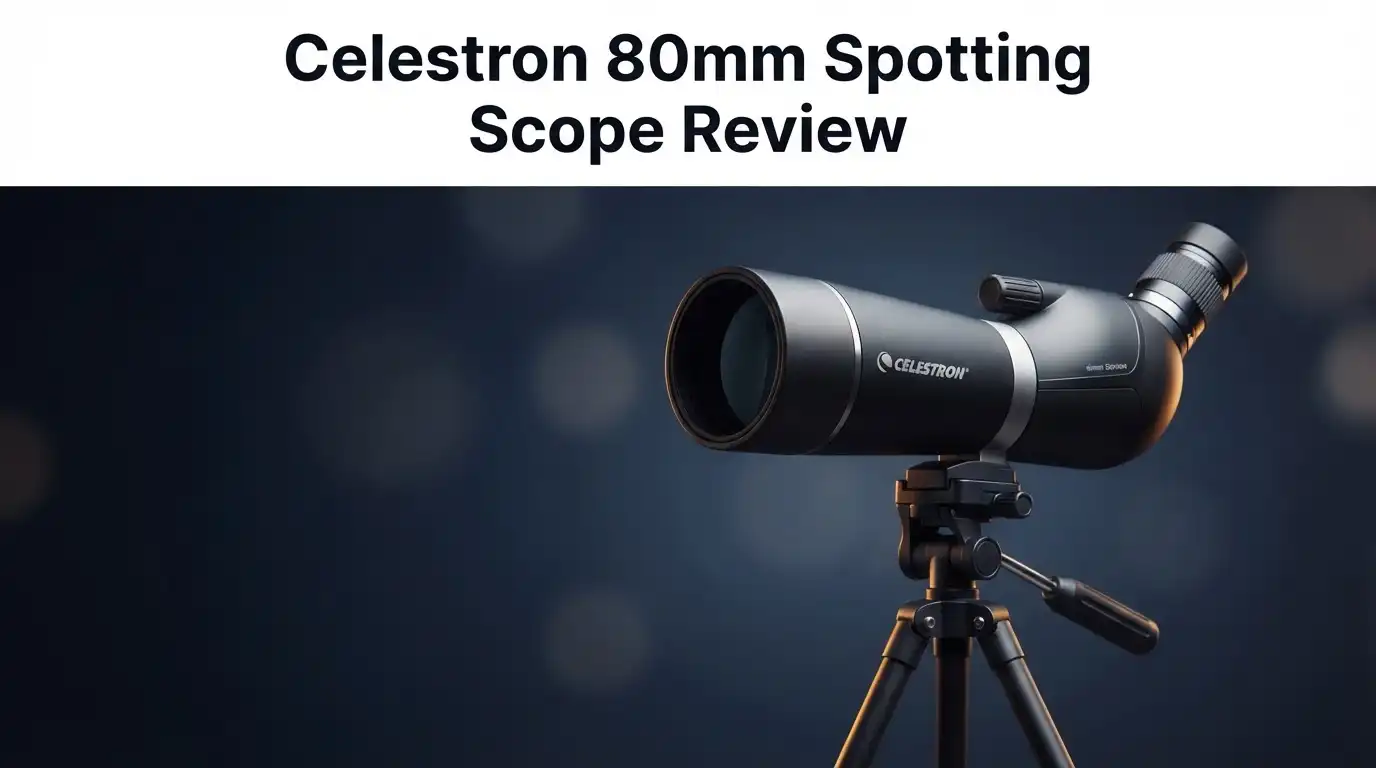
The Ultima 80 with the 45 degree angled body is the model most buyers choose. It pairs an 80mm refractor objective with a 480mm focal length and a 20x to 60x zoom eyepiece. Celestron uses multi coated optics, a BaK 4 style prism assembly, and a fully waterproof housing.
The angled eyepiece design takes some getting used to. You look down into the scope rather than straight through it. Once your neck adjusts, it becomes the more comfortable option for long sessions, especially if you share the scope with people of different heights.
Eye relief measures about 18mm, which works for most eyeglass wearers. The rotating tripod collar lets you shift the eyepiece to a comfortable angle without moving the tripod head. That single feature saves a lot of fiddling in the field.
Unboxing Experience
The box arrives plain and functional. Celestron does not chase an Apple style presentation here, and honestly the money went into glass instead of cardboard.
Inside you find the scope body nested in molded foam, the soft nylon carrying case, a lens cloth, and the instruction sheet. The zoom eyepiece comes already attached on most units. My first reaction was surprise at the heft. The scope feels denser than photos suggest, and the rubber armor has a grippy texture that inspires confidence.
The carrying case deserves a mention. It is a stay on style case with cutouts for the eyepiece and focus knob. You can leave it on while observing, which protects the body from knocks. The zipper feels cheap, though, and mine started sticking after a few months of use.
Build Quality and Design
Celestron wrapped the aluminum tube in green rubber armor. The color choice is deliberate. Olive green blends into natural settings better than black, which matters if you watch shy wildlife.
The scope measures roughly 19 inches long and weighs about 3.5 pounds. That puts it in the middle ground. It is too heavy for casual day hiking but easy to carry from the car to a hide.
A built in sight tube runs along the top of the body. You line up your target through this simple channel before looking through the eyepiece. It works, though a red dot finder would work better.
Waterproofing held up during a steady rain session. No fogging appeared inside the tube. The focus knob turns smoothly with light resistance, and it has not loosened over time.
Top 3 Alternatives for Celestron Ultima 80

- · PREMIUM OPTICS FOR BRIGHT, SHARP VIEWS: Fully multi-coated lenses with Celestron’s XLT coatings maximize light transmission for vivid color, high contrast, and crisp detail—even at dawn or dusk.
- · PHASE-COATED BAK-4 PRISMS: Premium BaK-4 prisms with phase coatings boost resolution and contrast for edge-to-edge clarity.
Last update on 2026-09-28 / Affiliate links / Images from Amazon Product Advertising API Some of the links on this website are affiliate links, which means that at no additional cost to you, I earn a commission if you click through and make a purchase. I only recommend products and services that I believe will add value to my readers. Thank you for your support!
Celestron TrailSeeker 20 to 60×80 Angled Spotting Scope

- ULTIMA ANGLED ZOOM SPOTTING SCOPE: This versatile all-around spotting scope with a 65mm objective lens, 18-55x zoom, and a 45° viewing angle is the ideal choice for any outdoor enthusiast. It's perfect for observing nature and long-distance viewing.
- INCLUDES ESSENTIALS FOR BETTER VIEWING: The Celestron Ultima 65 comes complete with a soft carrying case, an extended tripod mounting plate, a zoom eyepiece with an integrated T-adapter for digiscoping, an eyepiece pouch, a lens cloth, and more.
Last update on 2026-09-17 / Affiliate links / Images from Amazon Product Advertising API Some of the links on this website are affiliate links, which means that at no additional cost to you, I earn a commission if you click through and make a purchase. I only recommend products and services that I believe will add value to my readers. Thank you for your support!
Celestron Ultima 18 to 55×65 Angled Spotting Scope

- Gosky Updated Newest 20-60x80 Spotting Scope - Variable 20x to 60x magnification and dynamic lens focusing system brings better optics, more stable images and easier focusing power. It’s the best choice for target shooting, archery, hunting, bird watching, wildlife watching, hiking, camping, scenery, outdoor sporting, astronomical observation etc
Last update on 2026-09-13 / Affiliate links / Images from Amazon Product Advertising API Some of the links on this website are affiliate links, which means that at no additional cost to you, I earn a commission if you click through and make a purchase. I only recommend products and services that I believe will add value to my readers. Thank you for your support!
Gosky Updated 20 to 60×80 Spotting Scope with Tripod
Optical Performance in Daylight
Daylight is where this scope shines. At 20x the image looks bright, contrasty, and sharp across most of the field. Colors appear natural without the yellow cast some budget scopes produce.
I tested the scope on a distant church steeple about 900 yards away. At 20x I could read the clock face. At 30x the numerals sharpened further. Between 20x and 40x, the Ultima 80 gives you images that genuinely surprise people who paid more.
Chromatic aberration does appear. Look at a dark branch against bright sky and you will see purple fringing. It is mild at low power and grows noticeable past 45x. This scope uses standard glass, not ED glass, so some color error is expected.
Edge sharpness softens slightly in the outer 15 percent of the field.
Zoom Eyepiece Performance From 20x to 60x
The bundled zoom eyepiece is both the convenience and the compromise.
Zooming is smooth. A textured ring rotates through the range with clear markings. Focus holds reasonably well as you zoom, though you will usually need a small correction.
Field of view narrows sharply as you climb. At 20x you get a comfortable wide view, roughly 105 feet at 1000 yards. At 60x that collapses to around 52 feet. Finding your target at high power becomes a real chore, so always locate first at 20x and zoom in afterward.
Image quality at 60x disappoints. Brightness drops, contrast fades, and heat shimmer takes over on warm days. I settled at 30x to 40x for almost all serious viewing.
Celestron Ultima 80 Straight Spotting Scope

- ULTIMA STRAIGHT SPOTTING SCOPE: The outdoor enthusiast’s choice is our great all-around spotting scope with an 80mm objective lens and a straight-through viewing angle. Perfect for observing nature and long-distance viewing.
- INCLUDES ESSENTIALS FOR BETTER VIEWING: Celestron Ultima 80 includes an extended tripod mounting plate, a zoom eyepiece with an integrated T-adapter for digiscoping, a carrying case, an eyepiece lens cap, an eyepiece port cover, a soft carrying case, an eyepiece pouch, a lens cloth, and an instruction manual.
Last update on 2026-09-28 / Affiliate links / Images from Amazon Product Advertising API Some of the links on this website are affiliate links, which means that at no additional cost to you, I earn a commission if you click through and make a purchase. I only recommend products and services that I believe will add value to my readers. Thank you for your support!
Celestron sells the same 80mm optical system in a straight body. The choice between angled and straight comes down to how you plan to use the scope.
Straight scopes suit shooters and anyone glassing from a vehicle window. You point the scope like a rifle, and target acquisition feels faster. Digiscoping also becomes simpler because the phone sits in a natural position.
Angled scopes win for birding groups and upward viewing. You can set the tripod lower, which improves stability and lets short and tall observers share the same setup.
Optically the two models are identical. Same 480mm focal length, same coatings, same waterproof rating. Pick based on posture and habit, not image quality. The straight version sometimes sells for slightly less.
Bird Watching Performance
Birders form the biggest audience for this scope, and the Ultima 80 handles the job well within limits.
On a shoreline session I picked out leg bands on gulls at 200 yards. Duck plumage detail at 400 yards came through clearly at 35x. Shorebird identification at distance is where the 80mm aperture pays you back.
The close focus distance of about 26 feet is the weak spot. If a warbler lands in the bush 15 feet away, you cannot focus on it. Premium scopes focus much closer.
Low light performance impresses for the money. During the last 20 minutes before sunset, the scope still delivered usable images at 20x to 25x. Smaller 65mm scopes give up sooner.
Target Shooting and Range Use
Range shooters ask one question. Can it see bullet holes?
At 100 yards the Ultima 80 shows .22 caliber holes in white paper without effort. At 200 yards, .308 holes stay visible in decent light at 40x to 50x. Past 300 yards you will struggle with anything smaller than a rifle caliber hole, and mirage often decides the matter before the optics do.
Heat shimmer is the real enemy at the range. No scope at this price beats a hot afternoon with waves rolling off the ground.
The straight body version suits bench shooting better. It lines up with your natural head position when you sit behind a rifle. The included case protects the scope from range dust and bumps.
Digiscoping With Your Smartphone
Celestron sells a bundle that includes a smartphone adapter, and the scope works fine for casual phone photography.
Attach the adapter over the eyepiece, center your camera lens, and shoot. At 20x you get a clean circular image with minimal vignetting. Results look good enough for social posts and identification records.
Do not expect publication quality photos. Digiscoping through a zoom eyepiece with standard glass produces soft edges and color fringing on high contrast subjects. Video suffers from any vibration in the tripod.
Two tips help a lot. Use your phone timer or a wired remote to avoid touching the screen. Stay below 30x, because higher magnification amplifies both shake and optical flaws.
Astronomy Use After Dark
An 80mm refractor with 480mm focal length works as a casual night sky instrument.
The Moon looks excellent. Craters along the terminator show sharp shadow detail at 40x to 60x. Jupiter reveals its four bright moons and, on steady nights, the two main cloud belts. Saturn shows its rings clearly as separate from the disk at 60x.
Deep sky targets need realistic expectations. Bright clusters like the Pleiades and the Double Cluster look lovely. The Orion Nebula shows its glow and the Trapezium stars. Faint galaxies mostly appear as smudges.
The 45 degree angle helps a lot for overhead targets. Chromatic aberration becomes obvious on bright stars and planet edges, which is the main compromise of non ED glass at night.
What the Celestron 80mm Does Not Do Well
Honest reviews list the failures, so here they are.
Sixty power is mostly marketing. The usable top end sits closer to 40x on average days. Buying this scope for its 60x claim will disappoint you.
Close focus at 26 feet is poor. Insect and close range nature observation is off the table.
Chromatic aberration is visible. High contrast targets show purple and green fringing that ED glass scopes control far better.
The included case zipper feels flimsy, and the lens caps fit loosely enough that one of mine went missing on a windy day.
No tripod is included with the standard model. Factor another 80 to 200 dollars into your budget for a stable head and legs.
Pros and Cons
Pros
- Large 80mm objective delivers bright images in low light conditions
- Sharp, high contrast views between 20x and 40x magnification
- Fully waterproof body with durable green rubber armor
- Comfortable 18mm eye relief that works for eyeglass wearers
- Rotating tripod collar allows flexible eyepiece positioning
- Soft stay on carrying case included in the box
- Strong value at a street price under 300 dollars
- Backed by the Celestron limited warranty and US based support
Cons
- Image quality degrades noticeably above 45x magnification
- Visible chromatic aberration on high contrast targets
- Close focus distance of roughly 26 feet limits nearby viewing
- Weighs about 3.5 pounds, which feels heavy for long hikes
- Tripod is not included with the standard package
- Zoom eyepiece narrows the field of view significantly at high power
- Case zipper and lens caps feel cheaply made
Price and Value in 2026
Celestron lists the Ultima 80 around 269 dollars, and street prices frequently drop below that during sales events.
At this price the competition is thin. Most 80mm scopes with waterproof bodies and decent coatings start higher. Cheaper options from lesser known brands often use inferior prisms and flimsy focus mechanisms.
Step up options exist if your budget stretches. The Celestron TrailSeeker 80 adds better coatings and a dual focus system. ED glass scopes from Vortex and Athlon fix the color fringing but cost two to four times more.
The honest verdict on value is this. You get about 80 percent of a premium scope’s daylight performance for roughly 25 percent of the price.
Who Should Buy the Celestron 80mm
This scope fits specific people very well.
Beginning birders benefit most. You get real spotting scope capability without spending premium money before you know how often you will use it.
Range shooters at 100 to 200 yards will find it does the job for a fraction of a dedicated target scope’s cost.
Casual backyard astronomers who want Moon and planet views alongside daytime use get a genuinely versatile tool.
Skip it if you chase close range subjects, need critical sharpness at maximum zoom, or plan long backcountry hikes where every ounce counts. Serious birders who identify distant plumage details daily should save for ED glass instead.
Frequently Asked Questions
Is the Celestron 80mm spotting scope waterproof?
Yes. The Ultima 80 is fully sealed and waterproof. It handles rain and humid conditions without internal fogging. Wipe the exterior dry after wet sessions and store it with the caps on.
What tripod works best with this scope?
Choose a tripod rated for at least 8 pounds with a fluid pan head. Cheap photo tripods introduce vibration that ruins high magnification views. A sturdy aluminum or carbon fiber tripod makes a bigger difference than most people expect.
Can I use this scope for astronomy?
Yes, for casual observing. The Moon, Jupiter’s moons, Saturn’s rings, and bright star clusters all look good. Faint deep sky objects require a dedicated telescope with more aperture.
How far can you see with an 80mm spotting scope?
Distance depends on atmospheric conditions more than optics. Under good conditions you can identify large details at one mile and read large text at several hundred yards. Heat shimmer usually limits you before the glass does.
Is angled or straight better?
Angled suits birding, shared viewing, and upward observation. Straight suits range shooting, vehicle use, and fast target acquisition. Both models use identical optics, so choose based on how you observe.
Does it come with a case?
Yes. A soft stay on nylon case ships in the box. It protects the body during transport and can remain attached while you observe.

Hello, I’m Amelia White, the founder of birdsfanatic.com. As a lifelong bird enthusiast and spiritual seeker, I’ve always been fascinated by the mystical connections between birds and the human experience. On this site, I share my knowledge and insights into the symbolic meanings and spiritual significance of various bird species, exploring their roles in mythology, folklore, and cultural traditions. Join me on this journey into the world of birds, where we’ll discover the hidden wisdom and guidance that these magnificent creatures have to offer.