
Effective Ways to Deter Pigeons From Bird Feeders
If pigeons are stealing food from your bird feeders, it's important to learn about their behavior to find a solution. Pigeons eat a lot and can push smaller birds away from the feeders. You can take simple steps to protect your feeders and attract smaller birds instead. Choosing the right type of feeder and using natural deterrents can help manage these unwanted guests. Here are some effective methods to create a feeding area that smaller birds will love.
- Select the Right Feeder: Use feeders that are designed for smaller birds. Tube feeders with small openings can limit access for pigeons.
- Adjust Feeding Times: Feed smaller birds at specific times. This can minimize the chance of pigeons getting to the food first.
- Limit Food Quantity: Fill your feeders with only a little food at a time. This can reduce waste that pigeons may eat.
- Add Perches: Use feeders that have smaller perches. Pigeons need wider spaces to land comfortably, so smaller perches can make it harder for them to feed.
- Use Natural Deterrents: Place decoys, like plastic owls or hawks, near your feeders. These can scare pigeons away and make the area safer for smaller birds.
- Keep the Area Clean: Regularly clean up spilled seeds and waste. This will help discourage pigeons from visiting, as they are attracted to food scraps.
By following these strategies, you can create a more welcoming environment for your favorite birds while keeping pigeons at bay.
Key Takeaways
- Install feeders at least five feet above ground to prevent pigeons from accessing them easily.
- Use feeders with designs that limit landing space for larger birds, like slanted roofs and uneven surfaces.
- Choose high-quality bird seed mixes that attract songbirds but are unappealing to pigeons, such as safflower seeds.
- Implement anti-pigeon barriers, like mesh nets or spikes, to block larger birds while allowing smaller ones to feed.
- Position feeders strategically near trees or shrubs for safety, avoiding open areas to further limit pigeon access.
Understand Pigeon Behavior

To deter pigeons from your bird feeders, you must understand their behavior.
Pigeons are social animals. They gather in flocks, so if one finds a food source, many others will follow. They eat anything available, especially seeds in feeders. This makes feeders attractive targets for them.
To keep pigeons away, you can feed your preferred birds at specific times. This limits the pigeons' access to the food.
Another option is to place feeders where pigeons can't reach them. By recognizing their group behavior and eating habits, you can create a space that attracts the birds you want while keeping pigeons away.
Choose the Right Feeder Design
Choosing the right feeder design helps keep pigeons away while attracting your preferred bird species.
Here are three important features to consider:
- Feeder Height: Place your feeder at least five feet above the ground. This height helps deter pigeons, which like to access food from lower points.
- Feeder Access: Select feeders that limit larger birds like pigeons. Tubes with small perches or weight-sensitive designs can keep these birds away.
- Feeder Shape: Choose feeders with uneven surfaces or slanted roofs. This makes it harder for pigeons to land comfortably.
Use Bird Feed Formulas
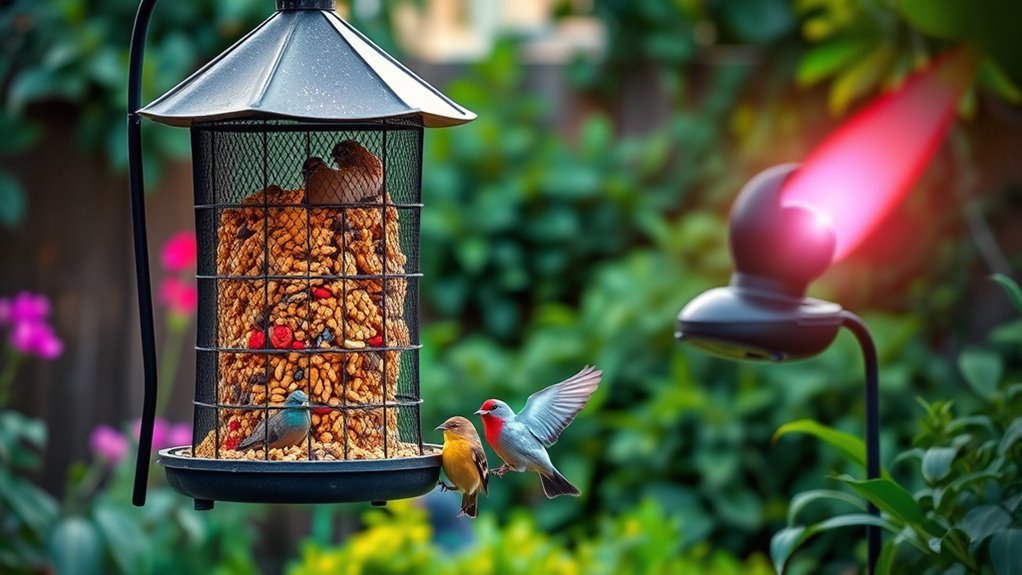
Using the right bird feed formulas can help attract your favorite birds while keeping pigeons away.
Choose high-quality seeds that appeal to songbirds but not to pigeons. Good options include sunflower seeds, millets, and safflower seeds, as these are less attractive to pigeons.
Opt for formulas that provide a balanced mix of proteins, fats, and vitamins. This balance ensures your birds get the nutrients they need without encouraging pigeons to overindulge.
By selecting the right bird feed, you can create a friendly space for your preferred bird species and discourage pigeons from taking over your feeders.
Enjoy watching the birds you love!
Install Anti-Pigeon Barriers
Install anti-pigeon barriers around your bird feeders to keep unwanted pigeons away.
These barriers help create a calm space for your favorite birds to feed. Here are three simple options to consider:
- Mesh Nets: Place these over feeders. They allow small birds to access food while blocking larger pigeons.
- Spikes: Attach these to ledges and roofs near feeders. They prevent larger birds from landing and taking over.
- Cages: Build a sturdy cage around your feeder. This limits access, ensuring only smaller birds can enjoy the food.
Using these barriers makes feeding birds a more enjoyable experience.
Keep your feeders safe and invite the birds you love!
Incorporate Squirrel-Proof Feeders

Squirrel-proof feeders help keep your feeding station focused on birds you want to attract. By choosing feeders made from squirrel-resistant materials, you can ensure your birdseed is available only to your desired birds.
Look for feeders with features like weight-sensitive perches or protective cages that stop squirrels. Adjustable height settings allow you to raise the feeders high enough to keep squirrels away while still being accessible to birds. Some feeder designs also make it hard for squirrels to grip.
Position Feeders Strategically
To attract various birds and keep pigeons away, position your feeders wisely. Use these tips:
- Feeder Height: Place feeders 5-6 feet above the ground. This height makes it difficult for pigeons to reach them while allowing small birds to access food easily.
- Natural Cover: Position feeders near trees or shrubs. This provides safety for small birds and makes it less likely for pigeons to get to the feeders.
- Choose Protected Spots: Avoid placing feeders in open areas, as pigeons like those spots. Instead, pick places with some shelter or coverage.
Utilize Scare Tactics
Pigeons can still visit your bird feeders, even if you place them carefully. To keep these unwanted birds away, use scare tactics.
Sound devices like ultrasonic repellers make sounds that will drive away pigeons without bothering smaller birds. Visual distractions, such as shiny ribbons or reflective tape, can also confuse and scare pigeons off.
Another option is to set up predator decoys, like plastic owls, that mimic threats. These strategies will help protect your feeders and attract birds you want.
Limit Feeding Times
Limit Feeding Times
To discourage pigeons from visiting your backyard, limit feeding times. A structured feeding schedule can help you attract your preferred birds while keeping pigeons away.
Here are some simple tips:
- Set Specific Feed Times: Choose two or three specific times each day.
- Observe and Adjust: Watch bird activity to find the best times for feeding.
- Stick to the Routine: Follow your schedule so your favorite birds learn when to visit.
By following these steps, you can create a better environment for the birds you want to see.
Enjoy watching them!
Keep the Area Clean
Keeping your bird feeding area clean helps keep pigeons away and attracts your favorite birds. A clean space reduces the food that can draw in unwanted pigeons. Sweep away fallen seeds and regularly clean your feeders.
Check for stale or spoiled food, as this can easily attract nuisance birds. Also, include bird baths in your cleaning routine to create a welcoming space for songbirds.
Employ Natural Deterrents
To keep pigeons away from your bird feeders, you can use natural deterrents.
These deterrents use strong scents that pigeons dislike. Here are three effective options:
- Peppermint Oil: The strong smell of peppermint can keep pigeons away while still being friendly to other birds.
- Cayenne Pepper: Sprinkling cayenne pepper around can discourage pigeons without causing them harm.
- Vinegar Spray: A spray made with vinegar can deter pigeons due to its strong odor.
Using these methods can create a more peaceful environment for other birds at your feeders.
Provide Alternative Food Sources
To deter pigeons and attract a variety of birds to your feeders, offer alternative food sources. Use seed types like nyjer seeds, safflower seeds, or mealworms to draw in smaller, colorful birds while keeping pigeons away.
These foods typically don't appeal to pigeons, allowing birds like finches and chickadees to visit your feeders.
You can also provide wild bird feed blends that cater to specific bird types. Look for mixes with smaller seeds and unique ingredients that those birds enjoy.
By varying the food you offer, you can create an inviting space for different birds, enhancing your backyard birdwatching experience.
Enjoy watching the diverse community of birds that visit!
Educate Your Neighbors
Educating your neighbors about pigeon issues can greatly improve your backyard birding experience.
Building community awareness fosters a more peaceful atmosphere. Here are three simple ways to encourage discussion:
- Share Facts: Talk about how pigeons affect local feeders. Explain ways to reduce their numbers.
- Team Up for Solutions: Collaborate with your neighbors to use pigeon-proof feeders and set specific feeding times.
- Organize a Neighborhood Gathering: Host an informal meeting for everyone to share their experiences and solutions, creating a united approach to address pigeon concerns.
Frequently Asked Questions
What Types of Birds Do Pigeons Compete With for Food?
Pigeons compete for food with sparrows, doves, and starlings. Pigeons often feed aggressively, which can push smaller birds away and intensify competition for food. Knowing this can help you improve your backyard feeding practices.
Can Pigeons Damage Bird Feeders?
Yes, pigeons can damage bird feeders. Their large size and aggressive feeding can cause problems with feeders. They may break feeders or eat too much seed, which affects the smaller birds you want to attract. This can disrupt your bird feeding experience.
Are There Specific Bird Feed Ingredients That Repel Pigeons?
Certain bird seed additives can help keep pigeons away. Ingredients like red pepper flakes and safflower seeds are effective in repelling them. These additives attract smaller birds that you want at your feeders. Use these ingredients to create a bird-friendly environment. Enjoy watching a variety of birds without the presence of pigeons.
How Do Pigeon Deterrents Affect Other Bird Species?
Pigeon deterrents can sometimes harm other bird species. These methods may keep away not only pigeons but also desirable birds from accessing feeders. This can change your birdwatching experience. It's important to find a balance so that all types of birds can benefit from the feeders.
Do Weather Conditions Influence Pigeon Feeding Behavior?
Weather conditions significantly affect pigeon feeding behavior. Seasonal changes influence their activity. Temperature also impacts their foraging habits. Pigeons are more active and search for food more often on warmer days. They adapt their feeding patterns based on the weather, showing a clear link between the two.

Hello, I’m Amelia White, the founder of birdsfanatic.com. As a lifelong bird enthusiast and spiritual seeker, I’ve always been fascinated by the mystical connections between birds and the human experience. On this site, I share my knowledge and insights into the symbolic meanings and spiritual significance of various bird species, exploring their roles in mythology, folklore, and cultural traditions. Join me on this journey into the world of birds, where we’ll discover the hidden wisdom and guidance that these magnificent creatures have to offer.