
How to Prevent Chipmunks From Accessing Your Bird Feeder
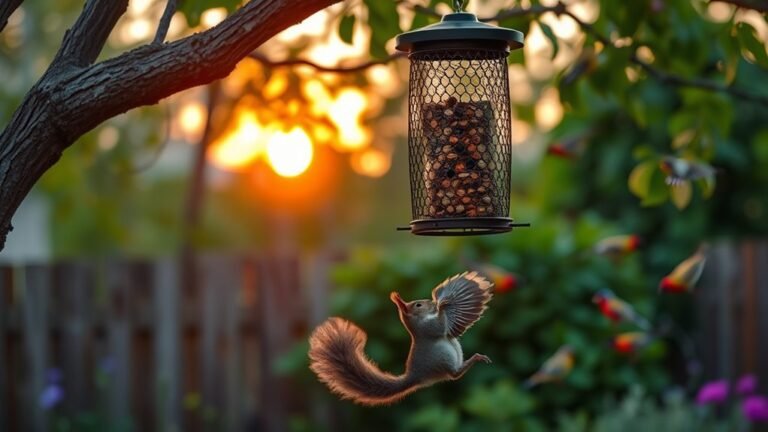
To prevent chipmunks from getting into your bird feeder, you need to understand their habits. Chipmunks are quick and clever, which makes them a tough problem for bird lovers. By choosing the right type of feeder and using some smart techniques, you can help keep them away. Here are practical tips to protect your feeder and let your birds eat in peace.
- Choose Chipmunk-Proof Feeders: Look for feeders designed to keep small animals out. Some feeders have weight-sensitive perches or cages that only allow birds to access the food.
- Use Baffles: Install a baffle on the feeder pole. This is a smooth, dome-shaped barrier that prevents chipmunks from climbing up to the feeder.
- Keep the Area Clean: Regularly clean up spilled seed around the feeder. This can reduce food sources that attract chipmunks.
- Change Food Types: Use bird seed that chipmunks do not like, such as safflower seeds. This can deter them from raiding the feeder.
- Create Distance: Place the feeder in an open area away from shrubbery or structures that chipmunks can use to jump onto the feeder.
By following these steps, you can enjoy watching your birds without chipmunks interrupting their meals.
Key Takeaways
- Use tube feeders or squirrel-proof feeders with weight-sensitive features to limit chipmunk access.
- Elevate feeders at least five feet high without nearby vegetation to deter chipmunks.
- Install a fence around the feeding area, burying it underground to prevent burrowing.
- Apply distasteful repellents like cayenne pepper or garlic spray around feeders.
- Clear debris and adjust feeding times to minimize chipmunk attraction to your yard.
Understanding Chipmunk Behavior

To stop chipmunks from raiding your bird feeders, you must learn about their habits.
Chipmunks look for seeds and nuts, which make bird feeders very attractive to them. They like to gather and store food to prepare for winter. They're more active in spring and fall, as they collect food for storage.
Knowing this, you can adjust when and what you feed the birds to reduce chipmunk visits. Secure your bird feeders and clear away any debris on the ground. This will help keep chipmunks away, allowing your birds to eat without interruption.
Choosing the Right Bird Feeder
Understanding chipmunk behavior is important for choosing the right bird feeder. To keep chipmunks away, consider tube feeders. Their narrow openings make it hard for chipmunks to access seeds.
You should also look for feeders with squirrel-proof features, such as weight-sensitive perches that close when heavier animals try to eat.
The materials of the feeders matter too. Metal and heavy-duty plastic resist chipmunk chewing and climbing. Avoid wooden feeders, as chipmunks can easily access them.
Elevating Your Bird Feeder
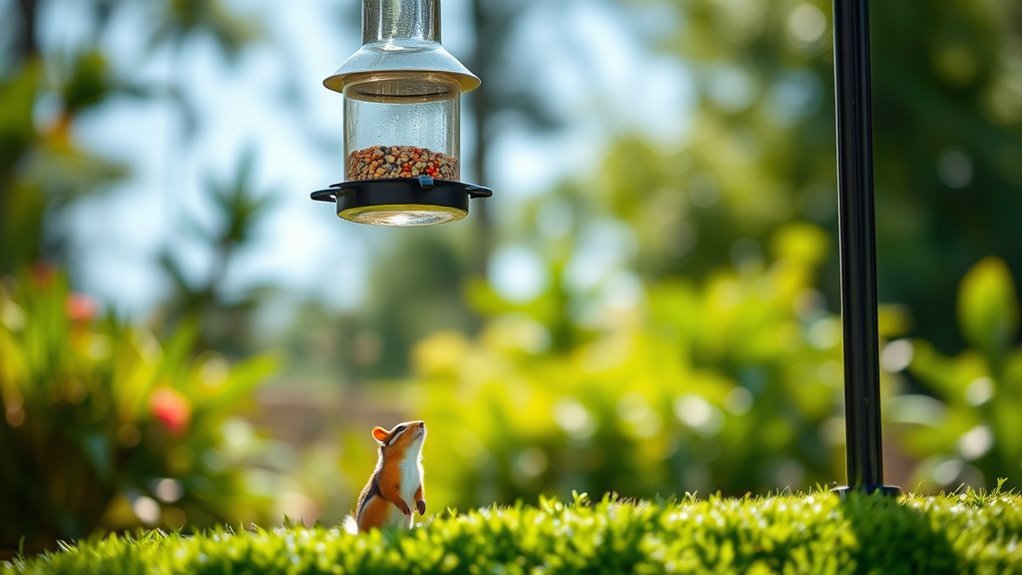
Elevating your bird feeder can keep chipmunks away while making it easier for birds to access food. Here are some simple ways to elevate your feeder:
- Use a pole feeder that stands tall above the ground.
- Select a hanging feeder that swings, which makes it harder for chipmunks to reach.
- Place feeders at least five feet high on a sturdy structure.
- Ensure there's no vegetation or obstacles below the feeder to prevent chipmunks from getting close.
These methods help attract more birds and enhance the look of your backyard.
Regularly using these tips can create a friendly space for different bird species while keeping chipmunks at a distance.
Enjoy watching the birds visit your elevated feeder!
Implementing Physical Barriers
To keep chipmunks away from your bird feeders, use physical barriers. One effective method is to install a fence around your feeding area. Select a fence that's at least two feet high, and bury the bottom a few inches underground to stop burrowing.
You can also choose squirrel-proof feeders or those with weight-sensitive features. These close off access when a chipmunk tries to feed.
Place the feeder on a pole with a baffle to block these determined rodents.
Using Distasteful Repellents
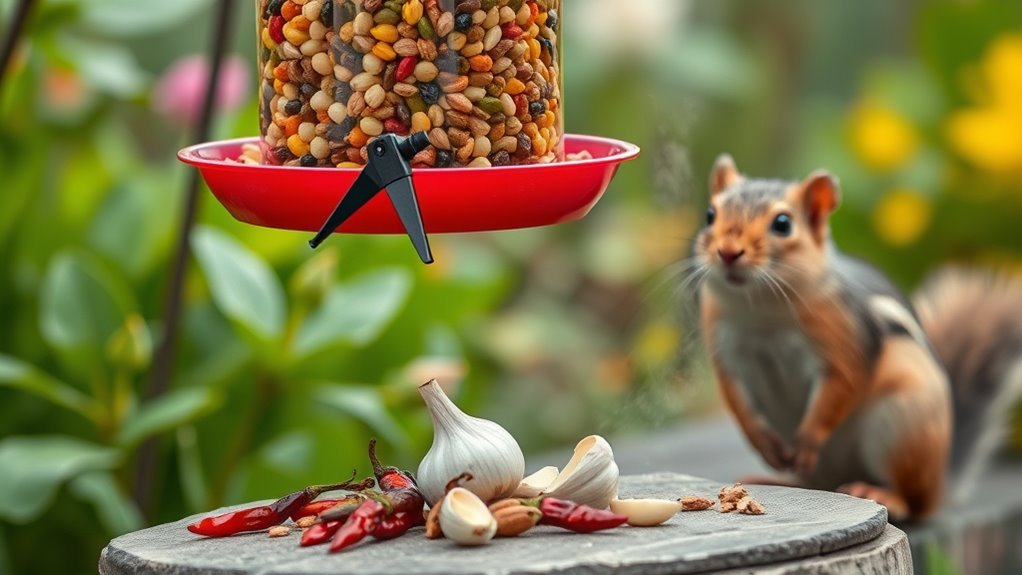
To stop chipmunks from reaching your bird feeders, use physical barriers and add distasteful repellents for better results. You can choose between natural and commercial options.
Here are some methods:
- Cayenne pepper or chili powder: Sprinkle these around your feeder. Chipmunks dislike the taste.
- Garlic spray: This natural option repels chipmunks effectively.
- Vinegar solution: A mix of water and vinegar can deter chipmunks due to its strong smell.
- Commercial repellents: Use products specifically made for rodents.
Using these distasteful repellents provides extra protection, allowing your birds to feed peacefully without interruption.
Maintaining a Clean Feeding Area
To keep chipmunks away, maintain a clean feeding area. Clean your bird feeder regularly and remove any spilled seeds from the ground.
Make a habit of taking away uneaten seeds daily, as chipmunks can quickly learn to visit your feeder for food. Store seeds in a secure, airtight container to keep them fresh and reduce odors that may attract chipmunks.
Providing Alternative Food Sources
Provide alternative food sources to keep chipmunks away from your bird feeders.
This method also helps support a balanced ecosystem in your yard.
Set up feeding stations to redirect chipmunks while benefiting other wildlife.
Here are some distraction foods to consider:
- Sunflower seeds: Chipmunks love them, making them a great bait.
- Peanuts in the shell: These are high in fat and protein, appealing to chipmunks but safe for birds.
- Fruits and vegetables: Use overripe items to nourish chipmunks and other critters.
- Corn kernels: These are cheap and attract chipmunks effectively.
Using these options can keep your bird feeders free from chipmunks and enhance biodiversity in your garden.
Frequently Asked Questions
What Attracts Chipmunks to My Bird Feeder?
Chipmunks are drawn to bird feeders because they find birdseed that is easy to access. If your feeders are near shrubs or ground cover, this makes it even more inviting for them to come by for a snack.
Can Chipmunks Damage My Bird Feeder?
Yes, chipmunks can damage your bird feeder. They often gnaw on it, especially if it is made of soft materials. To protect your feeder, choose durable materials that are harder for chipmunks to damage. This will help keep your bird feeder safe from their interference.
Are There Specific Bird Feeder Designs That Deter Chipmunks?
Certain bird feeder types, such as tube feeders and those with barriers, keep chipmunks away. These designs protect your bird feed and create a better space for the birds you enjoy watching. Opt for these feeders to ensure a chipmunk-free area while attracting your favorite birds.
How Do Seasonal Changes Affect Chipmunk Activity?
Seasonal changes affect chipmunk activity significantly. As temperatures change, chipmunks adjust their behavior based on food availability. They become more active in spring and summer when food is plentiful. In contrast, their activity decreases in autumn and winter due to limited resources.
Understanding these patterns helps in observing chipmunks throughout the seasons. In warmer months, they gather and store food for colder times. As winter approaches, their movements slow down, showing a clear adaptation to their environment. This cyclical behavior showcases their resilience and survival strategies in response to seasonal shifts.
What Time of Day Are Chipmunks Most Active Around Feeders?
Chipmunks are most active around feeders in the morning and evening. During these times, they search for food and interact with each other. It's helpful to watch them during these periods to learn more about their habits.

Hello, I’m Amelia White, the founder of birdsfanatic.com. As a lifelong bird enthusiast and spiritual seeker, I’ve always been fascinated by the mystical connections between birds and the human experience. On this site, I share my knowledge and insights into the symbolic meanings and spiritual significance of various bird species, exploring their roles in mythology, folklore, and cultural traditions. Join me on this journey into the world of birds, where we’ll discover the hidden wisdom and guidance that these magnificent creatures have to offer.