Tips for Keeping Cats Away From Bird Feeders
To keep cats away from your bird feeders, focus on strategic placement and modifications. First, choose a location for your feeders that is difficult for cats to access. You can also add barriers, such as poles or fences, to block their path. Consider using bird feeders with designs that prevent cats from reaching the birds. These changes can significantly improve the safety of the birds. Remember, creating a safe space for birds is essential for their well-being, and finding ways to keep cats away can help achieve that. Enjoy watching the birds while feeling good about their protection!
Key Takeaways
- Position bird feeders at least 10 feet away from trees and bushes to reduce hiding spots for cats.
- Use cat-proof feeders with baffles and elevate them to prevent access by ground predators.
- Install a strong fence or use hardware cloth barriers to deter cats from approaching feeders.
- Employ motion-activated deterrents that create sounds or lights when cats are detected near feeders.
- Distract cats with colorful garden art and provide alternative food sources like homemade treats.
Choose the Right Location for Your Bird Feeders
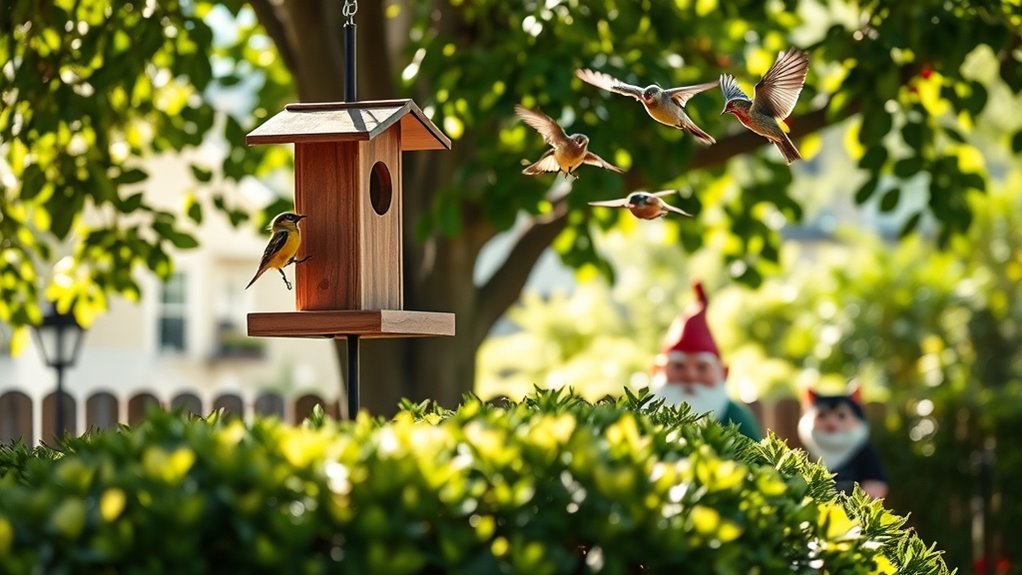
Choosing the right spot for your bird feeders is important for attracting birds and keeping cats away. Place your feeders at least 10 feet from bushes or trees where cats could hide.
Install feeders on poles at least five feet high to keep ground predators, like cats, at bay. Ensure there's an open area around the feeders for birds to see any possible dangers.
If you can, add native plants around the feeders to create a mixed habitat that offers shelter for the birds. By carefully selecting the placement of your feeders, you'll create a safe space that encourages birds to visit while reducing the risk of cats interfering.
Opt for Cat-Proof Bird Feeders
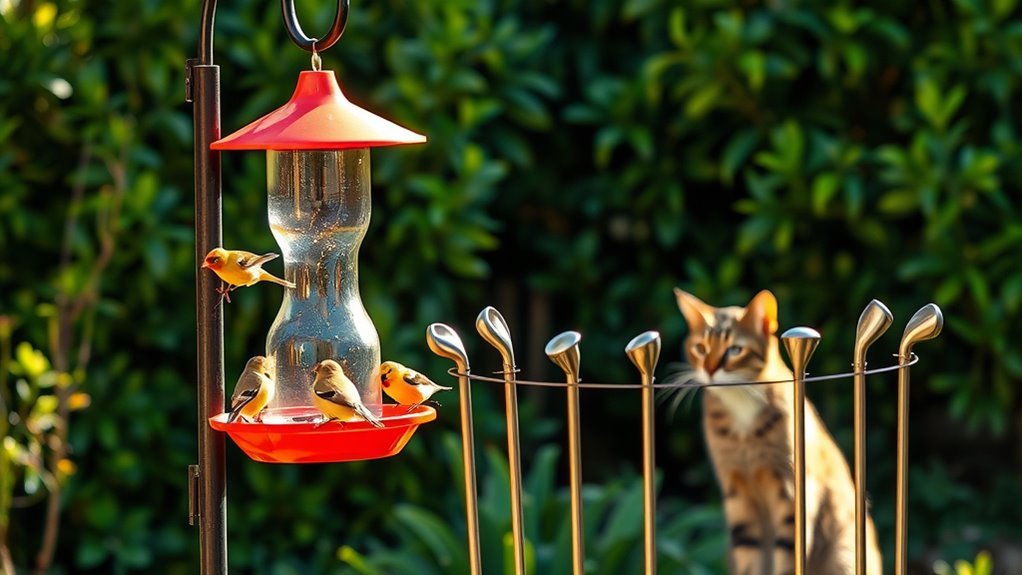
Protect your birds by using cat-proof bird feeders. Choose feeders designed to limit cat access while allowing birds to feed easily. Sturdy materials like metal or strong plastic can resist cat interference, ensuring the feeders last longer.
Some models have baffles that keep cats away from the food area. Elevating the feeders will also help, placing them out of a cat's reach.
Install a Surrounding Barrier

To protect your birds, install a barrier around your bird feeder area. A good fence keeps cats away from your birds.
Choose from these materials:
- Hardware cloth – This strong mesh prevents cats from entering.
- Wooden or vinyl fencing – A solid fence makes it hard for predators to approach.
- Live plants – Thorny shrubs can stop cats and enhance your yard's beauty.
Each option provides safety for birds.
Installing a barrier shows you care about wildlife and encourages others to do the same.
Utilize Feeders With Height and Distance
Placing bird feeders up high helps keep birds safe from cats. Aim for feeder heights of 6 to 10 feet off the ground. This makes it hard for cats to reach them or jump from nearby spots.
Also, keep feeders 10 to 12 feet away from fences, trees, or other places where cats can hide. By choosing these locations wisely, you create a safe feeding area. This way, birds can eat without worrying about cat attacks.
Your efforts support a healthy space for birds to thrive.
Create a Safe Space for Birds
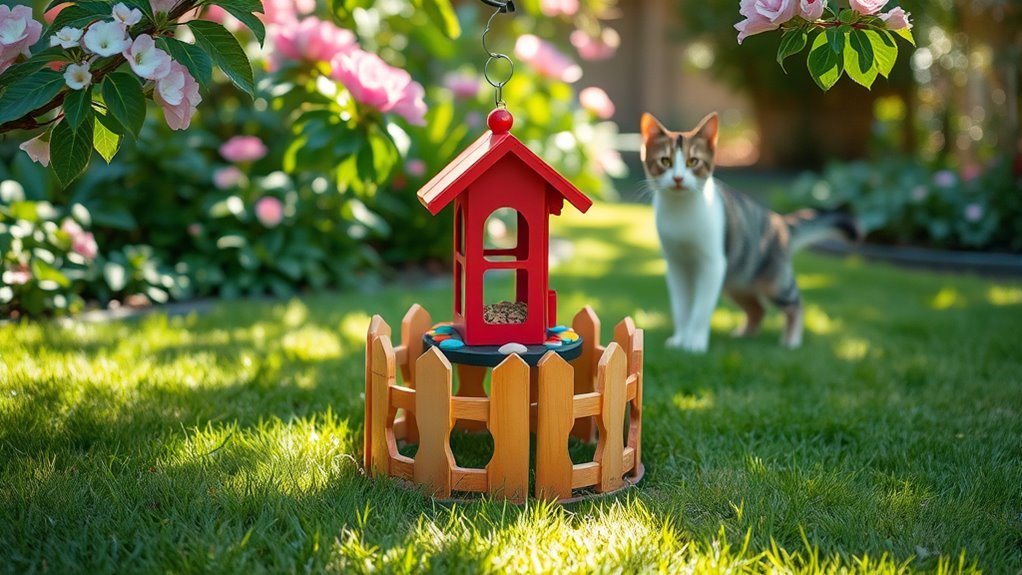
Creating a safe space for birds requires careful planning. Here are key steps to build a bird-friendly habitat:
- Native plants: Use local plants to provide food and shelter for birds.
- Nesting sites: Set up birdhouses or leave natural cavities for breeding.
- Hiding spots: Add bushes or shrubs to help birds hide from threats and feel safe.
Use Motion-Activated Deterrents
Creating a secure space for birds is essential. Additionally, protecting this space from predators like cats is crucial. Motion-activated deterrents effectively address this issue.
These devices use sensors to detect nearby cats and trigger sounds, lights, or sprays that discourage them. Install these deterrents near bird feeders to create a protective barrier.
It is important to use humane methods. Non-lethal deterrents help protect birds without harming other wildlife. If a cat remains persistent, consider using humane traps for relocation.
Plant Cat-Repellent Flora
To keep cats away from your bird feeders, plant cat-repellent flora.
These plants can effectively deter cats without using chemicals.
Here are three plants you can add to your garden:
- Lavender – Its strong scent repels cats while being pleasant for humans.
- Rue – This herb gives off odors that cats dislike, making it a strong repellent.
- Coleus canina – Known as the "scaredy-cat plant," it effectively drives cats away.
Incorporating these plants into your garden will help create a cat-free area for your birds.
Enjoy your garden and the peace it brings!
Employ Visual Distractions
Visual distractions can help reduce a cat's interest in your bird feeders. Using bright colors and unique patterns in your garden can shift a cat's focus away from the feeders.
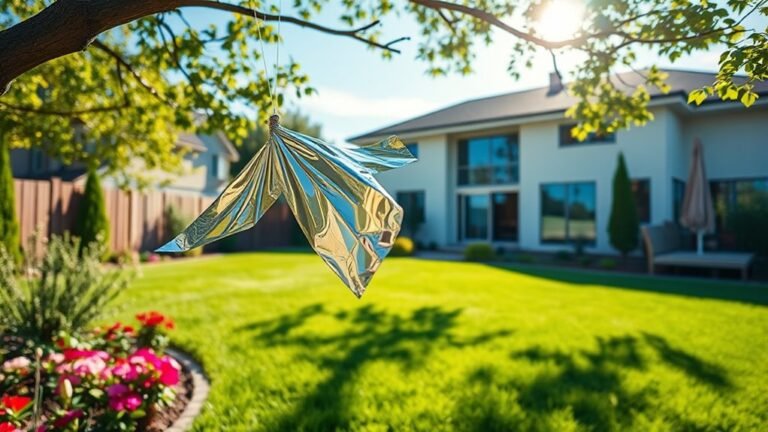
Cats are sensitive to movement and color, so creating eye-catching visuals can grab their attention. You can add colorful garden art, shiny objects, or wind spinners that move in the wind.
These items improve your garden's appearance and can also confuse a cat's hunting instincts. Place distractions between the cat's view and the bird feeders to break their focus.
Provide Alternative Food Sources for Cats
Providing alternative food sources for cats can help reduce their interest in your bird feeders. When your cats have enough satisfying meals, they're less likely to chase birds. Here are some good options:
- Homemade cat treats – Make tasty snacks using simple ingredients that cats enjoy.
- Nutritional supplements – Add these to their diet to keep them healthy and happy.
- Variety of wet food – Offer different flavors and textures to keep meals interesting for your cats.
Regularly Clean Up Spillage
Regular spillage of birdseed can attract cats and unwanted animals. Therefore, it's important to clean up any spilled seeds under your bird feeders often.
To achieve this, set up a cleanup schedule to collect fallen seeds quickly. This will help prevent cats from being drawn to your yard and also keep your garden looking nice.
Use tools like a broom or an outdoor vacuum to make the cleanup easier. A clean feeding area helps protect birds and keeps your neighborhood pleasant.
Educate Your Neighbors About Responsible Pet Ownership
Cleaning up spilled birdseed is one step in making a bird-friendly space.
Teaching your neighbors about responsible pet ownership can strengthen your community and protect local wildlife. You can organize or join community workshops on this topic.
- Share knowledge: Teach your neighbors how free-roaming pets affect birds.
- Encourage solutions: Talk about how to keep cats indoors or in secure areas, showing respect for wildlife.
- Promote responsibility: Show that responsible pet ownership can make your neighborhood more beautiful and support local biodiversity.
Frequently Asked Questions
What Type of Birds Are Most Attracted to Feeders?
Many birds are attracted to feeders, especially those that enjoy seeds like sunflower or safflower. Different bird species prefer different seeds. By offering a variety of seeds, you can attract a diverse group of birds to your feeder. Watching these birds can be a fun and rewarding experience.
How Often Should I Refill Bird Feeders?
You should refill bird feeders every few days. Adjust the frequency based on how many birds visit and how quickly they consume the seeds. Keeping your feeders full attracts more birds to your yard and helps maintain their food supply. Regular maintenance ensures your outdoor space remains lively and engaging.
Can Bird Feeders Be Placed Closer to the Ground?
You can place bird feeders close to the ground, but think about bird safety. When feeders are low, they may attract predators, which can keep birds away. Feeders placed higher up usually give birds better protection.
Are There Specific Times When Birds Feed the Most?
Birds usually feed the most in the early morning and late evening. You can observe their increased activity during these times as they look for food. This behavior helps them gather energy before nightfall and after sunrise.
How Do I Clean My Bird Feeder Properly?
To clean your bird feeder properly, follow these steps:
- Remove all seed from the feeder.
- Wash the feeder with warm, soapy water. Use a brush to scrub hard-to-reach areas.
- Rinse the feeder thoroughly with clean water.
- Allow the feeder to dry completely before refilling it with seed.
Regular cleaning helps prevent disease and keeps your birds safe. Enjoy watching your feathered friends thrive with a clean feeding area!

Hello, I’m Amelia White, the founder of birdsfanatic.com. As a lifelong bird enthusiast and spiritual seeker, I’ve always been fascinated by the mystical connections between birds and the human experience. On this site, I share my knowledge and insights into the symbolic meanings and spiritual significance of various bird species, exploring their roles in mythology, folklore, and cultural traditions. Join me on this journey into the world of birds, where we’ll discover the hidden wisdom and guidance that these magnificent creatures have to offer.