

Using Wind Chimes as a Bird Deterrent: Do They Work?
Using wind chimes as a bird deterrent can seem like a simple solution. However, the results can vary. Some studies show that birds react differently based on their behavior and the sounds they hear. Some homeowners report success with wind chimes, while others find that birds quickly get used to the noise. To determine if wind chimes will work for you, consider the specific factors that may affect their effectiveness. What aspects of your environment and bird activity could influence your results?
Key Takeaways
- Wind chimes can deter birds by producing sounds that disrupt their feeding and nesting behaviors, depending on the chime's material and sound frequency.
- Metal chimes create sharper, more irritating sounds for birds, while bamboo chimes produce softer tones that may have less deterrent effect.
- The effectiveness of wind chimes as bird deterrents varies based on the bird species and their adaptability to noise over time.
- Proper placement, such as hanging chimes 5 to 7 feet above ground, can enhance sound projection and coverage in the garden.
- Regular maintenance and adjustments to chime placement may be necessary for continued effectiveness due to changing environmental conditions and bird behavior.
The Allure of Wind Chimes: Aesthetic Appeal

Wind chimes add beauty to outdoor spaces. They not only bring relaxation but also enhance the aesthetic appeal of gardens. With designs that range from traditional to modern, wind chimes let you showcase your style.
The sounds produced by wind chimes are soothing and create a peaceful atmosphere. When the wind blows, they make music that can help you feel more connected to your environment.
Placing wind chimes in the right spots can attract attention visually and through sound, resulting in a harmonious setting.
Understanding Bird Behavior
Wind chimes can add beauty to your garden.
However, if you want to use them to keep birds away, it's important to understand bird behavior. By watching birds, you can see their nesting and feeding patterns. Many birds are territorial, especially during nesting season, which can affect how they react to new sounds.
Additionally, seasonal migrations influence their presence; migratory birds may stay away from noisy areas. By paying attention to these behaviors, you can determine if wind chimes will effectively deter unwanted birds.
Knowing how different species act allows you to make better choices for your backyard and understand the potential impact of wind chimes.
The Science of Sound: How Wind Chimes Work
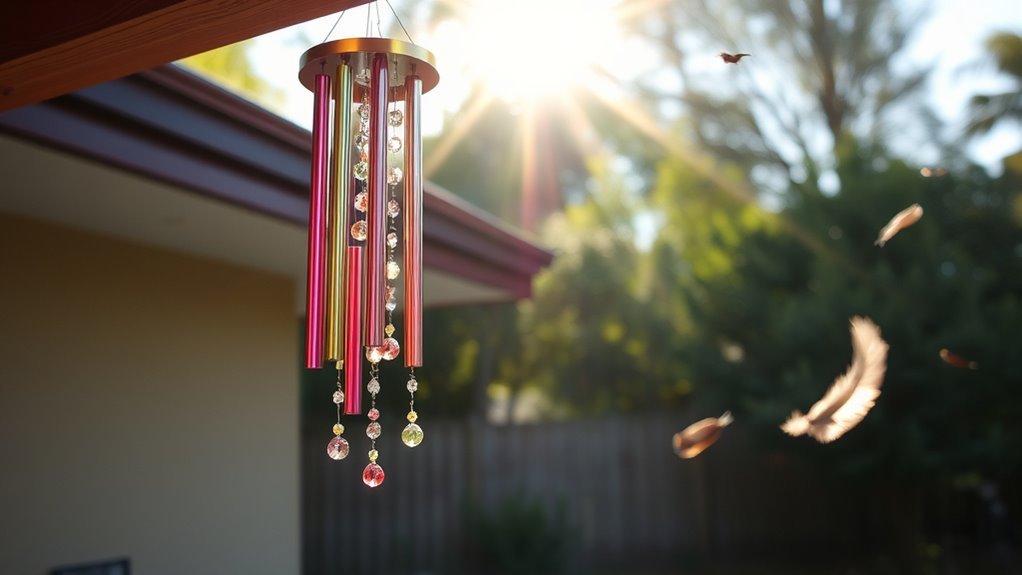
Wind chimes create distinct sounds that can affect bird behavior in your garden. Their design produces various frequencies, offering a range of sounds that birds can hear clearly.
Birds have strong hearing, and they respond differently to different pitches. Some sound frequencies may alarm birds, causing them to stay away from areas with these noises. By placing wind chimes in specific spots, you can influence the sounds around your home and potentially keep unwanted birds away.
The materials used in the chimes also change how they sound, making them more effective. Knowing how this works can help you create an enjoyable outdoor space while managing bird presence.
The Role of Noise in Bird Deterrence
Noise affects bird behavior significantly. It can deter birds from certain areas. Research shows that certain sounds can create environments that birds find unwelcoming. This method is called acoustic deterrence. It uses sound to keep birds away. In cities, noise pollution often replaces natural sounds and changes the behavior of wildlife.
Wind chimes can be effective in this way. They produce sounds that break familiar patterns, which birds perceive as threats. Many people have successfully used this approach. Consistency in sound and its selection is important.
Types of Wind Chimes: Which to Choose?

Choosing the right wind chime can help keep birds away from your property.
Metal chimes produce sharp sounds that can annoy birds. Bamboo chimes have softer tones but create a rustling noise that can also deter birds. If you want something decorative, glass and ceramic chimes look nice while still making sounds.
Tuned chimes create specific pitches, which might work better in some areas. Select chimes that match your outdoor space to create a welcoming environment while discouraging birds.
Try different types to find the best option for your needs.
Effectiveness of Wind Chimes in Deterring Specific Bird Species
Bird species react differently to deterrents like wind chimes. Their sensitivity to sound plays a significant role in their responses.
Here's a breakdown:
- Pigeons often ignore wind chimes because they aren't very sensitive to sound.
- Sparrows may respond to various tones but usually don't find chimes threatening.
- Crows, being intelligent birds, might avoid areas with sudden noises.
- Starlings can be easily startled, which makes them more likely to stray from distractions like wind chimes.
Wind Chimes vs. Other Deterrent Methods
People often look for ways to keep birds away from their property. Wind chimes offer a unique method. They create a soft, gentle noise that can deter birds without causing stress. This contrasts with other methods, like loud noises or chemical repellents, which can be harsh and disturbing.
Wind chimes produce a pleasant sound. They can help prevent bird visits without bothering you or your neighbors. This makes them a great option for anyone who wants to enjoy their outdoor space while keeping unwanted birds away.
Additionally, wind chimes are visually appealing. They serve both as decoration and as a way to control pests, making them a popular choice for enhancing outdoor environments.
Placement Strategies for Maximum Impact
To effectively deter birds using wind chimes, follow these placement strategies:
- Hang it high: Place your chimes 5 to 7 feet above the ground to ensure they're visible.
- Spread out: Position chimes throughout your garden or patio to cover more area, making it harder for birds to find safe spots.
- Clear the area: Avoid placing chimes near larger objects to keep their sound and visual impact strong.
- Catch the wind: Hang chimes in locations that allow them to catch the wind easily. Position them to face the direction of prevailing winds for the best sound.
Using these strategies can enhance the effectiveness of your wind chimes in keeping birds away.
Combining Wind Chimes With Other Bird Control Techniques
Combining wind chimes with other bird control techniques makes your property less inviting for birds. This method uses multiple strategies to increase effectiveness.
For example, you can attach reflective surfaces, like aluminum foil or mirrors, to enhance visual confusion for birds. Adding rough materials near the wind chimes can create different sounds that further disrupt normal bird behavior.
Using these elements together captures birds' attention and alters their environment. This results in a bird-free area that enhances your outdoor enjoyment.
Factors Influencing Success: Environment and Location
The effectiveness of wind chimes as bird deterrents depends on the installation environment and location. To improve their performance, consider these important factors:
- Wind patterns: Strong winds spread sound better.
- Landscape features: Open areas boost sound but may lack visual distractions for birds.
- Urban settings: Background noise can reduce the effectiveness of wind chimes, making higher sound frequency necessary.
- Wildlife habits: Birds may adjust to sounds with seasonal changes; some can become familiar with wind chimes over time.
When choosing a place for your wind chimes, assess the local habitat. These factors influence how successful your deterrent will be.
Adapting to your environment will help create a better area for the wildlife you want to attract.
Maintenance and Care of Wind Chimes
Regular maintenance of wind chimes is important for their durability and effectiveness as bird deterrents. Inspect your chimes frequently for any debris or damage.
Clean them using a soft cloth and mild soap to prevent buildup that can affect sound quality. If your chimes are outside, look for rust or corrosion, especially on metal parts. Apply a rust-resistant spray or sealant if necessary.
Ensure all parts and strings are secure to maintain their function and sound. During severe weather, consider storing them indoors to help prolong their lifespan.
Following these care tips will improve their deterrent effect and create a pleasant environment you can enjoy throughout the year.
Creating a Harmonious Outdoor Space
Maintaining wind chimes improves their lifespan and enhances your outdoor space. Proper placement can boost the beauty of your area and create a peaceful atmosphere.
To achieve this, follow these tips:
- Select chimes that produce calming sounds to encourage relaxation.
- Place them near seating areas to attract attention.
- Choose natural materials that match your surroundings.
- Add plants or flowers to complement the chimes visually.
With these steps, you can enjoy a tranquil outdoor environment, enriching your connection to nature.
Personal Experiences: Success Stories and Challenges
Many homeowners use wind chimes to beautify their gardens and keep birds away. Personal stories differ: some say wind chimes work well, while others meet challenges.
For example, one person placed wind chimes near fruit trees and saw fewer birds. In contrast, another found that local birds got used to the noise over time.
The success of wind chimes can depend on the bird type and the chime's sound. Through these experiences, it's clear that wind chimes can be effective, but success often requires patience and adjustment.
Frequently Asked Questions
How Do Wind Chimes Affect Other Wildlife Besides Birds?
Wind chimes produce sounds that affect wildlife differently. Animals respond to the sound frequencies in various ways. Some animals may feel attracted to the sounds, while others may feel scared or deterred. This reaction can change how they behave in their environment. For example, small mammals might avoid areas with strong chime sounds, while certain insects might be drawn to them. Understanding these responses helps us see how wind chimes interact with local wildlife.
Can Wind Chimes Deter All Birds Effectively or Just Certain Types?
Wind chimes may deter some bird species but not all. Some birds may find the sounds of wind chimes unsettling, causing them to leave the area. Other birds, however, may get used to the noise over time. To achieve the best results, evaluate your location and observe the types of birds you have. This assessment can guide you in using wind chimes effectively.
What Materials Are Best for Wind Chimes in Bird Deterrence?
To deter birds, use aluminum or copper wind chimes. These metals create high sound frequencies. These sounds disrupt birds' comfort zones. As a result, birds are more likely to leave for quieter areas.
Do Wind Chimes Lose Effectiveness Over Time or With Wear?
Wind chimes can lose their effectiveness over time due to wear. This wear can change the sound frequency they produce. To ensure wind chimes work well, you should clean and tune them regularly. This upkeep helps them continue making sounds that deter unwanted birds effectively. Proper care keeps your wind chimes producing clear and pleasant sounds for a long time.
Are There Specific Seasonal Times When Wind Chimes Are More Effective?
Wind chimes work best in spring when birds migrate and look for nesting spots. Knowing this seasonal behavior allows you to place chimes effectively. This helps keep birds away when they are most active.

Hello, I’m Amelia White, the founder of birdsfanatic.com. As a lifelong bird enthusiast and spiritual seeker, I’ve always been fascinated by the mystical connections between birds and the human experience. On this site, I share my knowledge and insights into the symbolic meanings and spiritual significance of various bird species, exploring their roles in mythology, folklore, and cultural traditions. Join me on this journey into the world of birds, where we’ll discover the hidden wisdom and guidance that these magnificent creatures have to offer.