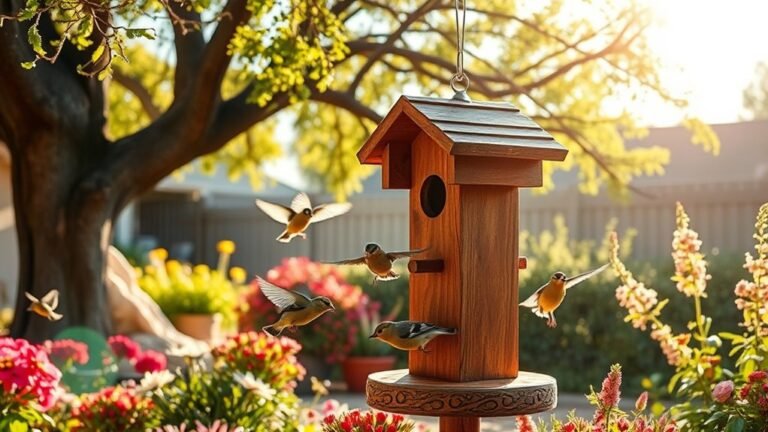

Identifying Black and Red Birds in Nature
Identifying black and red birds in nature can be fun and rewarding. Focus on key features like their colors, sizes, and behaviors. For example, the Northern Cardinal and the Scarlet Tanager have vivid colors that can either stand out or blend in with their surroundings. Observe where they live and listen to their calls. This knowledge will help you spot them more easily. What new birds will you find on your next outing?
Key Takeaways
- Look for bright red feathers and black bodies, especially in males, to identify black and red bird species.
- Observe the size, bill shape, and unique patterns of red feathers for accurate species identification.
- Pay attention to mating displays such as singing, chest puffing, and intricate flight patterns during the breeding season.
- Note their feeding habits, which can range from seeds to insects, often observed in urban parks or forest edges.
- Utilize birding apps for images and sounds to assist with proper identification and enhance your birdwatching experience.
Overview of Black and Red Bird Species
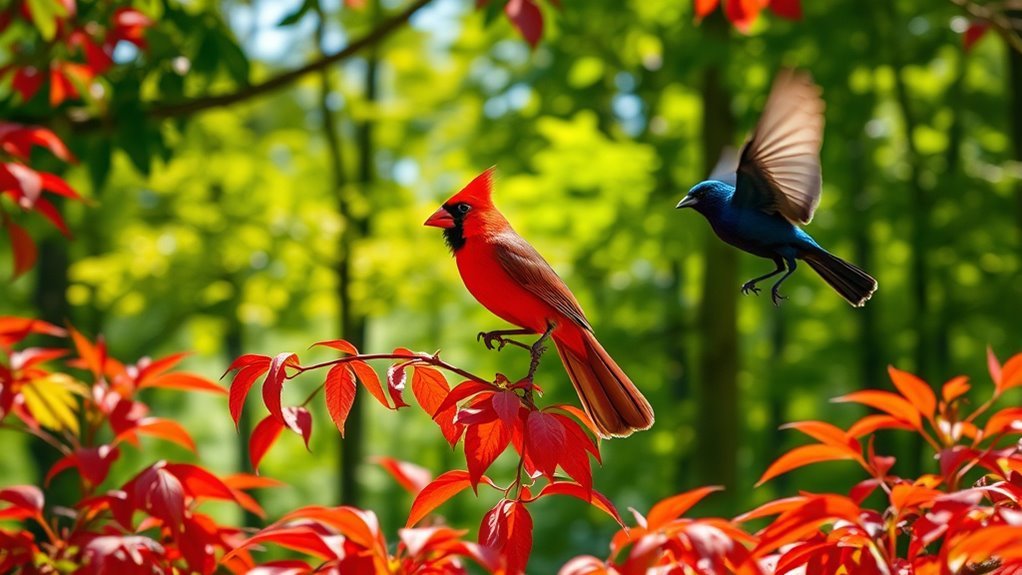
When you see black and red birds in nature, you'll discover interesting species that highlight the contrast between these colors.
You may spot northern cardinals, with their bright red feathers and black masks. You might also observe red-winged blackbirds, which show red patches on their shoulders during courtship.
Birding apps can help you by providing images and sounds that improve your learning.
Pay close attention to red feather identification; the shape and patterns matter for telling different species apart.
Each sighting deepens your connection to nature and the bird-watching community, encouraging you to share your experiences with others.
Key Characteristics to Identify
To identify black and red birds, observe their physical traits and behaviors. Look for color patterns; males usually have bright red feathers with black bodies.
Note their size and bill shape, which differ among species. Watch for mating displays during the breeding season; males may puff up their chests, sing, or fly in intricate patterns to attract females.
Their feeding habits provide more clues; some birds eat seeds, while others hunt insects or look for food in trees. Pay attention to their postures while feeding or interacting, as this can help you tell species apart.
Recognizing these traits will enhance your appreciation for nature.
Common Habitats for Black and Red Birds

You often see black and red birds in various habitats.
In cities, look for them in parks, gardens, and streets. They adapt well to human presence and often search for food scraps.
In forest areas, these birds thrive due to the abundant vegetation that offers cover and nesting sites. You can find them moving between branches, their bright colors standing out against green leaves.
Pay attention to the edges of forests, where sunlight shines through. These areas are great for foraging and socializing.
Notable Species of Black and Red Birds
In parks and forests, several black and red birds catch attention with their color and behavior.
The Scarlet Tanager stands out with bright red underparts and a black back, making it a stunning sight in summer.
The Northern Cardinal, known for its striking red color and unique crest, builds nests in dense shrubs.
The Red-winged Blackbird is known for its ability to mimic various calls, showing its adaptability.
Watching these birds enhances your appreciation for their beauty and connects you to nature.
Behavioral Traits to Observe
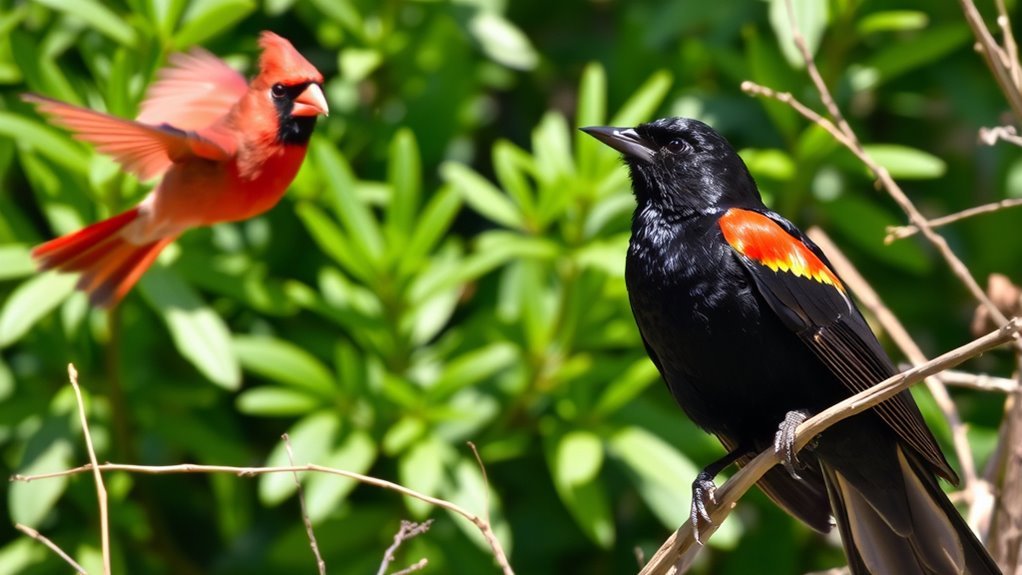
Observing the behavior of black and red birds offers interesting insights to improve your birdwatching experience.
Here are three main behaviors to watch for:
- Feeding Habits: Look at how they search for food. Do they prefer seeds, insects, or nectar? Different species have different methods.
- Social Interactions: Pay attention to how they communicate and interact in groups. Their calls and body movements can show who's in charge or who's friendly.
- Territorial Displays: Watch their behaviors during mating seasons. These actions reveal their unique personalities and habits.
By focusing on these traits, you can better appreciate the world of birds.
Happy birdwatching!
Tips for Birdwatching in the Field
To improve your birdwatching experience, you need the right tools and knowledge. Start with essential gear: binoculars with good magnification, a field notebook for notes, and a bird guide specific to your area.
Knowing how to use tools is also important. Practice identifying bird calls and songs; these sounds can help you find birds.
When you see a bird, move slowly to avoid scaring it. Be patient and watch carefully.
Join local birdwatching groups to learn from experienced watchers and ask questions.
With good preparation and support from others, you'll connect more deeply with birds. Enjoy your birdwatching!
The Importance of Bird Conservation
Birds add beauty to our environment, but their conservation is vital for ecosystem health. They contribute to pollination, seed dispersal, and pest control.
Here are three important points about bird conservation:
- Protecting Habitats: We must safeguard the places where birds live. This is crucial for their survival and supports a wide variety of other species.
- Sustainable Practices: Using methods like sustainable farming helps reduce habitat damage. This ensures that birds have safe spaces to thrive.
- Population Monitoring: We should keep track of bird populations. This helps us spot species that are declining and directs our conservation efforts effectively.
Frequently Asked Questions
Are There Myths or Folklore Associated With Black and Red Birds?
Many cultures have myths about birds, including black and red ones. These birds often symbolize transformation and protection. Understanding these symbols can deepen your appreciation of their role in various stories and traditions around the world.
How Do Weather Changes Affect the Presence of These Birds?
Weather changes significantly affect bird behavior. Temperature shifts and rainfall can alter their migration patterns. Birds may change when and where they feed based on food availability, which is influenced by the weather. Nesting periods can also shift, impacting the timing of breeding. These changes create a dynamic and vibrant environment that nature lovers appreciate.
What Is the Lifespan of Black and Red Birds?
The lifespan of black and red birds varies based on their environment. In good habitats, these birds can live from 3 to 15 years. This range shows how important habitat quality is for their survival.
Do Black and Red Birds Migrate, and When?
Many black and red birds migrate during specific seasons. They often fly south in autumn to find food. In spring, they return north to breed. This migration is influenced by the availability of food and suitable breeding conditions.
Which Birds in This Category Are Known for Unique Vocalizations?
Many birds have unique vocal patterns and songs. Their calls help them mark their territory and attract mates. These sounds create a vibrant connection to nature. Here are some birds known for their distinct vocalizations:
- Common Loon: Known for its eerie, wailing call, often heard in northern lakes.
- American Robin: Recognizable for its cheerful, melodious song, signaling the arrival of spring.
- Lyrebird: Famous for its ability to mimic natural and artificial sounds, creating an intricate display during courtship.
- Black-capped Chickadee: Recognized for its distinctive "chick-a-dee-dee-dee" call, which varies in intensity based on threats.
- Eastern Whip-poor-will: Known for its continuous, rhythmic call that sounds like its name.
These birds not only enrich our environment with their songs but also showcase the beauty of nature's communication.

Hello, I’m Amelia White, the founder of birdsfanatic.com. As a lifelong bird enthusiast and spiritual seeker, I’ve always been fascinated by the mystical connections between birds and the human experience. On this site, I share my knowledge and insights into the symbolic meanings and spiritual significance of various bird species, exploring their roles in mythology, folklore, and cultural traditions. Join me on this journey into the world of birds, where we’ll discover the hidden wisdom and guidance that these magnificent creatures have to offer.