
How to Stop Birds From Nesting in Unwanted Areas
If birds are nesting in unwanted areas of your property, start by identifying these high-risk spots. Look for signs like droppings or feathers. After you find these areas, you can use various strategies to keep birds away. Consider installing physical barriers or using visual distractions. Determine which methods will work best for your situation. Let's look at the options you have.
Key Takeaways
- Identify high-risk areas for nesting and monitor local bird behavior for signs of nesting activity.
- Implement physical barriers like wire mesh or bird spikes to block access to potential nesting sites.
- Use visual deterrents, such as reflective items and fake predators, combined with auditory devices to discourage birds.
- Maintain clean and clutter-free spaces by regularly inspecting areas and removing debris or potential nesting materials.
- Seek professional assistance if necessary for humane removal and to install effective preventive measures.
Identify and Assess High-Risk Areas

To stop birds from nesting, begin by identifying high-risk areas around your property. Focus on places like eaves, rafters, and porches where birds commonly build nests.
Observe local bird behavior to understand their nesting habits. Look for signs such as droppings, feathers, or incomplete nests.
Assessing risk involves identifying these areas and recognizing the specific bird species present. Connect with your neighbors to share information and strategies.
This collective effort helps maintain a bird-friendly environment without nests. By being proactive, you can protect your space and build a sense of community with those around you.
Implement Physical Barriers
After identifying high-risk areas, implement physical barriers to stop birds from nesting. Use materials like wire mesh, bird spikes, or plastic netting to block access.
Ensure the netting is tight and securely fastened to prevent entrapment. Regularly check these barriers; wear and tear can reduce their effectiveness.
Installing barriers protects your property and helps local wildlife stay safe. By taking these steps, you enhance your environment and prevent unwanted nesting.
Community efforts in bird control can improve your neighborhood's appeal.
Utilize Visual and Auditory Deterrents

To reduce bird nesting on your property, use visual and auditory deterrents.
Hang reflective items like old CDs or aluminum foil strips around your garden or areas where birds gather. The shiny surfaces confuse birds and keep them away.
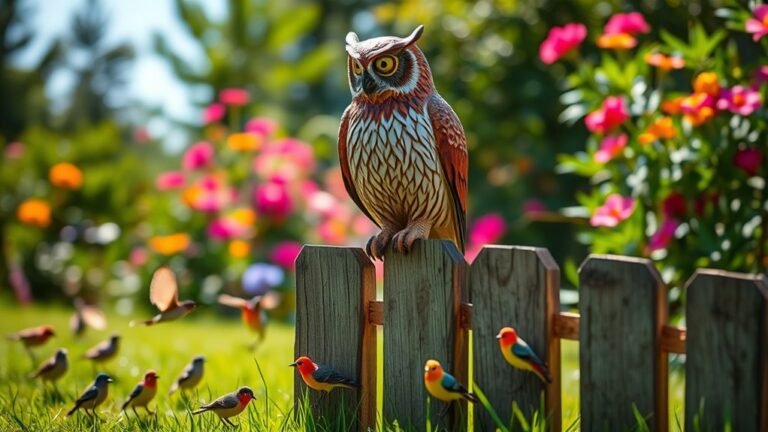
Add noise-making devices such as wind chimes or sounds that deter specific birds to disrupt their comfort. You can also place fake predators, like plastic owls, in key locations to scare birds off.
By combining these visual and sound strategies, you'll create an environment that's less appealing for nesting birds.
This approach helps protect your space while keeping it looking nice.
Enjoy your efforts to maintain your property!
Maintain Clean and Uncluttered Spaces
Keeping spaces clean and organized helps stop birds from nesting near your home. Birds look for hidden places to build nests. Here are simple steps to keep your area bird-free:
- Remove Debris: Clear away leaves, twigs, and old garden materials that attract birds.
- Inspect Regularly: Check spots like eaves, attics, and sheds to ensure they're clutter-free.
- Trim Vegetation: Cut back any overgrown plants where birds might want to nest.
- Store Tools Neatly: Keep tools and equipment organized to eliminate potential nesting sites.
Understanding bird nesting habits helps you create a less inviting environment for them.
A tidy space not only deters birds but also makes your property look better, creating a pleasant atmosphere for you and your family.
Seek Professional Assistance if Necessary

If you have trouble preventing birds from nesting on your property, getting help from professionals may be the best choice.
Wildlife experts have the skills and tools to deal with this issue properly while following the law. They know local regulations regarding bird protection and ensure that any actions taken are humane and legal.
Here are some advantages of hiring experts:
- They give advice specific to your property.
- They safely remove existing nests.
- They install measures to prevent future nesting.
- They provide ongoing monitoring and support.
- They educate you about local bird species and their behaviors.
Getting help can make the process easier and more effective.
Frequently Asked Questions
What Are the Best Seasonal Times to Deter Nesting Birds?
To deter nesting birds, act before spring begins. Use prevention strategies to stop birds from nesting. As summer arrives, install barriers in your space to protect it. Early action is key for creating a peaceful environment.
Can Certain Bird Species Be More Challenging to Deter?
Some bird species are harder to deter because of their specific behaviors. You must use effective methods that match their habits. This will help create an environment they do not prefer.
How Do Local Laws Affect Bird Nesting Prevention?
Local laws can include bird protection and nesting regulations. It is important to research the specific rules in your area. Knowing these laws helps you act within legal boundaries while addressing bird nesting issues effectively. This approach ensures you respect wildlife and maintain compliance with local statutes.
Are There Humane Ways to Relocate Bird Nests?
Yes, you can relocate bird nests using humane methods. Consider the timing and distance of the move. Move the nests gently at night to minimize disturbance. Ensure the new location is safe and suitable for the birds. This helps their survival and promotes their well-being.
What Should I Do if Birds Are Already Nesting?
If birds are already nesting, consider getting professional help for nest removal. Meanwhile, use protective measures like netting or visual deterrents to stop more nesting. Always follow local wildlife laws while you protect your area.

Hello, I’m Amelia White, the founder of birdsfanatic.com. As a lifelong bird enthusiast and spiritual seeker, I’ve always been fascinated by the mystical connections between birds and the human experience. On this site, I share my knowledge and insights into the symbolic meanings and spiritual significance of various bird species, exploring their roles in mythology, folklore, and cultural traditions. Join me on this journey into the world of birds, where we’ll discover the hidden wisdom and guidance that these magnificent creatures have to offer.