
How to Prevent Birds From Eating Your Grass Seed
If birds are eating your grass seed, you're not alone. Many gardeners deal with this issue. Fortunately, you can use a few simple strategies to protect your seeds. Timing your seeding and applying protective measures like mulch or bird netting can help. Let's look at effective ways to keep birds away from your grass seeds.
- Timing Your Seeding: Choose a time when bird activity is low. Early morning or late afternoon can be best.
- Use Mulch: Covering the grass seed with a thin layer of mulch can deter birds. It also helps retain moisture for the seeds.
- Bird Netting: Installing bird netting over your seeded area offers a physical barrier. This method is effective in keeping birds off your grass seed.
- Scare Tactics: Utilize reflective materials or noise makers to scare birds away. Items like shiny tape or wind chimes can be surprising for birds.
- Feed Birds Elsewhere: Consider setting up a bird feeder away from your lawn to divert their attention from your seeds.
By applying these strategies, you can increase the chances of your grass seeds growing healthy and strong.
Key Takeaways
- Schedule seeding during early morning or late evening to minimize bird activity.
- Cover seeded areas with mulch or straw to protect seeds and retain moisture.
- Install lightweight bird netting over seeded spots to physically exclude birds.
- Use reflective objects or scare tactics like wind chimes to deter birds.
- Position bird feeders at least 10-15 feet away from grass areas to limit seed scattering.
Understanding the Problem: Why Birds Love Grass Seed

Birds love grass seed for several key reasons. First, grass seeds are nutritious. They provide birds with protein, fats, and essential vitamins, making them an important part of their diet.
Different bird species have different preferences for seeds. Some birds like smaller seeds, while others prefer larger ones. This preference affects which birds may come to your garden.
The sight of bare soil or freshly planted seed attracts birds because it indicates a food source. Understanding these behaviors helps you protect your seeds while also supporting the local bird population.
Timing Your Seeding Efforts
Timing your seeding efforts can help protect your grass seed from birds. Here are some effective strategies to reduce bird interference:
- Seed in Early Morning or Late Evening: Birds are less active during these cooler times, making it a good time to sow seeds.
- Seed After Rainfall: Wet seeds can deter birds and encourage quicker germination.
- Choose Late Spring or Early Fall: These seasons often have fewer hungry birds looking for food.
- Avoid Major Migration Periods: Check local migration times to prevent attracting large flocks.
Choosing the Right Grass Seed
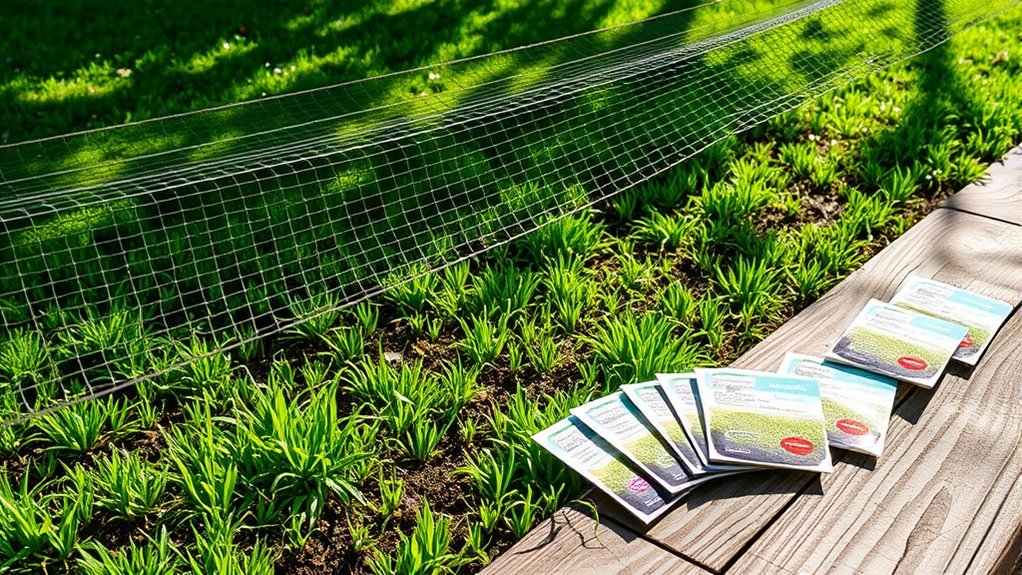
When choosing grass seed, consider your climate and soil type. These factors directly affect how well your lawn will grow.
First, research the best grass types for your area. Use grass varieties that match your environment to help resist pests and diseases. Cool-season grasses work well in northern climates, while warm-season grasses suit southern areas.
Next, focus on seed quality. High-quality seeds usually germinate better and grow stronger. This can help your lawn establish more quickly.
Buy seeds from trusted sources and look for labels that indicate good quality. By making smart choices, you can create a healthy and attractive lawn for your home and family.
Use Mulch or Straw Cover
To protect your newly seeded lawn from birds, use a layer of mulch or straw. This will shield your seeds and provide benefits like moisture retention and temperature regulation.
Follow these steps:
- Choose Your Material: Use organic mulch or straw for the best coverage.
- Spread Evenly: Apply a 1-2 inch layer over your seeds.
- Water Gently: Lightly water the area to settle the mulch or straw without displacing it.
- Observe Growth: Monitor your lawn's progress and adjust the coverage if needed.
Using mulch or straw can protect your efforts and help your lawn grow strong and healthy.
Enjoy watching your lawn thrive!
Employ Bird Netting

Bird netting is a simple way to protect your grass seeds from birds. To install it, cover the entire area where you planted your seeds and secure the edges tight to stop birds from getting underneath.
Use lightweight netting that won't harm the birds but will keep them away from your grass.
After you set it up, check the netting regularly for any tears or gaps. Keeping it in good condition ensures that birds can't reach your seeds.
Following these steps will help your grass seeds germinate and thrive, leading to a beautiful lawn that everyone will admire.
Create Scare Tactics
To keep birds from eating your grass seeds, use simple scare tactics. These methods mix noise and visuals to make your yard less inviting to birds. Follow these four easy tactics:
- Wind Chimes: Hang wind chimes around your yard. They create pleasant sounds while helping to scare off birds.
- Scarecrow: Build a scarecrow. A well-made scarecrow catches attention and adds character to your garden.
- Mylar Balloons: Inflate mylar balloons and tie them near your seeds. Their shiny surface and movement scare away birds.
- Sound Devices: Set up motion-activated noisemaking devices that trigger when birds get close.
These tactics will help protect your grass seeds and make your outdoor space lively and engaging.
Utilize Reflective Objects
To keep birds away from your freshly planted grass seeds, use reflective objects in your yard.
Hang shiny items, such as CDs or reflective tape, from trees and fences. These items reflect sunlight, creating quick flashes that can scare birds off.
You can also add metallic streamers or plastic foil strips around the edge of your seed area for extra protection.
By using these reflective strategies, you create an environment that discourages birds while still enjoying your yard's beauty.
With a creative approach, you can protect your grass seeds and promote a healthy green space for everyone to enjoy.
Plant Companion Crops
Companion crops protect your grass seeds from birds. Planting companions increases crop diversity and confuses birds, making it harder for them to find your seeds.
Here are four effective companion crops:
- Clover: Attracts beneficial insects and improves soil health.
- Sunflowers: Provide shade and act as a barrier around your grass seeds.
- Marigolds: Deter some birds with their scent and attract helpful pollinators.
- Buckwheat: Grows quickly, covering the ground to distract birds.
Using these plants with your grass seeds creates a visually appealing garden.
It also supports a healthy ecosystem, giving your seeds a better chance to grow without interference from birds.
Deploy Decoys
Deploying decoys can effectively keep birds away from your grass seed. Use types like plastic owls or reflective tape to simulate danger.
Position these decoys around the edges of your seed area. Move them every few days to maintain their effectiveness, as birds can quickly learn.
Ensure the decoys are visible from multiple angles, so they catch birds' attention from all directions.
Opt for Seed Coating
If you want to protect your grass seed from birds, consider seed coating. Seed coating protects seeds and helps them grow better.
Here are some coating options you can choose:
- Nutrient Coatings – Add essential nutrients to seeds for better growth.
- Pest-Repellent Coatings – Keep insects and pests away, along with birds.
- Colorful Coatings – Use bright colors to confuse birds and keep them from eating the seeds.
- Moisture-Activated Coatings – Ensure seeds receive the right amount of water to sprout successfully.
Choosing seed coating can improve your chances of a healthy lawn.
Watering Techniques
Effective watering techniques help you grow a healthy lawn and keep birds away from your grass seed. One good method is the soaking technique, where you water deeply but not often. This approach encourages the grass roots to grow deeper, which helps hold moisture in the soil.
Aim for around one inch of water each week, adjusting for any rainfall. The best time to water is early in the morning. This timing reduces evaporation and makes it less attractive for birds.
After planting your grass seeds, mist the area lightly to keep the seeds moist without drowning them. By using these techniques, you'll create a thriving lawn while keeping birds at bay!
Installing Bird Feeders Away From Grass
Bird feeders can enhance your yard by attracting various birds. However, placing them too close to grass can lead to unwanted seed scattering. To ensure your feeder placement is effective and keeps your lawn healthy, follow these steps:
- Maintain distance: Keep feeders at least 10-15 feet away from grassy areas to reduce seed scattering.
- Use appropriate feeders: Choose feeders meant for specific bird species to influence their feeding behavior positively.
- Offer diverse food options: Provide seeds that aren't located in grass areas to draw birds' attention away from the lawn.
- Monitor bird activity: Regularly observe which birds visit your feeders and adjust their positions as needed.
Regular Monitoring and Adjusting Strategies
To keep your lawn healthy, regularly check your bird feeders. This helps prevent them from becoming a problem for your grass seeds.
Schedule consistent assessments to monitor seed levels and observe bird activity. If you see birds gathering on your lawn, consider modifying your approach. You can change feeder locations or switch seed types.
Adding barriers, such as netting or mulch, around your new grass can deter birds during germination. By taking proactive steps and adjusting your methods, you can nurture a thriving lawn while still allowing birds to visit and feed without harming your grass growth.
Frequently Asked Questions
What Types of Birds Are Most Likely to Eat Grass Seed?
Sparrows and pigeons often eat grass seed. Sparrows look for seeds on the ground, while pigeons also feed on similar food. Knowing their feeding habits can help you protect your lawn and support grass growth.
How Long Does It Take for Grass Seed to Germinate?
Grass seed generally germinates in 7 to 14 days. This time frame varies based on the seed type and environmental factors. Treating the seeds properly can help improve germination. With the right care, you can grow a vibrant lawn.
Can Birds Damage Newly Grown Grass as Well?
Yes, birds can hurt newly grown grass. They dig in the soil to find insects or seeds, which can uproot young grass. Protecting your lawn during this key period helps ensure it grows strong and healthy over time. By taking steps to guard against birds, you can enjoy a vibrant yard that lasts.
Is There a Specific Time of Year to Seed Grass?
Seeding grass in spring is effective when temperatures rise, as this encourages rapid growth. For autumn overseeding, plan for late summer to early fall. This timing allows the grass to establish before winter, helps control weeds, and leads to a thicker lawn next year.
Are There Any Natural Repellents for Birds?
You can deter birds using natural ingredients like cayenne pepper, vinegar, and garlic. These ingredients create unpleasant sensations for birds. This method helps protect your plants while keeping your garden attractive.

Hello, I’m Amelia White, the founder of birdsfanatic.com. As a lifelong bird enthusiast and spiritual seeker, I’ve always been fascinated by the mystical connections between birds and the human experience. On this site, I share my knowledge and insights into the symbolic meanings and spiritual significance of various bird species, exploring their roles in mythology, folklore, and cultural traditions. Join me on this journey into the world of birds, where we’ll discover the hidden wisdom and guidance that these magnificent creatures have to offer.