
How to Keep Birds Away From Your Pool Area
If birds are invading your pool area, it can be quite annoying. To keep them away, it's important to understand why they are attracted to your space. You can use practical strategies to deter these birds effectively. Small changes in your environment or specific deterrents can help. Explore different methods to discover the best combinations that can return your pool to a calm, enjoyable place.
Key Takeaways
- Install bird spikes or wire along ledges to create unstable perching surfaces.
- Use reflective surfaces like Mylar tape or shiny ornaments to confuse birds.
- Remove food sources and secure trash to eliminate attracting elements.
- Trim nearby trees and bushes to reduce potential nesting and perching spots.
- Maintain a clean pool area and consider covering the pool when not in use.
Understanding Why Birds Are Attracted to Swimming Pools
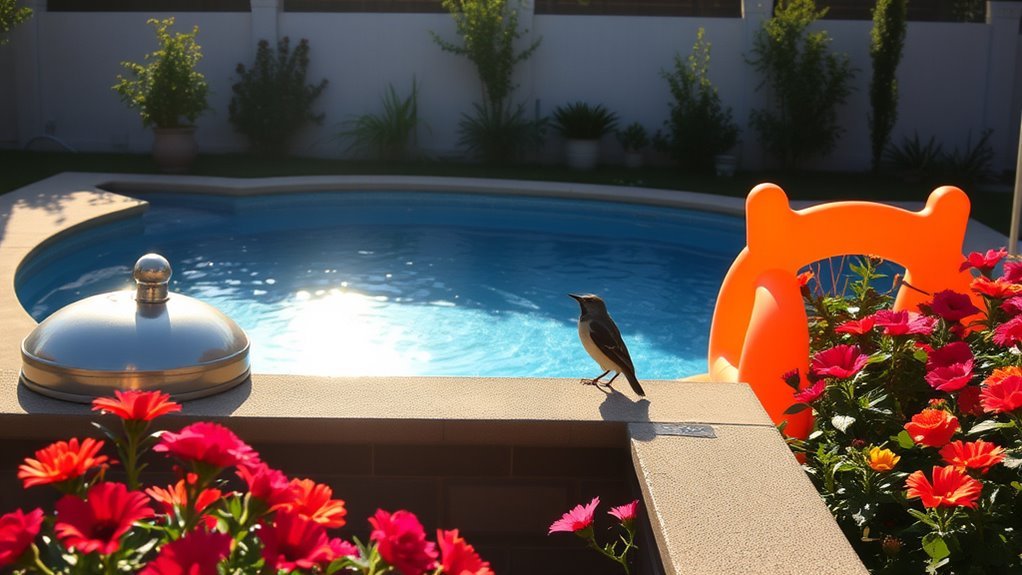
Birds are attracted to swimming pools for several reasons.
First and foremost, the pool offers a water source. The shimmering water reflects natural habitats, allowing birds to hydrate and cool off. Surrounding trees and shrubs provide important shelter and nesting spots, further increasing the pool's appeal.
You may see birds bathing or searching for food nearby, often drawn by insects at the water's edge.
Understanding these behaviors can help you maintain a peaceful pool area. By doing so, you can create an enjoyable outdoor space for you and your loved ones, while minimizing visits from uninvited feathered guests.
Installing Bird Spikes or Wires
To keep birds away from your pool area, you can install bird spikes or wires.
Bird spikes come in different materials like plastic or stainless steel. Choose based on the type of birds you're dealing with and how you want your space to look.
For wire installation, run thin, flexible wire along ledges or railings where birds like to perch.
This creates an unstable surface that birds won't sit on. Make sure to secure the wires tightly and vary their heights for better results.
Utilizing Visual Deterrents
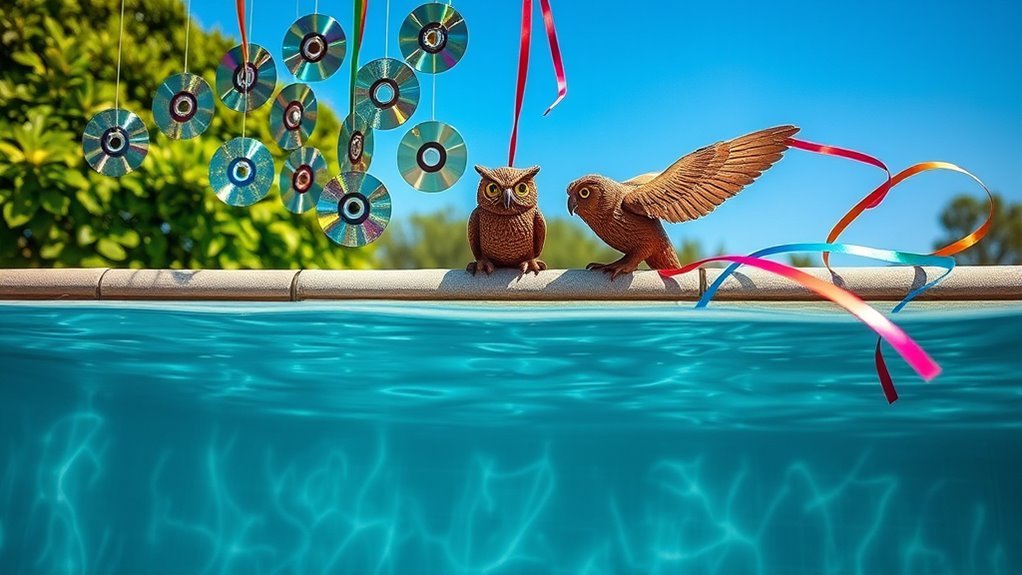
Visual deterrents can help keep birds away from your pool area. Start by using reflective surfaces like Mylar tape or aluminum foil strips.
These materials reflect sunlight and confuse birds, making your pool less appealing to them. You can also hang objects such as wind chimes or shiny ornaments.
These items add decoration and create movement and noise that birds may find disturbing. Place these deterrents around your pool for the best results.
Employing Sound Deterrents
Using sound deterrents can discourage birds from coming to your pool area. One effective option is sonic devices that emit sounds uncomfortable for birds.
These devices can vary in range and effectiveness, so choose one that fits your space. Some mimic predator calls, while others create continuous sounds that disrupt the birds.
Place these devices around your pool for maximum impact. Check them regularly to ensure they work properly.
Creating a Less Inviting Environment
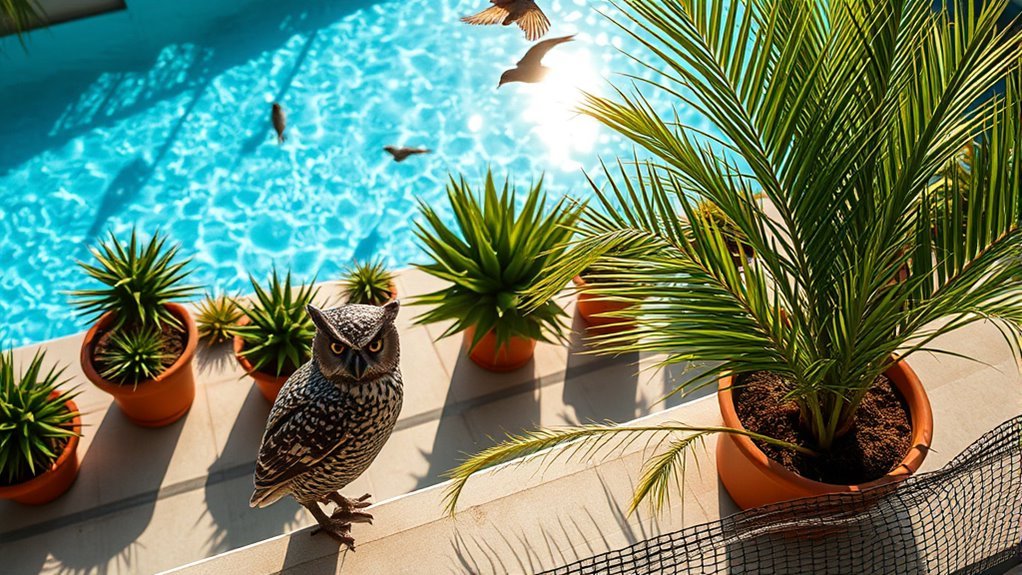
Sound deterrents can help reduce bird activity around your pool. Additionally, making the area less inviting for birds can improve your results. By understanding bird behavior and changing the environment, you can discourage these visitors.
Here are practical steps you can take:
- Remove food sources such as open trash and pet food.
- Trim trees and bushes nearby to limit perching spots.
- Use reflective surfaces like mylar tape or old CDs to create distraction.
- Install bird spikes or barriers on structures to block access.
- Place decoys or predator figures near your pool to deter birds.
These changes can help make your pool area less appealing to birds, leading to more enjoyable swim experiences for you and your guests.
Using Pool Covers When Not in Use
A well-fitted pool cover effectively blocks birds when your pool isn't in use. By using a pool cover, you stop birds from perching on the pool and enjoy additional benefits. These include keeping debris out, maintaining water quality, and improving safety for your family and pets.
Think about seasonal cover choices. A mesh cover works well in warmer months, while a solid cover offers extra protection in winter.
Choosing the right cover enhances the look and function of your pool area. Using a pool cover keeps your space inviting and free from unwanted birds.
Planting Bird-Repelling Vegetation
When you add bird-repelling plants to your pool area, you create a natural barrier that keeps birds away.
Choose native plants and aromatic herbs that enhance your space and deter birds. Here are some effective options:
- Lavender: Its strong scent can repel birds.
- Sage: This herb is useful in cooking and can also keep birds at bay.
- Rosemary: A sturdy plant that thrives in various climates.
- Marigolds: These flowers can deter birds with their scent and taste.
- Eucalyptus: The oils from this plant can be unappealing to many birds.
Incorporating these plants helps maintain a peaceful swimming space while adding beauty to your surroundings.
Implementing Water Features With Movement
To keep birds away from your pool area, add water features that create movement and sound. Flowing fountains are a great option; their bubbling water can mask noise and make your space feel lively.
Birds usually prefer calm, quiet places, so these sounds can help discourage them from staying. Moving waterfalls also provide visual and auditory appeal, creating a relaxing environment for you while deterring birds.
Place these features near your pool, making them visible to catch your attention without overwhelming the area. With the right placement of fountains and waterfalls, you can enjoy a beautiful space while minimizing unwanted bird visits.
Regular Maintenance and Cleaning of the Pool Area
To keep your pool area clean and enjoyable, follow a regular maintenance routine. This not only improves your swimming experience but also reduces the chances of attracting birds.
Consider these important tasks:
- Skim debris off the surface every day.
- Vacuum the pool each week to clear away dirt.
- Change filters regularly to ensure good water quality.
- Clean the surrounding areas, including decks and chairs.
- Ensure trash bins are closed to prevent birds from being attracted.
By staying on top of these tasks, you can enjoy a fresh swimming space while discouraging birds from visiting.
Enjoy your clean pool area!
Frequently Asked Questions
What Types of Birds Are Most Commonly Attracted to Pools?
Sparrows, starlings, and robins are common birds that visit pools. They come for water and the plants nearby. Knowing why these birds are attracted to your pool can help you manage their presence in your outdoor area. Observing their behavior can also make your pool time more enjoyable.
Are There Any Local Regulations for Bird Deterrents?
Before using any bird deterrents, check your local laws about them. This step is essential to ensure you follow the rules. Understanding these regulations helps you manage bird visitors while protecting local wildlife. Always aim for a balanced and safe environment.
Can Pool Chemicals Harm Birds?
Yes, pool chemicals can harm birds. Exposure to these chemicals may cause health problems. To keep birds safe, always cover your pool when not in use. Manage chemical levels carefully to create a safer environment for all.
How Often Should Deterrents Be Replaced or Adjusted?
Replace or adjust your deterrents regularly. Aim to do this every few weeks, based on their lifespan. Consider seasonal changes, as bird behaviors vary throughout the year. Keeping your approach current helps maintain its effectiveness.
Do Solar-Powered Devices Effectively Deter Birds?
Solar-powered devices can effectively keep birds away by changing their behavior. These devices produce unexpected movements and sounds, which make areas less attractive to birds. Using them can improve your space, allowing you to enjoy it without disturbances from birds.

Hello, I’m Amelia White, the founder of birdsfanatic.com. As a lifelong bird enthusiast and spiritual seeker, I’ve always been fascinated by the mystical connections between birds and the human experience. On this site, I share my knowledge and insights into the symbolic meanings and spiritual significance of various bird species, exploring their roles in mythology, folklore, and cultural traditions. Join me on this journey into the world of birds, where we’ll discover the hidden wisdom and guidance that these magnificent creatures have to offer.