

Georgia Backyard Bird Guide
If you want to enhance your backyard, learning about Georgia's birds is a great start. This guide covers common birds and simple ways to attract them to your garden with specific plants and water features. You will learn about bird behavior and its connection to the local ecosystem. What are the best ways to create a welcoming habitat? You might find the answers surprising.
Key Takeaways
- Common backyard birds in Georgia include House Sparrows, Chipping Sparrows, and various woodpeckers like Downy and Red-bellied Woodpeckers.
- To attract birds, plant native vegetation offering food, shelter, and colorful flowers suited for the Georgia climate.
- Provide bird baths to ensure birds have reliable drinking and bathing sources, keeping them clean and accessible.
- Engage in seasonal birdwatching by observing migratory patterns, nests, and feeding behaviors, enhancing your connection to nature.
- Utilize field guides and birdwatching apps for identification, behavior tracking, and sharing experiences within birdwatching communities.
Overview of Georgia's Bird Species
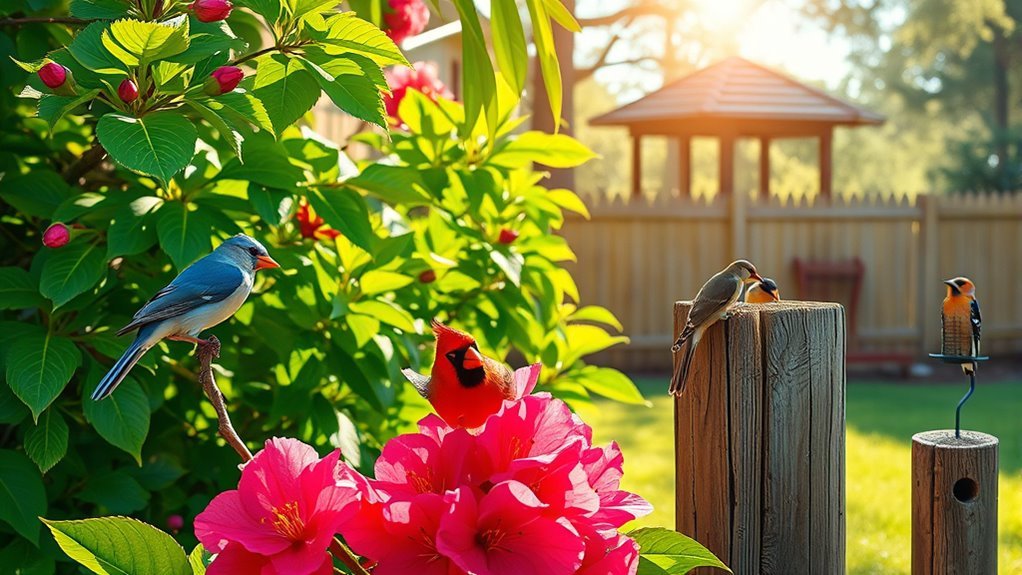
Georgia has many habitats, including coastal marshes and mountains. This diversity supports a wide variety of bird species. Birdwatchers can see both resident and migratory birds.
Migration attracts many people to enjoy the beauty of this natural event. Each season offers chances to spot rare birds, such as the Swallow-tailed Kite and the Painted Bunting. Every outing can bring new discoveries.
Birdwatching in Georgia creates a sense of community. Meeting other bird lovers enhances the experience and boosts appreciation for the state's rich bird life.
Whether you're new to birdwatching or experienced, Georgia's landscapes provide excitement and joy.
Common Backyard Birds in Georgia
In Georgia's backyards, you can find many common birds. House Sparrows and Chipping Sparrows often visit, filling the air with cheerful chirps. Their lively behavior makes birdwatching enjoyable.
You may also spot woodpeckers like the Downy Woodpecker and Red-bellied Woodpecker. They're known for their distinct calls and the sound of their drumming on trees.
Watching their actions can deepen your appreciation for local wildlife. Birdwatching not only brings joy but also connects you to Georgia's rich ecosystem.
Enjoy your time observing these fascinating birds!
Attracting Birds to Your Garden

To attract a variety of birds to your garden, create a welcoming space.
Start by planting native plants that provide food and shelter. Choose colorful flowers, shrubs, and trees that grow well in your area. Birds will feel comfortable in familiar surroundings.
Add bird baths to offer water for drinking and bathing. Place a shallow bath in a sunny location and keep the water clean.
Essential Birdfeeders and Feed
Choosing the right bird feeders and feed helps attract local birds to your garden. Different feeders suit various species. Tube feeders work well for finches and chickadees, while platform feeders draw in larger birds like cardinals.
Selecting the right seeds is also important. Black-oil sunflower seeds appeal to many birds because they're high in oil, while nyjer seeds are attractive to goldfinches. Offering a mix can attract a variety of birds.
Cleaning your feeders regularly keeps the feeding area healthy. By selecting appropriate feeders and seeds, you create an inviting space for birds, making your backyard lively and deepening your connection to nature.
Enjoy watching your feathered friends visit!
Creating a Bird-Friendly Habitat
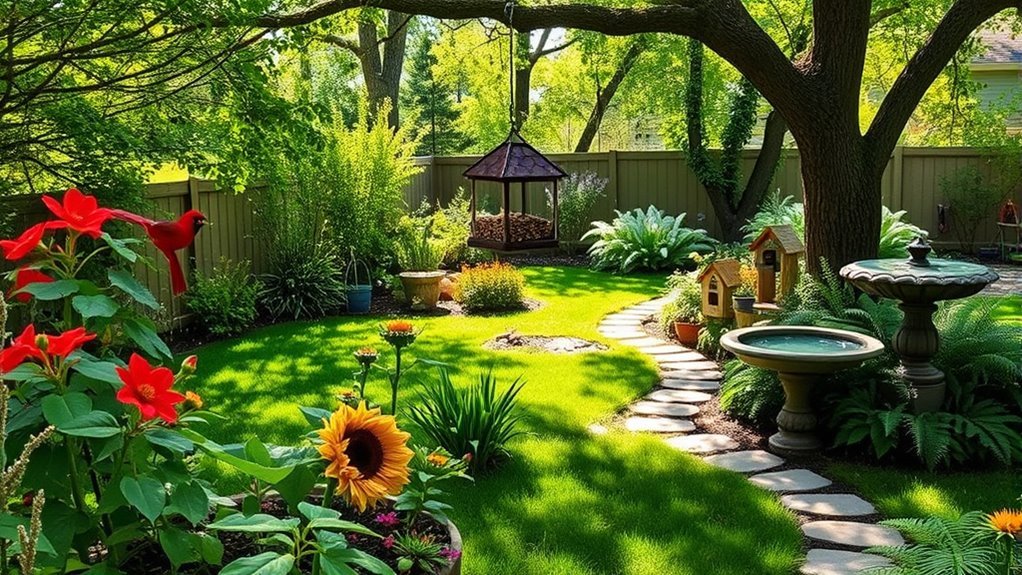
Creating a bird-friendly habitat requires understanding the needs of local birds. Start by using native plants. These plants offer food and shelter for birds.
Birds prefer native flora because it provides insects and seeds. Plant a mix of flowers, shrubs, and trees to give birds foraging options throughout the year.
Also, add water sources like birdbaths or small ponds. Keep these water features clean and accessible for birds.
A habitat with native plants and water makes a welcoming space for birds. This supports local wildlife and enhances your outdoor experience, allowing you to connect with nature.
Seasonal Birdwatching Tips
As the seasons change, adapt your birdwatching methods to fit the behavior of local birds. Knowing when birds migrate and how they behave in different seasons can improve your experiences.
Here are three clear tips for effective birdwatching:
- Spring Arrival: Watch for the first migratory birds. Listen for their songs and observe more activity at bird feeders.
- Summer Breeding: Look for nests and feeding patterns. Observe how parent birds care for their young.
- Fall Migration: Stay patient and alert as bird flocks move. Enjoy the vibrant colors of the birds during this time.
Engaging with birds during each season creates a deeper connection to nature and enhances your birdwatching enjoyment.
Birdwatching Tools and Resources
Using the right tools can improve your birdwatching experience. To identify and observe birds in Georgia, consider getting quality field guides. These books offer useful information about bird features, behavior, and migration. They help you connect with local birds.
Birdwatching apps can also help. These apps have databases, bird calls, and location tracking features. They make it easy to identify birds while you're out in the field. Use these apps to log your sightings, share your adventures, and connect with other birdwatchers.
Joining a community can make birdwatching even more enjoyable.
With the right resources, you'll learn to appreciate the birds in your Georgia backyard even more.
Fun Facts About Georgia's Birds
Georgia has over 400 bird species. This diversity makes it a great place for bird lovers. Here are some easy-to-understand facts about Georgia's birds:
- Migration: Many birds fly thousands of miles through Georgia during their seasonal migrations.
- Nesting Habits: Different birds build nests in different places. Some nest in trees, others in bushes, and some even on the ground.
- Local Birds: Some birds, like cardinals and chickadees, stay in Georgia all year. You can see them in your backyard no matter the season.
These facts help you connect with Georgia's birds. Enjoy watching them and appreciate their role in this vibrant ecosystem.
Frequently Asked Questions
What Are the Best Times of Day for Birdwatching in Georgia?
Birdwatching is best during the morning. Birds are active, feeding, and singing at this time. Early hours provide great opportunities to see various species. Evening is also a good time for birdwatching as birds settle down for the night. By focusing on these periods, you can improve your birdwatching experience and appreciate nature more. Enjoy the sights and sounds of birds at dawn and dusk.
How Can I Identify Bird Calls and Songs?
To identify bird calls, focus on the sounds. Listen for patterns in repetition and pitch. Use apps that recognize bird songs to help you match what you hear. This can make your experience more enjoyable and connect you with other bird lovers.
Are There Any Endangered Birds in Georgia?
Georgia has endangered birds, including the Red-cockaded Woodpecker and the Least Tern. You can help protect these birds by joining local conservation efforts and sharing information about their importance.
What Should I Do if I Find an Injured Bird?
If you find an injured bird, gently place it in a box. Make sure the box is secure and has air holes. Then, contact a local bird rehabilitation center or animal rescue. They will provide instructions on how to care for the bird until it recovers.
Can I Attract Specific Bird Species to My Backyard?
To attract specific bird species, place bird feeders that cater to their preferences and add native plants to your yard. These items provide food and shelter, making your space a welcoming home for local birds. By incorporating features that meet their needs, you can create an enjoyable environment for both you and the birds.

Hello, I’m Amelia White, the founder of birdsfanatic.com. As a lifelong bird enthusiast and spiritual seeker, I’ve always been fascinated by the mystical connections between birds and the human experience. On this site, I share my knowledge and insights into the symbolic meanings and spiritual significance of various bird species, exploring their roles in mythology, folklore, and cultural traditions. Join me on this journey into the world of birds, where we’ll discover the hidden wisdom and guidance that these magnificent creatures have to offer.


