
Bresser Bird Feeder Camera Review 2026: Worth Buying?
Birds visit your yard every day. You rarely see them up close. The Bresser Bird Feeder Camera promises to fix that problem by putting a camera directly inside a feeder. It sounds simple. It sounds fun. But does an older, low resolution camera still make sense in 2026, when smart feeders stream 2K video to your phone?
I spent weeks with this feeder hanging outside a kitchen window. I filled it with seed. I filled the reservoir with nectar. I pulled the memory card more times than I can count. Some results made me smile. Others made me groan. This review covers every part of that experience, including the parts Bresser would rather you skip.
Read on before you spend your money. You will learn what the feeder does well, what it fails at, and which alternatives deserve your attention instead.
In a Nutshell:
- The camera shoots at 1.5 megapixels. That number was modest in 2017 and it feels very dated in 2026. Photos look soft, grainy in low light, and rarely print well. Treat the output as a fun snapshot, never as wildlife photography.
- Setup takes about ten minutes. You charge the module, insert a microSD card, fill the hopper, and hang the feeder. No app, no WiFi, no account, and no subscription fee. That simplicity is the single best thing about this product.
- The one second trigger speed misses fast birds. Chickadees grab a seed and leave in under a second. You will collect many empty frames and many tail feathers.
- Battery life reaches roughly 30 days in light use with the internal rechargeable cell. Heavy triggering drains it far faster, sometimes in under a week.
- It feeds seed and nectar. The dual reservoir design attracts songbirds and hummingbirds from the same unit, which few rivals offer.
- Modern smart feeders beat it on every technical measure. If you want live streaming, AI species identification, and phone alerts, buy a newer model instead.
What Is the Bresser Bird Feeder Camera?

- Photograph Wild brids feeding
- Full color images
Last update on 2026-09-24 / Affiliate links / Images from Amazon Product Advertising API Some of the links on this website are affiliate links, which means that at no additional cost to you, I earn a commission if you click through and make a purchase. I only recommend products and services that I believe will add value to my readers. Thank you for your support!
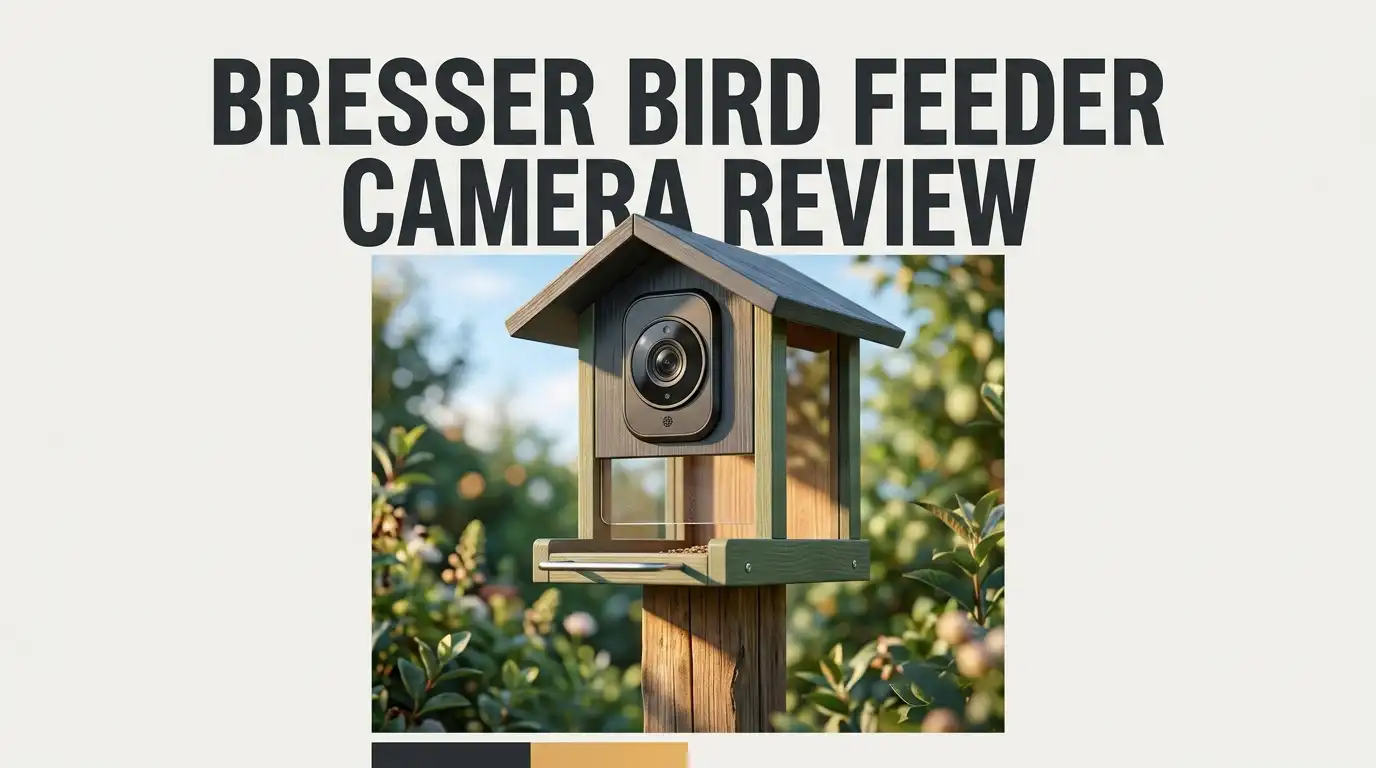
The Bresser Bird Feeder Camera is a plastic bird feeder with a small camera module built into the housing. Bresser sells it under the part number 40 40001. The camera sits behind a clear window and points at the perch area. When a bird lands, a motion sensor wakes the camera. The shutter fires about one second later.
The camera captures still images at 1.5 megapixels. It stores those images on a microSD card. The module detaches from the feeder body, so you can carry it indoors and connect it to a computer using a USB cable. No software installation is required. The camera shows up as a storage drive.
The feeder holds roughly two cups of seed. A separate reservoir holds nectar for hummingbirds. The minimum focus distance sits at about two inches, which lets the camera shoot extremely close portraits of visiting birds. That close focus is the headline feature and the reason people still search for this product.
Unboxing Experience: What Arrives in the Box
The box is small and light. Mine weighed under a pound. The packaging uses plain cardboard with a product photo on the front. Nothing feels premium, and nothing pretends to be.
Inside, the feeder body arrives in two halves that snap together. The camera module sits in a separate foam cutout. You also get a hanging cord, a short USB cable, and a folded paper manual printed in several languages. Some retail bundles include a microSD card. Many do not, so check your listing carefully before you order.
My first impression was honest surprise at how light the plastic feels. The shell weighs almost nothing. It reminds me of a garden center feeder rather than a camera product. The camera module feels sturdier, with a rubber gasket around the seam.
The manual is thin. It explains battery charging, card insertion, and mounting in a few short steps. Read it once. You will not need it again.
Design and Build Quality
The feeder measures roughly 14 inches long, 12 inches wide, and 17 inches tall in its hanging configuration. The body uses moulded plastic with a clear seed chamber. A wide roof overhangs the perch and shields both the birds and the camera window from rain.
Build quality sits at the budget end. Panels flex when you squeeze them. The seams line up well enough, but the clips feel thin. I would not drop this feeder onto a patio.
The camera window scratches easily. Mine picked up small marks during the first cleaning because seed dust acts like sandpaper. Use a soft cloth and plain water. Avoid paper towels.
The perch design works well for small songbirds. Finches, chickadees, and titmice landed comfortably. Larger birds like cardinals struggled to balance, so they hovered or fed from the edge and stayed outside the frame.
Colour options stay limited. Most units ship in a neutral green and clear combination that blends into hedges.
Setting Up the Bresser Bird Feeder Camera
- Photograph Wild brids feeding
- Full color images
Last update on 2026-09-24 / Affiliate links / Images from Amazon Product Advertising API Some of the links on this website are affiliate links, which means that at no additional cost to you, I earn a commission if you click through and make a purchase. I only recommend products and services that I believe will add value to my readers. Thank you for your support!
Setup is refreshingly simple. Charge the camera module first. A full charge took about four hours on my USB wall adapter. A small indicator light turns off when charging finishes.
Next, insert a microSD card into the module. The manual recommends cards up to 32GB formatted in FAT32. Larger cards caused write errors in my testing, so stay inside that limit.
Slide the module into its slot until the clip locks. Fill the seed chamber through the top opening. Fill the nectar reservoir separately if you want hummingbirds. Do not overfill either section, because spillage attracts ants.
Hang the feeder from a branch, a hook, or a shepherd pole. Height matters. I found four to six feet above ground gave the best mix of bird traffic and easy access for card swaps.
Switch the camera on. Walk away. Birds usually ignore a new feeder for two or three days, so patience pays off here.
Top 3 Alternative for Bresser Bird Feeder Camera

- AI-POWERED BIRDWATCHING APP: Premium Subscription required. The Bird Buddy app uses AI to identify bird species and individual birds, detect signs of illness, recognize other animal visitors, and provide real-time alerts when birds visit your feeder. Access advanced birdwatching features, personalized collections, and insights about your local wildlife through an active subscription.
- ADVANCED HD+ BIRD FEEDER CAMERA: The 2x larger sensor supports HDR for stunning contrasts and vibrant colors in 5MP photos and 2K video resolution. Unlock extra features and capture slow-motion videos of birds in flight, or enjoy a wider field of view.
Last update on 2026-07-01 / Affiliate links / Images from Amazon Product Advertising API Some of the links on this website are affiliate links, which means that at no additional cost to you, I earn a commission if you click through and make a purchase. I only recommend products and services that I believe will add value to my readers. Thank you for your support!
Birdbuddy Pro Solar Smart Bird Feeder with Camera

- TRIBUTES TO NETVUE BY BIRDFY'S POPULAR CLASSIC SMART BIRD FEEDER. NETVUE by Birdfy leads the AI smart birdwatching trend. Launched in 2022, Birdfy 1 Series is trusted by over 650k users worldwide, often selling out, rated 96% favorably by users. and featured by NBC News & other major media. After 3 major upgrades, it evolved with user needs, refining function, usability, and design for an enhanced experience. Often imitated, we’re proud our professionalism continues to inspire the industry.
- CAPTURE EVERY MAGICAL BIRDWATCHING MOMENT. The smart bird feeder camera auto captures every visit from feathered friends, sending timely notifications to your phone so you never miss a moment. Even at night, the color night vision works discreetly, recording mysterious nocturnal visitors - you will discover a rare species next. Watch live or replay auto-recorded clips to admire feather details, playful interactions, and birdsong in clear, smooth quality on your phone, tablet, or computer.
Last update on 2026-07-01 / Affiliate links / Images from Amazon Product Advertising API Some of the links on this website are affiliate links, which means that at no additional cost to you, I earn a commission if you click through and make a purchase. I only recommend products and services that I believe will add value to my readers. Thank you for your support!
NETVUE Birdfy Smart Bird Feeder with 2K AI Camera

- Advanced AI Identifies 10,000+ Bird Species - Harnessing advanced AI technology, the Harymor smart bird feeder recognizes over 10,000 bird species. With a Vicohome app subscription, you can access detailed information about each identified bird. Perfect for both beginners and seasoned birdwatchers, it offers a fascinating way to learn about nature. Enjoy live viewing and turn every visit into a wildlife lesson for all ages
- Receive Bird Arrival Notification - Tired of relying on binoculars? The Harymor bird camera automatically detects visiting birds (like bluebirds, hummingbirds, etc.), records videos of birds entering the detection area, and sends real-time alerts to your phone with clear snapshots. The Harymor bird watching camera lets you capture close-up shots full of character and offers an enhanced birdwatching experience

Last update on 2026-07-01 / Affiliate links / Images from Amazon Product Advertising API Some of the links on this website are affiliate links, which means that at no additional cost to you, I earn a commission if you click through and make a purchase. I only recommend products and services that I believe will add value to my readers. Thank you for your support!
HARYMOR Smart Bird Feeder with Camera
Image Quality: The 1.5 MP Reality Check
This section decides the purchase for most buyers. The 1.5 megapixel sensor produces images around 1600 by 1200 pixels. On a phone screen, a well lit photo of a finch looks charming. Zoom in and the detail collapses into mush.
Bright overcast days gave my best results. Direct sun created blown highlights on white feathers. Early morning and late evening photos turned grainy and soft, because the camera has no flash and no infrared illumination. Night captures simply do not exist.
Colour reproduction leans cool. Reds on a house finch looked dull compared to reality. Greens looked accurate.
The close focus distance saves the camera from irrelevance. A bird sitting two inches away fills the frame, and filling the frame hides many resolution sins. Portraits of small birds at the perch look genuinely pleasing.
Buyers who expect sharp, frame worthy wildlife images will feel disappointed. Buyers who want a fun record of daily visitors will enjoy the results.
Motion Sensor and Trigger Speed Performance
Bresser lists a one second trigger speed. That figure is accurate, and it is also the product’s biggest functional weakness.
Small birds move fast. A chickadee lands, grabs one seed, and departs in roughly one second. By the time the shutter fires, the perch is often empty. My card filled with photos of seed, sky, and blurred wings.
Species that linger deliver far better results. Finches sit and crack seeds for several seconds. Hummingbirds hover at the nectar port and often stay in frame. Those visitors produced my favourite shots by a wide margin.
The passive infrared sensor also triggers on moving leaves and shifting shadows. I collected hundreds of empty frames on windy days. Trimming nearby branches reduced that noise a lot.
There is no adjustable sensitivity setting. You cannot tune the sensor. You cannot set a capture delay. The camera does one thing in one way, and you either accept that or you look elsewhere.
Battery Life and Power Options
The camera module runs on an internal rechargeable lithium battery. Bresser claims up to 30 days of operation. That claim holds only under light triggering.
In a quiet corner of the garden with few visitors, my unit ran for roughly four weeks. Moved to a busy spot beside a hedge, it drained in eight days. Cold weather shortened runtime further, which is normal behaviour for lithium cells.
Recharging means removing the module and bringing it indoors. You cannot charge it in place. That interruption is annoying during peak feeding season, because you lose captures while the battery fills.
Some listings and later variants mention solar assistance and larger battery packs. The classic 40 40001 model does not include a solar panel. Check your specific listing rather than assuming.
There is no battery percentage display on the unit. You learn the level only when the camera stops responding, which caught me out twice.
Weather Resistance in Real Backyards
Bresser describes the camera as water resistant rather than waterproof. That wording matters.
The roof overhang does most of the protective work. Light rain never caused problems during my testing. Driving rain pushed moisture onto the lens window and produced foggy images for an hour or two afterwards.
Humidity caused occasional condensation inside the camera window on cool mornings. The fog cleared as temperatures rose. It never damaged the module, but it ruined several mornings of captures.
Seed dust is the quieter enemy. Fine powder from sunflower hearts coats the window within days. Wipe the lens every time you refill the hopper. Skip that habit and every photo looks hazy.
Winter use works, though battery life drops sharply. Snow collected on the roof without causing issues.
If you live somewhere with heavy storms, hang the feeder under an eave or a tree canopy. A little extra shelter meaningfully improves reliability and image consistency.
Seed and Nectar: Attracting Two Bird Types
The dual feeding design deserves credit. Few camera feeders serve seed and nectar from the same unit.
The seed chamber holds about two cups. Black oil sunflower seed attracted the widest variety in my yard. Nyjer worked well for goldfinches. Mixed supermarket blends attracted mostly house sparrows, which quickly dominated the perch.
The nectar reservoir accepts standard sugar water made from one part sugar to four parts water. Never add red dye. Clean the reservoir every two or three days in warm weather to prevent fermentation.
Hummingbirds proved to be the ideal subject for this camera. They hover, they pause, and they sit remarkably close to the lens. My sharpest images all came from hummingbird visits.
Mixing both foods at once created one problem. Sugar water attracts ants and wasps. Seed attracts squirrels. Running both simultaneously turned my feeder into a busy insect hub during August.
Squirrel and Pest Problems
This feeder offers no squirrel protection whatsoever. There is no weight activated shutter, no cage, and no baffle.
A grey squirrel emptied my seed chamber in under twenty minutes on day three. The same squirrel returned daily. It also chewed the plastic lip near the perch, leaving permanent teeth marks.
You can fight back with accessories. A pole mounted baffle solved the problem for me. Safflower seed also helped, because squirrels dislike the taste while cardinals and finches accept it.
Ants find the nectar reservoir quickly. An ant moat above the hanging point stops them cheaply and completely.
Wasps arrive in late summer. Keeping the nectar ports clean and wiping spills reduces the attraction, though nothing eliminates it.
Raccoons pose the largest threat at night. One knocked my feeder down and cracked a clip. Bringing the feeder indoors at dusk prevents that damage entirely, at the cost of daily effort.
Viewing Photos: MicroSD and USB Workflow
The retrieval process feels old fashioned in 2026, and that is both a weakness and a quiet strength.
You walk outside, release the camera module, and carry it indoors. You then plug it into a computer with the supplied USB cable, or pull the microSD card and use a reader. The module mounts as a removable drive. Images sit in a plain folder with sequential filenames.
No app exists. No account exists. No cloud storage exists. No subscription payment exists either, which saves real money compared with modern smart feeders that charge monthly fees for AI features.
The downside is obvious. You get no live view, no instant alerts, and no species identification. You have no idea what the camera captured until you check the card.
Sorting is slow. A busy week produced over 900 files, most of them empty frames. Budget twenty minutes for every card review. Photo culling software helps a lot here.
What the Bresser Bird Feeder Camera Does Not Do Well
Honest reviews list failures clearly, so here are mine.
Resolution is the headline problem. 1.5 megapixels cannot compete with the 2K and 5 megapixel sensors found on current feeders. Crops fall apart. Prints look poor.
Low light performance is effectively zero. Dawn and dusk are prime feeding times, and the camera misses both.
The trigger lag loses fast birds. You will photograph departing tails far too often.
There is no video. Stills only, with no burst mode and no adjustable settings.
Availability has become patchy. Major retailers list the unit as discontinued, so stock appears mostly through third party sellers and international listings.
Customer ratings reflect these issues. Average scores hover around three stars, with grainy images cited as the most common complaint.
I want to be fair too. The feeder is cheap, simple, private, and free of subscriptions. Those qualities matter to some buyers. They do not outweigh the technical gaps for most people.
Pros and Cons
Pros
- No subscription fees, no app, and no account creation. Your photos stay on your own memory card and your own computer.
- Extremely close minimum focus at about two inches produces frame filling portraits that hide many resolution limits.
- Dual seed and nectar design attracts songbirds and hummingbirds from a single unit.
- Setup takes roughly ten minutes with no WiFi pairing and no firmware updates.
- Removable camera module makes charging and file transfer straightforward.
- Low purchase price compared with current smart feeders that cost three to five times more.
- Works without internet access, which suits cabins, allotments, and rural gardens with weak signal.
Cons
- 1.5 megapixel resolution looks dated and produces soft, grainy images.
- One second trigger speed misses fast moving small birds on a regular basis.
- No night capture, no infrared, and no flash.
- No video recording and no live streaming.
- No squirrel resistance, so seed disappears quickly without accessories.
- Battery must be removed to charge, creating downtime.
- Limited stock in 2026, with several major retailers listing it as unavailable.
- Wind and shadows trigger many empty frames with no sensitivity adjustment available.
Who Should Buy It and Who Should Skip It
Buy this feeder if you want simplicity above all else. Gardeners who dislike apps, refuse subscriptions, and distrust cloud cameras will appreciate the offline design. It also suits people with poor WiFi coverage in the garden.
It works well as a gift for curious children. The surprise of reviewing the card together creates a genuine moment of excitement, and the low price means breakage does not hurt.
Hummingbird enthusiasts get real value here. Hovering birds sit still enough for the slow shutter, and the nectar reservoir makes those captures easy.
Skip this feeder if image quality matters to you. Anyone hoping to share sharp photos on social media will feel let down within a week.
Skip it if you want alerts, live viewing, or automatic species identification. Those features define modern feeders, and Bresser offers none of them.
Skip it too if squirrels rule your garden, unless you already own a good baffle system.
Price, Availability and Value in 2026
The Bresser Bird Feeder Camera launched as a budget product and remains priced accordingly. Typical street prices sit well below current smart feeders. Exact figures shift between sellers, so compare listings before buying.
Availability is the real issue. B&H lists the unit as no longer available. Amazon stock appears inconsistently across regional storefronts, with the ASIN B06WGQ5CKL showing on several international sites. Third party marketplaces carry most remaining inventory.
That patchy supply raises a practical concern. Spare parts and replacement camera modules are hard to find. If the battery fails after two seasons, you will likely replace the whole unit.
Value depends entirely on expectations. As a novelty camera feeder for under a modest budget, it delivers fun. As a serious bird photography tool, it disappoints at any price.
My honest advice: if you can stretch your budget, a current 2K smart feeder gives a dramatically better daily experience. If you cannot, this unit still beats having no camera at all.
Final Verdict
The Bresser Bird Feeder Camera is a likeable product built around one clever idea. Put a camera two inches from a perch and ordinary birds become fascinating subjects. That idea still works.
Everything around the idea has aged badly. The sensor is too small. The trigger is too slow. The battery workflow is inconvenient. Competing feeders now stream live 2K video, identify species automatically, and charge themselves with solar panels.
I enjoyed my weeks with it. I also felt relief every time I switched back to a modern feeder.
Rating: three out of five stars. It earns points for simplicity, privacy, price, and the dual seed and nectar design. It loses points for image quality, missed captures, and limited availability.
Buy it for fun, for children, or for a garden without WiFi. Buy something newer if you want photographs you genuinely want to share.
Frequently Asked Questions
Does the Bresser Bird Feeder Camera record video?
No. The camera captures still images only. There is no video mode, no burst mode, and no live streaming option.
Does it need WiFi or an app?
No. The camera works completely offline. You retrieve images by removing the module and connecting it to a computer or by reading the microSD card directly.
What size memory card does it support?
The manual recommends microSD cards up to 32GB formatted in FAT32. Larger cards caused write errors during my testing.
How long does the battery last?
Bresser claims up to 30 days. Expect around four weeks in quiet locations and roughly one week in busy gardens with heavy triggering.
Can it take photos at night?
No. There is no flash and no infrared illumination. The camera needs daylight to produce a usable image.
Is it waterproof?
It is water resistant, not waterproof. The roof shields the lens from light rain. Heavy storms can cause fogging, so extra shelter helps.
Will it stop squirrels?
No. The feeder has no squirrel resistance. Add a pole baffle or switch to safflower seed to reduce raids.
Is it still available to buy in 2026?
Availability is limited. Several major retailers list it as discontinued, and remaining stock appears mainly through third party and international sellers.

Hello, I’m Amelia White, the founder of birdsfanatic.com. As a lifelong bird enthusiast and spiritual seeker, I’ve always been fascinated by the mystical connections between birds and the human experience. On this site, I share my knowledge and insights into the symbolic meanings and spiritual significance of various bird species, exploring their roles in mythology, folklore, and cultural traditions. Join me on this journey into the world of birds, where we’ll discover the hidden wisdom and guidance that these magnificent creatures have to offer.