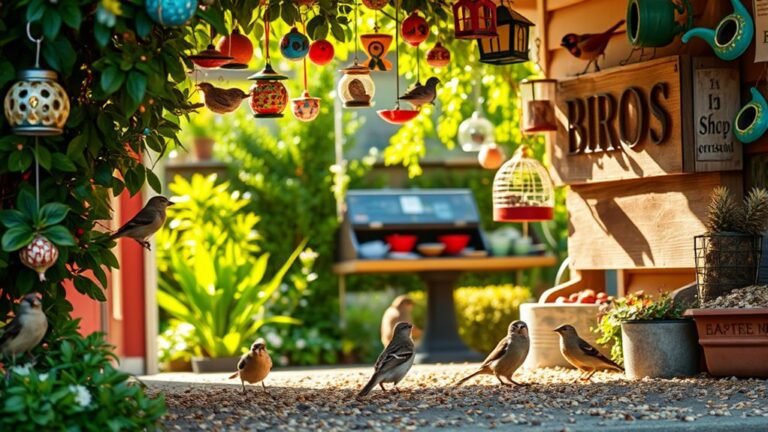

Becoming a Backyard Birder
As you begin your backyard birding journey, knowing the common bird species in your area is key. Birds have different feeding habits and preferences. This information can help you choose the right feeders and seeds. Pay attention to their movements and sounds to learn about their behaviors. With the right approach, you can create a welcoming space for birds in your garden. However, attracting different birds requires more than just putting out feeders; it takes a thoughtful strategy.
Key Takeaways
- Choose appropriate bird feeders, like tube and platform styles, to attract a variety of bird species to your backyard.
- Select high-quality, fresh birdseed blends that cater specifically to your desired bird populations for better attraction.
- Create a bird-friendly habitat by planting native plants and incorporating shelter options like birdhouses and brush piles for safety.
- Equip yourself with binoculars and field guides to enhance your birdwatching experience and help with species identification.
- Maintain a birdwatching notebook to track sightings and behaviors, which will deepen your connection with local avian life.
Understanding Common Bird Species

When you birdwatch in your backyard, you may see many common bird species that help the local ecosystem.
Learn how to identify birds by looking at their colors, sounds, and actions. For example, the American Robin has a bright orange breast and often searches for worms in spring and summer.
Watch for changes in bird behavior with the seasons; birds like the Dark-eyed Junco fly south in winter, while the Goldfinch changes its colors throughout the year.
By making these observations, you can better understand the birds around you and connect with other bird watchers.
This practice will enrich your backyard experience and deepen your connection to nature.
Choosing the Right Feeders
Choosing the right feeders can improve your backyard birding experience by attracting different bird species.
First, consider feeder types like tube, platform, and suet feeders. Tube feeders attract birds that enjoy sunflower seeds, while platform feeders draw in ground-foraging birds.
Next, choose feeder materials carefully; durable materials like metal and quality plastic resist the weather and keep pests away. This ensures your feeders last longer.
Also, select feeders that are easy to clean. This helps maintain hygiene and reduces the risk of disease among birds.
Selecting Quality Birdseed

Choosing quality birdseed is crucial for attracting a variety of birds to your yard.
Consider the following points when selecting your birdseed:
- Freshness: Check for a recent packing date to ensure maximum nutrition.
- Blends: Pick seed blends that match the types of birds you want to attract.
- Whole Seeds: Choose whole seeds over filler seeds, as they're more appealing to birds.
- Reputable Brands: Look for brands with good reviews and strong quality control practices.
Using high-quality birdseed will create an inviting space for birds to visit and enjoy.
Creating a Bird-Friendly Habitat
Creating a bird-friendly habitat involves more than just providing food. It requires building an environment that meets the needs of birds.
Start by planting native plants. These plants offer food and support local wildlife. For example, coneflowers and milkweed attract insects that birds can eat.
Include shelter options like birdhouses and natural brush piles. These provide safe places for birds to nest and hide from predators.
Also, vary your garden's structure with grasses, shrubs, and trees. This creates different layers for birds to explore, helping both ground-foraging birds and those that prefer the treetops.
Attracting Birds With Water Sources

Providing a steady water source is vital for attracting birds, just like food and shelter. Birds drink water and bathe in it to clean their feathers and regulate their body temperature.
Here are four effective water features that attract different bird species:
- Static Birdbaths: Various styles of birdbaths work well for smaller birds.
- Moving Water: Fountains or drippers produce sounds that draw birds to fresh, flowing water.
- Puddling Areas: Create shallow spots in your garden for birds to splash and drink easily.
- Natural Features: Small ponds or streams mimic natural settings, attracting a wide range of birds.
Landscaping for Birds
Landscaping your yard with birds in mind can attract many bird species. Start by planting native plants. These plants provide food and shelter that birds need. Choose plants like coneflowers and elderberries. They support local ecosystems and attract insects that birds eat.
Next, add birdhouses. Select birdhouse designs that fit the types of birds in your area. Pay attention to the size and entrance hole, as these details matter for different species.
By including these elements, your yard becomes a bird-friendly space. As you create this habitat, you can enjoy watching birds and feel connected to nature.
This effort can bring you closer to others who appreciate wildlife too.
Birdwatching Tools and Accessories
To improve your birdwatching experience, essential tools and accessories can help you observe better. Understanding different types of binoculars is important. Choose from compact, standard, or high-power binoculars based on your needs. A good pair helps you see birds more clearly from far away.
Here are four key tools:
- Binoculars: Get a good pair that fits your environment.
- Field Guides: Use guides specific to your region for accurate bird identification.
- Notebook: Keep a journal to track the species you see and their behaviors.
- Camera: Take photos of birds to study their details more closely.
With these tools, you can become a successful backyard birder. Enjoy the joy of observing and learning about birds in your area!
Documenting Your Birding Experience
How do you capture your birding experiences? Start with a birding journal.
In this journal, write about your observations, including the types of birds you identify, their behaviors, and their habitats. Note their plumage colors and sounds. Use clear terms like migratory patterns and feeding habits.
Photography is also important. Take sharp, well-composed photos of the birds you see. These images help you remember their features and allow you to study them later.
As you build this collection, you improve your understanding of birds. You also connect with the birding community.
Sharing your journal and photos with others fosters friendships and encourages conversations about birds. Enjoy the process of discovering avian life together.
Frequently Asked Questions
How Can I Identify Birds by Their Songs or Calls?
To identify birds by their songs, pay attention to their pitch, rhythm, and patterns. Listen for repeated sounds that can help you recognize different species. Comparing recordings of bird songs can improve your skills in identifying them and deepen your connection with nature. Enjoy the process of learning and appreciating these beautiful sounds.
What Time of Day Is Best for Birdwatching?
For birdwatching, the best time is in the morning. This is when birds are most active and you can hear their songs. Evening is also a good time to watch birds as they show interesting behaviors before night falls. Both times offer unique experiences in nature.
Are There Specific Birds for My Region?
Yes, specific birds live in your area. Look for local species that prefer woodlands, wetlands, or urban gardens. Noticing their habits helps you connect with the birds around you. Enjoy watching their unique behaviors and learn more about their lives.
How Can I Keep Squirrels Away From Feeders?
To keep squirrels away from feeders, choose squirrel-proof feeders. Use natural deterrents like scents or plants that squirrels do not like. Watching their behavior can help you improve your methods. This connection with nature can make the process enjoyable.
Can I Attract Birds During Winter Months?
You can attract birds in winter by offering food and shelter. Use high-energy foods such as suet, and add dense shrubs for cover from bad weather. This will improve your backyard environment for birds.

Hello, I’m Amelia White, the founder of birdsfanatic.com. As a lifelong bird enthusiast and spiritual seeker, I’ve always been fascinated by the mystical connections between birds and the human experience. On this site, I share my knowledge and insights into the symbolic meanings and spiritual significance of various bird species, exploring their roles in mythology, folklore, and cultural traditions. Join me on this journey into the world of birds, where we’ll discover the hidden wisdom and guidance that these magnificent creatures have to offer.