Songbird Essentials Hummingbird Bee Guards Review 2026: Worth Buying?
Bees crash hummingbird feeders every summer. They land on the ports, crowd the flowers, and drive tiny birds away. Many backyard birders give up and take the feeder down. That is a sad ending for a hobby that should bring joy.
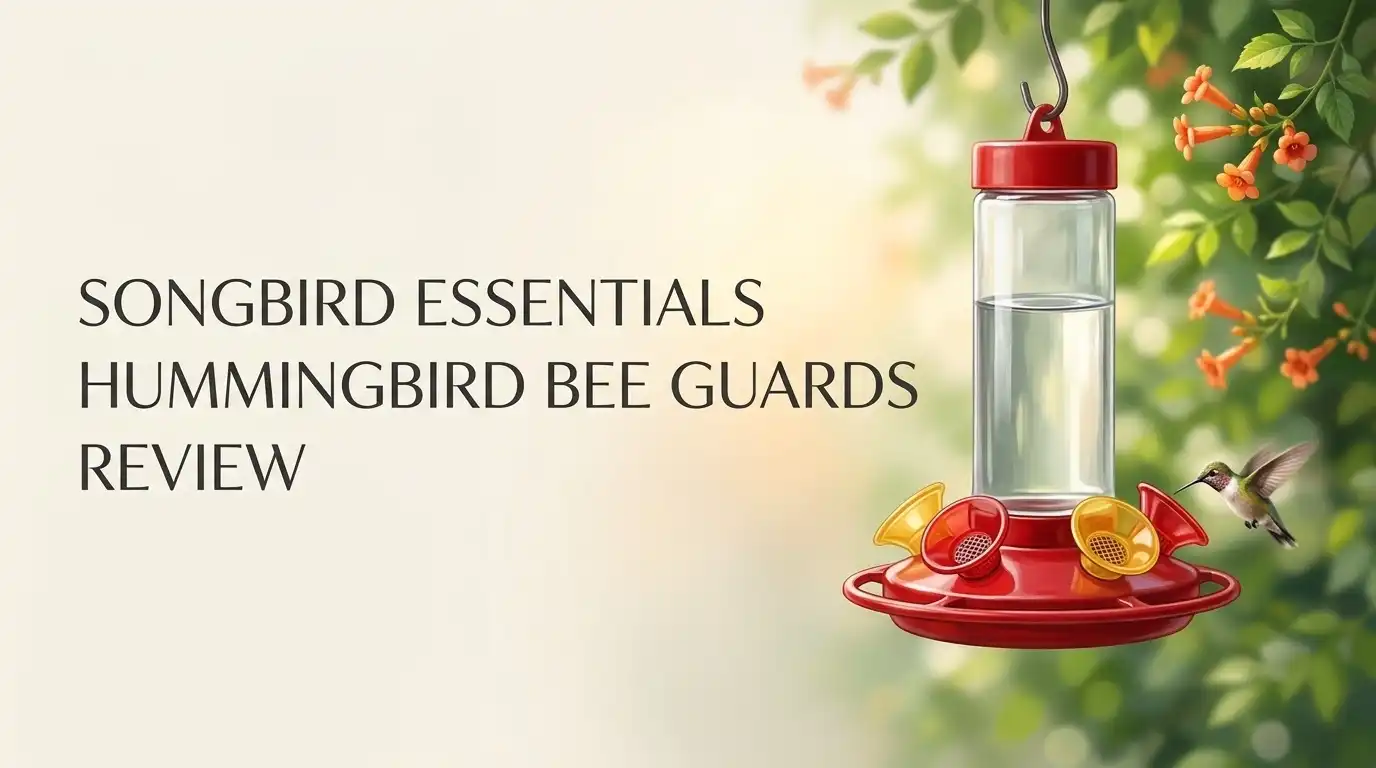
Songbird Essentials makes a simple fix. Their bee guards are small yellow flower shaped caps that sit over your feeder ports.
The design blocks insect mouths while letting hummingbird tongues reach the nectar below. The idea sounds almost too easy. Does it actually hold up through a full season of heat, rain, and hungry yellow jackets?
In A Nutshell:
- They reduce bee traffic by a large margin, but they do not eliminate it completely. My feeders went from constant wasp swarms to occasional visitors. Expect improvement, not perfection. Bees still hover nearby and test the ports.
- Fit is the single biggest factor in success. These guards are built for Dr JB’s feeders made by Songbird Essentials. They snap on firmly and seal well. They do not fit Perky Pet feeders or most generic imports. Check your port size before ordering.
- Build quality beats cheap imports. The plastic feels thick and rigid. It is BPA free and made in Missouri. My set showed zero cracking after a full summer of direct sun. Color fade was minimal.
- Hummingbirds adapt within a day or two. Some birds hesitated at first. By the second morning, every regular visitor was feeding normally. No bird was blocked from the nectar.
- The price is fair for a replacement part. A five pack costs roughly six to eight dollars. That is cheaper than buying a whole new feeder.
- Cleaning is required. Sugar residue builds under the petals. Skip cleaning and the guards become sticky bee magnets instead of barriers.
Songbird Essentials Hummingbird Bee Guards

- Dr Jb's clean feeder
- High quality, crystal clear, wide mouthed glass bottle for easy cleaning and mess free filling
Last update on 2026-11-12 / Affiliate links / Images from Amazon Product Advertising API Some of the links on this website are affiliate links, which means that at no additional cost to you, I earn a commission if you click through and make a purchase. I only recommend products and services that I believe will add value to my readers. Thank you for your support!
These guards come from Songbird Essentials, a Missouri company that has built birding gear since the 1990s. The bee guards pair with the Dr JB’s Clean Feeder line. Each guard is a molded yellow flower that caps a feeding port.
The function is straightforward. The petal sits above the nectar line. A bee lands on top and finds no liquid within reach. Its tongue measures only a few millimeters. A hummingbird tongue stretches far longer and slides right past the barrier.
The design uses physics instead of chemicals. No sprays, no traps, no dead insects. That matters because bees are pollinators worth protecting. You want them redirected, not killed.
The guards ship as replacement parts. Many feeders already include them. Buyers usually purchase a fresh set after losing petals or watching old ones crack.
Unboxing Experience And First Impressions
My order arrived in a plain plastic bag inside a padded mailer. There was no fancy box, no glossy insert, no marketing card. The packaging is pure function. For a six dollar part, that feels correct rather than cheap.
The five flowers sat loose in the bag. Each one measured about one inch across. The yellow color looked brighter in person than in the product photos. They felt noticeably heavier than the flimsy silicone copies I had bought previously.
I pressed one between my fingers. The plastic flexed slightly then snapped back to shape. No sharp edges, no mold flash, no chemical smell. The underside had a clean ring designed to grip the port rim.
First impression was simple confidence. These looked like parts that would survive a season outdoors. The lack of instructions bothered nobody since installation takes about four seconds per flower.
Installation And Fit On Your Feeder
Installation is the easiest part of this product. You lift the feeder base, line up the flower with the port opening, and press straight down. A soft click confirms the seal. The whole feeder takes under a minute.
Removing them is equally simple. Pop them off with a thumbnail from underneath. They stay put during wind and bird landings but release easily when you want them off.
Here is the critical warning. These guards fit Dr JB’s 16 ounce and 32 ounce feeders. They do not fit Perky Pet models. They do not fit most generic feeders sold under random brand names. Port diameter varies wildly across manufacturers.
I tried forcing one onto a different brand feeder. It sat loose and leaked. Measure your port opening first. If your feeder is not a Dr JB’s model, look at the alternatives listed below instead.
Top 3 Alternative for Songbird Essentials Hummingbird Bee Guards

- REPLACEMENT BEE GUARDS: 205Y replacement bee guards are compatible with Perky-Pet models 203CPBN, 203CPBR, 204CP-4, and 403CP
- KEEP BEES OUT: The replacement bee guard's raised barrier around port keeps bees out of nectar

Last update on 2026-08-28 / Affiliate links / Images from Amazon Product Advertising API Some of the links on this website are affiliate links, which means that at no additional cost to you, I earn a commission if you click through and make a purchase. I only recommend products and services that I believe will add value to my readers. Thank you for your support!
Perky Pet Replacement Yellow Bee Guards

- 【UPGRADED 2-in-1 Self-Sealing Bee Guard Feeding Ports】Equipped with premium integrated bee guard replacement flowers, our upgraded cross-slit self-sealing silicone valve differs from traditional open feeding holes. It effectively prevents bees from intruding while allowing hummingbirds to feed freely, and the valve shuts automatically to reduce nectar exposure after feeding.
- 【HELPS REDUCE NECTAR LEAKAGE & Maintain Clean Feeding Environment】Professional replacement fittings for compatible hummingbird feeders, the silicone feeding ports avoid nectar dripping and exposure, cut down nectar waste and keep the feeding zone tidy for wild hummingbirds.
Last update on 2026-11-12 / Affiliate links / Images from Amazon Product Advertising API Some of the links on this website are affiliate links, which means that at no additional cost to you, I earn a commission if you click through and make a purchase. I only recommend products and services that I believe will add value to my readers. Thank you for your support!
2 in 1 Silicone Bee Guards Replacement Flowers
No products found.
24 Pcs Silicone Bee Guards for Hummingbird Feeders
How Well Do They Block Bees Really?
This is the question that matters. I ran a side by side test. One Dr JB’s feeder got the guards. An identical feeder went without them. Both hung six feet apart in the same sun exposure.
The results were clear but not absolute. The guarded feeder averaged two or three insect visitors at any moment. The unguarded feeder averaged fifteen to twenty. That is a massive reduction in traffic.
Honeybees gave up fastest. They probed the petal, found nothing, and left within seconds. Yellow jackets proved more stubborn. They circled longer and kept testing different ports before moving on.
One important detail emerged. Bees returned heavily whenever nectar spilled on the outside surface. A drippy fill or an overfilled reservoir undoes the whole system. Clean the outside after every refill and the guards perform their best work.
Do Hummingbirds Still Feed Comfortably?
I worried about this more than anything. A guard that blocks birds is worthless. Thankfully my fears proved mostly unfounded.
The first morning brought hesitation. Two ruby throats hovered, poked, and backed away. They returned to an older unguarded feeder nearby. That adjustment period lasted roughly thirty six hours.
By day three, every regular visitor fed normally through the guards. They inserted their bills at a slight angle and drank without difficulty. Feeding sessions lasted the same length as before.
Juvenile birds took slightly longer to learn. Young hummingbirds explore more clumsily and bumped the petals a few times. They figured it out by the end of the first week.
One honest note. If you install guards mid season when birds already know your feeder, expect a temporary drop in visits. Patience solves it.
Durability After A Full Season Outdoors
Plastic bird feeder parts fail in predictable ways. They crack from ultraviolet exposure, fade to pale yellow, or warp from heat. I watched for all three.
My set hung in full southern sun from May through September. Afternoon temperatures regularly passed ninety five degrees. Not one guard cracked or split. That alone separates them from the budget copies I have thrown away.
Color held up reasonably well. The bright yellow dimmed slightly but stayed clearly yellow rather than turning chalky white. Hummingbirds are drawn by red feeder bodies anyway, so mild petal fade changes little.
The gripping ring remained tight all season. I removed and reinstalled the guards roughly twenty times for cleaning. They never loosened.
Winter storage is smart. Bring them indoors during freezing months and a single set should last several years.
Cleaning And Maintenance Requirements
Here is where many owners get frustrated. Bee guards create extra cleaning work. There is no way around that.
Sugar water seeps into the gap between the petal and the port rim. Left alone, it ferments into a sticky black film. That film attracts the exact insects you were trying to block. It also risks bird health.
My routine takes five extra minutes. I pop off all guards during each refill, soak them in hot water for two minutes, then scrub the underside with a small brush. A dedicated port brush makes this far easier than a toothbrush.
Avoid soap unless you rinse thoroughly. Residue harms hummingbirds. Hot water and vinegar handle most buildup.
Clean every three days in hot weather. Clean weekly in cool weather. Skip this and the guards actively work against you.
What These Bee Guards Do Not Do Well
Honest reviews name the flaws. These guards have several.
They are not ant proof. Ants walk right past them and down into the ports. You still need a separate ant moat above the feeder.
Compatibility is narrow. Buyers constantly report that these do not fit Perky Pet feeders or generic models. Amazon reviews are full of disappointed people who ordered without measuring.
They do not stop determined wasps completely. Large yellow jacket populations will still harass your feeder and your birds.
The five pack quantity frustrates some owners. If you run multiple feeders, you need multiple packs and the per flower cost adds up.
Finally, they offer no protection against sticky spills. The system only works when the feeder stays clean outside. Owners who refill carelessly see almost no benefit at all.
Pros And Cons
Pros
- Large reduction in bee and wasp traffic at the feeding ports when used correctly and kept clean.
- Thick rigid plastic that survived a full summer of direct sun without cracking or warping.
- BPA free materials manufactured in the United States, which many buyers value for food contact parts.
- Installation takes seconds with a simple press on fit and an easy thumbnail removal.
- Hummingbirds adapt quickly and feed normally after a short learning period of one or two days.
- Low replacement cost compared to buying an entirely new insect resistant feeder.
- Chemical free approach that redirects bees instead of harming pollinators.
Cons
- Fits Dr JB’s feeders only and will not work on Perky Pet or most generic feeders.
- Provides zero protection against ants, so a separate moat remains necessary.
- Requires frequent cleaning or sugar buildup turns the guards into insect attractants.
- Five pack quantity feels small for households running several feeders.
- Determined yellow jackets still probe the ports and occasionally succeed.
- Brief drop in hummingbird visits during the adjustment period after installation.
Who Should Buy These Bee Guards?
These guards suit a specific buyer. Identify yourself below before ordering.
Buy them if you already own a Dr JB’s Clean Feeder. This is the obvious case. The guards are the factory replacement part and the fit is perfect.
Buy them if your original petals cracked, faded, or disappeared. Squirrels and strong wind steal these little flowers surprisingly often.
Buy them if you want a pollinator friendly solution. Traps and sprays kill bees. These simply redirect them elsewhere.
Skip them if you own any other brand of feeder. The fit will fail and you will waste money.
Skip them if ants are your main problem. A moat solves that, not a bee guard.
Skip them if you cannot commit to regular cleaning. Dirty guards perform worse than no guards at all.
Price And Value Assessment
A five pack typically sells between six and nine dollars depending on the seller. Multi color twenty packs cost around twenty five to twenty eight dollars.
Is that fair? Yes, with a caveat. Compared to generic silicone sets offering twenty four pieces for under ten dollars, the Songbird Essentials price looks steep on a per piece basis.
The value comes from longevity and fit. My generic silicone guards tore within six weeks. The Songbird set completed a full season intact and looks ready for another.
Consider the alternative cost too. A replacement bee resistant feeder runs twenty five to forty dollars. Spending seven dollars to restore a feeder you already own is sound math.
My verdict on value is positive for Dr JB’s owners and negative for everyone else. Compatibility determines whether you get value or a wasted purchase.
Tips To Maximise Bee Protection
Guards alone will not win the battle. Combine them with these habits for far better results.
Fill your feeder only three quarters full. Lower nectar levels keep liquid further from the port opening and out of insect reach.
Wipe the exterior after every refill. A single sticky drop invites an entire colony.
Move your feeder six to ten feet every few days. Bees navigate by memory and lose track quickly. Hummingbirds relocate the feeder within minutes.
Hang the feeder in partial shade. Heat increases nectar expansion and pushes liquid out of the ports.
Add a dedicated ant moat above the hanger. Fill it with plain water and refill after rain.
Avoid yellow accessories elsewhere on the feeder. Yellow attracts wasps. The guards themselves are unavoidable, but skip extra yellow decorations.
Final Verdict
Songbird Essentials bee guards do their job. They cut insect traffic dramatically, they survive brutal summer sun, and they let hummingbirds feed without real trouble. The build quality clearly exceeds the cheap imports flooding online listings.
They earn a strong recommendation with one firm condition. You must own a Dr JB’s feeder. Compatibility is the make or break factor, and the majority of negative reviews trace back to mismatched feeders.
Treat them as part of a system, not a magic solution. Pair them with careful filling, regular cleaning, an ant moat, and occasional feeder relocation. Together those steps transform a wasp covered feeder into a peaceful hummingbird station.
For roughly seven dollars, that is a genuinely good outcome for your backyard.
Frequently Asked Questions
Do Songbird Essentials bee guards fit Perky Pet feeders?
No. These guards are molded specifically for Dr JB’s feeders. Perky Pet uses a different port diameter and shape. Buy the Perky Pet 205Y guards for those feeders instead.
Will bee guards stop hummingbirds from feeding?
No. Hummingbird tongues extend far beyond their bill tips and reach nectar easily. Birds may hesitate for a day or two, then feed normally.
Do these guards keep ants away?
No. Ants crawl past bee guards without difficulty. You need a water filled ant moat hung above the feeder for ant protection.
How often should I clean the bee guards?
Every three days in hot weather and weekly in cooler weather. Soak them in hot water and scrub the underside to remove sugar buildup.
Are the bee guards safe for hummingbirds?
Yes. They use BPA free plastic and contain no chemicals, repellents, or pesticides. They block insects by distance alone.
How many guards come in a pack?
The standard yellow replacement pack contains five flowers. A mixed color option contains twenty pieces for owners with several feeders.
Can I use bee guards all year?
Yes in warm climates. In freezing regions, remove and store them indoors during winter to prevent brittleness and extend their lifespan.

Hello, I’m Amelia White, the founder of birdsfanatic.com. As a lifelong bird enthusiast and spiritual seeker, I’ve always been fascinated by the mystical connections between birds and the human experience. On this site, I share my knowledge and insights into the symbolic meanings and spiritual significance of various bird species, exploring their roles in mythology, folklore, and cultural traditions. Join me on this journey into the world of birds, where we’ll discover the hidden wisdom and guidance that these magnificent creatures have to offer.