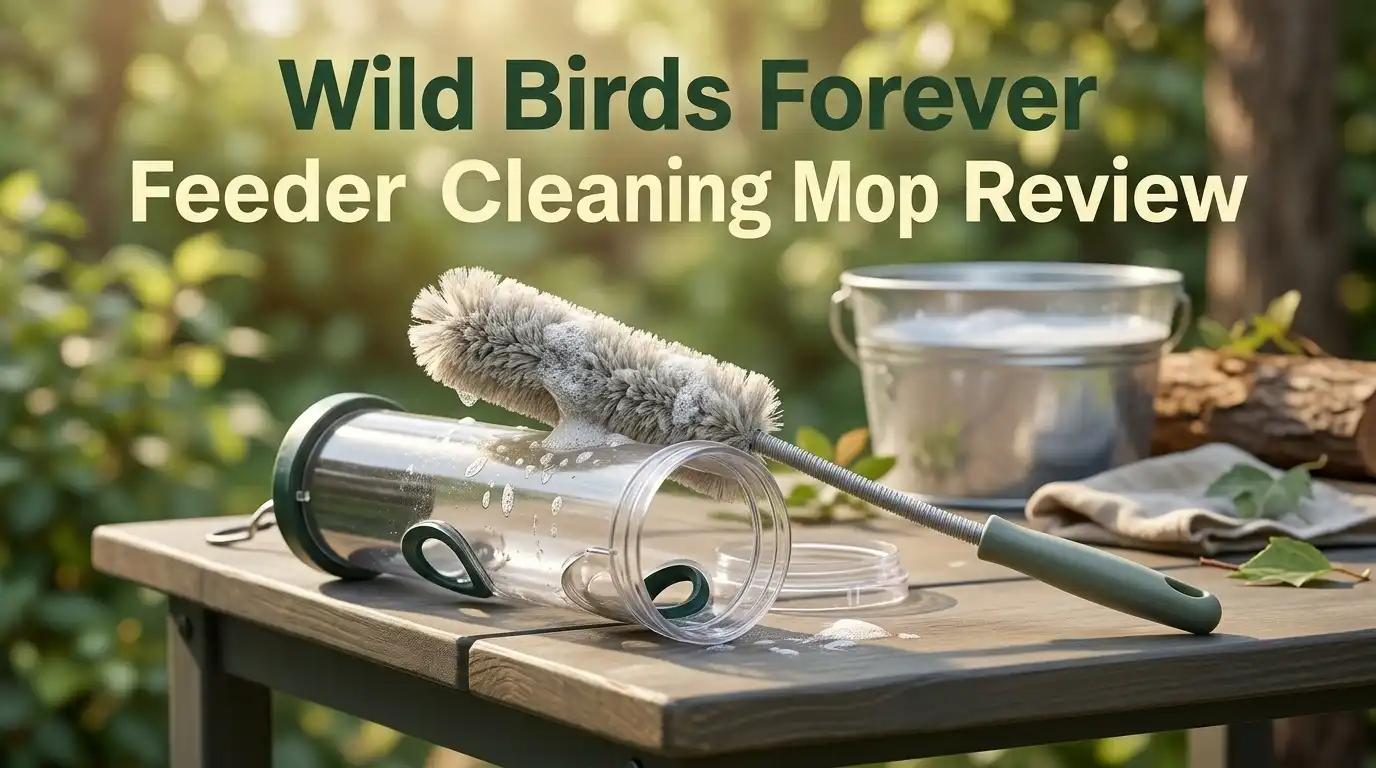
Wild Birds Forever Feeder Cleaning Mop Review 2026: Worth Buying?
Mold inside a nectar bottle is sneaky. You glance at your feeder, the liquid looks clear, and the birds keep coming. Then you unscrew the base and spot a black ring hiding in the shoulder of the bottle where no bottle brush ever reaches.
That single spot can make hummingbirds sick, and it is the exact reason the Wild Birds Forever Feeder Cleaning Mop exists.
This review covers the unboxing, the real cleaning performance, the weak points nobody mentions, and whether the price makes sense in 2026. I will be blunt about where it fails, because a cleaning tool that shreds inside your feeder is worse than no tool at all.
In a Nutshell:
- The foam head is the whole point. The soft sponge tip compresses through narrow bottle necks, then springs back open inside the reservoir. It wipes the curved shoulder area that stiff bristle brushes always miss, and it will not scratch glass or plastic.
- It works best on nectar feeders. Hummingbird and oriole bottles are its natural home. On wide seed tubes it is usable but slow, and on sticky dried sugar crust you will still need a soak first.
- Durability is the real weak spot. The foam is held on a thin twisted wire. Squeeze it too hard through a tight neck and small pieces of foam can tear loose inside your feeder. Several long term users report a lifespan of one season, sometimes less.
- The handle is short and bendy. Around 12 inches total. That is fine for standard bottles and too short for tall tube feeders or deep reservoirs.
- The price keeps it fair. This is a low cost accessory, usually under ten dollars, and multi packs drop the per unit cost further. Value is good, but longevity is average.
- Buy it as part of a kit, not alone. Pair it with a thin port brush. The mop handles the body, the port brush handles the feeding holes. Together they cover everything.
What Is the Wild Birds Forever Feeder Cleaning Mop?

- EASILY CLEAN BIRD FEEDERS: The Perky-Pet Foam Cleaning Mop has a no scratch foam mop that makes cleaning feeders easy
- PERFECT FOR NECTAR FEEDERS: The cleaning mop has a long arm that's perfect for hummingbird and oriole feeders
Last update on 2026-11-12 / Affiliate links / Images from Amazon Product Advertising API Some of the links on this website are affiliate links, which means that at no additional cost to you, I earn a commission if you click through and make a purchase. I only recommend products and services that I believe will add value to my readers. Thank you for your support!
The Wild Birds Forever Feeder Cleaning Mop is a simple sponge tipped wand built for one job: scrubbing the inside of bird feeder bottles without scratching them. The head is a block of soft open cell foam. The handle is twisted galvanized wire with a loop at the end for hanging.
The whole tool measures roughly 12 inches long. The foam head is about three inches of absorbent material that squashes down to fit through a narrow opening. Once inside, it expands and presses against the glass wall.
This is not a high tech product. It is an old fashioned design that bird shops have sold for decades. The value comes from the shape, not from any clever engineering. If your feeder has a wide body and a skinny neck, this mop reaches places a round bristle brush simply cannot touch.
Unboxing Experience and First Impressions
There is no box. That surprised me slightly. The mop arrives in a thin plastic sleeve with a cardboard header card stapled at the top, the kind of packaging you see hanging on a peg hook in a garden store. Zero plastic waste, which I appreciate.
Pulling it out takes two seconds. The foam feels dry, stiff, and a little crumbly at first touch. Do not judge it dry. Run it under warm water and the sponge softens completely, turning plush and grippy within about ten seconds.
My first impression of the handle was less positive. The twisted wire flexes easily between my fingers. It feels light, almost flimsy, and I immediately wondered how it would hold up under real scrubbing pressure. There is a small hanging hook bent into the top, which turned out to be genuinely useful for drying.
Key Specifications at a Glance
The specs are short because the tool is short. Overall length sits at roughly 12 inches, with the foam head taking up the top third. The handle is twisted steel wire, usually coated to resist rust, ending in a formed hanging loop.
The foam is open cell polyurethane sponge, the same family of material used in soft kitchen sponges. It is safe for glass, plastic, and painted metal surfaces, which matters because scratches in a feeder bottle create microscopic grooves where mold anchors itself.
Weight is almost nothing, around an ounce. The mop is hand wash only in practice, even though the foam survives hot water fine. It is not dishwasher friendly because the wire core can rust at the crimp point if it sits wet in a machine cycle. Most versions ship as a single unit, though three packs are common and cheaper per piece.
Build Quality and Materials

Last update on 2026-11-12 / Affiliate links / Images from Amazon Product Advertising API Some of the links on this website are affiliate links, which means that at no additional cost to you, I earn a commission if you click through and make a purchase. I only recommend products and services that I believe will add value to my readers. Thank you for your support!
Here is where honest reviewing matters. The build quality is acceptable for the price, and no better than that. The foam block is held in place by the twisted wire pinching through its center. That crimp is the failure point.
When you shove the mop through a tight bottle neck, the foam compresses hard against the wire. Over repeated uses, the wire slowly saws through the sponge. Owners describe foam fragments breaking off inside the feeder, sometimes within the first week of daily use.
My own unit lasted about seven weeks of twice weekly cleaning before the head started shedding at the edges. One useful trick I learned: gently squeeze the wire crimp tighter with pliers before first use. That small adjustment noticeably extends the life of the foam head. It is a shame the manufacturer does not do it at the factory.
Top 3 Alternative for Wild Birds Forever Feeder Cleaning Mop

- Two Heads. Two Jobs. One Brush that Does Both - Most hummingbird feeders have two cleaning problems: the reservoir or tube that needs a full scrub, and the feeding ports that need something smaller and more precise. This 17-inch double-ended brush solves both without switching tools. The large 4-inch bristle head scrubs tubes, reservoirs, and main chambers. The small 1.5-inch ball head reaches ports, spouts, and tight interior curves.
- Nylon Bristles that Scrub without Scratching - Glass feeders, plastic feeders, acrylic feeders - the non-scratch nylon bristles on both ends clean thoroughly without leaving marks or dulling surfaces. The twisted wire handle is flexible enough to follow curves inside bottle-style feeders without forcing an awkward angle. Designed by Songbird Essentials, founded by one of the most knowledgeable birding experts in the country.
Last update on 2026-09-12 / Affiliate links / Images from Amazon Product Advertising API Some of the links on this website are affiliate links, which means that at no additional cost to you, I earn a commission if you click through and make a purchase. I only recommend products and services that I believe will add value to my readers. Thank you for your support!
Songbird Essentials 2 in 1 Hummingbird Feeder Cleaning Brush

- Soft sponge head scrubs without scratching - safe for plastic and glass feeders of any kind - the clean that does not leave marks, residue or a reason to replace your feeder before its time
- Long enough to reach the bottom of hummingbird and oriole feeders and get into the curved walls where nectar dries and sticks - the hard to reach spots that bristle brushes miss
Last update on 2026-11-12 / Affiliate links / Images from Amazon Product Advertising API Some of the links on this website are affiliate links, which means that at no additional cost to you, I earn a commission if you click through and make a purchase. I only recommend products and services that I believe will add value to my readers. Thank you for your support!
Backyard Essentials Nectar Feeder Sponge Cleaning Brush

- HUMMINGBIRD FEEDER CLEANING BRUSHES FOR EASY MAINTENANCE - Keep your hummingbird feeders spotless and safe for visiting birds with The FryOilSaver Company's dual-head hummingbird feeder cleaning brush, expertly designed to remove sticky nectar residue and stubborn buildup that attracts bad hygiene, making it essential for backyard hummingbird feeders.
- DUAL-HEAD DESIGN REACHES EVERY TIGHT SPACE - This hummingbird feeder cleaner features two specialized brush heads: one for the main nectar bottle and one narrow head for feeding sockets and spouts, measuring 14 inches long with 1.7-inch head width, perfect for hummingbird feeder bottles, outdoor bird feeders, and any narrow-neck containers you need cleaned.
Last update on 2026-11-12 / Affiliate links / Images from Amazon Product Advertising API Some of the links on this website are affiliate links, which means that at no additional cost to you, I earn a commission if you click through and make a purchase. I only recommend products and services that I believe will add value to my readers. Thank you for your support!
FryOilSaver Co. B129C Hummingbird Feeder Cleaning Brush, 14 Inch
How It Cleans Hummingbird Feeder Bottles
This is the test that counts, and the mop passes it well. My inverted glass hummingbird feeder has a classic bulb shape with a narrow threaded neck. A standard bottle brush spins in the middle and never touches the shoulders.
The foam mop slides in, pops open, and makes full contact with the inner wall. One slow rotation plus a few up and down passes removed the cloudy sugar film completely. Fresh residue wipes away with plain hot water, no soap needed.
Dried nectar is a different story. If you let the feeder sit for a week in summer heat, the sugar hardens into a varnish. The soft foam glides right over it. You must soak the bottle first, ideally in hot water with a splash of white vinegar, then mop. Soak first, mop second. That order works every time.
Performance on Seed Tube Feeders
Seed tubes are a secondary use, and results are mixed. The foam head is wider than most thin tube brushes, which sounds helpful but creates drag inside a narrow polycarbonate tube. You end up pushing harder, and hard pushing is exactly what tears the sponge.
On a standard four inch wide tube feeder, the mop worked fine for wiping dust and powdery seed residue off the walls. It absorbed moisture nicely, which helped dry the tube before refilling.
Where it struggled was caked wet seed near the bottom tray. That material needs scraping, and foam does not scrape. For seed feeders, a stiff bristle brush remains the better tool. Think of this mop as a nectar specialist that moonlights on dry seed tubes. It is a finishing tool, not a demolition tool.
Durability After Weeks of Use
Let me give you real numbers rather than vague praise. My mop handled about fourteen cleaning sessions before visible damage appeared. Small foam crumbs started separating near the wire. By session twenty, the head had lost maybe a quarter of its original volume.
That tracks with what long term buyers report. Many say older versions of this style lasted several seasons, and that recent foam quality feels thinner and softer than it used to be. Reports of a single week lifespan usually involve daily cleaning of very narrow necked feeders.
The handle held up better than expected. It bent slightly but never snapped or rusted. The foam dies long before the wire does. Buying a three pack solves this neatly, giving you roughly a full season of coverage for the price of one coffee.
What This Mop Does Not Do Well
Authentic reviews name the flaws, so here they are plainly. First, the foam sheds. Finding sponge bits floating in your fresh nectar is annoying and, in a feeder, slightly concerning. Always rinse thoroughly after mopping.
Second, the handle is too short. At 12 inches, it barely reaches the base of taller feeders. My hand ended up wet inside the bottle more than once.
Third, it cannot clean feeding ports. The foam is far too wide for those tiny flower shaped holes where mold loves to grow. You need a separate thin brush or a pipe cleaner.
Fourth, it has no scrubbing power. Soft foam cannot remove hardened sugar, dried algae, or stubborn black mold spots without a pre soak. This tool wipes, it does not scour. Know that before you buy, and you will not be disappointed.
Pros and Cons
A quick balanced look at the tool.
Pros
- The soft foam head reaches curved shoulders and narrow necks that bristle brushes skip entirely.
- It is completely scratch free on glass, plastic, and painted finishes, protecting your feeder surface from mold anchoring grooves.
- The sponge absorbs water well, so it doubles as a drying tool before refilling.
- A built in hanging hook lets it air dry properly, which prevents mildew in the foam itself.
- The price is very low, and multi packs cost little more than single units.
Cons
- The foam tears loose from the wire core, sometimes within weeks of regular use.
- At 12 inches, the handle is too short for deep or tall feeders.
- It cannot clean feeding ports, so a second brush is required.
- No scrubbing power against dried nectar, so soaking is mandatory.
- The wire handle flexes under pressure and feels cheap in hand.
Cleaning Routine That Works Best
A good routine doubles this mop’s usefulness. Start by emptying the feeder completely and rinsing with hot tap water. Then fill the bottle with hot water and add a tablespoon of white vinegar. Let it sit for ten minutes.
That soak does the chemical work. The mop then does the mechanical work. Insert it, rotate slowly, and let the foam ride the inner curve. Avoid jamming it through the neck at an angle, because angled pressure is what rips the sponge.
Clean the ports separately with a thin brush. Rinse everything twice with clean water so no vinegar taste remains. Dry the bottle fully before refilling, since leftover moisture dilutes nectar and speeds fermentation.
In hot weather, repeat every two or three days. Cool weather allows weekly cleaning. Hang the mop by its hook afterward so it dries completely.
Who Should Buy It
This mop suits a specific person. If you keep one to four nectar feeders and clean them on a regular schedule, it is a sensible, cheap addition to your kit. Glass feeder owners benefit most, because scratch protection genuinely matters on glass.
It also suits anyone frustrated by brushes that leave a visible film ring near the bottle shoulder. That is the problem this shape solves, and it solves it well.
Skip it if you own deep reservoir feeders taller than 12 inches, or if you only run seed feeders. Skip it also if you tend to forget cleanings and face hardened residue regularly, because soft foam will frustrate you.
Serious hummingbird hosts with ten or more feeders should buy a multi pack plus a dedicated port brush set. One mop will not survive that workload alone.
Price and Value for Money
Pricing sits in the impulse buy range. Single mops typically land between six and nine dollars. Three packs usually run around twelve to fifteen dollars, which is clearly the smarter purchase given the limited lifespan of each head.
Compare that to the cost of replacing a scratched feeder, or the hidden cost of sick birds, and the math looks reasonable. A season of clean nectar for the price of a sandwich is fair value.
That said, value is not the same as quality. You are paying little and getting a tool with a known weak point. Competing sponge mops with thicker foam and riveted heads cost only a dollar or two more and often last longer.
My honest take: buy the multi pack, treat each mop as semi disposable, and your satisfaction will stay high.
Care and Storage Tips
Treat the foam gently and it rewards you. After every use, rinse the head under running water until the water runs clear. Sugar left inside the sponge ferments and smells sour within days.
Squeeze the head softly rather than wringing it. Twisting is what separates foam from wire. Never wring this mop like a dishcloth.
Hang it by the loop in open air, ideally somewhere with light airflow. A hook inside a shed or under a porch works perfectly. Avoid sealed plastic bins, since trapped moisture breeds mildew inside the sponge.
Once a month, soak the mop head in a weak vinegar solution for five minutes, then rinse. That kills anything living in the pores.
Replace the mop the moment you see crumbs in your rinse water. A shedding sponge contaminates faster than it cleans.
Final Verdict
The Wild Birds Forever Feeder Cleaning Mop earns a solid recommendation with clear limits. It does one thing genuinely well: wiping the hard to reach inner curves of nectar feeder bottles without scratching them. No bristle brush matches that specific skill.
It also has one genuine flaw: the foam head separates from the wire sooner than it should. That flaw is survivable because the product costs so little, and because a pliers squeeze on the crimp slows the damage.
I would score it around seven out of ten. Useful, cheap, honest in purpose, weak in construction.
Buy the three pack, add a thin port brush, soak before you scrub, and this little mop will keep your feeders safe all season. Buy it expecting a lifetime tool, and you will be writing a one star review by August.
Frequently Asked Questions
Does the foam mop scratch glass hummingbird feeders?
No. The open cell foam is softer than glass and softer than feeder plastic. It cannot leave scratch marks under normal pressure. This is its main advantage over nylon bristle brushes, which can score plastic reservoirs over time and create tiny grooves where mold settles and grows back quickly.
How long does the cleaning mop last?
Expect one feeding season with twice weekly use, which is roughly two to three months. Daily users often report four to eight weeks before the foam starts shedding. Tight bottle necks shorten the life considerably. Buying a multi pack and rotating units gives better long term value than replacing single mops repeatedly.
Can it clean the feeding ports?
No. The foam head is far too wide for the small flower ports on hummingbird and oriole feeders. You need a thin port brush, a pipe cleaner, or a clean mascara style wand for those holes. Ports are where mold hides most often, so never skip them during your cleaning routine.
Is soap necessary when using the mop?
Usually not. Hot water plus the mop removes fresh nectar film easily. For deeper cleaning, use a white vinegar and water soak instead of detergent. Soap residue can linger in feeder crevices and taint nectar. If you do use mild dish soap, rinse at least three times with clean water.
Does it work on seed feeders too?
Partly. It wipes dust and dry residue from tube feeder walls well and helps dry the tube afterward. It cannot scrape caked wet seed or stuck debris from trays. For seed feeders, keep a stiff bristle brush as your primary tool and use the foam mop for the finishing wipe.
What is the best cleaning frequency in summer?
Clean every two to three days when temperatures climb above eighty degrees Fahrenheit. Nectar ferments fast in heat, and cloudy liquid means bacteria is already active. In cooler spring and fall weather, weekly cleaning is generally enough. Always replace nectar at the same time you clean, never top off an older batch.

Hello, I’m Amelia White, the founder of birdsfanatic.com. As a lifelong bird enthusiast and spiritual seeker, I’ve always been fascinated by the mystical connections between birds and the human experience. On this site, I share my knowledge and insights into the symbolic meanings and spiritual significance of various bird species, exploring their roles in mythology, folklore, and cultural traditions. Join me on this journey into the world of birds, where we’ll discover the hidden wisdom and guidance that these magnificent creatures have to offer.