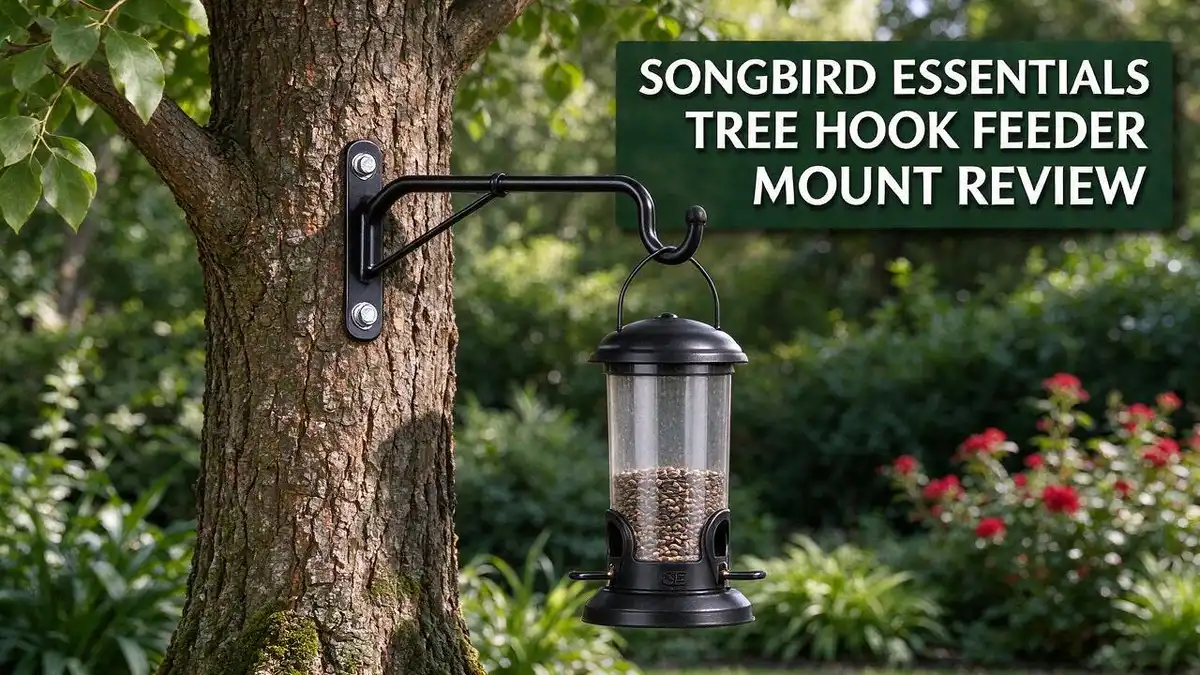
Songbird Essentials Tree Hook Feeder Mount Review 2026: Buy or Pass?
Hanging a bird feeder sounds simple. Yet many feeders end up sagging or falling off a weak branch. That is where the Songbird Essentials Tree Hook Feeder Mount steps in. It gives your feeder a solid place to hang.
The mount uses a steel cable with a silicone sleeve. This sleeve helps protect your tree limbs. The S hook makes setup quick. The powder coated steel stands up to rain, sun, and snow.
Many shoppers say it holds large feeders with ease. Others love how well it works with glass hummingbird feeders. Keep reading to see if this mount fits your yard. You will also find a few smart alternatives if you want a different style.
In a Nutshell
- Weather ready: The steel resists rust and stands up to rain, snow, and sun.
- Two mounting options: Shoppers can pick the cable limb protector or the 24 inch branch hook, depending on their tree.
- Works for hummingbirds: The mount holds glass hummingbird feeders, so you can offer nectar alongside seed.
- Indoor and outdoor use: The 24 inch branch hook suits both settings, so it fits more than one spot.
- Other feeding styles: Pole feeders, pole mounts with baffles, and recycled plastic tray feeders offer different ways to feed birds.
- Same brand extras: Songbird Essentials also makes the Sesqungee squirrel feeder if squirrels visit your yard.
Quick takeaway: Our research found no stated cons, but measure your branch before you buy to confirm the fit.
Build and Materials

- Please note this baffle is not designed for use with one piece poles or shepherds hooks.
Last update on 2026-07-11 / Affiliate links / Images from Amazon Product Advertising API Some of the links on this website are affiliate links, which means that at no additional cost to you, I earn a commission if you click through and make a purchase. I only recommend products and services that I believe will add value to my readers. Thank you for your support!
Materials matter when a feeder hangs outside all year. The Songbird Essentials mount relies on powder coated steel for its main structure. That finish helps the metal handle daily exposure to the elements.
The steel cable does most of the heavy lifting. It carries the full weight of the feeder, including seed and water. A single cable line keeps the load simple and direct.
The silicone sleeve covers the point where the cable meets the bark. It protects the tree from rubbing and scraping. This detail matters most for young trees with thin bark.
The hook and fittings follow the same focus on durability. Solid metal parts help the feeder stay in place during windy days.
The product research does not list the wire gauge or metal thickness. Buyers who need exact strength numbers should check the full product details. This gap matters for shoppers with very heavy feeders.
Cleaning takes little effort on a smooth coated surface. A damp cloth quickly removes seed dust and bird droppings.
Wind and weather test every outdoor fixture over time. A sturdy build reduces the need for frequent repairs. Simple care keeps the setup working for many seasons.
Think about your tree before you buy. Thick limbs suit a cable better than thin twigs. A branch hook works best on a sturdy limb with a clear, straight spot.
Feeder weight also matters. Heavier feeders put more strain on every metal part. Check the listed weight details before you hang a full feeder.
Good materials pair well with regular checks. Look over the cable and hook each season for wear.
Overall, the materials suit a long life outdoors. Metal and silicone parts handle sun, rain, and snow well. Choose the size that fits your tree and your feeder style.
Installation and Mounting
Before you attach anything, pick a spot that gives birds a clear escape route. Look for an open area about ten feet from dense shrubs. This distance lets birds dart to cover if a hawk appears.
Next, check the branch. Choose a limb that feels firm when you push on it. Avoid dead wood, since it can snap under a heavy feeder during a storm. Maple and oak branches often hold weight well, while soft wood trees may bend more in the wind.
Measure the height before you wrap the cable. Most people hang feeders about five feet above the ground. This height keeps seed off the grass and out of reach of cats.
Hold the feeder against the branch and watch how it swings. Leave enough room so the feeder does not bump the trunk when the wind blows.
Wrap the cable loosely around the limb. Give the cable room to grow, because trees thicken over time. Tight wraps can squeeze the bark and harm the tree.
Trim any side twigs that block the drop path. Clear space helps you lift and refill the feeder without strain.
Work with a helper when you lift the feeder high. Use a stable ladder and keep one hand on the rails. Never stand on a chair or a wobbly stool.
Give the feeder a gentle tug before you fill it. Watch the hook closely. If anything shifts or creaks, adjust the wrap and try again.
Consider a squirrel baffle above the mount. A baffle blocks climbing critters and keeps the feeder working for birds. Check the baffle after storms, since high winds can bend it out of place.
Finally, recheck the mount each season. Look for loose hooks, worn wrap, or rust spots near the fittings. Small fixes now prevent a fallen feeder later.
Feeder Compatibility and Load Capacity
Feeder compatibility starts with the hook. Most feeders have a loop or handle at the top. Check that the S hook opening fits that loop before you buy. A thick or oversized loop may not slide on easily.
Tube feeders and tray feeders both hang well from this mount. A tray feeder spreads its weight across a wide base. A tube feeder puts most of its weight at the hanging point, so keep the perch count in mind.
Load capacity depends on what goes inside. The research does not list a maximum weight limit. Think about the full weight, not the empty weight. Dry seed weighs less than wet seed, and rain can soak a tray and add a surprising amount.
Suet cakes and dense seed blocks add more strain than loose seed. Sunflower seed and mixed blends fill a feeder fast. Try a small test load first and watch how the limb bends for a few minutes.
Birds and squirrels add weight too. A flock landing at once creates sudden bumps on the cable. Squirrels can pull much harder than a bird does. If squirrels visit your yard, add a baffle or choose a caged feeder.
Keep the feeder centered on the hook. Uneven loads twist the fittings and wear the wrap faster. In winter, clear ice and packed snow from the feeder, since frozen seed can add weight quickly.
Plan for the whole season, not just the first day. Seed levels change through the year. Fill the feeder to about three quarters during busy months. This leaves a safety margin and keeps the mount steady in wind.
Top 3 Alternatives
Woodlink Easy Clean

- EASY FLOOR CLEANING: Whether you need to do a thorough floor cleaning with a mop, or just need to clean some dirty spots, grab the Fuller Brush Wood Floor Easy Clean Mist to get the job done quickly and easily!
- WOOD FLOOR FINISHES: A safe and gentle way to clean floors, this mist is suitable for use on all types of wood floor finishes and laminates. Just mist and mop!
Last update on 2026-11-05 / Affiliate links / Images from Amazon Product Advertising API Some of the links on this website are affiliate links, which means that at no additional cost to you, I earn a commission if you click through and make a purchase. I only recommend products and services that I believe will add value to my readers. Thank you for your support!
This feeder makes cleaning simple for busy bird lovers. Its parts come apart without tools, so you can scrub every corner in minutes. The clear reservoir shows seed levels at a glance. Many people like how well the seed flows through the feeding ports. It works nicely for finches, chickadees, and nuthatches. Regular cleaning keeps seed fresh and birds healthy.
Perky-Pet Squirrel Buster

- KEEP SQUIRRELS OUT: These metal bird feeders feature a weight-activated squirrel proof Seed Shield that closes feeding ports when squirrels attempt access. Keep your bird seed safe from unwanted visitors as the Sure-Lock cap prevents lid removal
- MORE BIRDWATCHING TIME: Allow the birds to feed more comfortably outside the port thanks to our patented Flexports, which encourage longer visits and provide better visibility for enhanced safety during outdoor bird watching experiences

Last update on 2026-07-09 / Affiliate links / Images from Amazon Product Advertising API Some of the links on this website are affiliate links, which means that at no additional cost to you, I earn a commission if you click through and make a purchase. I only recommend products and services that I believe will add value to my readers. Thank you for your support!
Squirrels often raid backyard feeders faster than birds do. This model uses a cage design that keeps larger pests out. Small songbirds still slip through the openings to reach the seed. Many gardeners choose it when squirrels keep stealing the food. The feeder hangs easily from a hook or pole. It fits well in gardens with heavy squirrel traffic.
Stokes Select Feeder

- LARGE CAPACITY FEEDER: Holds up to 2.5 qt of seed, reducing refill frequency and keeping birds well-fed. Ideal for attracting cardinals, chickadees, and juncos to your garden or yard.
- EASY-REFILL DESIGN: Features an easy-refill top for quick and mess-free seed replenishment. Spend less time refilling and more time enjoying birdwatching in your outdoor space.
Last update on 2026-11-05 / Affiliate links / Images from Amazon Product Advertising API Some of the links on this website are affiliate links, which means that at no additional cost to you, I earn a commission if you click through and make a purchase. I only recommend products and services that I believe will add value to my readers. Thank you for your support!
This tube-style feeder offers a sturdy build and a clean look. The seed ports keep food dry during rain and snow. Many people say it attracts a wide range of songbirds. Its simple parts make refilling quick on busy mornings. Homeowners who want low-maintenance feeding often find it a good fit. It suits both small yards and large gardens.
Weather Resistance and Upkeep
Trees keep growing, and that change matters. As a limb thickens each year, the wrap can tighten or loosen. Check the cable every spring before the birds return.
Winter brings a different challenge. Freezing rain can coat the hook and fittings with ice. Gently knock off heavy ice with a broom handle after storms. This keeps the hook seated and the feeder level.
Moisture can also reach the seed. Wet seed clumps and spoils quickly. Empty any soggy seed after heavy rain, then dry the tray before you refill it.
Shade changes how fast things dry. A spot under dense leaves stays damp longer. Moving the feeder into open light helps it dry faster after a storm.
Summer sun can also wear on finishes over time. Look for fading paint or chalky spots on the hook. Note any changes so you can plan a replacement before a part fails.
Sap and bark can leave sticky marks on the cable. Wipe these spots with a soft cloth and warm water. Skip harsh chemicals, since they can wear down the silicone sleeve over time.
Snow season calls for steady feeding. Birds rely on your feeder when the ground stays covered. Keep the tray stocked during cold snaps so flocks know where to look.
Droppings can collect on the hook and base. A quick wipe during each refill keeps the area clean. This simple habit also helps reduce the spread of germs among visiting birds.
Upkeep does not need to feel like a chore. A few minutes after each storm keeps your feeder safe, dry, and ready for hungry songbirds all season long.
Tree and Branch Safety
Safety starts with the tree itself. Pick a healthy tree with strong, living limbs. Dead wood can snap without warning.
Look for cracks, splits, or soft spots in the wood. A weak limb may give way under a full feeder.
Wind matters too. Long, thin limbs sway more in storms. A feeder on a thin tip can swing hard and strain the wrap.
Keep the mount far from power lines. Give every wire plenty of space above and beside the feeder.
Ladders need care as well. Set the ladder on firm, level ground. Ask someone to hold the base before you climb.
Protect the bark under the cable. A folded cloth between the wrap and thin bark adds padding. Bark stays healthier that way.
Think about the fall zone. If a limb breaks, the feeder could land on a walkway, a car, or a play area. Choose a spot above open lawn or garden beds.
Cats can climb nearby trees and reach hanging feeders. Leave open space around the feeder, away from dense shrubs where cats hide.
Ice and heavy snow add weight to limbs. Brush snow off the branch and feeder after storms. Never shake a frozen limb to clear it.
Pets need a safe route too. Dogs that chase squirrels may pull on low branches. Keep the feeder high enough that pets cannot jump onto it.
Check the ground below the feeder. Seed hulls and droppings can fall onto patios or sidewalks, which may get slippery. Sweep the area often.
Plan a clear path for yourself too. Keep a steady route to the feeder free of roots, rocks, and wet leaves. Good footing prevents slips during winter refills.
A safe setup makes refills easier. You can reach the feeder without stretching or climbing.
Pros and Cons
Pros
- Quick to install so you can hang a feeder in minutes.
- Very sturdy and trusted by users for holding heavier feeders.
- Rust resistant steel that handles rain, snow, and sun outdoors.
- Works with glass hummingbird feeders, so you can attract more than seed eaters.
- Simple S hook design that makes swapping feeders easy.
Cons
- No stated cons in the research, so these points are general things to weigh.
- Needs a healthy branch at the right height, which some yards may not have.
- Supports one feeder per hook, so you need more mounts for multiple feeders.
- Two sizes exist, so check the length before you choose.
Who Should Buy It
If you love watching birds from a window, this mount may suit you well. It works best for people who already have a sturdy tree nearby.
Tree owners with healthy limbs benefit the most from it. A branch at a comfortable height keeps the feeder in clear view.
People with a mature tree in a quiet corner of the yard often feel the most satisfied. Birds tend to visit calm spots more often than busy areas.
Renters often want a bird feeding spot without changes to the home. This mount hangs from a branch, so nothing needs attaching to the house or fence.
Families with children can enjoy it too. Kids can spot cardinals, finches, and chickadees from a kitchen window with little effort. Parents often find that calm time at the window helps everyone relax.
New homeowners who want to start feeding birds can begin with a simple setup like this one. It lets them learn bird habits before they invest in larger equipment.
Photographers and bird watchers form another good match. A feeder at eye level on a low branch makes clear photos easier to capture.
Gardeners who like to experiment will appreciate the flexibility. You can move the hook to another branch if the birds prefer a new corner.
Teachers and nature clubs can also use it as a real tool for lessons about birds.
Who should look elsewhere? People without a suitable tree need another option. Pole feeders, pole mounts with baffles, or shepherd’s hook setups may fit better. Those options still give birds a reliable place to eat.
Squirrel problems deserve a different approach too. The same brand offers the Sesqungee squirrel feeder, which may suit those yards better.
Overall, this mount fits tree owners, families, and curious bird fans best. It gives a simple, friendly way to feed birds from the tree you already have.
Final Verdict
The Songbird Essentials Tree Hook Feeder Mount earns a solid place in this lineup. It offers a quick and sturdy way to hang feeders from a tree branch.
Pick a pole setup if your branches are not ideal. A pole feeder sits on top of a post, so it works well in open ground. Shepherd’s hook feeders also suit gardens with flower beds and clear views.
Squirrels can ruin a feeding station fast. A pole mount with a baffle slows them down. Songbird Essentials also sells a squirrel feeder, which may suit yards with heavy squirrel traffic.
Think about feeder weight and seed type. Hanging tray feeders made from recycled plastic handle seed well and clean up with less effort. Match the feeder to the mount so each hook carries the load with ease.
Know your yard before you buy. Watch which birds visit most often and how much sun and wind the spot gets. A quiet, shaded corner often keeps seed fresh for longer.
Expect birds to arrive within days. Many backyard birds find new feeders quickly once seed is out. Keep the feeder filled and clean so regular visitors stay close.
Plan a cleaning routine from day one. Scrub the feeder every couple of weeks with mild soap and warm water. Dry it fully before refilling so mold does not grow on the seed.
Seasons change what birds need. Winter brings more visitors who want high energy food. Spring nesting birds may need extra fat sources and fresh water nearby.
A birdbath can pair well with the feeder. Water draws in birds that might skip the seed. Place it a few feet away so birds feel safe while they visit.
Bottom line: This mount suits anyone who wants a fast and sturdy hanging spot. Compare the alternatives if your yard needs a different setup. Either way, you can start watching birds today.
Frequently Asked Questions
How high should I hang the Songbird Essentials Tree Hook Feeder Mount?
Hang the feeder about five feet off the ground. This height keeps cats and other ground predators at a distance. Birds still feel safe because they can reach the feeder quickly. Try to place some shrubs nearby so birds have cover to dart into.
How can I tell if a branch is strong enough?
Look for firm wood with no cracks, peeling bark, or soft spots. Gently press the limb with your hand. If it bends or moves a lot, choose a different branch. A thick, steady limb makes the best perch for a feeder.
Will squirrels reach the feeder?
Squirrels can climb the limb and reach the seed. Hang the feeder a few feet out on the branch so jumps are harder. You can also add a baffle above the feeder. This simple step keeps your seed for the birds.
How often should I clean the feeder?
Clean the feeder about every two weeks. Use warm soapy water and rinse it well. Let it dry fully before you refill it. Clean feeders help birds stay healthy and stop mold from growing in the seed.
Can I move the mount if my yard changes?
Yes, you can move the mount to a new branch at any time. Remove the feeder, unhook the mount, and try a new spot. Watch the sun and wind for a few days before you pick a final location.

Hello, I’m Amelia White, the founder of birdsfanatic.com. As a lifelong bird enthusiast and spiritual seeker, I’ve always been fascinated by the mystical connections between birds and the human experience. On this site, I share my knowledge and insights into the symbolic meanings and spiritual significance of various bird species, exploring their roles in mythology, folklore, and cultural traditions. Join me on this journey into the world of birds, where we’ll discover the hidden wisdom and guidance that these magnificent creatures have to offer.